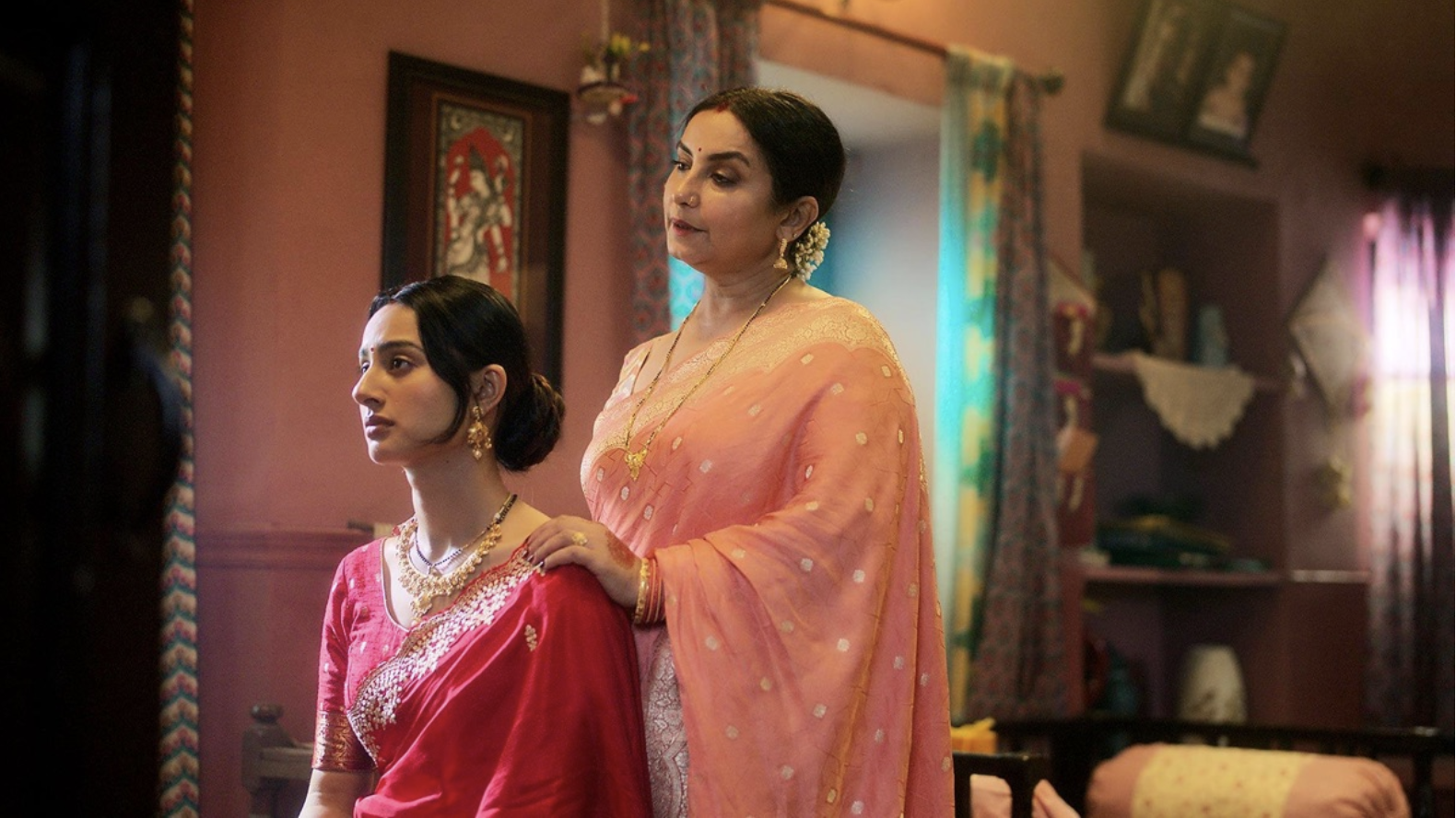
‘humare family mein ashirwad hai, koi dimagi bimari hume touch hi nahi kar sakti‘
Produced by Pankaj Tripathi, Perfect Family (2025) is the new series available on the Youtube channel of JAR series. As ironic as the title is, the Karkaria family is far from perfect. The family looks familiar to the audience; a middle-class Indian household, bound by tradition and shared space. The meals are eaten together, roles are clearly defined and inter-personal conflicts are under control. Yet beneath this appearance of order, lies emotional rigidity and familial tensions.
The narrative opens when the family’s 11-year-old daughter, Daani, experiences an anxiety attack at school. As the school counsellor intervenes to understand the underlying cause, it becomes evident that Daani’s distress cannot be viewed in isolation. The counsellor identifies significant dysfunctions within the family environment, concluding that the anxiety attack is a manifestation of deeper unresolved conflicts within the home.
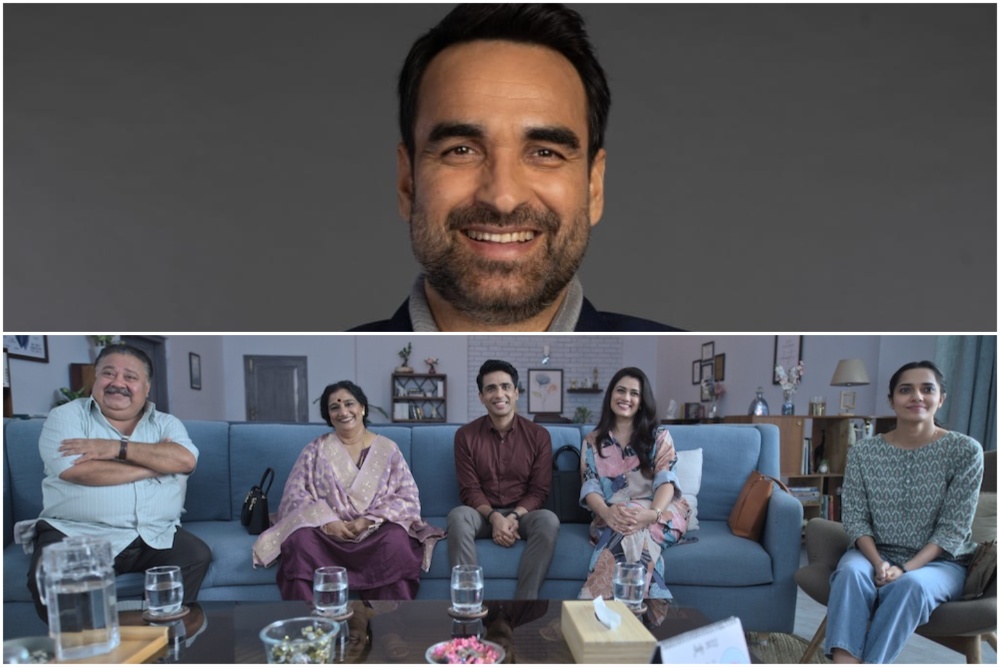
For the sake of Daani’s school, the Karkarias are compelled to take family therapy. Over eight therapy sessions, the character arcs of family members are dissected in front of us. As viewers move alongside them through these sessions, the series firmly questions a deeply held belief of togetherness, sacrifice, and endurance within Indian culture.
The burden of being “perfect”
Based in an upper-middle-class colony in Delhi, the Karkaria family lives under the constant pressure of maintaining a certain standard of respectability and success. Just like most Indian families, this standard is attained by controlling the decisions and actions of family members.
Harmony is preserved through adjustments. Emotions such as anger, disappointment, resentment that disrupt order within the family are often swallowed in the name of family unity. Suffering is normalised as duty, and silence is considered as strength. The imperfect Karkaria family situates itself perfectly within this reality. The household is not outwardly abusive. Instead, it operates through unspoken emotional contracts: elders command authority, younger members comply, and love is expressed through obligations. When the son and daughter-in-law express a desire to move out, it is perceived as a threat to the family’s pride. Living together under one roof despite psychological distress is upheld as a marker of unity.
When the son and daughter-in-law express a desire to move out, it is perceived as a threat to the family’s pride. Living together under one roof despite psychological distress is upheld as a marker of unity.
The series asks an uncomfortable question: What is the definition of a perfect family? Is avoiding emotional truth the right way for a family to survive? And who pays the price for this avoidance?
Who is the protagonist and antagonist?
One of the most compelling aspects of Perfect Family is its refusal to create heroes or villains. Unlike most narratives, there is no clear distinction between the antagonist and protagonist. The series portrays each family member as both the oppressor and the victim. Each character is shaped by their history and, in turn, is shaping the emotional environment of others. This framing allows the series to explore family life as an integrated living system rather than a collection of individual failures.

This framing also provides a lens of how harm within families is rarely intentional, but inherited. Emotional patterns are passed down quietly and normalised through everyday routines. They are justified in the name of sanskar. In reality, what appears as respect is often fear; what appears as sacrifice is self-neglect. The family survives not because conflict is absent, but because it is carefully managed.
The characterisation of each family member
The Patriarch of the house: Mr. Somnath Karkaria (played by Manoj Pahwa)
As the eldest male member, Somnath Karkaria is the patriarch of the household. Maintaining the family’s reputation in society has always been Mr. Somnath’s main concern. He believes that respect and honor come from societal approval. He genuinely wants to care for this family, however his idea of care is limited to providing money and material security.
Mr. Somnath has grown up in a patriarchal Indian society that expects men to be strong, controlling, and emotionally distant. These expectations have played a major role in shaping his behavior. Beneath this rigidity lies the fear of abandonment, shaped by his own childhood separation from his biological parents. His desperate need to keep the family together under one roof stems from the same fear. In attempting to hold his family together through authority and discipline, Somnath unknowingly reproduces the very emotional neglect that once shaped him.
The Annapurna of the house: Mrs. Kamla Karkaria (played by Seema Pahwa)
Somnath’s wife, Mrs. Kamla Karkaria, embodies the woman whose life revolves around sustaining the household. Her days are organised around cooking, cleaning, and ensuring that everyone else’s needs are met. She has been taught to believe that suffering and compromise are part of her fate, justifying the same through the statement: ‘Dukh toh mere bhagya mein likha hai.‘
She has been taught to believe that suffering and compromise are part of her fate, justifying the same through the statement: ‘Dukh toh mere bhagya mein likha hai.‘
Her silence is a learned strategy for survival within a system that rarely grants women autonomy. Despite facing all kinds of psychological distress in her marriage, Kamla becomes an enforcer of these very norms. She expects her daughter to accept similar compromises and struggles to tolerate the independence of her daughter-in-law.
Sandwiched within life: Mr. Vishnu Karkaria (played by Gulshan Devaraiah) & Mrs. Neeti Karkaria (played by Girija Oak Godbole)
Caught between generations are Vishnu and Neeti Karkaria, the couple simultaneously raising their younger children and older parents. Vishnu identifies himself as emotionally sensitive, a trait that is frequently labeled as a weakness. From a young age, his emotional awareness and vulnerability were discouraged, reinforcing the belief that sensitivity had no place in a “strong” man. Because of this, he often fails to meet his father’s rigid patriarchal standards. This creates an ongoing inner conflict between recognising his emotional needs and suppressing them to fit societal ideals of masculinity.
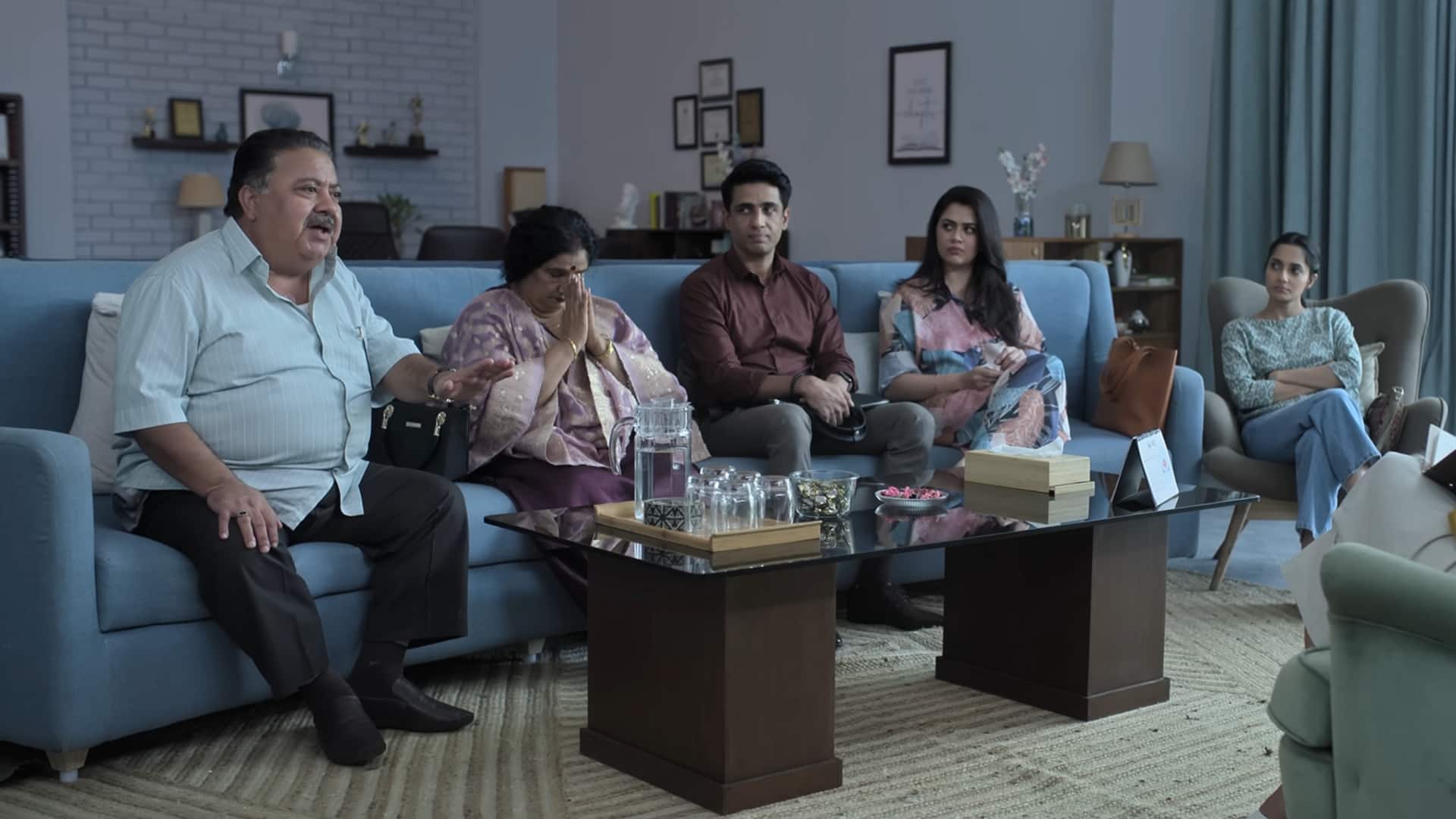
As a result, he lives with constant self-doubt, continually trying to prove his worth in a system. He becomes an oppressor by passing these pressures onto his children. He places high expectations on Daani by pushing her to excel in everything. In doing so, Vishnu unintentionally continues the cycle of pressure and performance that he himself is trapped in.
Neeti, on the other hand, enters the family with her own unresolved history. Having experienced abandonment and parentification at a young age, Neeti was denied a safe and nurturing childhood. In adulthood, this unprocessed trauma manifests in harmful ways. She directs her anger toward her husband and daughter by becoming emotionally oppressive. Her persistent insistence on financial security and material comfort is a mask for the lack of emotional safety.
The black sheep of the family: Ms. Pooja Karkaria (played by Kaveri Seth)
Pooja Karkaria, the daughter of the house, occupies the role of the “difficult” woman. She is the one who does not adjust easily. She takes interest in the workings of the family business and wants to help her father. Pooja is shown to be separated from her husband, Ashok. Unlike other married women she is not willing to adjust, she is yet to figure out what she wants from the marriage.
Pooja Karkaria, the daughter of the house, occupies the role of the “difficult” woman. She is the one who does not adjust easily.
Due to her non-compliance to traditional norms, she often encounters conflicts with her parents. Pooja knows that she has been a victim of rigid gender norms and manipulation. At the same time, Pooja becomes an oppressor when she emotionally withdraws from her husband. She emotionally disengages with her husband rather than confronting unresolved conflict. She unknowingly transfers her own pain and confusion onto her husband, continuing the cycle of emotional neglect that she herself has experienced.
Therapy as reflection, not transformation
Through therapy, the narrative of Perfect Family refuses the fantasy of transformation. Instead, it offers reflection. Daani’s anxiety attack sends a crucial message that she is the emotional centre of the series. This is not because she is the weakest member of the family, but because her emotions are most raw and honest. Children often absorb what adults refuse to name. In Daani’s distress, the family’s unspoken tensions find expression.
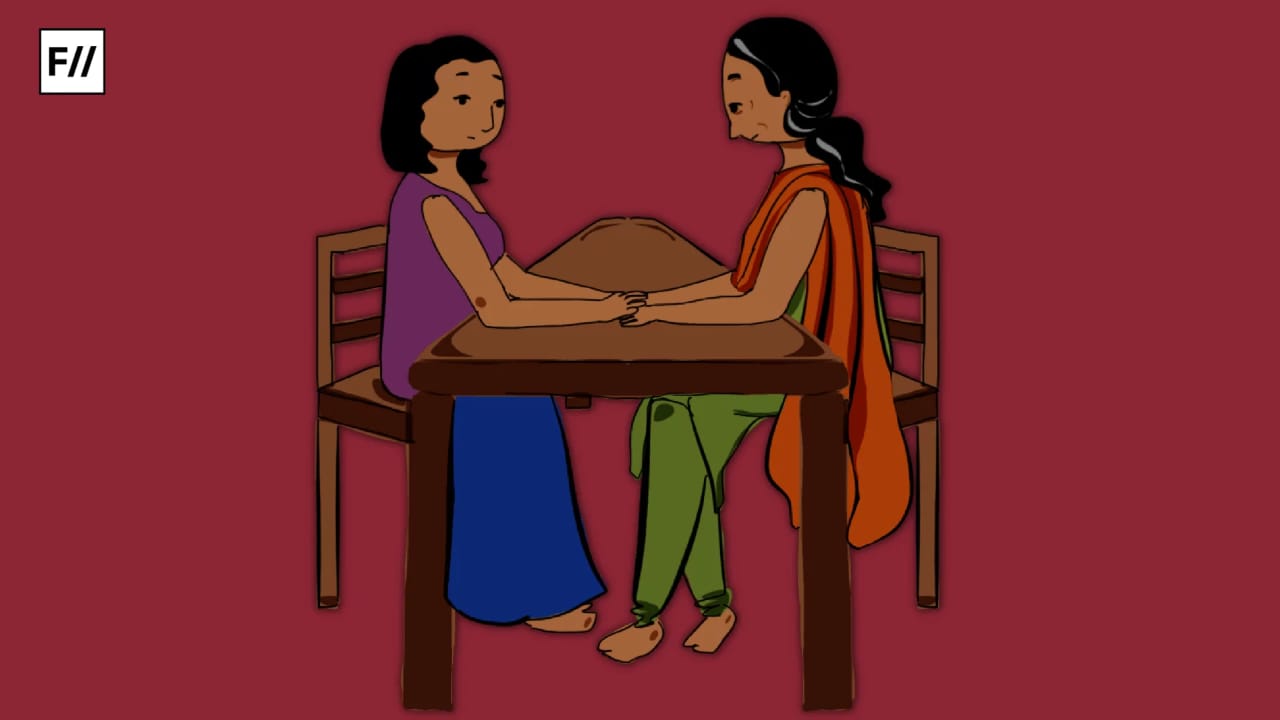
The director of the series, Sachin Pathak shows us a storyline where conversations slow down, patterns become visible, and discomfort is allowed to exist without the urgency to repair. By the end of the series, no one is entirely healed. Somnath confronts his dependence on alcohol. Kamla begins to imagine an identity beyond caretaking. Vishnu finds the courage to question a career he does not love. Neeti starts viewing her in-laws with empathy rather than resentment. Pooja, the family’s “black sheep,” chooses divorce and self-determination.
Yet patterns linger. Old habits resurface, growth is unsteady, and inter-personal change is temporary. This realistic approach is precisely what makes the series relatable to the Indian audience. There is a strong refusal to offer neat closure which makes Perfect Family deeply believable. In conclusion, one question remains: are we ready to reflect not just on the Karkarias, but on our own unspoken inheritances?
.
About the author(s)

Shivani Keny is a Ph.D. scholar at Birla Institute of Technology and Science (BITS) Pilani, K.K.Birla Goa-campus. Her PhD research is focused on understanding parentification and dysfunctional dynamics between parent-child relationships. She is driven by a strong desire to
deepen her understanding of the human mind and its connection to the world. Her passions include cooking, traveling and exploring different facets of life.