In her seminal text, A Room of One’s Own, celebrated Modernist author Virginia Woolf writes, ‘A woman must have money and a room of her own if she is to write fiction‘. Woolf defines how agency and access are crucial for women writers and how resources that are easily available to male writers often elude women authors. In the same text, Woolf tackles the erasure of women writers from history and mentions how they are rarely credited for their work: ‘I would venture to guess that Anon, who wrote so many poems without signing them, was often a woman.‘
Woolf also starts the oft-discussed conversation of how men write women, and the mis/representation of women characters in texts written by men: ‘Suppose, for instance, that men were only represented in literature as the lovers of women, and were never the friends of men, soldiers, thinkers, dreamers; how few parts in the plays of Shakespeare could be allotted to them; how literature would suffer! We might perhaps have most of Othello; and a good deal of Antony; but no Caesar, no Brutus, no Hamlet, no Lear, no Jaques–literature would be incredibly impoverished, as indeed literature is impoverished beyond our counting by the doors that have been shut upon women.‘
Woolf’s text is one of the earliest and most important attempts to study gender and literature in the Western world. In this part of the world, Susie J Tharu and K Lalita’s Women Writing in India compiles women’s literary voices including ‘songs by Buddhist nuns, testimonies of medieval rebel poets and court historians, and the voices of more than sixty writers of the eighteenth- and nineteenth-centuries.’ Debarred from access to the written word by Brahmanical patriarchy, women authors in South Asia, often recorded their narratives through oral accounts, which were sometimes transcribed in secrecy or documented aeons later.
However, women writers have always existed: from the queer Greek poet Sappho, who was called the “tenth muse” by Plato, to Aphra Behn, the first professional woman novelist; from the Bronte sisters to Jane Austen, and from Black feminist writers like Maya Angelou and Audre Lorde to Dalit women writers like Bama and Baby Kamble. They have written in languages beyond those from Europe and although there have often been attempts to silence, discredit and devalue their work, they have continued to tell their stories in their own scripts, from Bengali, Hindi, Urdu, Tamil, Malayalam, Kashmiri and Assamese to Brajabuli, Santhali, Rajbangshi, Khadi Boli, Tulu and Konkani.
Women writers have also challenged misrepresentation in literature by men and told their stories in their own voices, producing innovative novels, essays, poetry, short stories, plays, memoirs, and non fiction texts.
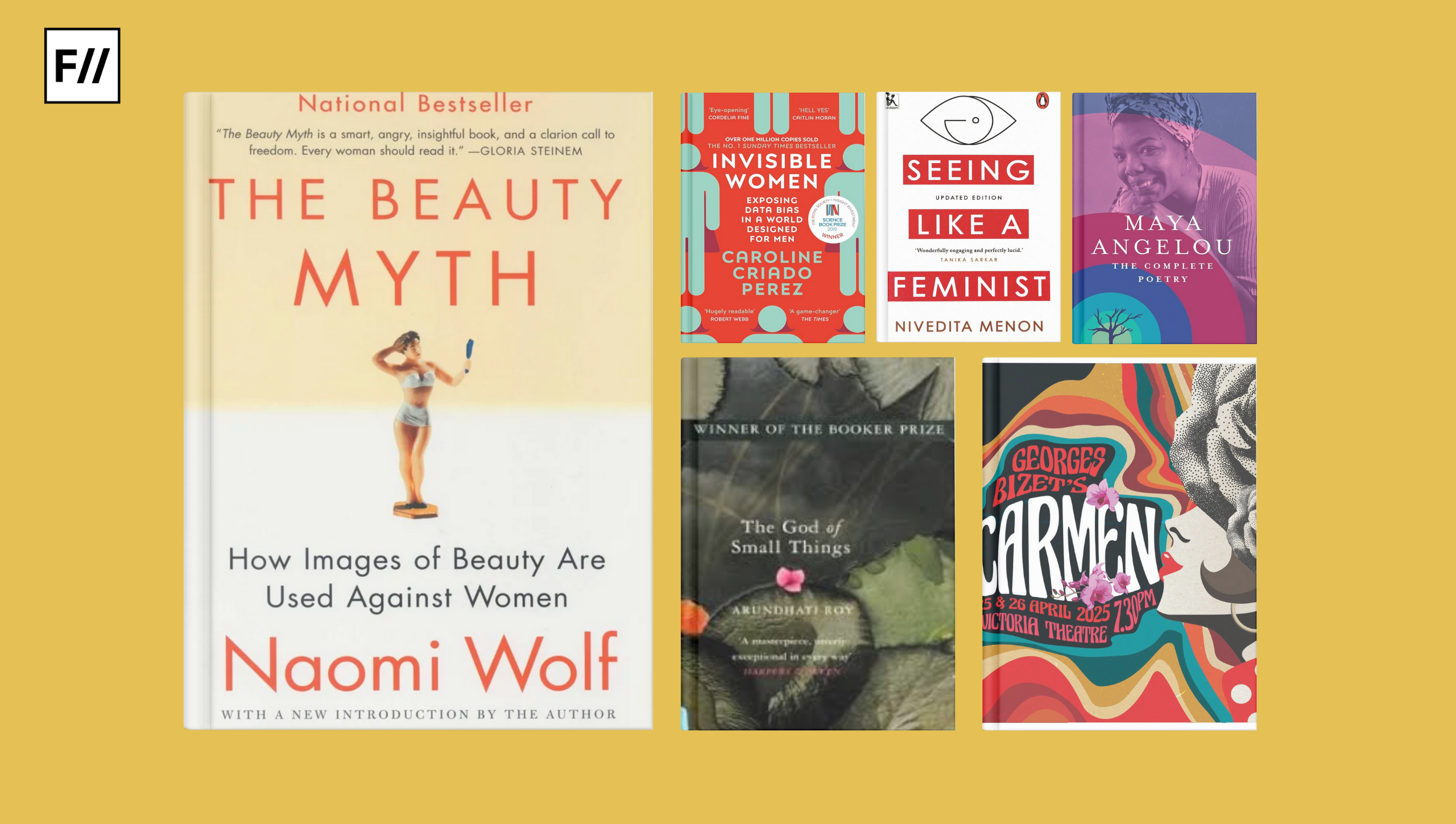
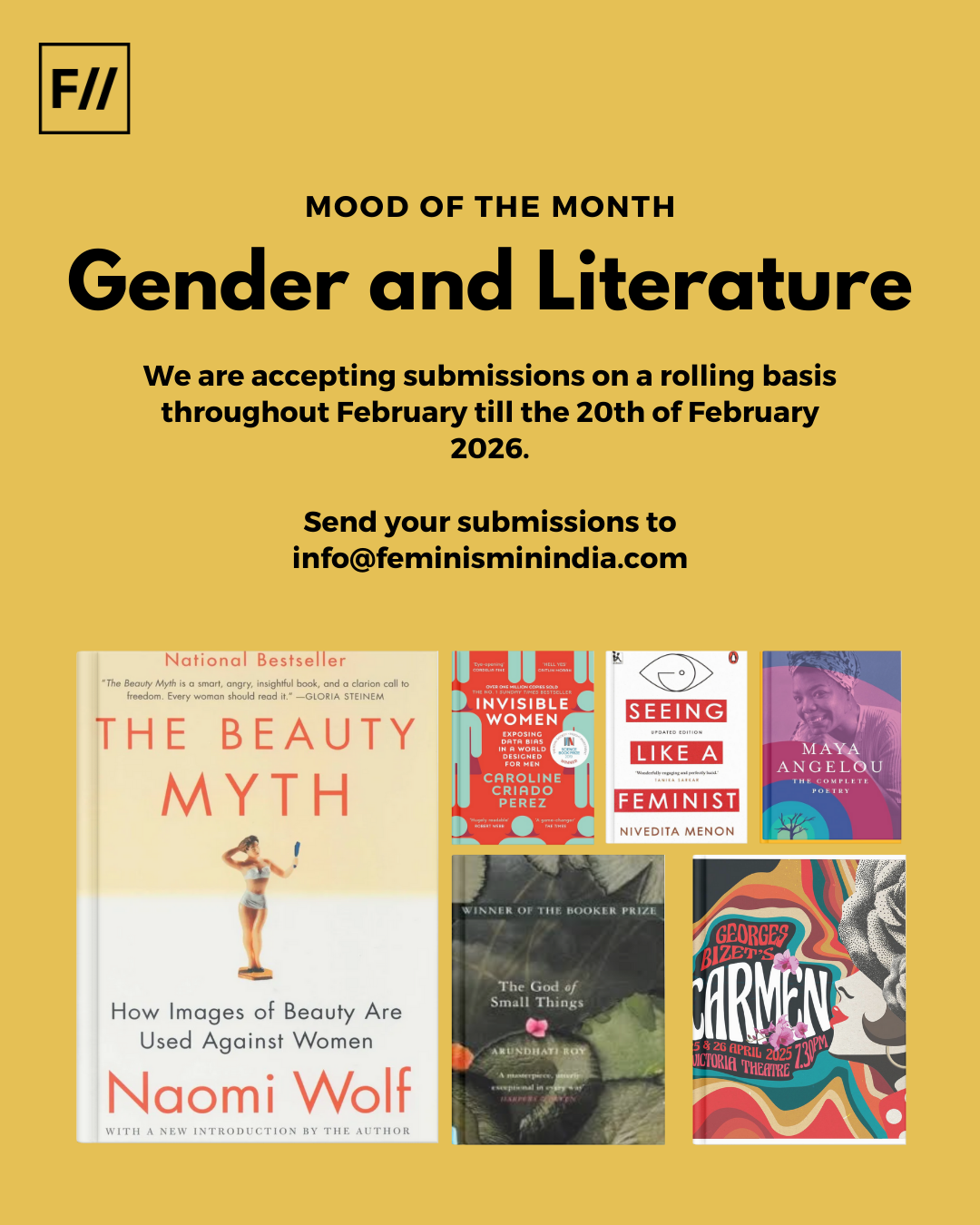
To celebrate, highlight and honour the work of women and queer authors, who redescribed literary genres and parametres, carved a considerable space in literature and also fought to portray women authentically, FII is inviting submissions on the theme, Gender And Literature, throughout February until the 20th of the month.
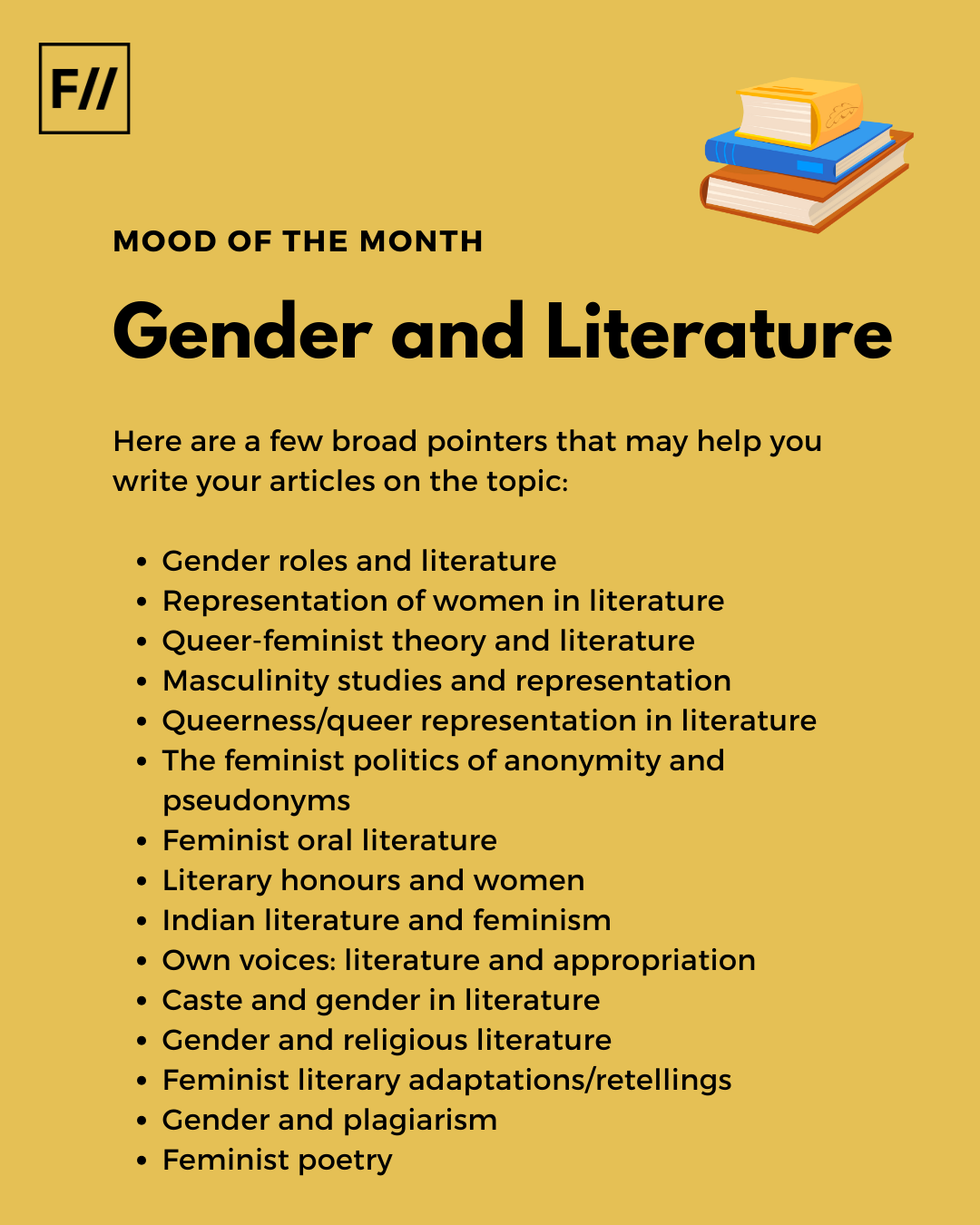
Here are some of the themes that you may find helpful in putting together your thoughts:
- Gender roles and literature
- Representation of women in literature
- Queer-feminist theory and literature
- Masculinity studies and representation
- Women in literature
- Queerness/queer representation in literature
- The feminist politics of anonymity and pseudonyms
- Women’s personal accounts
- Feminist oral literature
- Literary honours and women
- Indian literature and feminism
- Own voices: literature and appropriation
- Caste and gender in literature
- Gender and classical epics
- Gender and religious literature
- Feminist literary adaptations/retellings
- Gender and plagiarism
- Analysis of feminist poetry
- Women essayists
- Women and queer playwrights
This list is not exhaustive and you may feel free to write on topics within the theme that we may have missed out here. Please refer to our submission guidelines before you send us your entries. You may email your submissions to info@feminisminindia.com.
We look forward to your drafts and hope you enjoy writing them!
About the author(s)

Feminism In India is an award-winning digital intersectional feminist media organisation to learn, educate and develop a feminist sensibility and unravel the F-word among the youth in India.

Comments:
Comments are closed.