Amid the fever of Board Examinations currently, one is reminded of the most dreaded multiple choice questions format: the Statement-Assumption deduction. In a cultivistic and culturally embedded country like India, assumptions are a figment of social creation. A topical question from this question bank could be-
Statement- The State of Gujarat has proposed amendments to its Marriage Registration Act, 2006 to make parental consent a mandatory prerequisite and a compulsory 30-day gap between the application and the issuance of certificate.
Assumption-
- Parents always think for the better of their children.
- Parents always make the right decision for their children.
- All parents share a good relationship with their children.
- All parents understand the personal preferences, expectations and life choices of their children.

The Deputy Chief Minister of Gujarat, Harsh Sanghavi, proposed an amendment to the Gujarat Registration of Marriage Act, 2006 under Rule 44 which makes parental consent for the registration of marriage mandatory amid other debatable provisions. Presumably, he would choose ‘all the assumptions are implicit‘, but are the government’s justifications legitimate enough to violate the fundamental right to Life with Dignity?
Intent behind the proposed amendment
Deputy Chief Minister Harsh Sanghavi called the proposed amendment a matter of ‘public importance‘ that aims to prevent cases of coercive or deceptive marriages. Being categorically gender exclusive in his statements, he said, ‘If someone deceives a daughter of the state by hiding his identity, this government will ensure such strict action that he will not dare to look at any daughter with ill-intent in the future‘.
Mr. Sanghavi was well prepared to face the citizen examiners as his answer script mentioned the ultimate key words such as sanatan dharma, love jihad and dignity of young girls. The example stated by him was a showcase of his critical understanding of the topic at hand and how practically he could apply it to the present social scenario. He remarked on the Assembly floor, ‘If any Salim changes his identity and becomes Suresh to trap innocent girls, he will be taught a lesson for life‘.
Mr. Sanghavi was well prepared to face the citizen examiners as his answer script mentioned the ultimate key words such as sanatan dharma, love jihadand dignity of young girls.
This move is not sudden. It follows a memorandum submitted by the former members of the Patidar Anamat Andolan Samiti (PAAS) 1005 in December 2025 to the Chief Minister of Gujarat, Bhupendra Patel. It urged for parental consent to be made mandatory for the registration of marriage in the state. Mr. Sanghavi added how the State Law Minister and Justice Kaushik Vekariya held consultations and took suggestions from multiple stakeholders before the draft amendment was proposed. However, the draft is facing stiff opposition from various fronts in the country.
‘Big brother’ syndrome: monitoring marriages
The proposed amendment is an example of something George Orwell’s Thought Police would do. In the book 1984, he talked about the Gaze of state sponsored systems which subject private matters of individuals to public life and in turn ensures that personal choices align with the orthodox principles of the state or society.
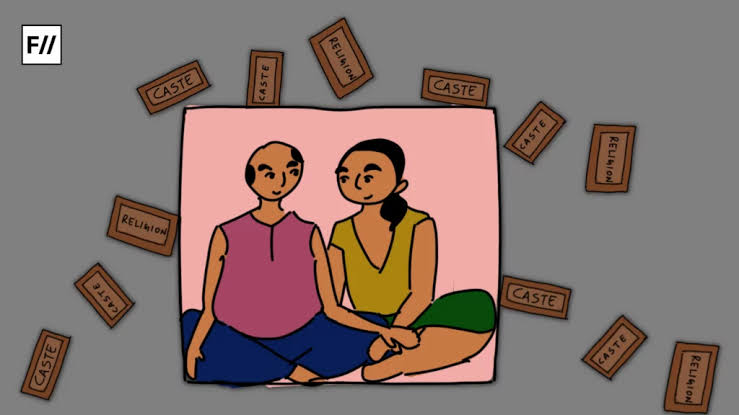
The draft amendments make the consent of parents of both the bride and groom a mandated requirement. As per the procedure described, the parents must be informed within ten-working days after the Assistant Registrar verifies the application either electronically, this includes messaging via WhatsApp, or through physical communication. The provisions are rigid and some include signatures of both parties and two witnesses to be notarised and accompanied by government-issued identity proofs such as the Aadhaar, passport, or driving licence. Applicants’ and their parent’s birth certificates or school leaving certificates, wedding invitation cards, photographs, witness photographs and a declaration stating if the parents have been informed about the marriage are also required. An online portal will be created to facilitate the uploading processes under a standardised format.
After these submissions, applications will be forwarded from the Assistant Registrar to the District or Taluka Registrar. Finally, after a minimum waiting period of 30 days, if all the prescribed conditions are satisfied, the marriage certificate will be issued.
As per the procedure described, the parents must be informed within ten-working days after the Assistant Registrar verifies the application either electronically, this includes messaging via WhatsApp, or through physical communication.
Currently, the draft is open to public suggestions on the Health and Family Welfare Department’s online portal for 30 days until March 21-22, 2026. In parallel to this, a review is underway to finalise the proposal.
Lessons from the past
The Special Marriage Act (SMA), 1954 was one of the most progressive legislations enacted in early post-independence India as it provided a secular framework for registering civil marriages.

Previously, marriages were governed under personal laws in accordance with the religion of the couple but SMA provided a contractual path to legalise marriage without the need to perform any rituals or conversion. For inter-religious and inter-caste marriages, SMA provided an alternative route and an opportunity to claim hereditary rights such as that of inheritance as marriages under it are typically governed by the Indian Succession Act, 1925 and not personal laws.
However, the law is not without its procedural biases and the heavily debated issue is that of the 30-day notice period. Under SMA, one of the parties must have resided in the district from where they intend to have their certificate issued for at least 30 days before filing the Notice of Intended Marriage. There is a great imbalance of power in the relationship dynamic shared between the couple and the Marriage Officer. As per Sections 5 and 6 of the Act, the Marriage Officer is required to display this public notice of intent in a conspicuous place for 30 days mentioning the personal details of the parties. During this window, any person is allowed to raise objections to the marriage on grounds of age, mental capacity, pre-existing marriage etc. If such an objection is filed, the Marriage Officer is obliged to investigate the claims within the 30 days.
Much like Bentham’s ‘Panoptical View’, critics contend, rather than being a facilitator of freedom, the SMA is a surveillance tool where the Registrar’s office is the inspection house from where the couple is made visible to the entire community for constant monitoring.
Much like Bentham’s ‘Panoptical View’, critics contend, rather than being a facilitator of freedom, the SMA is a surveillance tool where the Registrar’s office is the inspection house from where the couple is made visible to the entire community for constant monitoring. Other than families vigilante groups are the unseen guards who facilitate moral policing by pressurising the couple into abandoning marriage proposals.
While hearing the landmark Marriage Equality Case, Supriyo versus Union of India (2023), the then Chief Justice of India, DY Chandrachud called the 30-day notice period an invasion of privacy and –steeped in patriarchy‘ as it was enacted at a time when women lacked agency over choices in their lives. He observed how such public notification enables state actors like the District Magistrate and the Superintendent of Police to invade their privacy. Moreover, the court raised the concern over how this makes the marginalised groups even more vulnerable to injustice as interference in decisional autonomy is sanctioned by the law itself.
Other than these observations, precedents have strongly supported the removal of this 30-day notice period. In the case of Safiya Sultana versus State of Uttar Pradesh (2021), Justice Vivek Chaudhary from the High Court of Allahabad ruled that forcing couples to go public with their intent to marry is a violation of the fundamental Right to Privacy under Article 21 of the Indian Constitution. He justified this on the basis of how other personal laws do not require this and called the provision optional. By the virtue of this, now, in Uttar Pradesh a Marriage Officer can publish such a notice only if the couple specifically requests for it in writing.
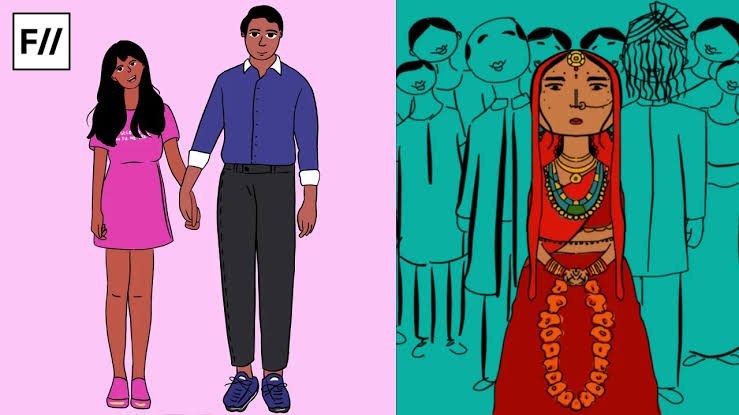
On the need for parental approval, the Supreme Court in the case of Shafin Jahan versus Asokan K.M. (2018), upheld adult autonomy in marriage choices by holding that a 24-year-old woman had the absolute right to choose her partner. It set aside an annulment by the Kerala High Court which was made citing how Shafin Jahan’s marriage did not have the active involvement of her parents and Justice DY Chandrachud held the choice of a life partner as an ‘inviolable core zone of privacy‘.
Fear mongering in the name of religion and post-marriage conversions
The government of Gujarat has been in the news over its multiple attempts to govern inter-religious relationships in the state. The Gujarat Freedom of Religion (Amendment) Act, 2021, famously called the ‘Anti Love-Jihad Law‘, currently survives in limbos as the High Court has stayed multiple sections on the ground of consensual interfaith marriage. This stay was challenged in the Supreme Court which is presently reviewing nine other such acts from different states and has imposed a uniform stay.
The key provisions of this act include non-bailable punishments from 3 to 10 years and with fines upto ₹5 lakh for marriages done solely for unlawful conversion. Reasons for conversion such as a better lifestyle or divine allurement were added as illegal inducements and the burden of proof is on the accused to prove that the conversion was not forced or fraudulent. Third-party First Information Reports (FIRs) are also allowed under this law.
In India marriages are not mere civil contracts. They are a showcase of power, honour and wealth, a ritual of continuing the lineage while maintaining bloodline “purity” and an assertion of social status to gain legitimacy in the community.
In India marriages are not mere civil contracts. They are a showcase of power, honour and wealth, a ritual of continuing the lineage while maintaining bloodline “purity” and an assertion of social status to gain legitimacy in the community. Hence, while the obvious outcome of a marriage certificate is to avail certain rights and schemes, it is also a social contract between a couple and society to “live and let live” by agreeing to several terms, conditions and consequences in case of violation.
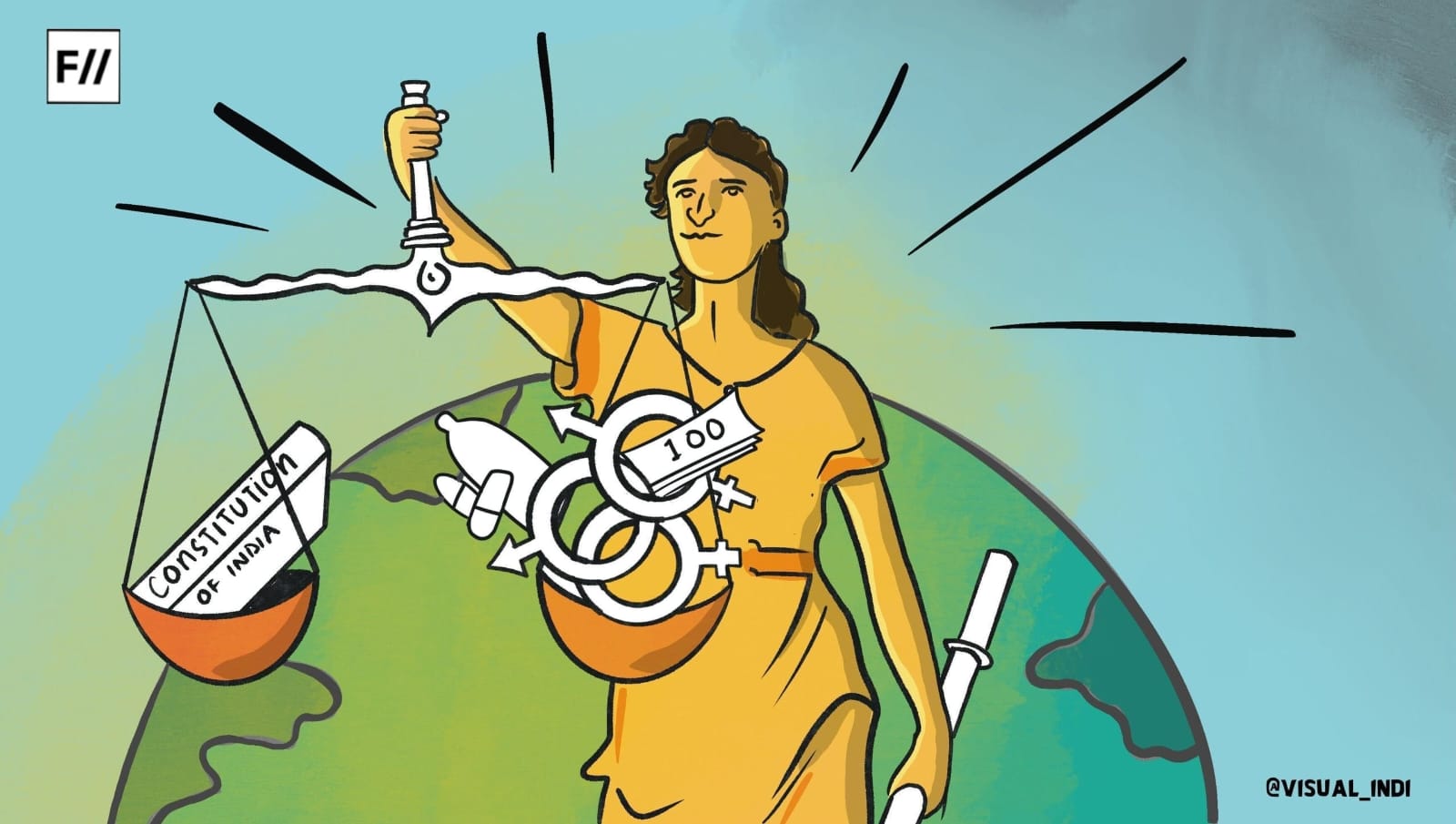
Under such circumstances, the loud pronouncements of love-is-love and right to choose whom to marry are hollow promises subject to the collaborative moral policing of the state and society. By awarding such a major stake to parental approval in this proposed amendment, the state of Gujarat forgets that honour killings, domestic violence, dowry, widow burning, child marriages etc are all examples where families are the perpetrators. One must question the implicit assumption of this law that claims all parents not only think of but know the best interest of their child and have been involved enough to gain the entitlement of an authoritative voice in their life-altering decision to marry.
About the author(s)

Second year student of Media Studies at CHRIST (Deemed to be University), BRC, Bangalore. A trained Kathak dancer, theatre artist and political nerd.