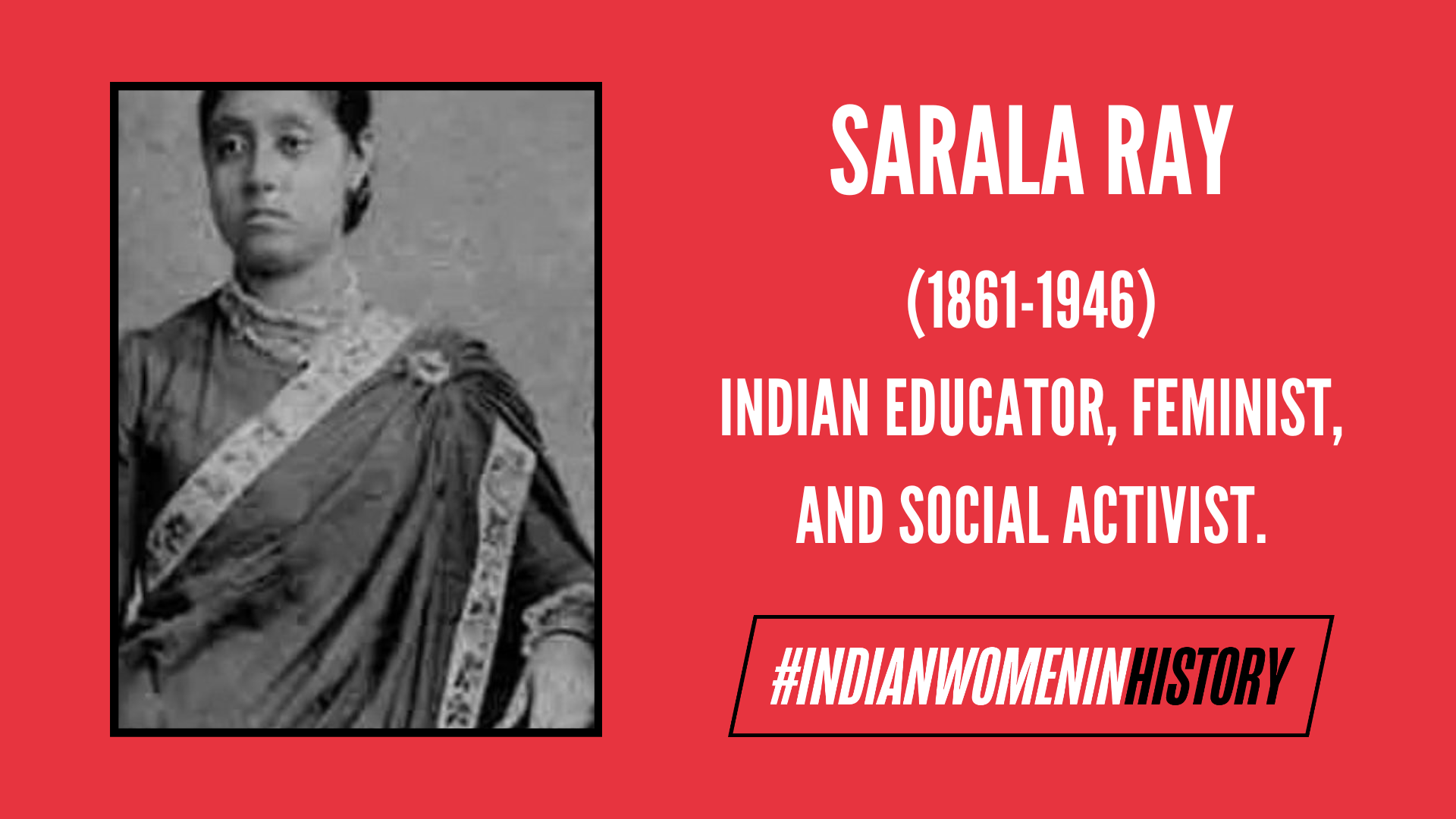
Stree Shiksha or educational reforms for women was one of the main battlegrounds where perceived tussles over civility, progress and nationalism were thrashed out in the late 19th and early 20th centuries. While Brahmo reformers like Rammohun Roy are well known, lesser-known female reformers like Sarala Ray often go missing in dominant historical retellings. Ray was the founder of one of the first girls’ schools in Calcutta, the Gokhale Memorial Girls’ School, which stands tall even to this day. This article seeks to unearth and examine the many contributions of this figure and the tensions within them.
Early Reformist Socialisation and Rebellious Youth
Sarala Ray was born on 26th November 1861 to the eminent Brahmo social reformer Durgamohan Das. Durgamohan Das, according to Geeti Sen (1996), was a barrister and one of the early members of the Sadharon Brahmo Samaj, which broke away in 1878. He gained the title of ‘female emancipationist’ and was active in supporting the Hindu Mahila Vidyalaya, which Annette Akroyd had opened. A school where his own daughters were enrolled. In 1878, this school was merged with the Bethune school, and the students were recognised as Bethune students.
Ray was therefore born into an environment of reform for women, especially through education. The idea of emancipation, particularly for a certain class of Bengali women, was an apparent feature of her childhood. This undoubtedly shaped not only her personal vision but also how she imagined the then-modern citizen of the nation to be.
Sarala Ray, the eldest daughter of the family, was also a prominent character of the family lore according to Geeti Sen. She was seen as somewhat an unconventional rebel in her personal life, described by Sen as “She would “hold a kind of “salon” in her home which was a meeting place for prominent social and political figures from all over India. She was also one of the first women to smoke publicly (Sen, G., 1996, p 59).“
Contributions to Stree Shiksha
Anusuya Ghosh (2022) writes that although Sarala Ray herself could not opt for higher education due to her early marriage to P.K. Ray, the first Indian principal of Presidency College, Calcutta, she was actively engaged in promoting educational reforms.
Sarala went to Dacca with her husband and established a school for women there, as well as a Mahila Samiti for women in Dacca. She was soon appointed the secretary of Brahma Balika Shikshalaya; however, she had to leave this position prematurely when her husband moved to London. During her stay in London, she became familiar with Western educational practices and later applied them in various endeavours. She established the ‘Indian women’s educational association’ there. After coming back to the country, she joined the Sakhi Samiti, which aimed to train young girls to become teachers who would later work for the Samiti, at the request of Swarnakumari Devi.
In 1920, Sarala Ray established the Gokhale Memorial Girls’ School in Calcutta, which is considered her greatest contribution to education. According to Abala Bose’s memoirs, the idea for the school came to her soon after the passing away of her beloved son and at a time when she was reeling under this grief. She saw her dear friend, the late Gopal Krishna Gokhale, in her dream, and there he seemed to advise her to completely surrender herself to serving her nation, to immerse herself in work, that would be the only way to escape her misery. She proposed utilising the funds collected to create a memorial for Gokhale in Bengal, which had been lying idle for this purpose.
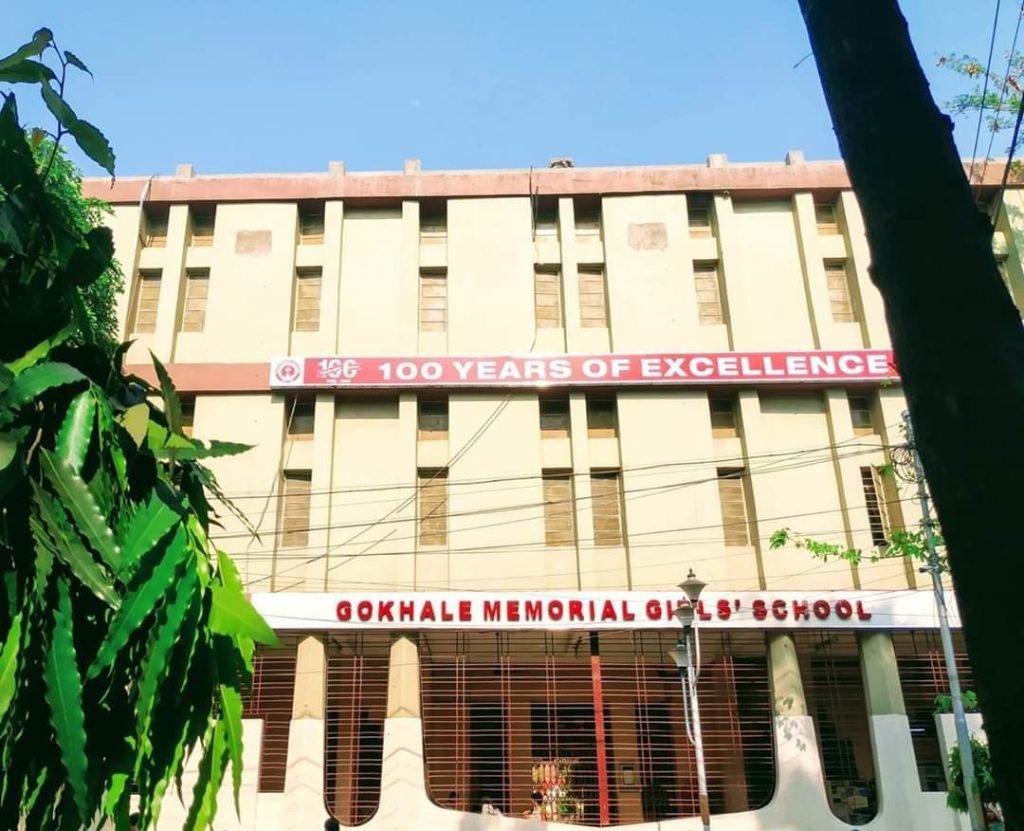
With the aid and support of many notable figures, the Gokhale Memorial Girls’ School, named after her dear friend Gokhale, was officially opened on 8th of April 1920, with six students. The idea was to create a space that would provide students with the best of what the Orient and the Occident had to offer and foster holistic development, according to Ghosh (2022).
She created a nuanced, separate curriculum for the primary and secondary levels. She advocated a kindergarten method for young children. For the older ones, she wanted them to have familiarity with all facets of life and therefore decided to include a wide range of subjects. She was indeed ahead of her time in terms of curriculum, going so far as to propose replacing higher Bengali with Arabic or Urdu to facilitate the entry of Muslim students, and also making complex subjects like comparative religion, history, geography, etc., a staple of the new curriculum.
Vision and Aim
Ray wished to create educated, dignified women who would be the perfect match for the newly emerging Bengali Bhadralok class. She argues in her paper read at the Ladies’ Conference in Benaras, which appears in the 1961 Saral Ray Centenary Volume, that women are responsible for stimulating the ‘moral stamina’ of men. It is women’s unconditional devotion that has ‘spoiled’ the men and has resulted in their degraded moral and ideological stature. Women have become barriers in the path of the development of men due to their subservience and insufficient use of their ‘latent powers’. Women must therefore, to uplift the men and thereby the entire nation, come out of the shadows of darkness themselves and acquire education and awareness. They must develop themselves and become self-reliant in order to make the nation so.
She wanted students to develop a passion for education. In her presidential address at AIWC, Madras, she talks about how educational institutions must focus on character building and mould the women into desirable citizens. She argues for the scope of spiritual actualisation, alongside intellectual development, in these schools. She believes all social ills stem from a lack of education. She talks of “rights and duties of citizenship” as a key but often-ignored theme that must be emphasised in schools. She envisioned a separate board of education to be run solely by educated women, who would design a specific curriculum to spread education, tailored to women’s needs of the day and the societal expectations placed on them. Sarala Ray writes, “There are women now in the country who know the type of womanhood they would like to produce through their educational institutions.”
Oindrila Mitra (2022) says she also wished to break the image of women as incompetent teachers, and, therefore, going against the trend of the time of having male teachers predominantly teach in women’s schools, she employed a female-only teaching staff at Brahmo Balika Sikshalaya. She preferred using the term ‘educational workers’ for herself and the women teachers employed rather than ‘sikhika’ or teacher.
She envisioned Gokhale Memorial Girls’ School and her approach to educating women to be distinct from those of other established girls’ schools in many ways. The first being that, unlike others who have set into a mechanical, almost factory-like rhythm, this school would have a personal touch, true thirst for knowledge, creativity and interest in self-actualisation rather than just certification. Unique subjects such as fine arts, physical education, and home science. Were also made part of the curriculum here. A third thing that made this school unique was the employment of native speakers to teach languages (Hindi, Bengali, and English) properly. Sarala Ray tried to develop a ‘modern’ holistic curriculum during that time. Her aim was to turn women into self-sufficient beings who no longer needed men’s support for their own growth. She wanted to give women the status of rightful, deserving citizens of the nation.
The Problematics of Reform
Ray’s persistent emphasis on “honour and grace” serves as a reminder of the ‘ideal woman’ envisioned during the times; it has a peculiar whiff of Victorian morality mixed with the aspirations of the newly emergent Bhadralok class. Self-actualisation seems to be of the greatest concern to these reformers, the kind of self-actualisation that eventually benefits a much broader circle. That which curiously remains unmentioned in all this is the crass, utilitarian effects of education; it is to be made use of in case of female education only in the realm of the mind. The inner spiritual reality that Chatterjee (1987) speaks of is the only one that is to be enhanced, refined and re-defined, while the outer material world waits to be conquered by those who are nurtured by the “sterner skills” of the inner sphere, the men. The ‘immortality’ of the spiritual mind is at once used to uplift women’s stature and mark out the ‘right’ territory for them.
Sarala Ray remains an unignorable name in the discourse of Stree Shiksha, especially in Bengal. The school she established stands to date as one of the most sought-after institutions of knowledge in present-day Kolkata. Her innovative approach to curriculum and creative vision no doubt contributed to this. Although steadfast in her goal of educating women to become worthy subjects of the nation, the very sense of ‘worth’ she seemed to aspire for was entangled in lines of class, morality, caste and gendered hierarchy. This exploration of her life times allows us to move beyond the narrative of the male social reformer and to complicate the motives, positions, and challenges of visions of emancipation.
References
- Chakraborty, R. (2009). Women’s Education and Empowerment in Colonial Bengal. In Responding to the West. Amsterdam University Press.
- Chatterjee, P. (1987). The nationalist resolution of the women’s question. In Centre for Studies in Social Sciences, Calcutta eBooks. Centre for Studies in Social Sciences, Calcutta. http://ci.nii.ac.jp/ncid/BA68886664
- Chattopadhyay, K. L. (1987). Brahmo Reform Movement in the 19th Century Bengal—a Modernising Force. Proceedings of the Indian History Congress, 48, 478–479. http://www.jstor.org/stable/44141742
- Ghosh, A. (2022). Sadhana Centenary Volume (2019-2021). Navana Printing Works.
- Karlekar, M. (1986). Kadambini and the Bhadralok: Early Debates over Women’s Education in Bengal. Economic and Political Weekly, 21(17).
- Mitra, O. (2022). Sadhana Centenary Volume (2019-2021). Navana Printing Works
- Sen, G. (1996). A Collage of Family Portraits. India International Centre Quarterly, 23(3/4).
About the author(s)

Shrestha Bandopadhyay is a researcher, writer, and trained sociologist with expertise in feminist theory, critical policy analysis, and community-based research. Her work focuses on marginalised communities, gender dynamics, and digital media, and she has published in respected journals. She is currently a PhD scholar at the Centre for Women's Studies, JNU. Shrestha also holds an MA in Women’s Studies from the Tata Institute of Social Sciences and a BA in Sociology from St. Xavier’s College, Kolkata. She is also an accomplished Bharatanatyam and Manipuri dancer. Connect with her on LinkedIn, Instagram, and Facebook.