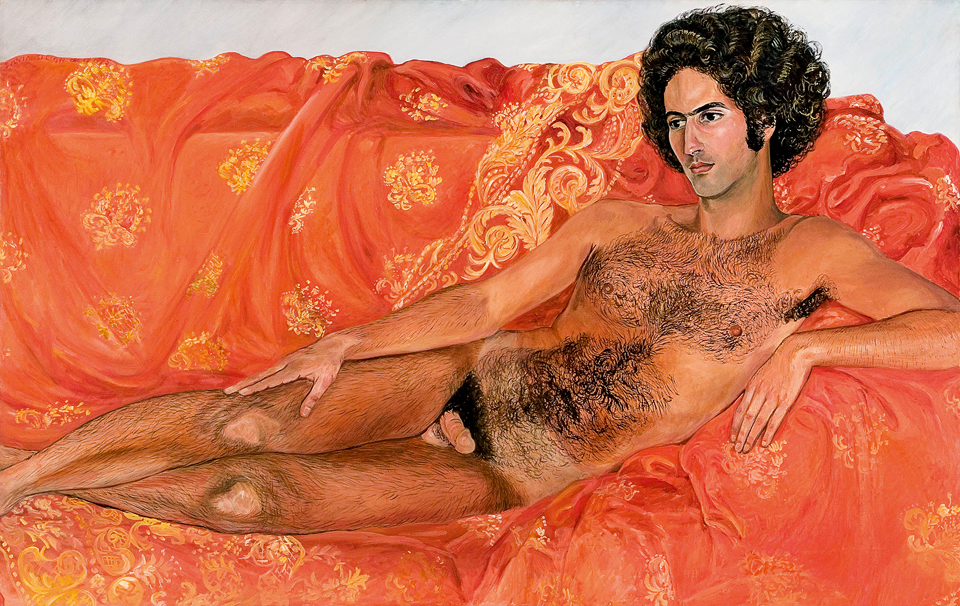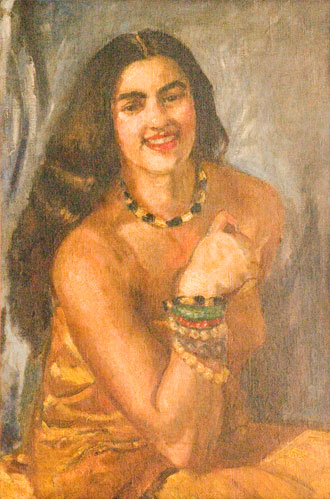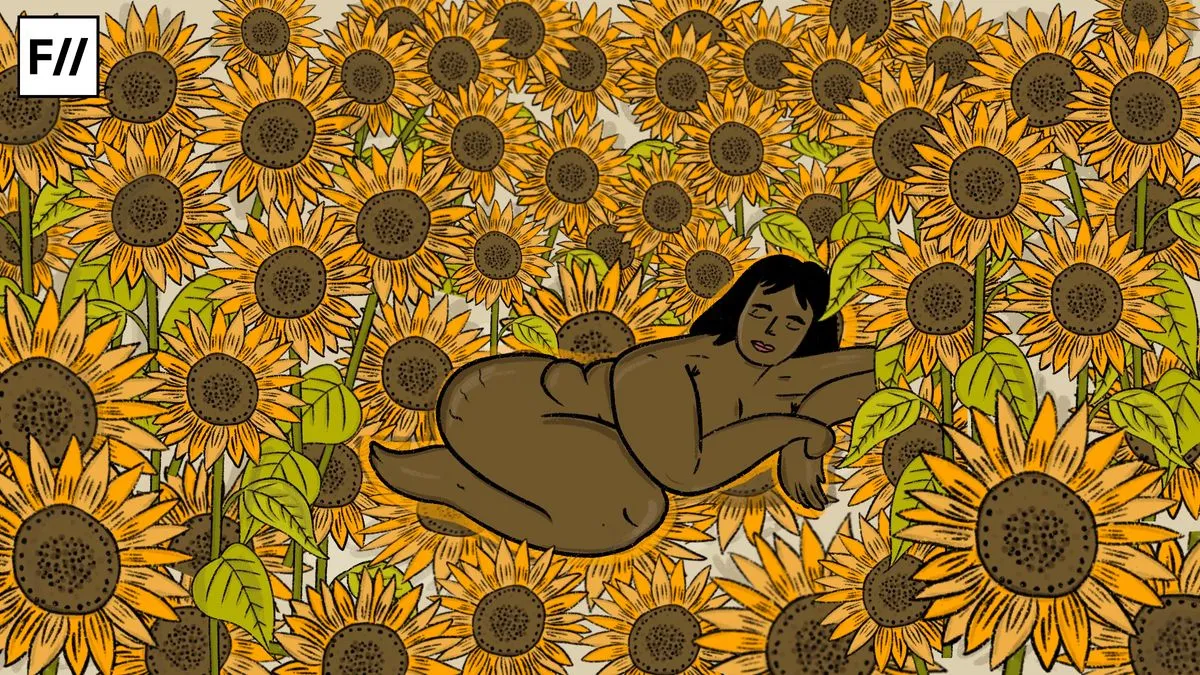
In India, feminist ideas have become increasingly visible across contemporary art, fashion and popular culture, enclasped by galleries and brand collaborations. Yet, women artists continue to occupy a marginal position in the country’s art market in terms of institutional and financial value.
Research from the British Council highlights that a significant gender disparity exists in India’s art sector and shows women artists are over-represented in lower-level roles with undervalued economic contributions. It documents that there exist persistent pay gaps and informal work conditions marginalizing women financially and institutionally.
The Illusion of Inclusion
Feminist ideas are gaining currency within the art world, but their circulation is often shaped by institutional and market interests and hence visibility does not necessarily translate into equity or agency.
Women artists continue to occupy a marginal position in the country’s art market in terms of institutional and financial value.
“We have always had women artists in the history of art: in India as well as abroad, in the global south as well as the global north,” said Vibhav Kapoor, an Indian artist and Assistant Professor of Practice at OP Jindal Global University. However, he adds, while visibility has grown, “the question becomes, to what extent is that being exploited?”
At the India Art Fair, women artists made up 45% of representation in recent years, up 12% from 2022 with 28% of total fair sales from their works globally across fairs. Women artists’ works sell at 72-76% of male counterparts’ prices on average in primary markets and fairs.
Kapoor locates the disparity within the larger structure of access, noting that “the art market functions at a very specific strata of society”, where “very few people actually have the money to buy art.”
Bangalore-based mixed media artist Shrishti Mehtawala notes that “collectors often respond strongly to aesthetic and technical skills of women artists, yet there is sometimes hesitation to view our work as a high-value financial investment compared to the male counterparts.”
These dynamics, however, are not limited just to the Indian market. Philadelphia-based Afro-Latina painter Ydaly Mer states similar tensions within international art markets where feminist visibility does not always ensure equitable recognition. “Work by women especially when it is emotional or socially engaged, can sometimes be categorized in limiting ways or expected to represent broader social conversations”, she adds. She also adds that while there is a growing interest in feminist and political work, recognition within the market remains uneven.
Who Gets Remembered?
For Geneva Mello, a painter based in California’s Central Valley, feminist practice often operates through strategies of subtlety rather than confrontation. “On the surface, my paintings are relatively safe, enjoyed for their bright colours and nostalgic imagery”, adds Mello. “But if the viewer reads my artist statement, it opens up the work for more engaging feminist interpretation”
Working from vintage photographs of women from the 1930s to 1960s, she describes her practice as an act of historical recovery. “My work questions who gets remembered, who gets misremembered, and who gets erased”, adds Mello. “In revisiting and reimagining these images, I aim to elevate the narratives of our grandmothers, aunts and community matriarchs.”
Aesthetic Feminism
Within this economy, feminism is often welcomed when it is legible, visually appealing, and market friendly. Kapoor describes this as a part of a broader capitalistic logic. “Brands are very good at marketing and popularising things”, he says, adding that cultural forms long practiced by women “become popularised once the brand uses them.”
This selective embrace of feminism has long shaped not just what is supported, but how feminist expression is framed within commercial art spaces.
Mehtawala describes this phenomenon as “aesthetic feminism” where power is shown through beauty and symbolism which often gains more traction in commercial galleries. “In my work feminism shows up through the lens of gaze. My usage of mixed media reclaims ‘decorative arts’ which are traditionally associated with female domesticity and elevates them into high-concept fine art”, she adds.
Across geographies, this negotiation between aesthetics and politics continues to define how feminist work is produced and received.
For Mer, feminism in contemporary painting has expanded not only what stories are told but also how they are told. “Feminism has helped expand what stories are allowed to be told,” she says. “It has played a major role in the growth and visibility of women artists while rejecting the traditional expectations placed on them”, adds Mer.
At the same time, institutional caution remains a recurring pattern. “My local institutions respond very cautiously to socially and politically charged artwork, but do their best to show what they think they can get away with,” adds Mello, pointing to how the market safely often dictates visibility.
Beyond Gender as a Brand
For San Diego-based socio-political collage artist G.E. Vogt, feminism is not a theme that can be cleanly separated from artistic identity. “The question of gender or feminism is present to an extent in all of my work, in that it is present in myself.”, she says. Yet, Vogt is wary of how feminist art is often narrowed. “I most often see work that highlights how beautiful women are”, she notes, while arguing that such framings overlook the complexity of women and the experiences they face in the world.
The tension between feminism and the art market is not just about representation alone, but about control over narratives and values. As feminist art moves across galleries, fairs, and institutions, it is repeatedly tested for how far it can go without unsettling the existing hierarchies.
The bias is so entrenched that it has shaped how she presents herself professionally. “This is the major reason I go by G.E. Vogt as an artist rather than my given name”, she explains. “My work is viewed more neutrally, and it is often assumed I’m a man”
Yet, the question of whether visibility can exist independently of market logic remains unresolved. “Art is powerful enough to live beyond the market”, says Kapoor, cautioning against reducing art solely to its market value and pointing to creative practices that exist outside galleries and fairs.
Indian artist Priyal Patel’s practice actively resists this containment. “My work includes solely feminine bodies, sometimes directly and sometimes in parts”, she says. “Gaze plays a very important role in my work; and influences it so much that my work often transcends into repetition of one part of a female body, be it legs, hair on legs, breasts or underarm hair.”
For Patel, this fragmentation reflects the internalised violence of constant surveillance. “The conditioning and the gaze are so inherent in myself and the females around me that I can’t help but repeat it again and again,” she explains. “This conditioning is inherited so deeply that it exists in a constant loop and reflects in my work as well.”
Her experience exhibiting in India reflects the contradictions of a society that is, as she describes it, both progressive and deeply regressive. “These are those who want to break notions or are rebels themselves”, she notes, but also, “people, mainly men, who can’t help but sexualise the very being of female body parts which in my opinion are as normal as any human body.”
Looking beyond representation, Patel calls for a deeper structural change. “There needs to be a community where women artists feel heard, rather than constantly dealing with rich collectors or bourgeois galleries”, she argues. “Women artists struggle more than male artists in general, and if you are a feminist artist, you struggle ten times more both in society and within the industry.”
The tension between feminism and the art market is not just about representation alone, but about control over narratives and values. As feminist art moves across galleries, fairs, and institutions, it is repeatedly tested for how far it can go without unsettling the existing hierarchies.
While some artists resort to subtlety and aesthetic negotiation, others refuse containment altogether and insist on work that is political and personal. The question, then, is not whether feminist art will continue to circulate, but whether the systems that profit from it are prepared to be challenged by it. Without that reckoning, feminism in the art world may remain visible but carefully controlled.
About the author(s)

Aditya Ansh is a freelance reporter based in New Delhi.