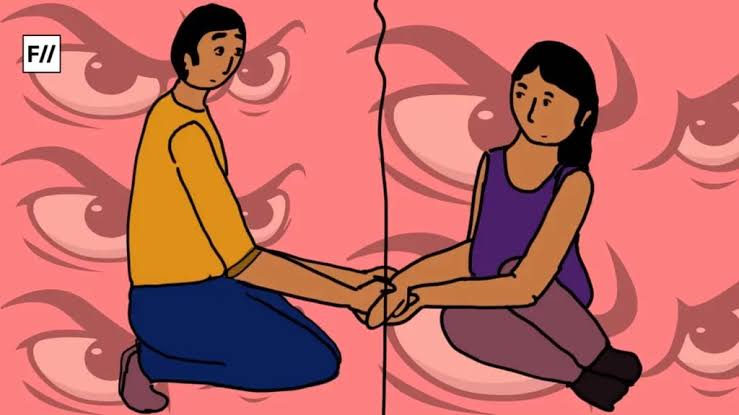
In Kashmir, the digital space has become a place of control and intimidation. Women journalists, students, content creators, and others use online platforms to express themselves. What was once a space for expression and professional growth is now turning hostile, as cyberbullying and online harassment become more organised across Kashmir and beyond.
These incidents of online abuse are not isolated; they are part of a larger system where technology is used to silence women’s voices. Coordinated groups and anonymous accounts often target outspoken women with abuse, threats, and character attacks, aiming to intimidate them into withdrawing from public conversation.
The Rise of Organised Digital Intimidation
Many choose not to report these incidents due to fear of social judgment or a lack of faith in the systems meant to help. This pattern of digital abuse goes beyond violating their right to express themselves; it causes deep psychological harm, forcing many women to distance themselves from online spaces entirely.
Many choose not to report these incidents due to fear of social judgment or a lack of faith in the systems meant to help. This pattern of digital abuse goes beyond violating their right to express themselves; it causes deep psychological harm.
What makes this phenomenon significant is the tacit silence, and sometimes complicity, of authorities who neither acknowledge nor curb these online assaults. The lack of accountability allows trolling to operate as a digital form of radicalisation, effectively enforcing censorship without any official ban. For women, this means their presence in digital spaces becomes risky, and their freedom of expression is curtailed by intimidation that follows them beyond the screen into their social and professional lives.
“When I first started making content, people started trolling me and then started abusing me too directly. The harassment got so bad that even my parents were being insulted. I complained to the Cyber Police (Cyber Wing of J&K Police) and got help, but the abuse didn’t stop. I decided to talk about this because it’s not just my story, it’s the truth for a lot of young women who are just trying to work and be themselves online. This constant harassment really hurt my mental health. It made me anxious and kept me up at night,” said Aiman, a content creator.
Stories of Fear and Resilience
If we look specifically at Jammu and Kashmir, official numbers shared in Parliament in 2025 show that the number of cyberbullying cases has been steadily rising, from 154 in 2021 to 173 in 2022 and 183 in 2023. The Cyber Police Crime Bulletin from 2020 said that 150 women between the ages of 18 and 30 had reported cybercrimes, but only four of those led to formal investigations. The National Crime Records Bureau’s 2022 report also documented 54 cybercrime cases involving female victims in Jammu and Kashmir, though experts believe the actual numbers are higher due to underreporting driven by stigma and social pressure.
“Whenever we upload a video, whether it promotes a college event or is for marketing, the girls featured in it often get trolled. People leave comments like ‘Have you no shame? ’, ‘Don’t you have modesty? , or ‘Don’t your parents say anything?’, along with other abusive remarks that I cannot even repeat. This has affected me emotionally because I am not here for this. I am a student. After seeing such comments, I feel afraid to participate in any activity again, even if it is purely informative,” said Mahi Bashir, a student.
Over 60% of Kashmir’s population is under 35, and more and more young people rely on social media and smartphones for everyday communication, work, and education. They are particularly vulnerable to online abuse because of their heavy reliance on technology.
In 2023, the National Crime Records Bureau reported over 10,000 cases of cyberstalking across India.
Unlike traditional stalking, cyberstalking has no physical limits. Offenders can closely monitor someone’s online presence, track their movements, and continue harassment across platforms and time zones.
“As a journalist with a visible presence, I have faced inappropriate and ideological trolling, especially after speaking on gender issues. The attacks, from questioning my feminism to telling me to ‘go back to the kitchen’, reveal deep-rooted biases. While such negativity affects mental health, it has only strengthened my resolve because when criticism turns aggressive, it often means the message has struck a nerve,” said Urvatil Wuska, a journalist.
The response to Kashmiri women’s online voices is frequently immediate and intensely personal. One opinion, interview, or social media post can set off a chain reaction of coordinated harassment, abuse, and trolling. Timelines are overrun with hateful comments, and inboxes are overflowing with threats and memes. The goal is to intimidate and silence rather than merely disagree.
Building Safe Spaces
Women are adapting rather than going invisible. A young woman named Hanaz started an online community known as Yakjut, where women freely express themselves, talk, agree, disagree, and offer support to one another. Simultaneously, small but effective circles of solidarity are emerging, where women share mental health help and legal information and encourage speaking out. During online storms, these areas serve as emotional mooring points.
According to Syed Hanaz Tariq, owner of the Yukjut women’s community, “One of the biggest problems on social media is that whenever a woman speaks about her work, education, politics, or personal struggles, she is objectified and attacked instead of being treated as a human being.” Many men make fun of her looks and attire. In a patriarchal culture like Kashmir, religion has emerged as one of the most effective means of dehumanising and silencing women. They attack women’s personal lives and questions such voices. Because of this, women rarely feel safe on social media, which is why communities like “Yukjut” are important because they allow women to support one another without fear of discrimination or religious control.
Through threats, mass reporting, and public targeting of individuals over minor content, an advocate and his team in Kashmir have instilled fear among Kashmiri content creators and women running small online businesses, many have been warned to delete posts or face account bans and legal action. The manner in which he is addressing the matter is much more concerning, even though some of the material stated in the name of religion may be debatable in and of itself. The freedom of expression as well as the fundamental principles of respect and dignity are being undermined by the use of intimidation and selective religious reasons to suppress and shame voices.
The IT Act addresses sending offensive texts. Following its overturning, Section 66A was amended to include additional provisions for identity theft (Section 66C), publishing pornographic or sexually explicit content (Section 67), BNS, stalking (Section 354D), criminal intimidation (Section 351(2)), and defamation (Section 356). These laws cover impersonation, threats, and trolling online. Impersonation, identity theft, creating false profiles, and disseminating pornographic content without permission are all punishable by law. Criminal law recognises stalking, both in person and online.
Women are adapting rather than going invisible. A young woman named Hanaz started an online community known as Yakjut, where women freely express themselves, talk, agree, disagree, and offer support to one another.
Many women in Jammu and Kashmir feel unsafe even though there are ways to report problems, such as FIRs, criminal action, injunctions, and defamation suits. This is because there aren’t many reports, there aren’t many investigations, it’s hard to find anonymous accounts, and there are delays in prosecution and content removal. “The IT Act, 2000, and criminal law in India do a good job of dealing with online harassment, stalking, intimidation, impersonation, and obscene content. The problem is not that there aren’t any laws, but that they aren’t being enforced.” “Advocate Zia ul Rehman is a lawyer in the High Court and lower courts in Srinagar.
Behind every story is a silence that cannot be measured because abuse weighs more than their aspirations. Journalists, students, and artists are compelled to step away not because they lack talent. After receiving constant threats and trolling that negatively impacted his family and mental health, one young professional left her career after relentless trolling and abuse. This is how silencing operates – not through prohibitions, but by career-ending fear. When harassment decides who speaks and who disappears, it is no longer “just online abuse”; it becomes a social weapon that steals careers, choices and hope.