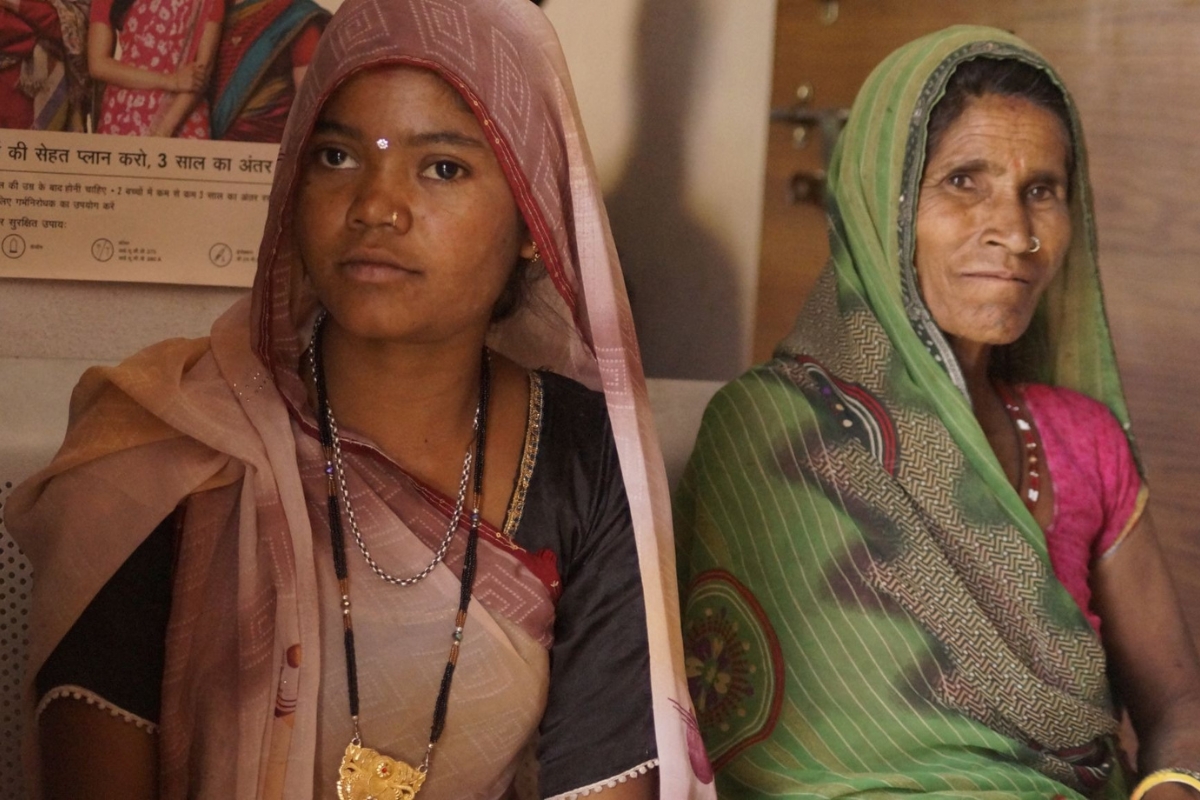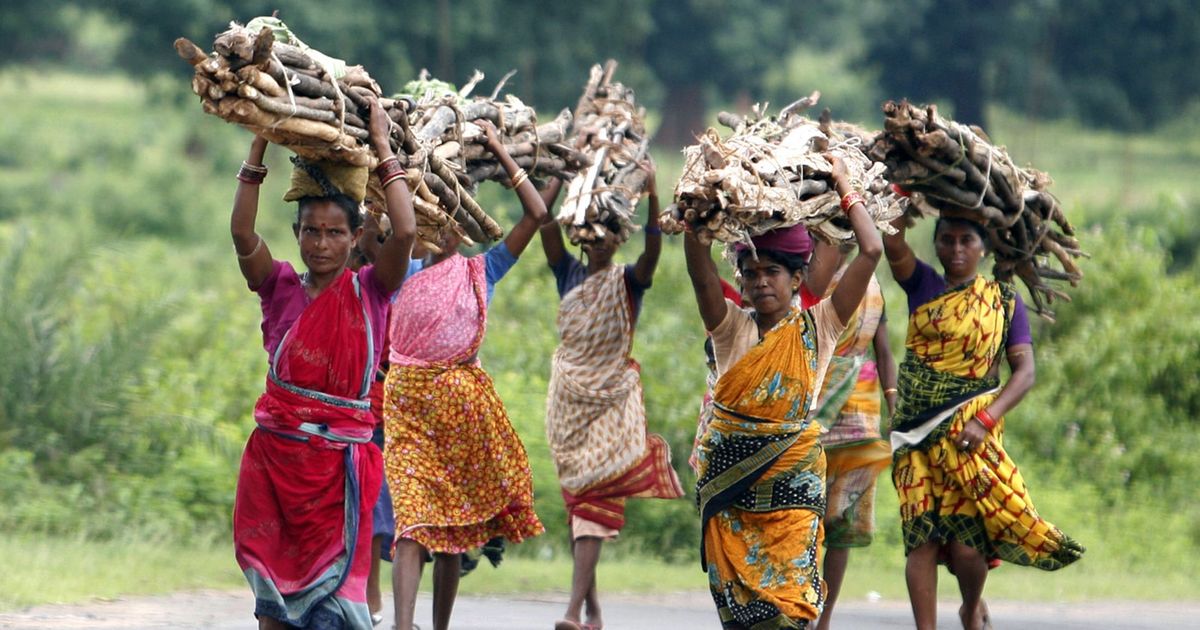
The forest villages of Andhra Pradesh’s Srikakulam district are mainly inhabited by the Savara and Jatapu tribes. Agriculture is their primary occupation, but a significant portion of their household income comes from the collection of minor forest produce such as seasonal fruits, roots, firewood, etc. This work is largely carried out by women, often travelling across the forested hills.
Nearly two decades after the Forest Rights Act 2006 entered into force, the legal recognition meant to protect forest-dependent communities remains uneven, leaving women’s forest labour without any decision-making power.
During visits to the Chelam hills area of Burja and Sarubujjili mandals, conversations with the Savara and Jatapu women highlight how these gaps shape their everyday lives. Despite their important role in household sustenance, women have limited control over how their forest produce is sold and their voices are restricted in decision-making spaces such as Gram Sabhas. Many remain unaware of their legal entitlements under the FRA. This marginalisation is not incidental, but deeply rooted in how forest governance operates in the field.
The Forest Rights Act was enacted to address historical injustices caused to the forest dependent communities. It recognised both individual and Community Forest Resource Rights (CFR) over forest land and minor produce, placed Gram Sabha at the centre of forest governance and mandated joint ownership for men and women.
However, studies have highlighted poor recognition of Community Forest Resource Rights, with implementation mostly focussed on individual rights.
In Srikakulam, the problem goes beyond administrative delay. Although individual forest land titles have been issued in some villages, community forest rights remain unrecognised. Without these collective rights, women who work in forests every day do not have a say in how forest resources are managed or marketed. As a result, their work remains informal, and they continue to depend on middlemen and household decisions rather than community-led control.
Forest Work Without Economic Autonomy
During field interactions women spoke of collecting minor produce regularly and selling almost the entire produce through local intermediaries. Weekly markets and other major centres are far from many forest villages, access to these centres is costly and time-consuming. In this context, the local intermediaries are the default channel to sell their products. They often pay the price far lower than the market rates. Although, women primarily undertake the work, they have little say regarding how, where and at what price their collected products are sold.
A Savara woman from Burja mandal said, “We collect the forest produce, but the price and sale are decided by others. We do not know how much we earn.”
Many women noted that forest officials do not routinely prevent them from collecting minor forest produce. Yet this access is based on tolerance rather than legal certainty. While individual forest land pattas have been issued in several villages, community forest rights remain largely unrecognised.
In the absence of recognised CFRs, women’s engagement with forests continues without collective control over forest resources, pricing, or decision-making. Most women remain unaware that the Forest Rights Act explicitly recognises rights over minor forest produce and community forest resources.
This lack of awareness reflects deeper implementation gaps rather than individual failure. Studies have consistently pointed to weak legal literacy efforts under the FRA, particularly among women, despite the Act’s provisions on gender equality and joint ownership.
Land, Documents, and Gendered Control
In the villages visited, families had received land pattas (official land titles) but the ownership is mostly with the names of men. In one village, only two women have pattas with their names as they were single women in the households.
Even though the FRA mandated joint ownership of land, women rarely gain control. Their names may be added to pattas, but documents continue to be held and managed by men. The near absence of recognised community forest rights in these villages limits women’s ability to participate in collective decisions over forest use and livelihoods.
Gram Sabha and the Limits of Participation
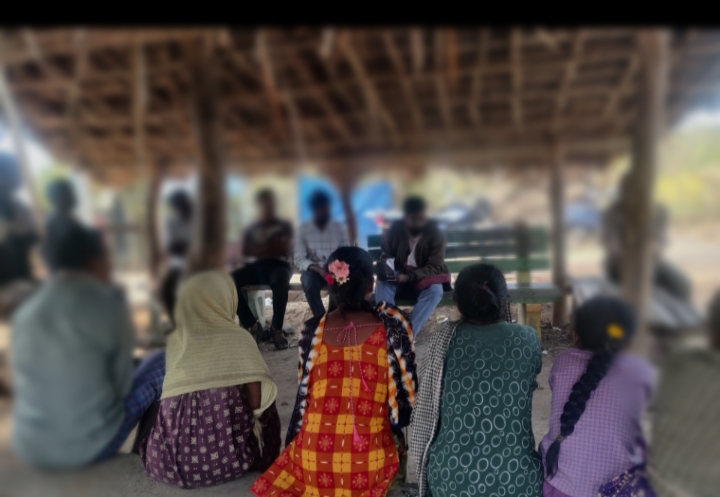
The Forest Rights Act placed Gram Sabha at the centre of forest governance, where decisions are discussed and approved. This space remains deeply gendered in practice. Women’s attendance and participation are minimal. Women reported fear, hesitation, and social pressure, especially in the presence of male elders, which discouraged them from speaking in Gram Sabhas and other public spaces.
Even when women are present, participation does not necessarily translate into voice. A Jatapu woman from Sarubujjili mandal said, “Even when we attend the Gram Sabha, we are rarely encouraged to speak, and discussions related to forest access or livelihoods are usually articulated by men.”
The Gram Sabha proceedings are mainly conducted in Telugu, and the women speak Savara, a language without a written script, this limits their ability to follow and engage in discussions.
This exclusion is further shaped by language for many women from the Savara tribe. The Gram Sabha proceedings are mainly conducted in Telugu, and the women speak Savara, a language without a written script, this limits their ability to follow and engage in discussions.
As a result, formal inclusion in Gram Sabhas often masks deeper exclusions. In Srikakulam, this gap decides whose voices are heard, whose concerns are taken seriously, and whose connection to the forest is officially recognised.
Community Differences, Shared Gendered Exclusion
In the villages discussed here, the Savara tribe is recognised as a Particularly Vulnerable Tribal Group (PVTG), while the Jatapu community is not. This distinction influences access to welfare schemes, development programmes, and governmental attention.
Even within PVTG’s, Women’s rights receive limited focus. Women from the Savara tribe face compounded barriers due to language differences and low literacy levels, and the Jatapu women experience similar hurdles from land control and decision-making despite not a PVTG. Across both these communities, gender continues to shape access to land, documents and public platforms.
This over-lapping inequalities explain why the absence of community forest rights matter. Without these rights, women remain positioned at the margins of forest governance, present as workers, but absent as rights-bearing decision-makers.
Development in the Absence of Community Rights
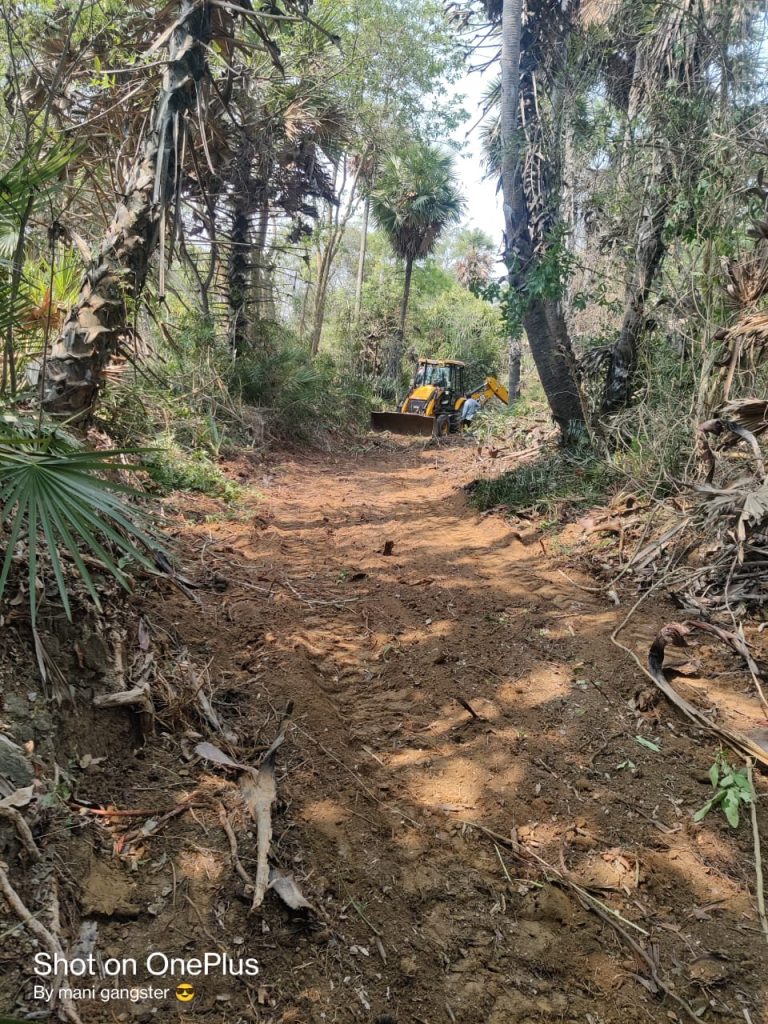
Women’s concerns were not only shaped by their livelihood struggles but also by uncertainty over a proposed coal-based thermal power plant in the region. Most women from these villages are not fully aware of the project, but they are worrying about displacement from their forests, restricted access and the loss of already fragile livelihood options.
These concerns reflect a wider pattern. In many parts of the country, forest lands were diverted for industrial and energy projects often without meaningful consent from Gram Sabhas, with women were mostly excluded from decision-making. Regions where Community Forest Resource Rights remain pending or unrecognised are more vulnerable to land diversion and loss of forest access.
FRA Delays as Gendered Dispossession
Delayed CFR recognition, lack of legal awareness, weak implementation of joint ownership titles and exclusionary local governance practices together creates a specific form of dispossession. Women contribute labour without control over income, do not secure rights and continues to engage in local governance platforms without genuine influence.
Forest governance should not be seen as gender-neutral. Without addressing how women access, understand, and exercise rights, legal recognition risks remaining symbolic rather than transformative.
An activist working on tribal development and forest rights in the district for over two decades said, “The delays in recognising Community Forest Rights have disproportionately affected women.” According to him, when forest governance focuses mainly on individual land titles, women’s everyday dependence on forests for livelihood remains outside formal decision-making. Without recognised community rights, women are excluded not only from forest management but also from discussions around development and land diversion.
This shows how state practices, patriarchal norms, and market structures intersect on the ground. Women’s forest-based labour remains essential to household survival, yet it is treated as informal, expendable, and secondary to male authority.
Therefore, treating delays in Forest Rights Act implementation as a feminist concern is crucial. Forest governance should not be seen as gender-neutral. Without addressing how women access, understand, and exercise rights, legal recognition risks remaining symbolic rather than transformative.
Beyond Paper Rights
In districts like Srikakulam, securing forest rights cannot end at individual land titles or paper compliance. Rights on paper mean little without meaningful recognition of community forest rights, accessible legal literacy, and deliberate efforts to enable women’s participation in decision-making spaces.
Without this, women will continue to bear the burden of forest labour without the protection of rights. The question, then, is not whether forests sustain tribal women’s lives, they already do, but whether policy will recognise women as rightful decision-makers in the landscapes they sustain.
About the author(s)