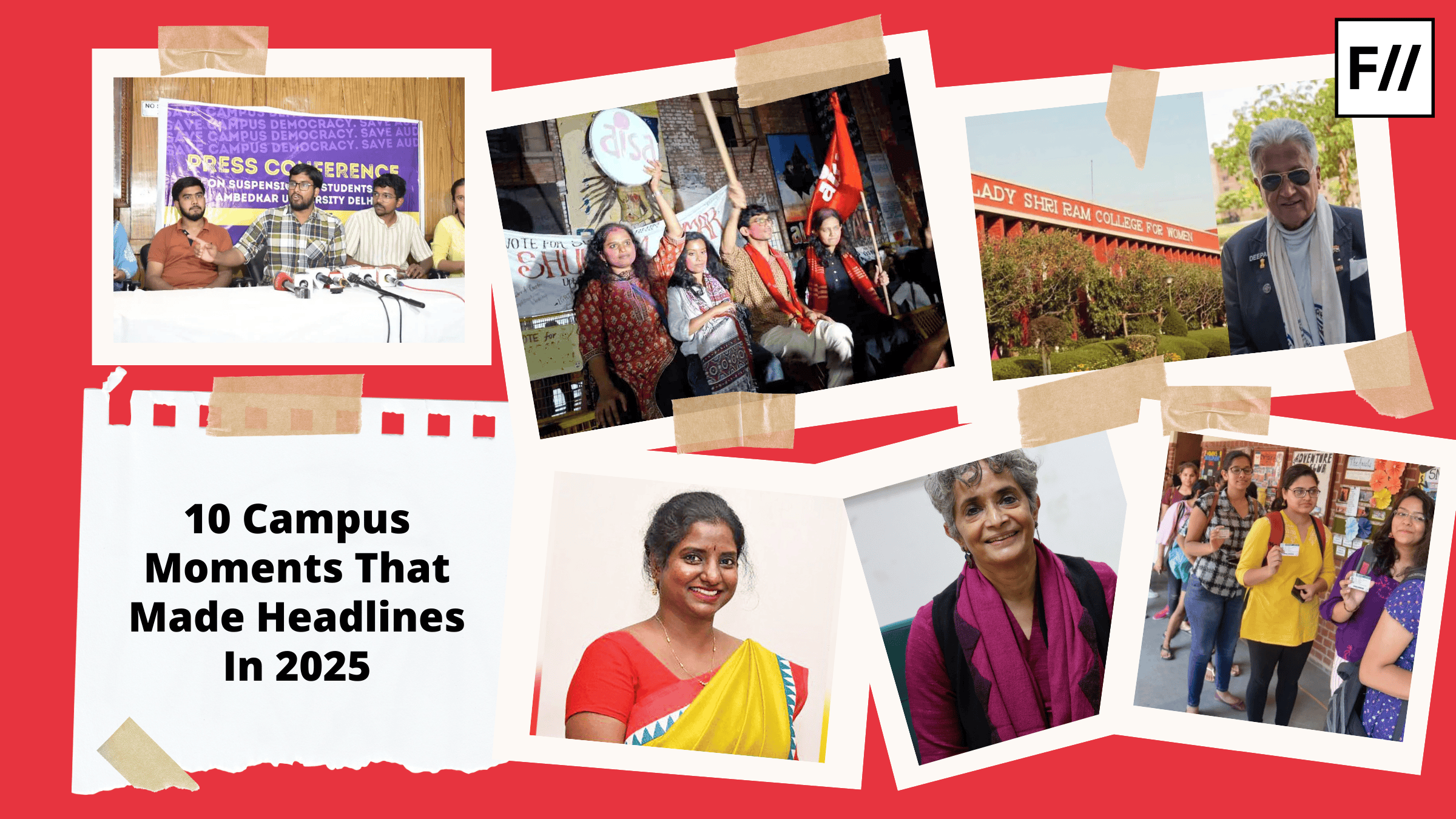
2025 bore witness to a stark focus on the politics of Indian education institutions. From systems of neutral meritocracy facing the challenge of caste-based discrimination, ideological clashes manifesting from and abetting popular discourse, queer collective demands for space and dignity, hunger strikes, to the annual election cycles of universities such JNU and DU that stand at the forefront of national pivots of student-led politics; all of these served to revive debate on the meaning of campus democracy in an era of polarisation.
1. Left-Unity Trumps Jawaharlal University Students’ Union (JNUSU) 2025 Elections
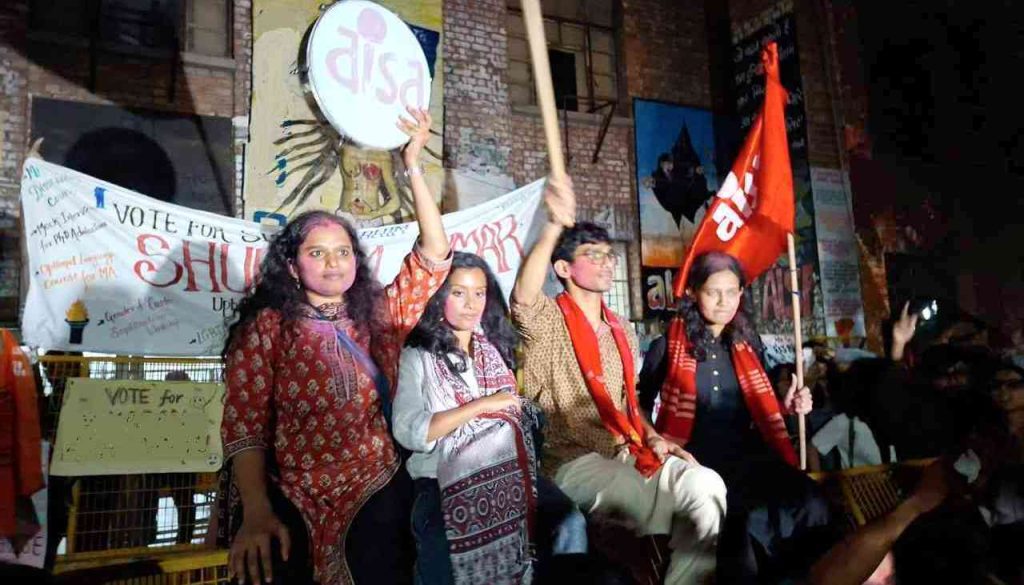
In this year’s election, the Left Unity Alliance secured a sweeping victory over ABVP once again, the coalition of constituted of the All India Students’ Association (AISA), Students’ Federation of India (SFI), and Democratic Students’ Front (DSF). The victory materialised with a 67% voter turnout, with Aditi Mishra of AISA being elected president, the first woman president in six years, being a testimony of a majority of students supporting platforms centred on welfare, inclusion and resistance to centralising pressures.
A continued resonance of the Left Unity’s agenda to defend academic and campus autonomy and revive participatory student governance in a moment of sharply polarised political narratives highlights the powerful organisational base that underpins the coalition.
2. Deepak Vohra’s Controversial Speech at Lady Shri Ram College for Women (LSR)
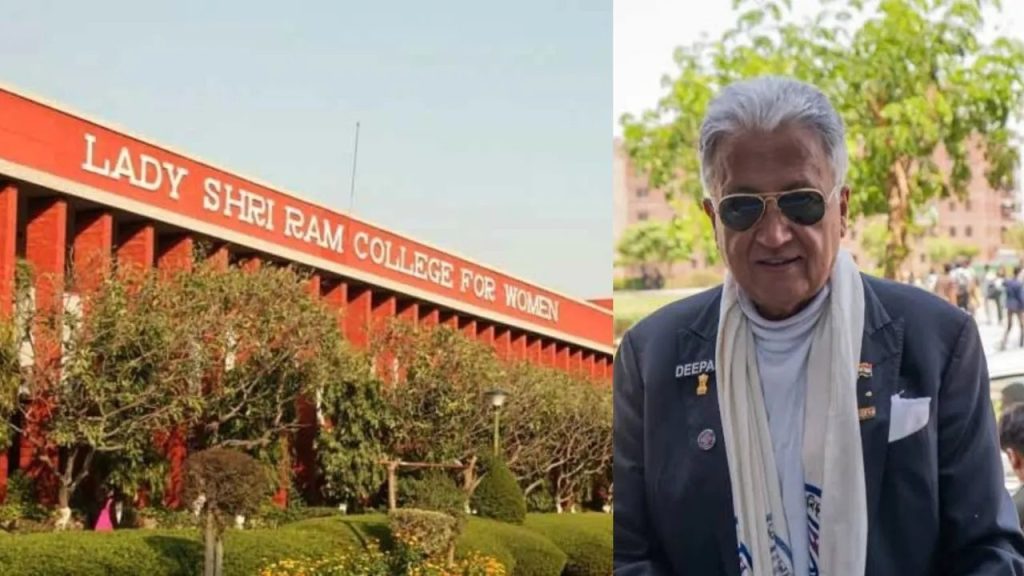
Retired Indian Foreign Service officer Deepak Vohra, known for his distinctive presence in UPSC circles and viral mock interview questions, became the centre of controversy after a lecture at Delhi University’s Lady Shri Ram College for Women (LSR) sparked widespread student backlash.
Deepak Vohra was invited to give a talk titled “Unstoppable India 2047” by the B.A. Programme Department in September 2025 as a discussion on India’s future. But many in the audience found his comments to be misogynistic, islamophobic, queerphobic and exclusionary. His remarks about gender roles, communal identities and even flirtatious references to the college principal resounded as unabashed inappropriateness among the audience, generating outrage across the campus.
The LSR Students’ Union condemned the address as being a violation of academic values and demanded a public apology by the speaker, underlining the invasive undermining of such rhetoric in inclusive educational spaces.
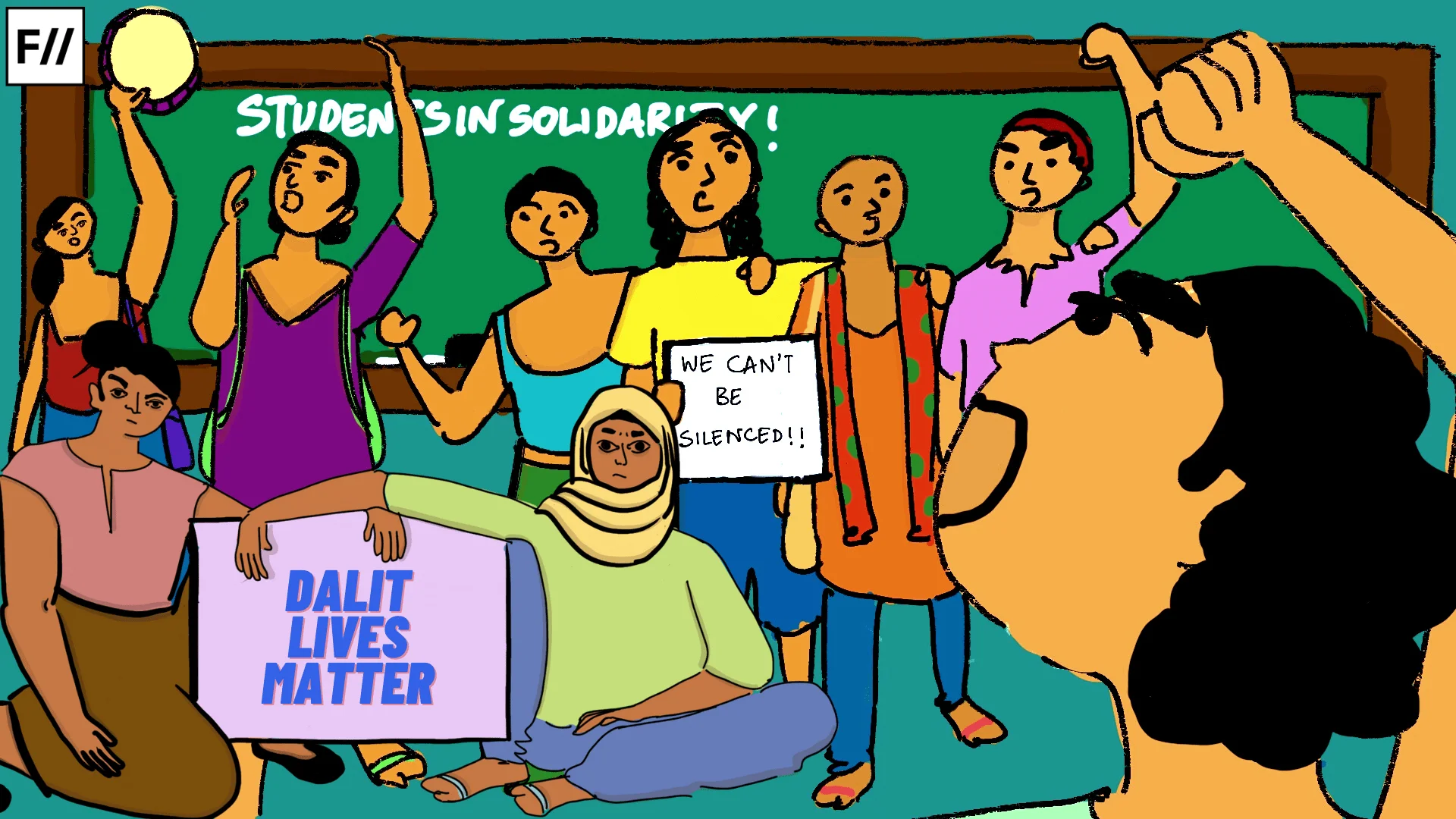
3. IIT’s Casteist Practices Come to Light
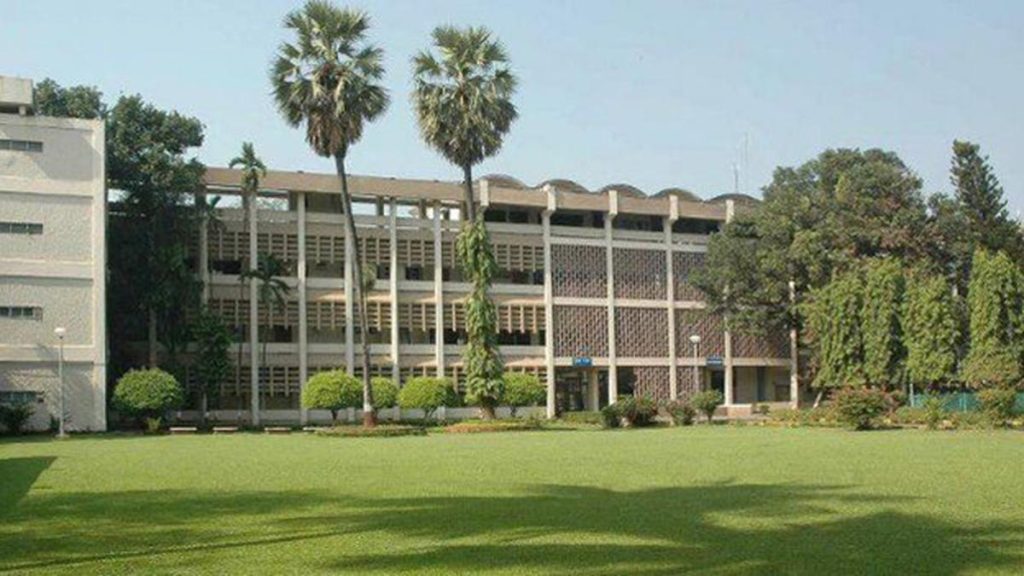
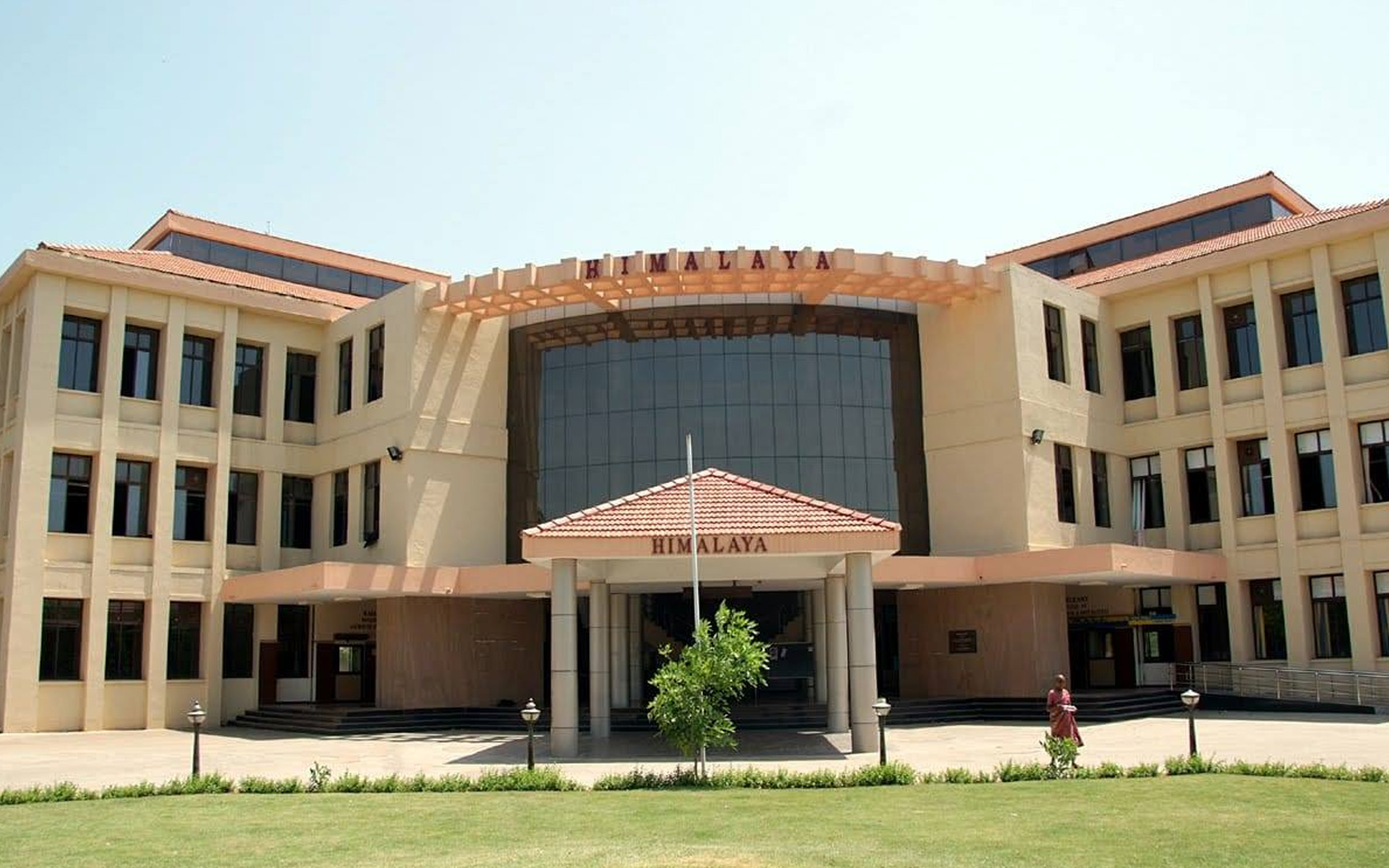
Although more than an year belatedly, the National Commission for Scheduled Castes (NCSC) in January 2025 took up a complaint of caste discrimination by campus placement offices in Indian Institute of Technology (IIT) Delhi and Bombay campuses. The complaint was lodged by education activist Dheeraj Singh, in the backdrop of successive suicides of students belonging to Scheduled Castes in IIT Delhi and IIT Bombay, setting off an onslaught of complaints by students and alumni alike about discriminatory practices and bigotry, covert or overt, that infested these institutions.
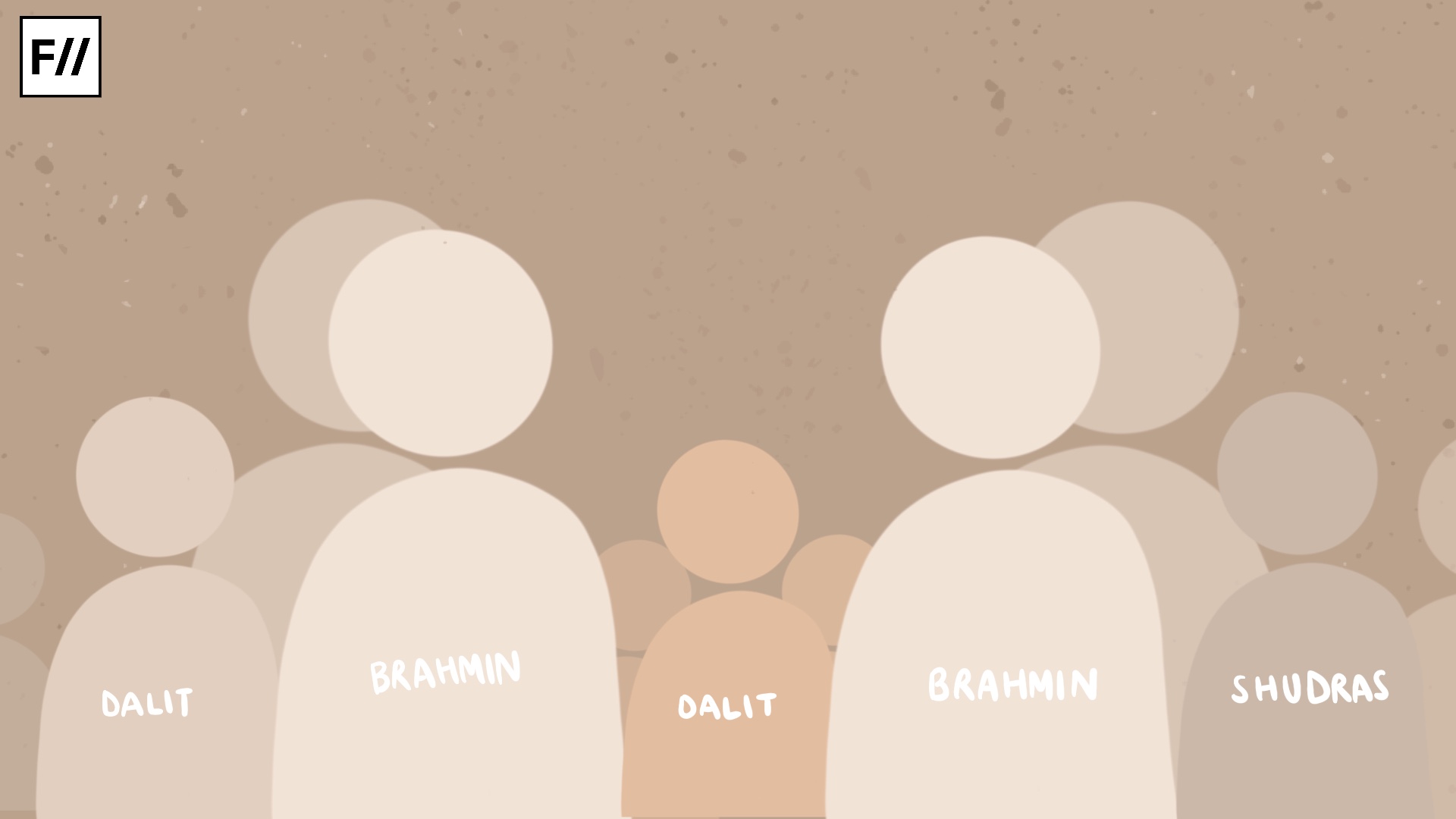
Amongst them, what came to be highlighted were the mandated divulging of caste categories for placements. The complainant alleged having evidence of at least 300 students affected by discriminatory practices in the placement year of 2023-24. Also attached were the placement office forms that required students to reveal their socioeconomic category and JEE rank, identifiers of caste.
For some of the most prestigious educational institutions of our country to be plagued with the social blight of casteist discrimination and disparagement, severe enough to still be robbing the lives and futures of so many youths and families, is a harrowing damnation of the failure to uproot this evil across societal strata, be it cultural, economic or educational. That casteism pervades even into institutions of some of the brightest minds of the country, is an indictment of the Indian societal mind yet chained by malaise of bigotry and fault lines based on discrimination.
4. Growing Suspension of Professors in Indian Universities and What It Means for Academia
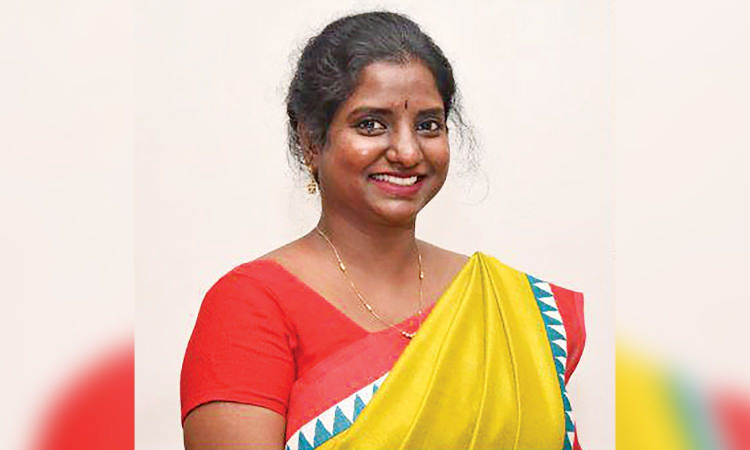
An unsettling trend has proliferated across India, wherein university faculty members are faced with suspension under a variety of conditions, putting academic freedom and institutional governance under serious question marks. One high-profile case was that of S. Lora, assistant professor at SRM Institute (SRMIST), who faced immense online backlash to her social media comments critiquing India’s airstrikes and the labelling of “anti-national”, prompting disciplinary action amid intense public pressure.
On the other hand, the suspension of a political science professor was nullified by Chhattisgarh High Court, ruling it to be illegal and a violation of natural justice. Similar suspensions were reported throughout the country’s institutions in 2025.
Such incidents delineate the tensions between protections for dissent and academic freedom and disciplinary procedures in academia. While some suspensions may serve as response to legitimate claims of misconduct, others highlight how fair process and academic expression can be jeopardized by administrative overreach, potentially its weaponisation, and external controversies.
5. Student Protest Against Suppression of Dissent Engulf Ambedkar University Delhi (AUD)
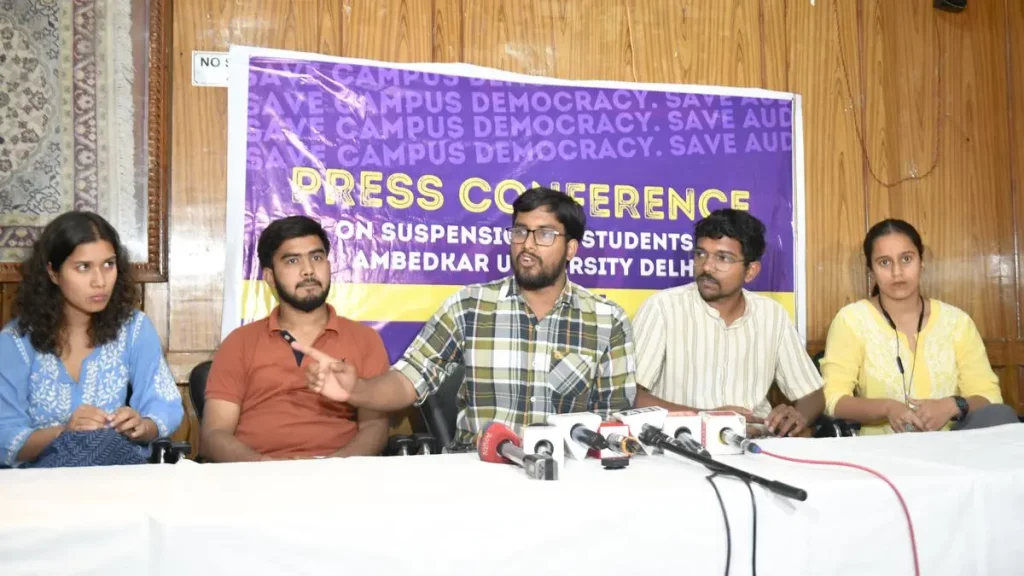
In the early months of 2025, Ambedkar University Delhi (AUD) became the locus of campus unrest and escalating protests by students on disciplinary actions undertaken by the administration, transforming into a wider debate on dissent and academic freedom. At the onset of this turmoil was the violent crackdown of students observing a protest and hunger strike with the subsequent lasting suspension of three students affiliated with Student’s Federation of India (SFI).
Five more students affiliated with SFI also later faced suspension, enlivening calls of violation of free speech and crackdown on dissent and political activism in the university. With intensified barricading and police presence, the faculty stanced itself with the students, calling for revoking of suspensions that transgressed upon academic freedom as well the removal of barricades that restricted access and resumption of talks.
Faculty members were also not immune to the administration’s lashing, senior professors dismissed and several facing potential demotions, creating an environment of fear and uncertainty and free speech is met by punitive action as one faculty member put it. The dismissals enkindled strong protests by students and faculty alike, calling them vindictive and arbitrary. This pattern of academic suppression seems to resonate reminiscent of the administrative pattern seen in Jamia Millia Islamia, suspensions, barricades, faculty terminations and assault on student voices.
6. Delhi University Students’ Union Yet Again Elects ABVP
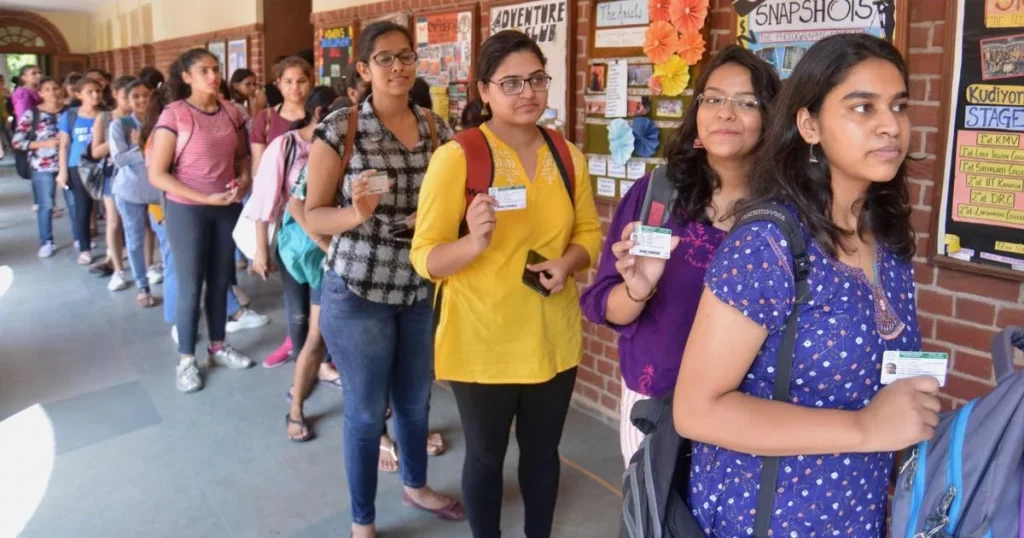
The Akhil Bharatiya Vidyarthi Parishad (ABVP) seized victory for the presidency yet again in the 2025 Delhi University Students’ Union (DUSU) elections. Whilst the realm of competition was fierce, with candidates from the NSUI and Left alliances, ABVP’s Aryan Maan clinched the top spot, reflecting the successive dominance of the party in DU’s politically galvanized environ.
Another conspicuous pattern is the distinct lack of a woman president in DUSU, a persisting trend for close to two decades now. The last time DUSU had a woman elected to its body for the post of president was in 2008, revealing the structural barriers that impede women’s access to the most visible role of leadership, despite holding other positions and active engagement in student politics.
This phenomenon conforms to and underlines a deeper pattern of gender in Indian society, that which recognises the participation of women but rarely allowing them to ingress into real power positions, subordinating them to secondary roles instead of epicentres for leadership.
7. Nivedita Menon Retires from JNU
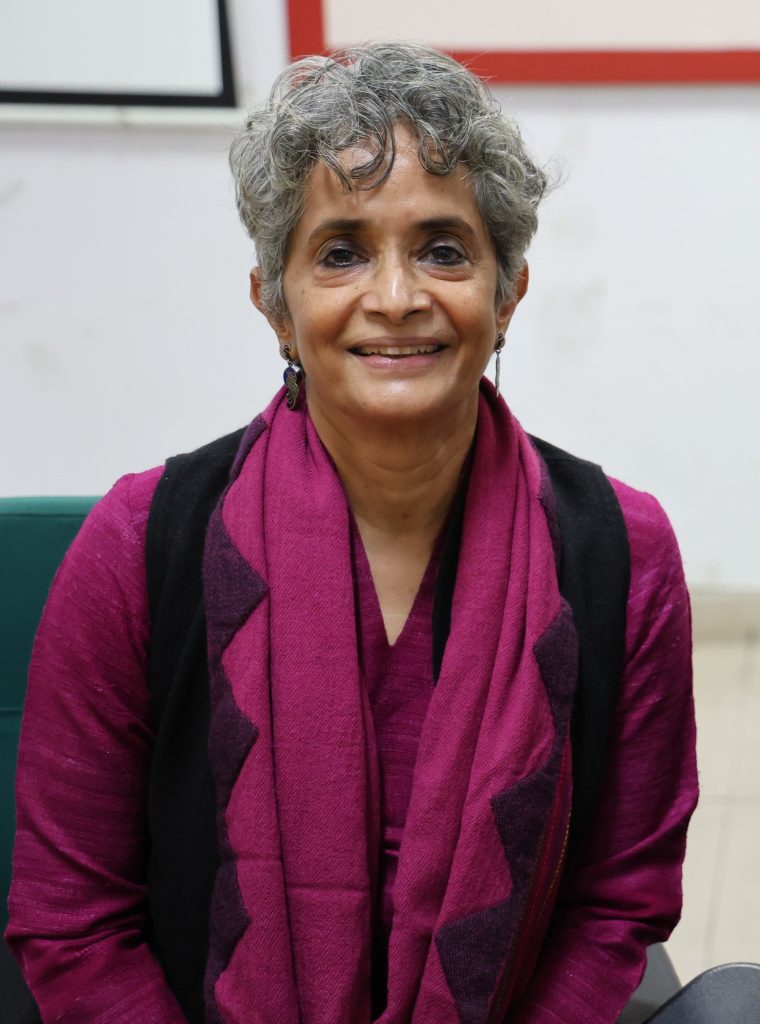
Professor Nivedita Menon, a notable feminist political theorist and a longtime member of the faculty at Jawaharlal Nehru University (JNU), has retired after 17 years of teaching and writing. One of the leading voices in feminist scholarship, Menon is the author of major books, including Seeing Like a Feminist, and has shaped key critical debates on gender, power, secularism and social justice in India. Her teachings and writings inspired generations of students, many of whom call her retirement ‘the end of an era‘ and a serious intellectual loss for campus conversation.
Menon’s career also generated controversy as loud criticism surrounded her concerning her critique of nationalism and patriarchal systems. Political groups labelled Menon “anti-national” as she made statement on Kashmir and Hindu nationalism. Some supported her while others created a backlash.
Menon, admired for her fearless questioning of the society and commitment to feminist thought, has left behind an active legacy at JNU in terms of critical engagement and student love.
8. Student Protests Over Fee Hikes Erupt Across Major Universities
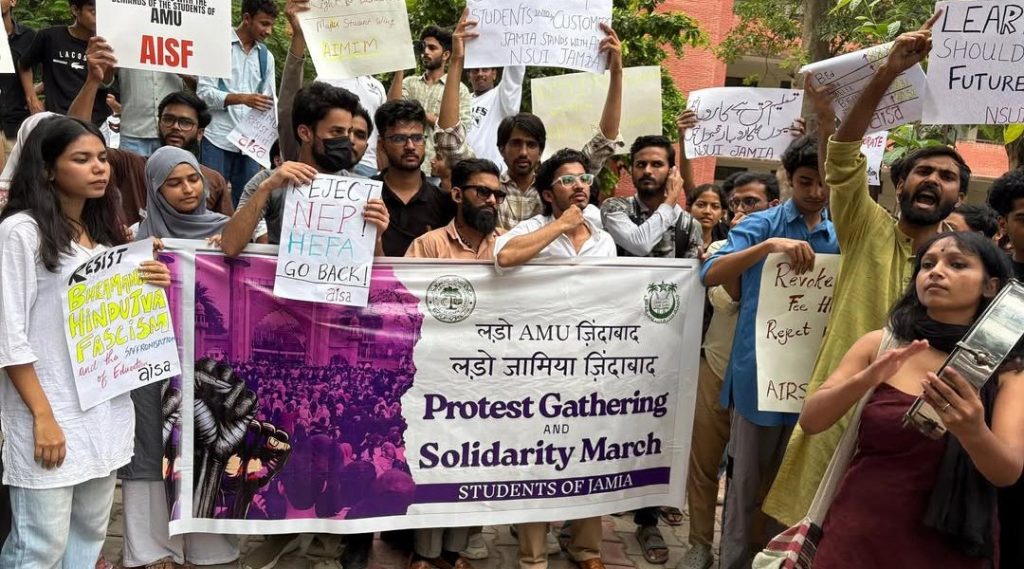
Across major Indian public universities, including Aligarh Muslim University (AMU), Jamia Millia Islamia and Delhi University (DU), student protests have erupted over steep fee hikes and shrinking accessibility to higher education. At the heart of the unrest was a significant rise in annual fees at AMU which students argued would exclude economically weaker and marginalised communities from pursuing degrees.
Jamia also saw such protests, calling attention to sharp increases of up to 90% in some programmes, while DU witnessed fee increases beyond its own stated caps, including higher development and service charges.
Students and unions insist education is a right which has now taken the shape of a commodity, demanding rollbacks, transparent fee structures and sustained public funding to protect accessibility and social mobility.
9. Campus Safety Under Scrutiny
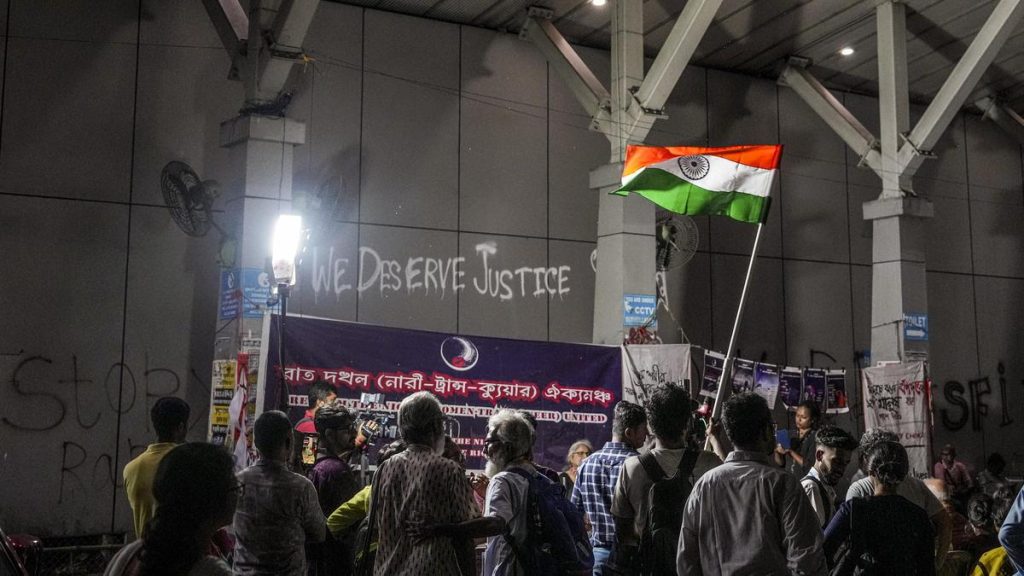
Recurring incidents of security lapses brought student protection and campus security under scrutiny on university campuses across the country. In Durgapur, West Bengal, a medical student aged 23 was allegedly raped near her college, the police provided charge sheet for which, naming six individuals including one classmates. Trial efforts are now being expedited. In Bengaluru, one engineering student, aged 21, was arrested and suspended for allegedly raping his senior inside a college washroom on campus.
Tensions escalated at Banaras Hindu University (BHU) in Uttar Pradesh after a vehicle reportedly hitting a female student, causing a confrontation between students and security staff, stone-pelting and over 100 students being booked by the authorities once they entered to deescalate the situation.
Incidents such as these shed light on the growing anxieties around physical safety, sexual violence and effective governance and security in spaces for higher education, emphasizing the necessity for effective reporting mechanisms, strong preventive measures and a habilitating, supportive environment for survivors.
10. Queer Movements and Pride Parades
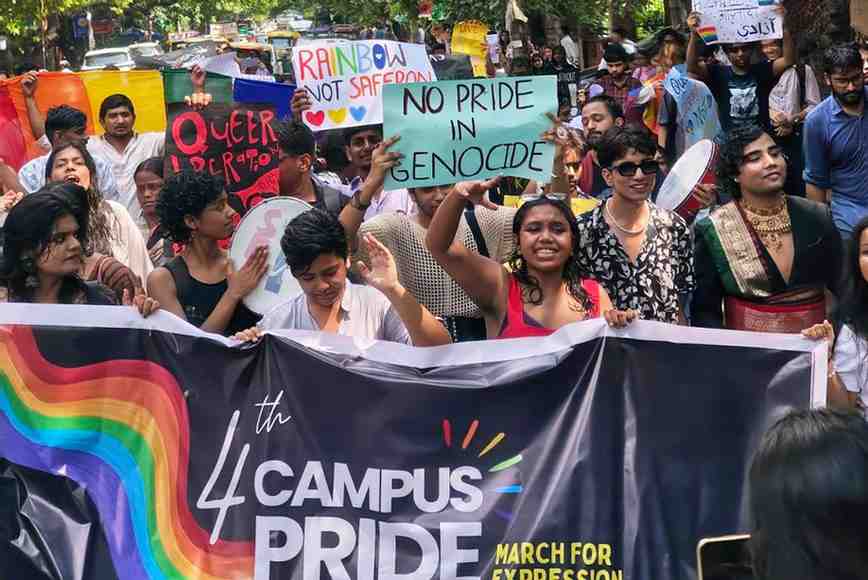
6th September, 2025 marked the anniversary of the 2018 Supreme Court judgement reading down Section 377, with the 4th Delhi University Campus Pride Parade held on that day. 17 organisations alongside SFI and DUQC led a march of over one hundred students from Delhi University Arts Faculty. The parade condemned homophobia, transphobia and the recent attack on Nitara, a trans woman student at Motilal Nehru College, while also becoming a convergence of wider progressive ideas with slogans of ‘Jai Bhim’ and ‘Free Palestine’ resonating through the crowd.
2025 was also witness to a wider rise in queer activism in campuses across the nation, with institutions such as IIT Madras hosting Pride events and expanding support spaces for students belonging to the LGBTQIA+ communities.
These political phenomena altogether come to shape a struggle for ideological and material power; a tug of war between autonomy and administrative control, inclusion and hierarchy, free expression and manufactured outrage.
This is by no means an exhaustive or representative list. Suggestions to add to this listicle are welcome in the comments section.
About the author(s)

Mema is currently a Master's student at South Asian University (SAU). Hailing from Manipur, her lived experiences there have shaped a deep commitment to the feminist cause. She cares deeply about women and their future, which she tries to convey with her writing. She finds joy in reading, writing and cooking.