In recent years, popular culture has been fraught with toxic and dangerous representations of masculinity, which celebrate violence, hate and misogyny. With the advent of the “manosphere” on the internet, men’s rights and issues have been raised in public forums, time and again, not as a call to practice radical care and vulnerability among men or to protect male survivors of violence, but as a rallying cry against feminism and gender justice movements. The same narrative of male victimhood has been playing out globally, but without any acknowledgements to the patriarchal power structures that enable and perpetuate this violence.
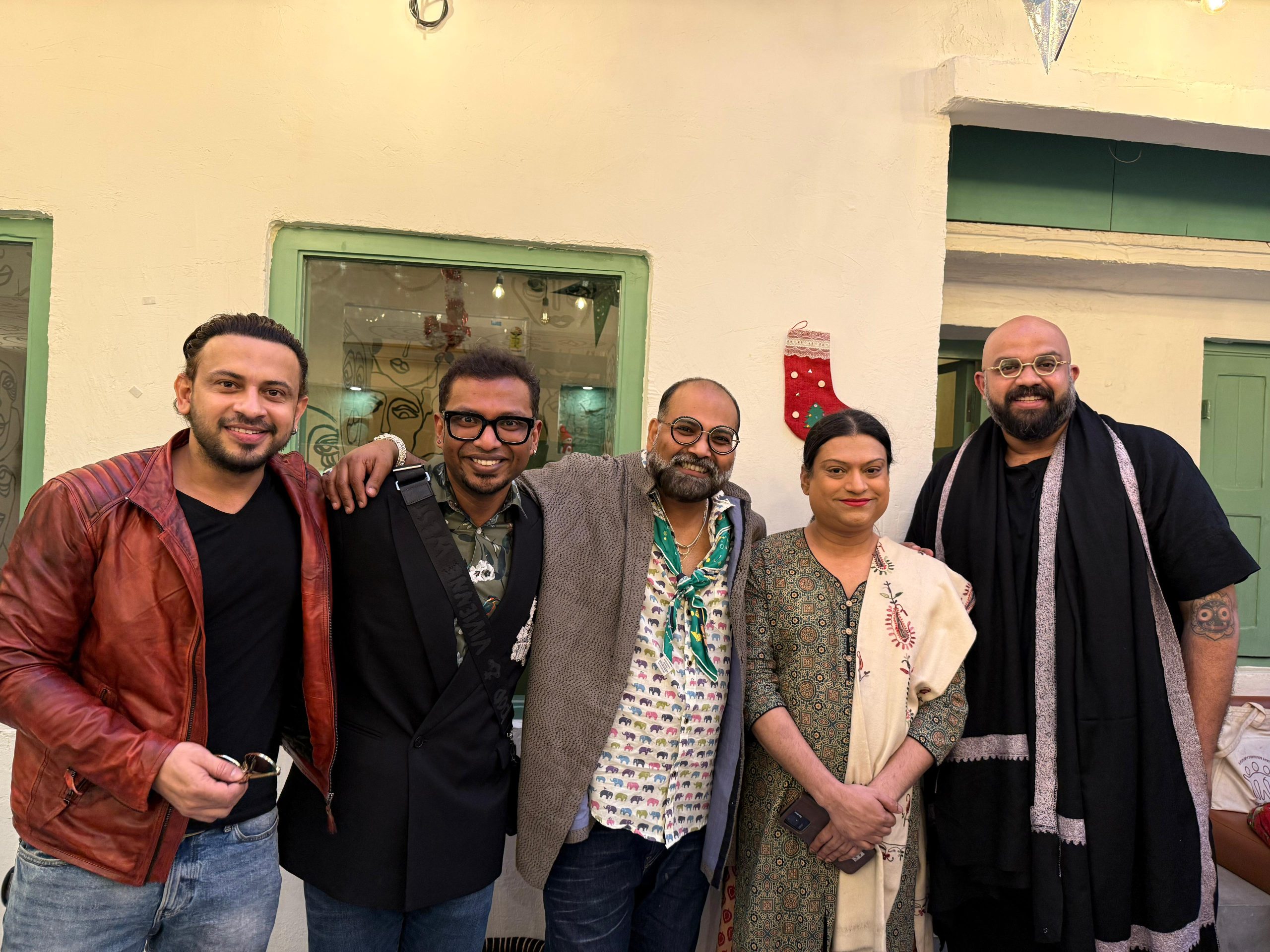
At this time, it becomes crucial to pause and reflect on the crisis of masculinity, through a critical queer feminist lens. It was with this thought in mind, that noted designer Abhishek Roy, actor Anindya Chatterjee and scholar of gender studies, Professor Rohit K Dasgupta came together at Kaldi Bean Cafe Kolkata for a timely adda about masculinity in popular culture, fashion and cinema on the afternoon of 19th December.
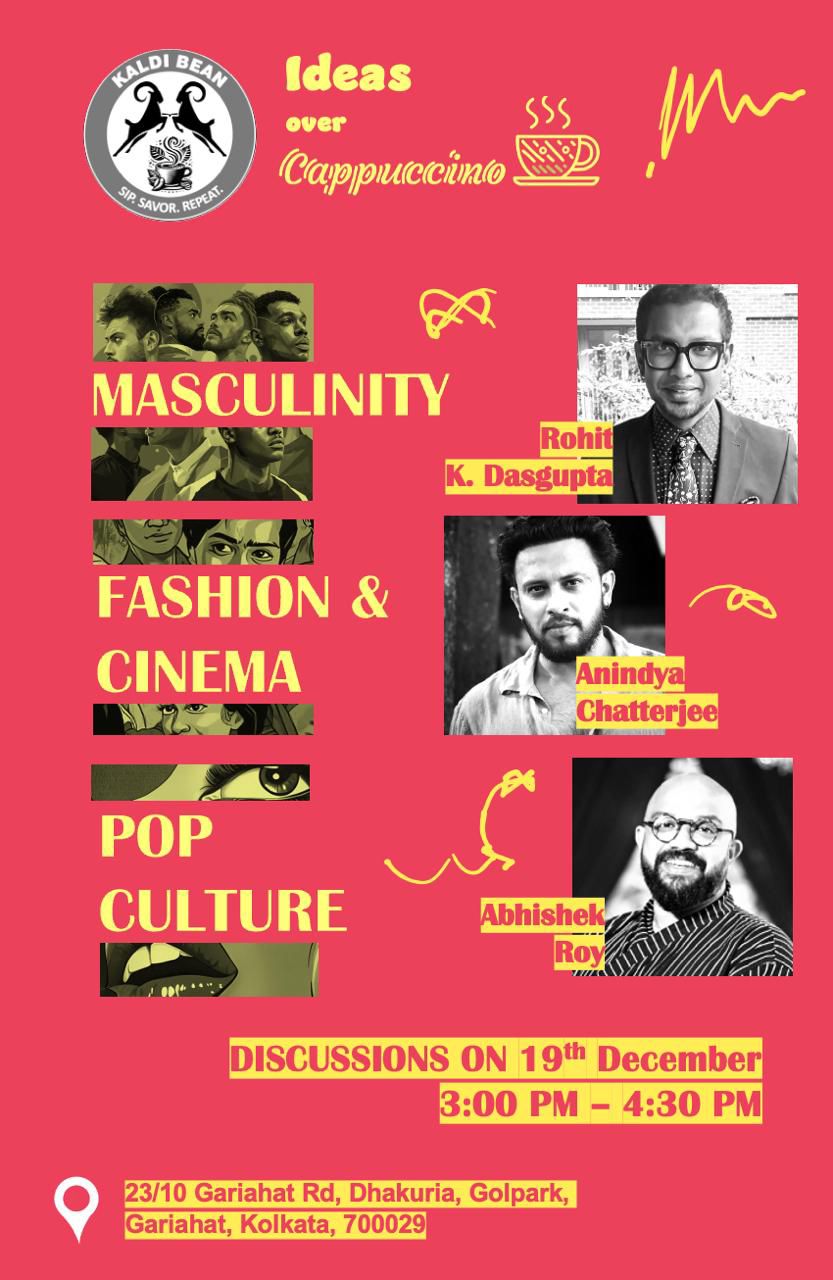
From the timeless charm of Uttam Kumar to the energetic flamboyance of Dev, from the simple khadi Kurta to a coveted Sabyasachi ensemble, from the traditional Bengali Byamagar to high energy fitness gyms, masculinity has evolved and changed over the past 50 years. Therefore, at this juncture, we must look back on past cultures of masculinity and redefine what being a man means.
Cultures of masculinity throughout the ages: from film to fashion
The conversation on masculinity was framed like a quintessential Bengali adda, a nod to the spirit of debate and discourse that has been an integral part of our shared culture. Moderated by Dr. Debanuj DasGupta, professor of feminist studies at the University of California at Santa Barbara and co-owner of Kaldi Bean, the adda addressed myriad topics, ranging from fashion and film to activism and accountability. The discussion was opened up by posing an important question to the panel: what does masculinity mean to you?
While designer and curator Abhishek Roy related masculinity to a sense of responsibility and accountability, noting how different people adapt masculinity in diverse ways, Rohit Dasgupta, professor of gender studies scholar at the London School of Economics, noted how masculinity has a non-biological origin, and is a disciplinary category, instead of a gender category. Popular Bengali actor Anindya Chatterjee discussed how media shapes discourses on masculinity and how filmic cultures of masculinity has evolved over time, from Sylvester Stallone’s machismo in Rambo to Aamir Khan’s romantic persona in Qayamat Se Qayamat Tak. Chatterjee also elaborated on how masculinity is culturally constructed and is different from region to region, focusing on how Bollywood’s brand of masculinity differs from the masculinity portrayed by Uttam Kumar or Soumitro Chatterjee in classic Bengali films.
Popular Bengali actor Anindya Chatterjee discussed how media shapes discourses on masculinity and how filmic cultures of masculinity has evolved over time, from Sylvester Stallone’s machismo in Rambo to Aamir Khan’s romantic persona in Qayamat Se Qayamat Tak.
Adding to this, Rohit Dasgupta discussed how certain cultures of masculinity are the results of centuries of colonialism, referring to Mrinalini Sinha’s seminal text Colonial Masculinity, where the historian defines the figures of the ‘manly Englishman‘ as a foil to the ‘effeminate Bengali‘ in the late nineteenth century. Taking this point of discussion further, Debanuj DasGupta examines how, in the context of South Asia, caste and class often influences cultures of masculinity, with the figure of the upper class and upper caste Bhadralok gent taking precedence, especially in the Bengali cultural imagination.
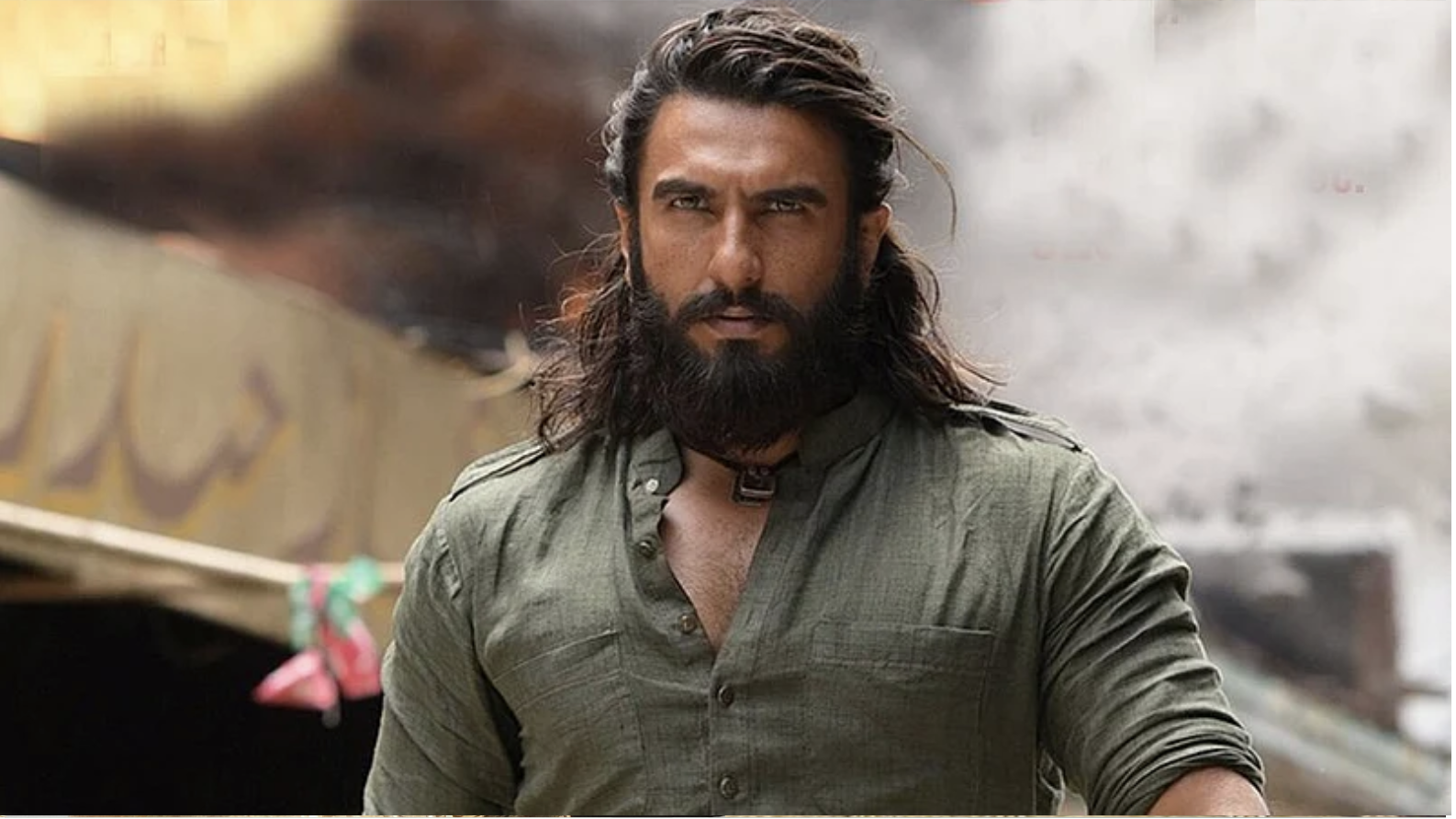
Abhishek Roy, the founder of Roy Calcutta, a fashion house that has dressed eminent male celebrities like Saif Ali Khan and Sourav Ganguly, spoke about how predominant cultures of masculinity inform the sartorial choices of men in today’s times, where Ranveer Singh choosing to dress in conventionally “feminine” shades of pink and stereotypically “feminine” silhouettes like the Anarkali, influences the clothing choices of the average Indian male. Abhishek Roy also discussed the launch of his new line of menswear featuring fluid, gender-neutral silhouettes, an attempt by the designer to re-fashion cultures of masculinity.
Masculinity today: from personal to political
Beyond fashion, cinema and culture, the discussion also shed light on contemporary politics, emphasising how Hindutva hyper-masculinity in today’s time, is a toxic reaction to the colonial era emasculation of the Indian (Hindu) man. In this regard, Rohit Dasgupta also alluded to Tristan Bridges’ conceptualisation of “hybrid masculinity”, which, while attempting to fight back traditional hegemonic masculinity, reinforces existing inequalities and maintains patriarchal power, rather than radically dismantling them, a trait often embodied by seemingly “progressive” men on the left. As a Labour Party politician, Rohit Dasgupta, shared how men on the left need to hold each other accountable, discussing how misogyny within the South Asian diaspora is an issue that he addresses in his political practice regularly.
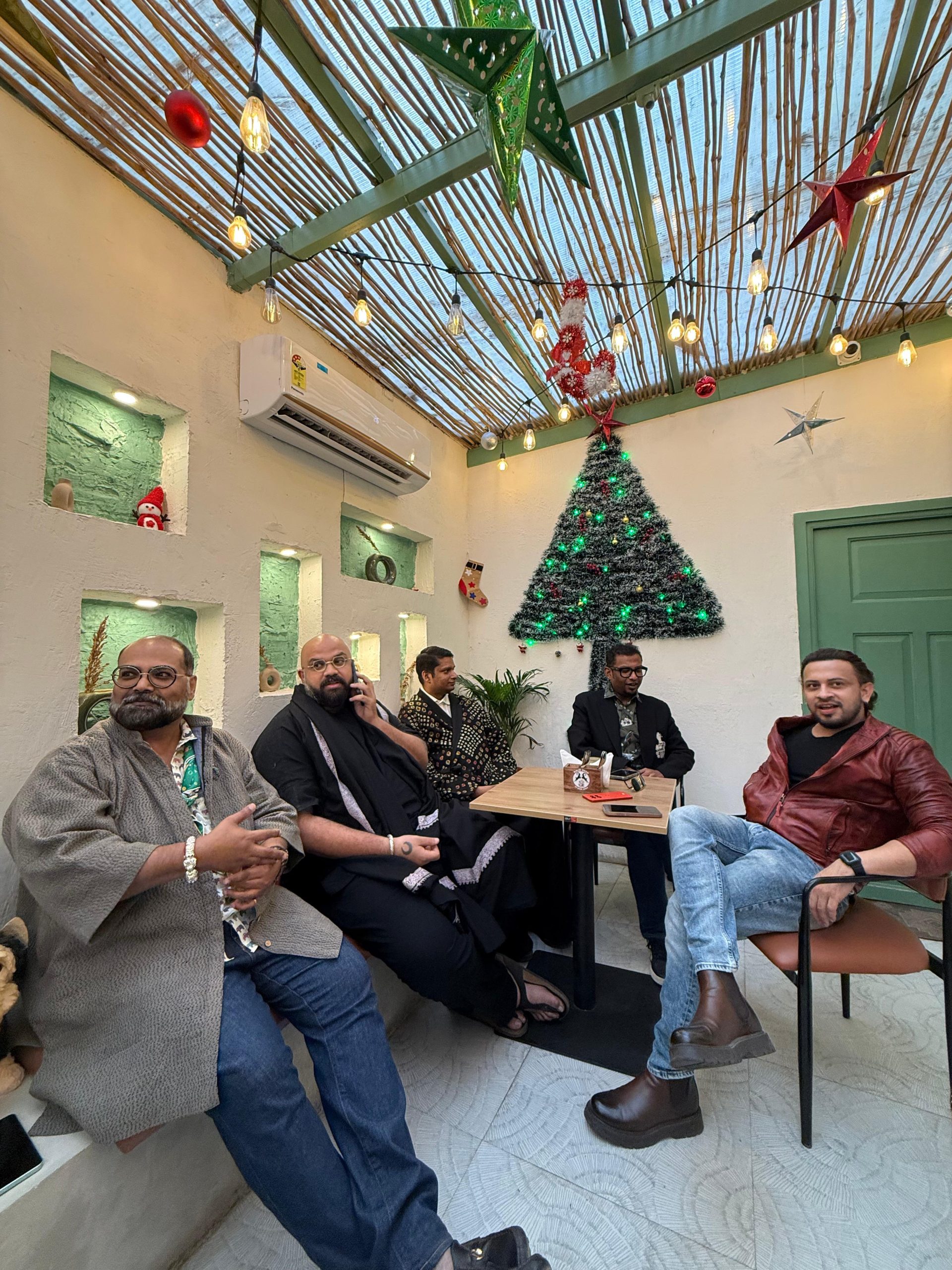
Actor Anindya Chatterjee, who had been especially vocal during the 2024 mobilisation against the brutal rape and murder of a junior doctor in Kolkata’s premiere RG Kar Medical College, discussed his experiences of solidarity and activism, in the context of gender justice movements, as a man. In his discussion, he also talked about how rape culture needs to be addressed in a systemic manner, instead of through reactionary modes. Taking on from this thread of discussion, one of the guests present at the adda, veteran gender rights activist and co-founder of Manavi in 1985, Shamita Das DasGupta, shed light on the futility of carceral feminism and the need to dismantle rape culture from the family, the fundamental unit of society, first, since that is where rape culture and violence begins.
The speakers also discussed how male survivors of sexual violence are often silenced and under-protected by society, which situates communal honour solely on the reproductive body of a girl/woman, to an extent, when male survivors, themselves, are conditioned to be in denial of the reality of their abuse. Intersectional gender rights activist, and one of Bengal’s most prominent trans voices for justice, Anurag Maitreyee discussed how toxic masculinity and gender roles are imprinted on impressionable young minds, through lullabies, fairytales and fables, perpetuating this inequality, from a very early age. Anurag Maitreyee, a guest at the adda, proposed a novel form of activism that is intersectional, inclusive and is born from a ‘solidarity of pain‘, where all genders come together in a struggle that is united and shared, instead of fragmented and solely identitarian.
Brewing dissent: third spaces shaping cultural discourse
The discussion on masculinity at Kaldi Bean Cafe was versatile and encompassed politics, culture and art. Featuring feminist and trans-queer voices, the afternoon adda invigorated guests and speakers with a renewed zeal for activism and artistic expression that propels social justice and transformative change in the sphere of gender.
Featuring feminist and trans-queer voices, the afternoon adda invigorated guests and speakers with a renewed zeal for activism and artistic expression that propels social justice and transformative change in the sphere of gender.
Speaking about the need for informal yet informed discussions like this, in a cafe or coffee house, which is a third space historically associated with dissent and debate throughout Ottoman as well as European history, Dr. Debanuj DasGupta says, ‘Kaldi Bean was conceived by three friends: Anasuya Gupta, Amit Sharma (designed by AS) and I, Debanuj DasGupta, as a space for adda and creative ideation. The discussion on masculinity was the first in a series of many more such upcoming “Ideas over Cappuccino” sessions that have been curated by the founders as a spot for exchanging ideas between scholars, practitioners and cafe goers, as a nod to resurrecting the original coffee houses from the Ottoman era, where coffee and conversation flowed freely.’
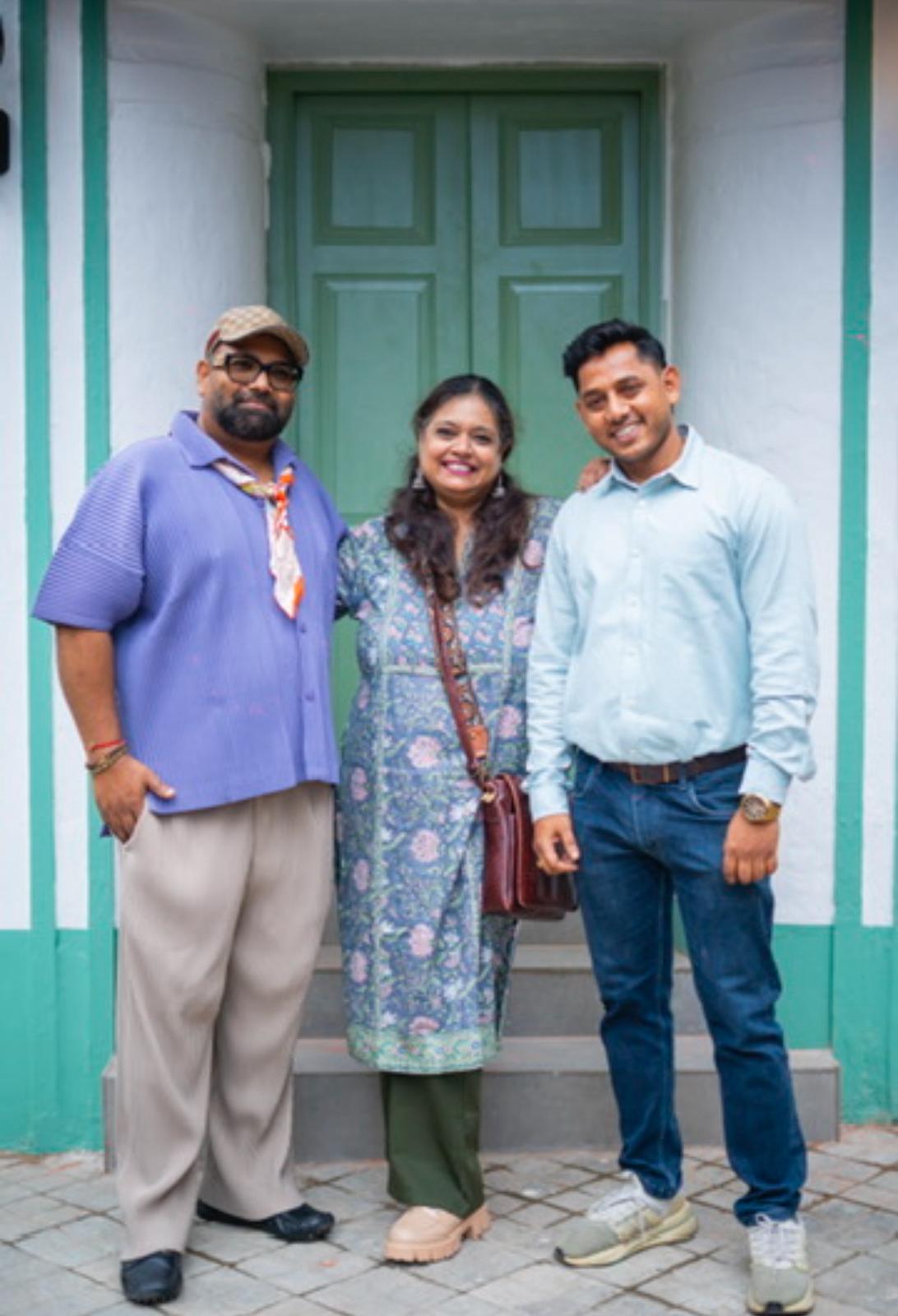
‘It was heartwarming to see how Kaldi Bean became a liberatory space, today, as activists, scholars and artists came together to discuss gender and sexual politics, over steaming cups of coffee and hearty plates of Litti Chokha and Champaran mutton, a special item curated by Amit Sharma (co-owner of Kaldi Bean), for today’s adda. We are eager to have more such discussions on a range of topics at this space, and exchange ideas and thoughts with our community,‘ added Dr. DasGupta.
About the author(s)

Ananya Ray has completed her Masters in English from Jadavpur University, Kolkata, India. A published poet, intersectional activist and academic author, she has a keen interest in gender, politics and Postcolonialism.