Last year, I decided to transition from freelancing to full-time employment. Having worked in a demanding setup earlier, I was hoping to find a relatively simple engagement that leaves room for rest (physical and mental), social life and personal interests. After reviewing hundreds of jobs across profiles, organisational scales, and diverse programmes, a pattern seemed to be emerging on requisites of the role: ability to work ‘independently’, ‘in a fast-paced environment’, ‘in a dynamic environment’, and ability to ‘deliver under tight deadlines’. These requisites remained consistent regardless of the technical skills required of the role, the scale, structure and nature of the programme. It begged the question – why is all work ‘fast-paced’? Why is every organisation ‘dynamic’ irrespective of the geographical location, length of establishment, scale and complexity of operations?
Normalisation of hustle culture
To unpack this phenomenon, we must understand two aspects of the employment market: a) The start-up culture is now all-pervasive. What was characteristic of a new organisation – small team, limited resources, round-the-clock work – is now a feature of all organisations, whether new or established, existing or expanding. The capitalistic market demands squeezing out productivity from each unit of time and labour. The competitive nature of the market implies that the organisations not ‘fast’ and ‘dynamic’ enough cannot function. This corporate mandate bleeds through the non-profit/development sector as well, which does not run for profits but is run by profits through corporate and social impact funding. For them, profit maximisation takes the form of ‘impact’ maximization, efficiency, resource optimization or worse, ‘passion’ and ‘drive’ for social change.
The competitive nature of the market implies that the organisations not ‘fast’ and ‘dynamic’ enough cannot function. This sounds fair and normal, and that is the internalised ableism of the employment market. Under this criterion, who is rendered unemployable? – people with disabilities, physical or mental illnesses, and women loaded with household responsibilities and childbearing in a patriarchal society.
That leads us to the second aspect—b) Who is the ideal employee? Apart from core competencies and technical skills, one needs to bring ease and minimal interruptions to work, implying someone who is ever present (physically and mentally) with occasional or planned breaks only can move quickly through unexpected transitions and urgent demands and push through difficulties and challenges without extra support or resources. This sounds fair and normal, and that is the internalised ableism of the employment market. Under this criterion, who is rendered unemployable? – people with disabilities, physical or mental illnesses, and women loaded with household responsibilities and childbearing in a patriarchal society. The selection criteria automatically filter out people who need support and accommodations, have a low baseline of health, need regular medical assistance, or attend to young children or chronically ill people in the family.
The employment scenario in India
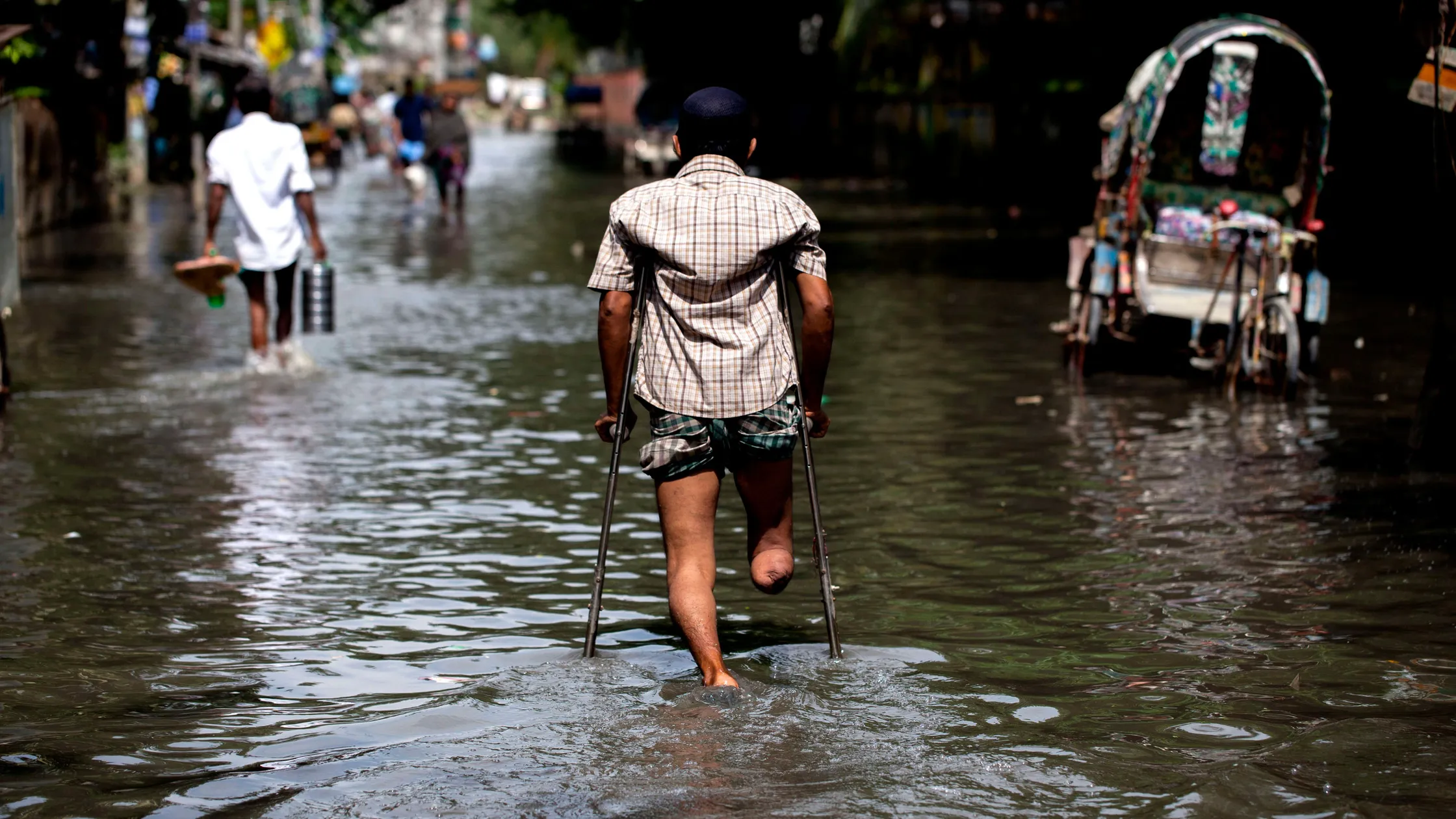
According to Census 2011, 36% of persons with disabilities (PwDs) were employed, of which 31% were agricultural labourers. It can be inferred from this that people with disabilities employed in the formal sector would be less than 5% in any case. Here, the gender gap is notable, as only 23% of disabled women were employed as against 47% of disabled men.
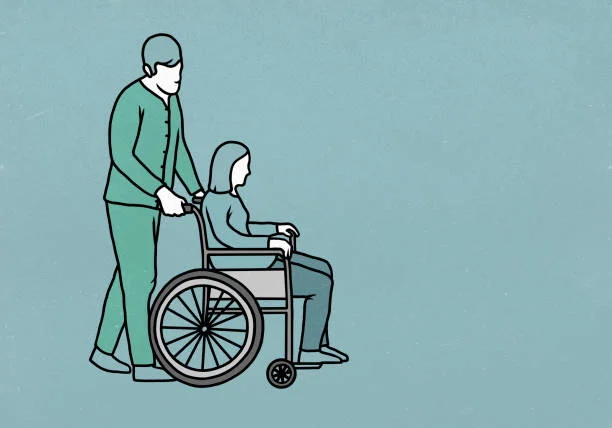
The neglect of people with disabilities is revealed in the abysmal nature of data available. The figures are outdated and the data collection criteria are flawed. Moreover, the Rights of Persons with Disabilities Act, 2016 (RPwD), expanded the recognised list of disabilities from 8 to 21, implying that a majority of people with disabilities are missing from the 2011 data, and their support needs and employment status remain unrecorded.
The gender analysis of employment statistics in India reveals that “women’s participation in work and their earnings are much lower than that of men, and they overwhelmingly engage in self-employment, informal employment or no-skill manual jobs – much more than their male counterparts” (International Labour Organisation, 2024). In 2021-22, the female LFPR (Labour Force Participation Rate) was 32.8%, less than half of the male LFPR (77.2%). While the LFPR for women increased after 2019, it was mostly represented by rural areas in self-employment and unpaid family work which is considered the most vulnerable category of employment. With regard to youth employment, while the engagement of youth in agriculture declined, young women were more likely to engage in farm employment than young men. The LFPR of young men was 61.2%, almost three times higher than that of young women at 21.7%. Furthermore, among the total youth population not in employment, education or training, women accounted for 95.1%, of whom most (93%) were engaged in domestic duties.
The India Employment Report, 2024, also notes that, “In tertiary sector activities, such as trade, hotels and restaurants, public administration, health and education and transport, storage and communication, there is a large gender gap in favour of men.”
This phenomenon of women’s exclusion from economic participation has been examined from the lens of gender discrimination and the norms of patriarchy. Several causes attributed to it include sexism, gender bias and prejudice, lack of agency in Indian families, and purity culture. This has brought to attention serious gender barriers in the workplace, like sexual harassment, the glass ceiling, and the motherhood penalty. However, when looked at deeper, these barriers are rooted in the ableist structure of the economy and society, beside gender oppression and inequity.
The sexist perceptions, like ‘Oh, women cannot do this job/task as well as a man’ or ‘Women are not inherently/biologically built for this role’, reflect the gender bias. But this bias itself and the resulting exclusion from opportunities based on the assessment of ‘productivity’ is deeply entrenched in ableism, exacerbated by the gender bias. And thus, we see that women who can ‘perform’ like men, be available on demand, and not ask for any support or accommodations would be readily hired, in spite of the gender bias, because they represent the ideal of ableism – the perfect productive asset of capitalism.
The cycle of dependence
The RPwD Act upholds the rights of people with disabilities to equality, access and non-discrimination in different aspects of community life, including healthcare, education, employment, culture, social participation and protection from violence and abuse. It mandates and paves the way for policy interventions to ensure access and inclusion in different domains at different levels. Yet the inclusion policy and intent appear to be lacking meaningful action, and the access measures remain tokenistic. While several organisations pledge to be ‘equal opportunity employers’ that do not discriminate on the basis of gender, race, caste, religion or disability, it is difficult to locate the concrete measures taken to enable an employee with a disability to navigate a fast-moving, dynamic, tight-resourced, independence-valuing work environment and culture.
A careful understanding of the layered implications of the inherent and normalised ableism of the employment market reveals that the ripples affect more than just people with disabilities. First of all, it creates a cycle of dependence for the disabled. The support needs of the disabled can be met with financial security and independence, which can enable meaningful social relationships and community participation.
With rising awareness and political enfranchisement of disability rights, the corporate world has caught up with the message of inclusion and access. However, the performance of inclusion is more prominent than practice. We see campaigns, events, talks and discourses on December 3rd, the International Day of Persons with Disabilities, across for-profit and non-profit enterprises. But in a capitalist framework, people with disabilities are either a market for consumer goods, to be tapped and realised, with inclusion being a branding strategy for promotion, or a checklist item for the non-profit organisations to show their ‘outreach’ and regard for all vulnerable groups. This co-option of disability inclusion is a convenient escape from taking real measures that would require dismantling the ableist structure at the foundation. Even small changes, like accessible infrastructure, support staff, flexible timings, health insurance coverage, transport services, etc., would be resource-intensive and difficult to implement in a system that is built for maximisation of profit. Anyone who cannot produce a full day of labour with the least amount of resources (cost to the employer) is, by default, an anomaly, to be filtered out from the system, by design. Therefore, the only way to uphold inclusion and accessibility in the existing system is to turn justice and equity into products for consumption that can reap benefits/profits for organisations, without having to yield any sustainable support to those left out. Hence, people with disabilities are found in pledges, beneficiary pictures and awareness events but are absent from offices, boardrooms, executive teams and even NGO leadership.
The implications of ableism in employment market
It may seem of marginal concern for the mainstream public that ableism, especially in employment, should be given serious thought. After all, people with disabilities who can actually work (excluding profound physical and intellectual disabilities) constitute such a small portion of the total population that they can be covered by welfare and charity schemes. Why bother the existing ‘perfectly functional’ system that values efficiency and productivity?
A careful understanding of the layered implications of the inherent and normalised ableism of the employment market reveals that the ripples affect more than just people with disabilities. First of all, it creates a cycle of dependence for the disabled. The support needs of the disabled can be met with financial security and independence, which can enable meaningful social relationships and community participation. A dependent person with a disability finds themselves at a higher risk of neglect, developing comorbidities, worsening health conditions, social exclusion, abuse and mistreatment. Secondly, ableism rejects access to anyone who is not ‘perceived’ as capable, which brings women directly under exclusion from gainful employment opportunities, as their requirement for physical safety, social burden of marital responsibilities and biological cost of motherhood are all deemed too unprofitable. Third, the ‘able’, ‘male’ population is not all secure under this system, because the moment one becomes disabled in life (temporary or permanent), or the long-term need to tend to a family member with chronic illness arises, the employment and financial security come at stake.
Hence, we need to unpack ableism in employment and the cunning ways in which it is advertised as reasonable and justifiable, driven by efficiency, optimisation of resources and passion for social change – all while systematically filtering out anyone who does not fit the mould, whether they be conventionally, visibly disabled or not.
Inclusion is not simply a matter of policy, intent or installing some infrastructure to enable access for certain physical disabilities. Although these are very crucial starting steps, inclusion, in the true sense, will require a complete scrapping and overhaul of the ableist system that does not allow people with different abilities, needs and paces to function. It means rethinking the organisational structure and design, physical and operational, and practising ‘Nothing about us without us’ by bringing people with disabilities actively into the decision-making boards and across levels and functions. Most of all, it would require examining our internalised ableism as individuals in a society exclusionary by design. It is a long way to go, but perhaps it can begin with an honest admission that the employers do not have the capacity to practice inclusion, and till then the job roles will remain discriminatory, actively based on exclusion of ‘disabilities’.