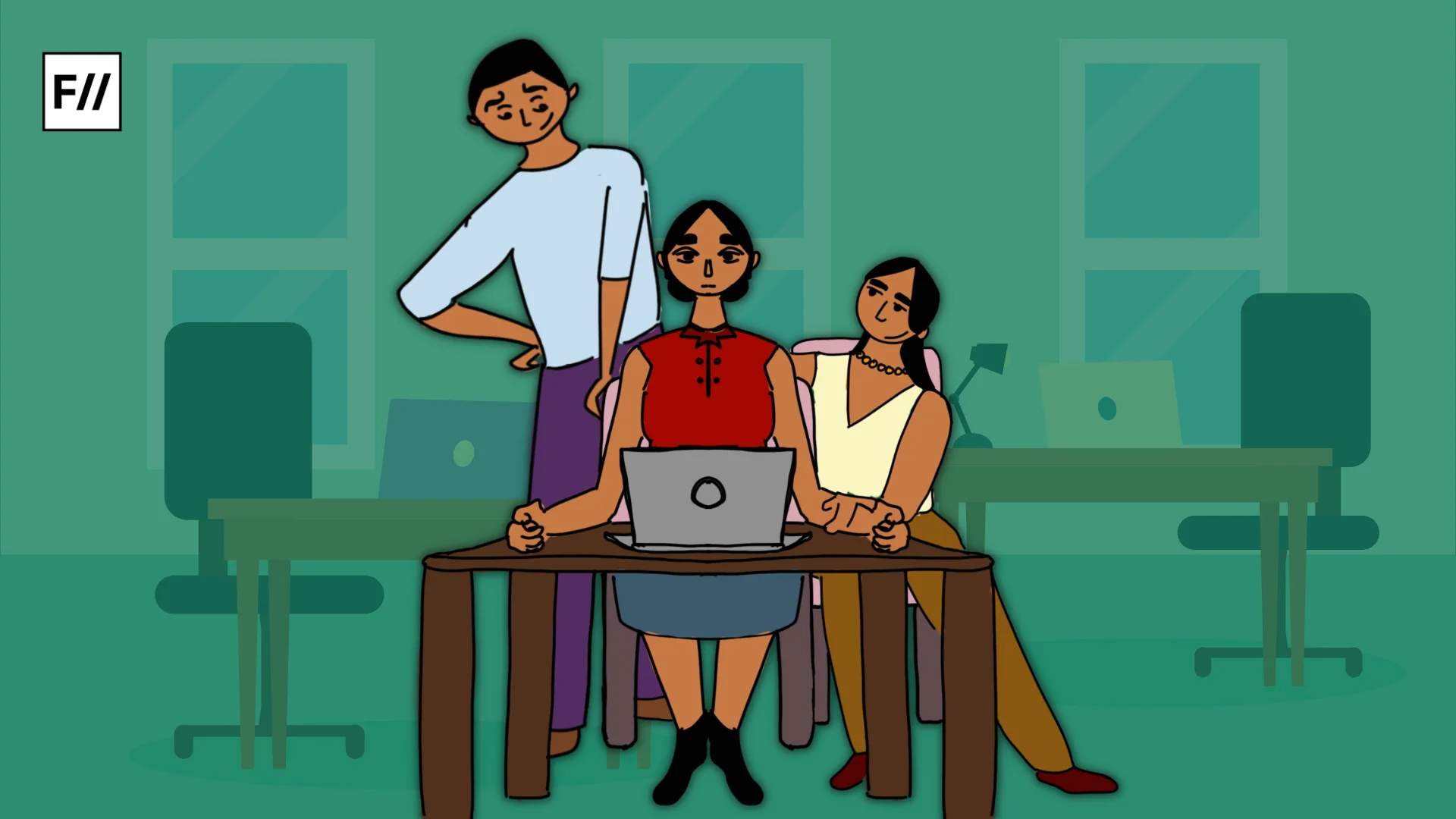
The identity of gender manifests in the labour market in multiple ways. These can include lower wages for the same occupation, occupational segregation, restricted workplace location, and the provision of unpaid labour, among others. This phenomenon is observed in communities of artisans across districts in West Bengal, as well. Artisanal production is a unique form of production because it is closely tied to a distinct sense of identity. There is also a prevalent gendered division of labour in artisanal production. A curious case of such division shows up in potter communities from Bengal.
Crafts and division of labour
When we think of potters, we generally envision a man toiling away at his wheel, making cups, plates, and bowls. That is indeed the general case across districts. The author talked to different potters in several towns and villages in West Bengal. The division of labour in a pottery-based household was also very clear. The man would sit on the wheel, working with the clay. The clay was generally brought by someone from the family or was purchased. The primary part of the job, which involves giving shape to the clay, is done by the man. There were parts of the process that were done by the woman, generally the wife of the man.
The woman would generally be involved in cleaning the raw clay by taking out the stones. She also cleans the general working area and keeps the products in the sun for them to dry. Often, the part where the products are burnt in the kiln is done by the woman. Painting on the products is also often the wife’s job.
Often, the part where the products are burnt in the kiln is done by the woman. Painting on the products is also often the wife’s job.
The potters would then either sell the products in the markets themselves or sell them through retail or wholesale channels. Debashish Pal*, a potter from Balarampur village mentions:
‘I get the clay from the river banks. I create bowls of various sizes, lamps, and other products related to worship. I work on the wheel. My mother and wife help us with this by moving the products for drying and transporting them from one place to another. They also help me with the cleaning of the clay and eventually painting some of the pots.‘
The women of Salampur
This seemed the general picture of the labour process in pottery until we arrived in the village of Salampur in the West Midnapore district of West Bengal. Here we did not see women working as unpaid household helpers to their potter husbands. Rather, they themselves were potters.
The women who spoke with us mentioned that their husbands work as migrant workers in different cities or states. Damini Pal* mentioned:
‘I learned the craft from my brother-in-law. He works in a wheel. I used to watch him work and then picked up the craft on my own. I started working to contribute to the household expenses. My sons are in school, and there are expenses for their education. My husband earned Rs. 6000 a month from the cloth shop. That was not enough for us. That is when I thought I should also work and contribute to the expense.‘
Uniqueness among women potters
Understanding the nuances of the work that the women from Salampur do can throw light on the gendered nature of this particular work. The women chose to work in pottery because they wanted to contribute to the household income during the pandemic, when their husbands’ income had fallen sharply. This points to a situation which labour economists often refer to as ‘distress-driven employment‘.
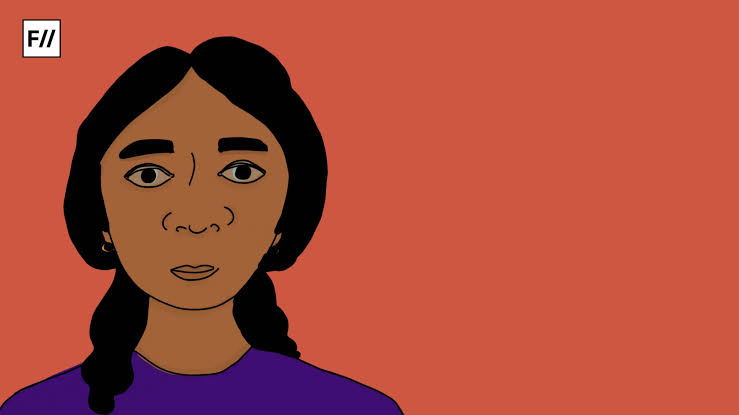
This is in sharp contrast to the men potters who often take great pride in their craft, which they have learned from their previous generations. Shefali Pal*, a potter, mentioned that, during the pandemic, she thought she could at least contribute Rs. 1000 to the household to cover the tuition fees of their children. The money that the women make now forms a crucial part of their household budget.
The way in which these women sell their final products also differs from how their male counterparts generally do so. Rupa Pal* states that since they are women, they cannot go out to the local markets to sell their products. ‘Instead, we are reliant on the middleman who comes to the village and buys up all our product,‘ she says. The norms associated with the domesticity of women restrict their mobility in this case.
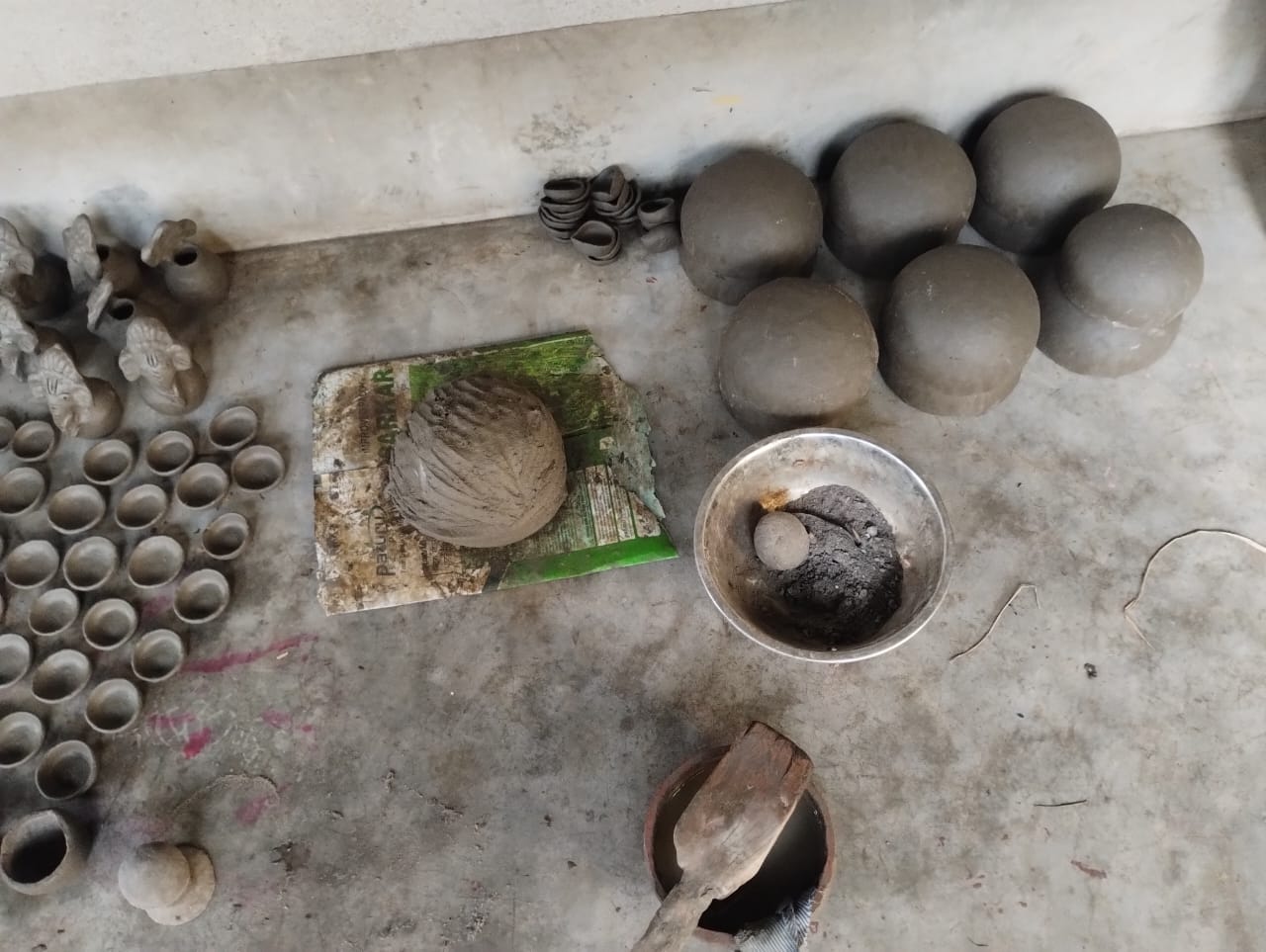
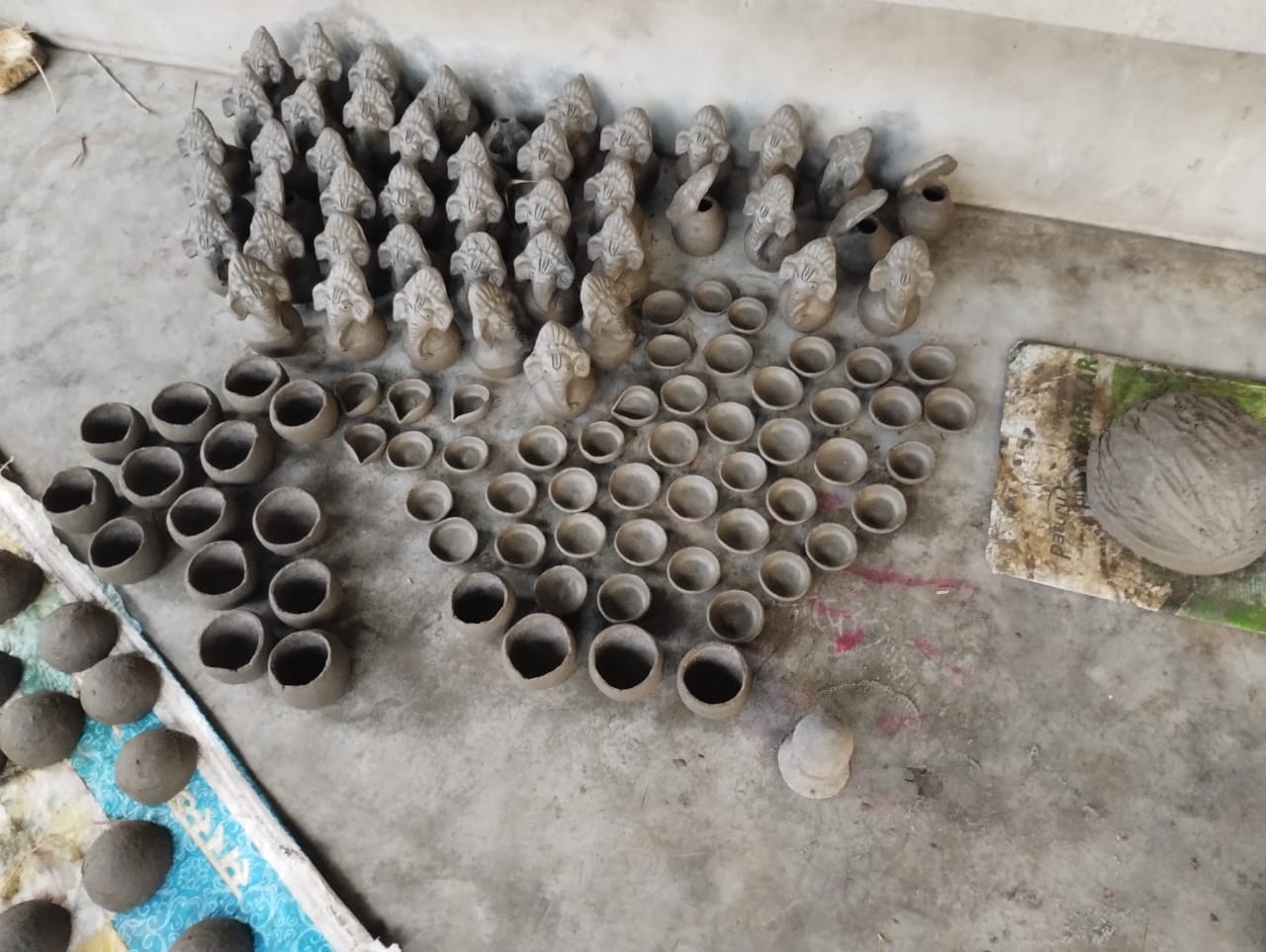
Women do not use the wheel to make the clay products. They use their hands, dice, and a mould to give shape to the clay and create the final product.
Probably the most interesting observation that differentiates the labour process of women potters from that of men potters is the production process. Women do not use the wheel to make the clay products. They use their hands, dice, and a mould to give shape to the clay and create the final product. All the women unanimously mention that working on the wheel is a man’s job. Women cannot work on the wheel. This illustrates an example of how norms and customs that restrict women’s access to certain occupations become part of the everyday narrative and justification. Working with the wheel could have enabled the women to make more products and cater to the increasing demand. Radha Pal* mentions:
‘Women are not supposed to work on the wheel. Since I don’t sue the wheel, I am unable to cater to all the demand. The products made on the wheel also have better finishing.’
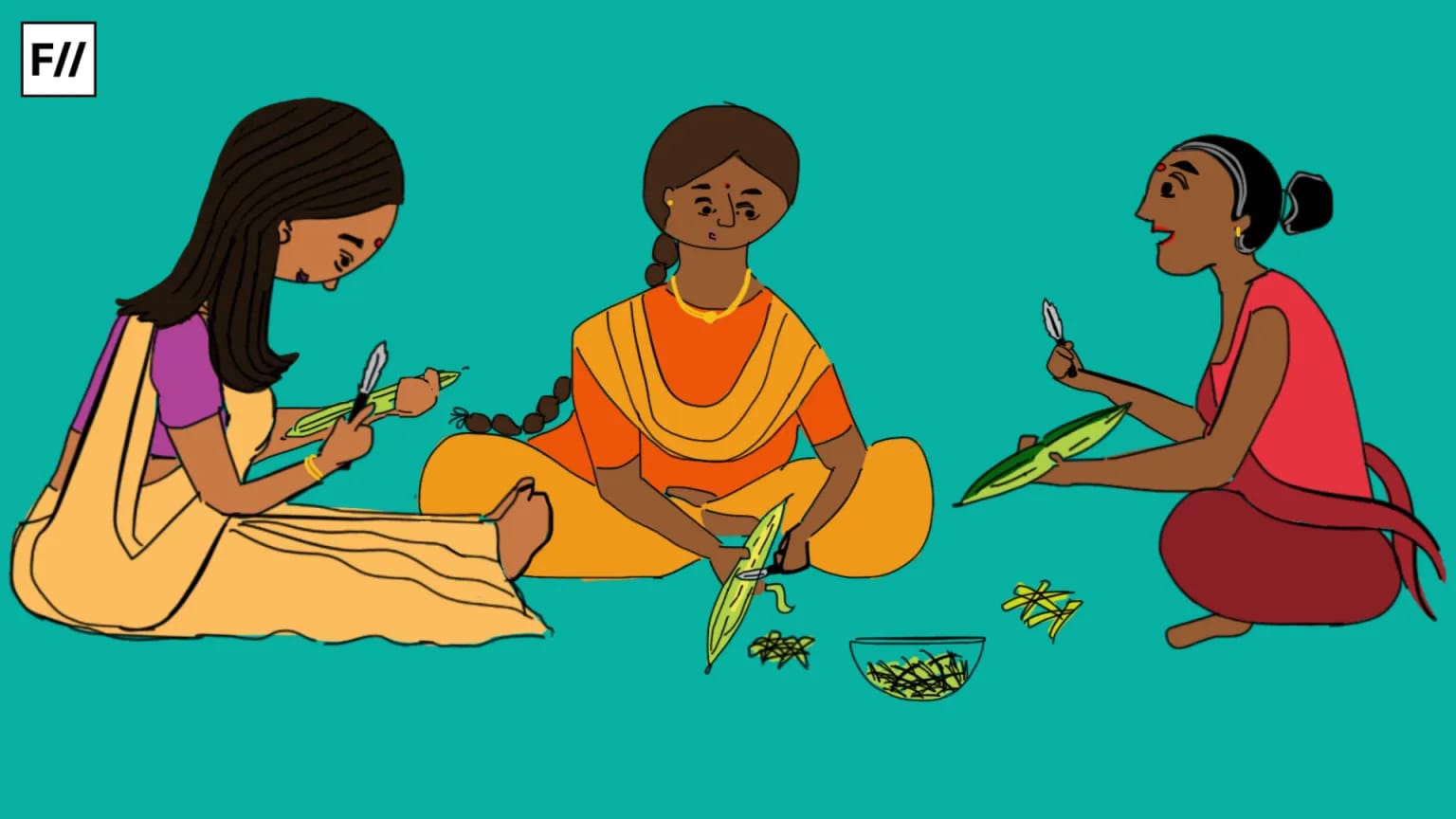
Even when they are potters, their first priority is still housework. The women from Salampur are artisans by any definition, even if they do not possess the same pride about their work that men generally do when they pick up their generational craft. The state has not yet recognised them as artisans since they do not possess the artisan card. While it is refreshing to see women who are actively involved in pottery, rather than being “helpers” to their potter husbands, their stories remind us of the intricate gender dynamics at play.
*Names have been anonymised to maintain the confidentiality of the respondents. The author is grateful to Swapnanil Mukherjee for being part of this fieldwork, and to all the artisans who took the time to speak with us.
About the author(s)

Satyaki Dasgupta is an Assistant Professor in the Department of Economics at Christ University, Bangalore.