From prehistory to pre-colonial archives, the column explores rituals, symbols, and stories that refused to die. Rooted in feminist research and lived memory, this is not just about recovery, but reclamation. What was lost? What survives? And what do we owe the women who dared to leave us signs, symbols, and scripts?
In a small café after hours, a group of friends sits together. Their table is covered with paper scraps, glue, and photocopied images. The pages are cut, folded and annotated. These materials will never be catalogued by libraries or stored in archives formally. They may be shared for a short while but will disappear fast. But this is a form of archive, nonetheless.
There are communities that have long been left out of official records and keeping records has never depended on permission for them. Feminist history has been kept alive through the passing of pamphlets, oral stories and at times even simple acts of care. These may not always last but they have allowed knowledge to be shared and remembered. Here, we are looking beyond traditional archives and asking an important question: when these archives leave people out, where and how will feminist communities record their history?
What is an archive, and who decides?
We often treat archives as neutral records of the past, but that’s not the case. Feminist scholars have pointed out that what gets stored in these archives or history is highly influenced by power. Decisions about what is kept in archives we know and hear of reflect social and political priorities of its time rather than the whole objective truth.
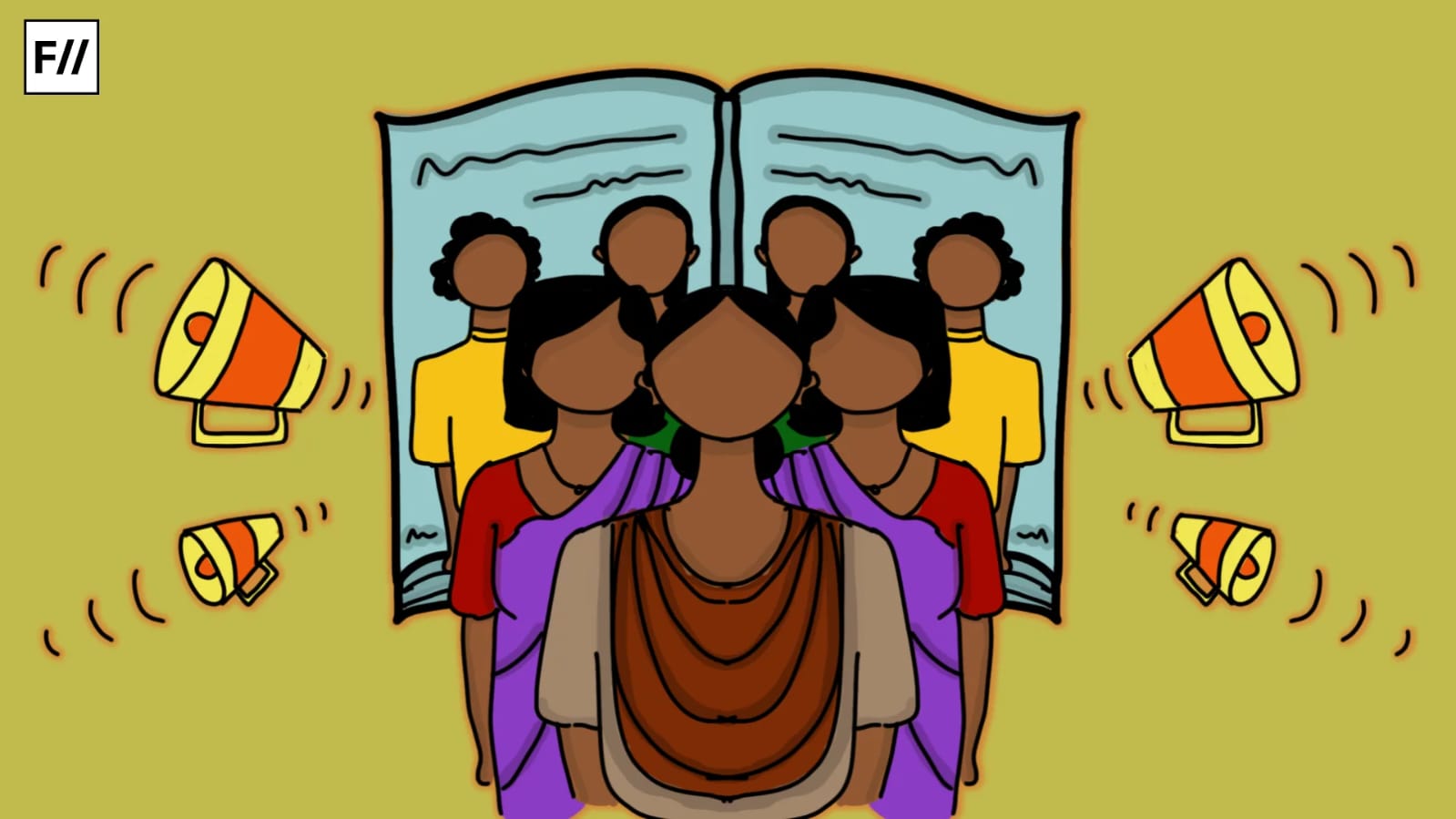
Many scholars such as Michelle Caswell argue that archives are not neutral spaces. But they are places where ethical and political choices are made. In her work, she talks about how these archives can repeat the harm that already exists or repair it instead. It depends on how we treat and support the people and communities linked to the records.
Saidiya Hartman builds on this idea with the concept of critical fabulation that responds to gaps in the archives. In Venus in Two Acts, she shows how lives of enslaved and marginalised people appear in official records only in pieces and never as a whole. She doesn’t see these silences as failures. But she reads them as signs of violence and uses storytelling to make sure these lives are remembered.
This reveals that many histories survive outside official records we know of. These examples show us how feminist archives are less about being neutral or permanent. It is more about staying grounded in local knowledge, responding to what matters now.
Zines, blogs, and counter-catalogues
Zines have often acted as feminist counter-archives for a long time. They emerged during the Riot Grrrl movement and became a space for women and queer communities to document their experiences that were excluded from the mainstream.
They emerged during the Riot Grrrl movement and became a space for women and queer communities to document their experiences that were excluded from the mainstream.
There exist projects like the Queer Zine Archive Project (QZAP), open to the public and non-commercial, that treat zines as records of queer life. They preserve materials that are often seen as temporary. This often includes handwritten manifestos, personal reflections, experimental art, and political commentary.
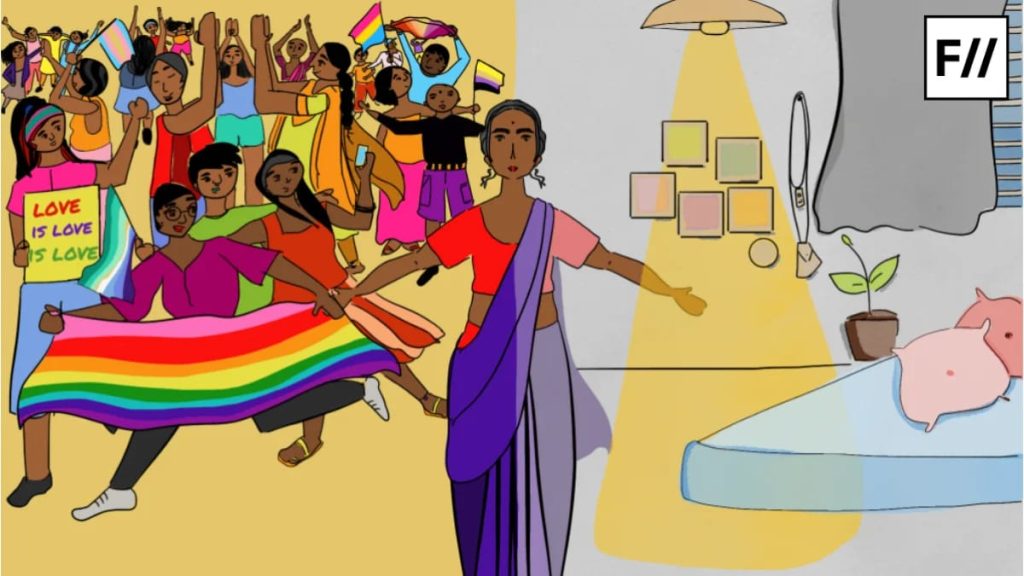
Zines and online collectives have been used to record queer desire, caste violence, feminist activism, and protest across South Asia. These platforms mix personal stories, art, and analysis while also challenging the idea that only “official” knowledge is valid.
Zines and other informal forms of publications have long been used to preserve stories excluded from dominant narratives. Their fragility is not a weakness. It’s a way to avoid control and sanitisation.
Menstrual apps, data justice, and intimate knowledge
Not all feminist archives exist on paper or in boxes. Some live as data. There are menstrual tracking apps that are often presented as tools for body awareness. These help women navigate the gaps which are left by medical systems around menstruation and reproductive health. For many women. This offers a way to understand their bodies- bodily patterns are long treated as private or shameful in our society.
Not all feminist archives exist on paper or in boxes. Some live as data. There are menstrual tracking apps that are often presented as tools for body awareness.
But this data is also intimate, so we must note that intimate data collection also introduces new forms of surveillance. A Documentation of Data Exploitation in Sexual and Reproductive Rights (Privacy International, April 2020) reveals how anti-reproductive rights groups use data and technology to invade our privacy and make reproductive healthcare harder to access. This shows us how tools designed to care for people can quietly become ways to monitor and control them when their data is used without consent.
In response, there has been an emergence of feminist technologists who are making trackers that keep women’s health information private instead of selling it. For instance, we now have apps like Euki and Drip that store data safely on your device and focus on giving users control over their own information.
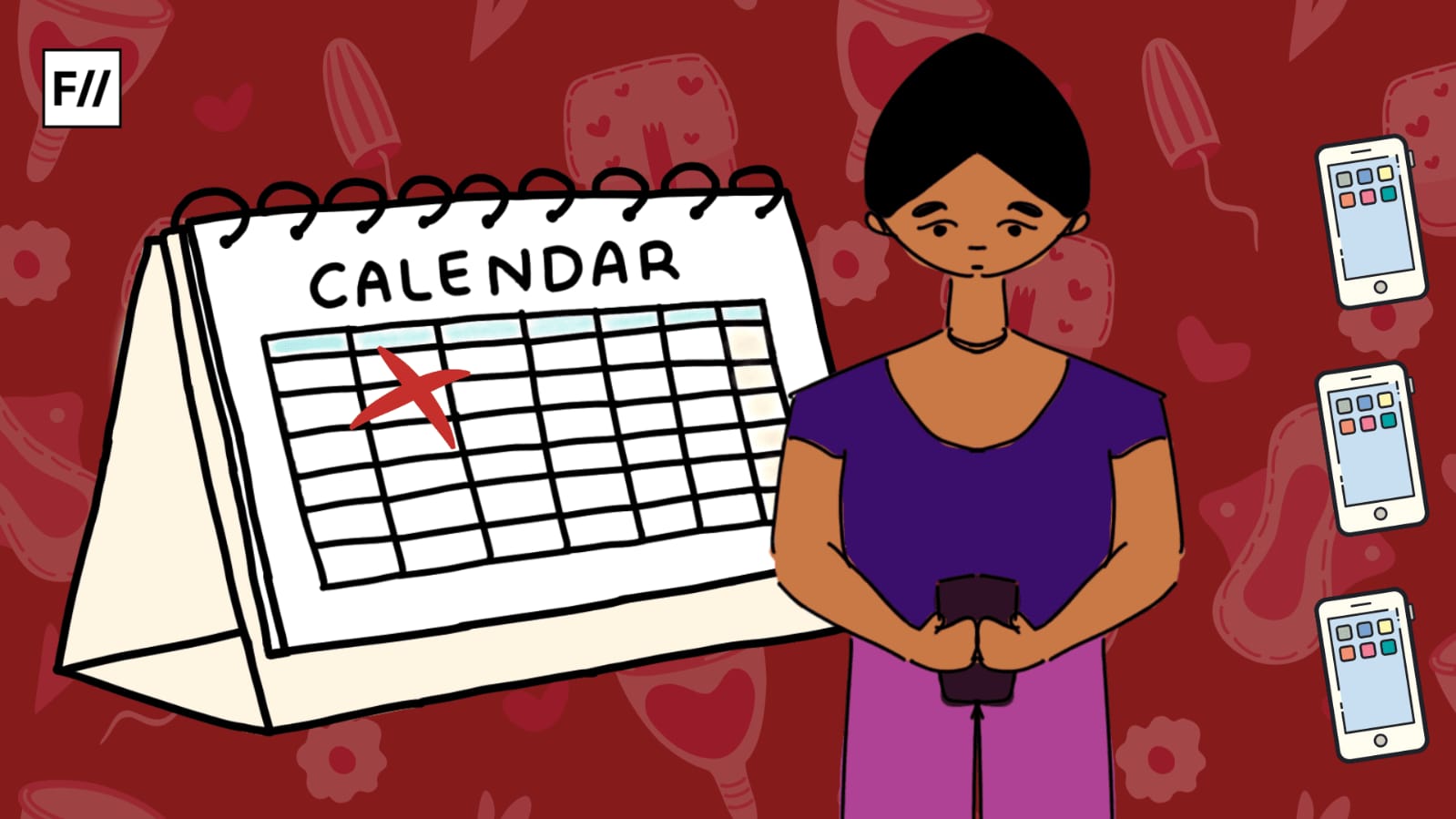
The question here is not whether tracking empowers but who actually benefits from the archive it creates.
Queer archives and the ethics of invisibility
Queer archives have always had to exist under certain risks. Visibility does bring recognition and helps people feel seen, but it can also invite judgment and even harm at times. And because of this very reason, queer archives have to proceed with caution, anonymity, and limited access. They move with consent and care, but also stay accountable to their communities, even as they open up parts of their collection to the public.
Honestly, they are less concerned with total visibility but instead focus on ensuring that histories are not erased. An example of this would be community ephemera, such as flyers, protests, and performances. This keeps memory intact while protecting people.
José Esteban Muñoz reminds us that some histories are not meant to be fixed. The queer experience has often survived through performance and shared memory rather than permanent records.
This way of working connects to a wider idea about how queer histories usually survive. José Esteban Muñoz reminds us that some histories are not meant to be fixed. The queer experience has often survived through performance and shared memory rather than permanent records. And in this sense, invisibility is not absence. It is a strategy.
Archiving care, grief, and collective refusal
Some feminist archives do not look like archives at all. Instead, they are found in our everyday practices. For instance, feminist groups, queer support circles, and informal care networks have long passed knowledge on survival without always putting it in written records. The documents sometimes do not last, but the way we relate to each other and hold their knowledge does.
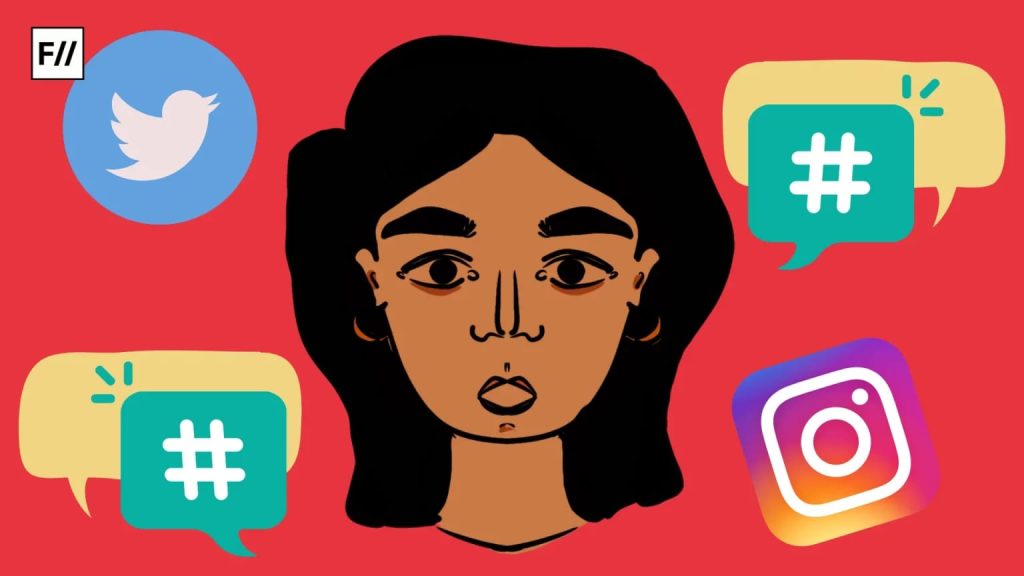
We can see that the digital spaces today carry this too. For instance, campaigns like #SayHerName, operate or work in a similar manner. They make sure that gendered violence is not pushed into silence or a void by sharing the grief collectively. These archives are lived and experienced together rather than being stored in institutional walls somewhere.
And care sits at the centre of all of this. Feminist scholars remind us that care is not something to possess, but something we practice. For instance, bell hooks writes in Love as the Practice of Freedom about care, attention, and responsibility as political acts that are connected to community. And here we are reminded again that knowledge moves through our presence rather than paperwork. When we look at things this way, care itself becomes an archive. An archive that survives through repetition, relationships, and people choosing to show up for each other.
The archive of care does not hold a single definition. It is a practice that is felt and carried. This archive- the archive of our mothers, our goddesses, and those on the margins, lives in poems, in oral histories, in data traces, in rituals, and even in refusal. It lives in what is spoken, what is protected, and what is left undocumented on purpose.
This archive- the archive of our mothers, our goddesses, and those on the margins, lives in poems, in oral histories, in data traces, in rituals, and even in refusal.
And it moves through women like you and me. Through this very script, the archive lives on. These scripts were never about recovering everything but about reading what our mothers left with us.
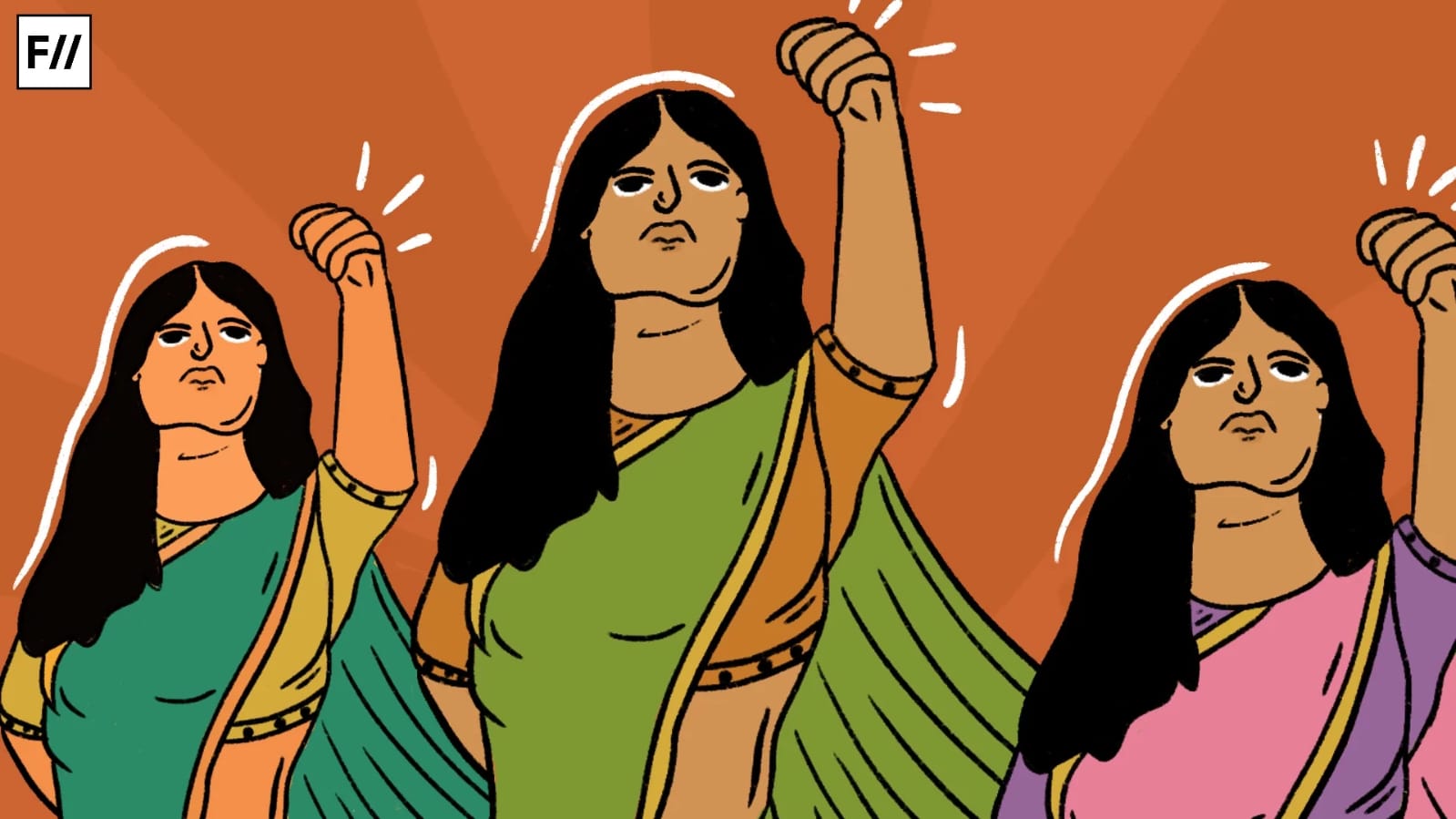
It is about honouring the women who came before us, and those who will come after. It is about paying attention to what continues to exist without permission.
And now my archive of care is ours.
About the author(s)

Juhi Sanduja is an Editorial Intern at Feminism In India (FII). She is passionate about intersectional feminism, with a keen interest in documenting resistance, feminist histories, and questions of identity. She previously interned at the Centre of Policy Research and Governance (CPRG), Delhi, as a Research Intern. Currently studying English Literature and French, she is particularly interested in how feminist thought can inform public policy and drive social change.