
At 2 AM, the streets of Indian metropolitan cities change character. The chaos of the day recedes, traffic dwindles, stores have long shut their doors – and for thousands of Indian women who work night shifts in call centres, their commute home begins. Women undertake these journeys daily in cities like Gurugram, Noida, Bengaluru, Hyderabad, Chennai, Mumbai and Pune, revealing critical faultlines in India’s urban progress story; while the economy strengthens, the city’s infrastructure for women’s safety does not. India’s IT-enabled services (ITeS) and business process outsourcing (BPO) sector currently employs an estimated 4 million people, a significant proportion of this being women (36% according to India Times). Supporting clients in the United States, Australia and Europe entails round-the-clock operations. Working in call centres has offered Indian women financial independence, higher pay and access to global workspaces; however, this opportunity comes with invisible costs: unreliable nighttime transport, navigating unsafe streets and inadequate protections and policies that vary sharply depending on state and organisation.
An industry survey based in Bangalore (2012) found that 48% of women working night shifts “feel unsafe”. Quite little has changed a decade since, as India’s ‘hidden shift’ continues to be powered by women venturing into empty streets and navigating risks. The women employees still navigate a commute fraught by harassment and crime, despite the claims of security measures being provided by companies and due to the lags in the public transport system.
Call Centres, Night Shifts and Commuting
Over the last two decades India’s booming IT/BPO industry became a prominent gateway for women into the formal sector. Mint reported that companies providing IT-enabled services saw a 35% year-on-year jump in jobs for women, with customer service and backend roles employing the highest share of women (around 25%). For many graduate, middle-class women, these are lucrative jobs offering financial empowerment and confidence, but they warrant arduous hours. Historically, India’s older labour laws (Factories Act 1948) barred women from working in factories at night (7 PM to 6 AM), while this restriction was aimed as a safeguard, it limited opportunities. Recent reforms have lifted these restrictions, permitting night shifts, especially in IT/BPOs, with the mandatory consent of female employees and strict safety measures.
Over the last two decades India’s booming IT/BPO industry became a prominent gateway for women into the formal sector.
In practice, thousands of Indian women routinely commute home at night; most BPOs provide transport, often in the form of shared company cabs. These cabs carry groups of employees – which for women means riding with male colleagues, a driver and security personnel. A study on night shift reforms confirms that these arrangements help instill trust amongst family members of women employees. Patel (2006) found that transport services provided by the companies ‘encouraged many women to join this sector’. Thus organised night shuttles help transgress social barriers to women’s employment. However, it also implies that even a minor break in the system – a delayed cab, missing pickup or mix-up of schedules – can leave women stranded on the streets at odd hours without any support. These risks are exacerbated by poor infrastructure such as the absence of street lights, obstructions on footpaths, lack of cycle tracks, poor or no lighting at transit stops and inadequate waiting areas.
The Cost of Staying Safe
Women bear the burden of “safety tax”, as discussed in this Feminism in India article, having to constantly invest extra time, money and resources in finding comparatively safer (often longer) routes, expensive transport fares, and buying safety tools such as pepper sprays or safety alarms. A 2022 study by the Mumbai Metropolitan Region Development Authority (MMRDA) found that women commuters spend 21% more on transport than men because of heightened measures to ensure personal safety. A World Bank report revealed that women in Delhi were investing an extra 27 minutes daily to select a perceived safer route home.
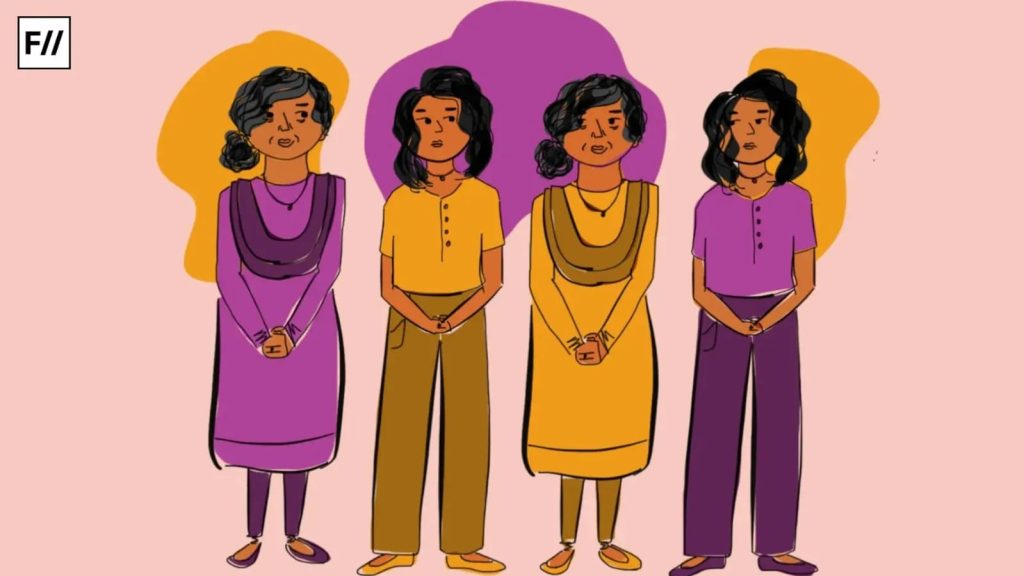
The current safety policies in place for night shifts stem from tragic histories, the most infamous being the killing of Pratibha Srikanth Murthy, a 28-year-old Hewlett-Packard Co. call-centre employee in Bangalore. While returning home in a cab after finishing her shift, she was raped and murdered by a substitute cab driver of the company. This incident “sent shockwaves across BPO offices in the country” becoming a catalyst for change. Since then companies have adopted GPS tracking of vehicles, deploying safety personnel (often women) in the cab. Dell’s current transport policy forbids dropping a woman off last or first without a security guard and all cabs are monitored by GPS. Ironically, back in 2007 when my mother briefly worked for Dell, Gurugram, she was always the first to be picked up and the last to be dropped (a result of route planning logistics based on employee location not negligence or deliberate company policy). Back then the cabs did not have security escorts or tracking systems, making the journey relatively stressful, keeping her in a state of constant vigilance.
Nasscom’s BPO Code of Conduct guidelines on commute safety encourage companies to have 24×7 ‘control centers’ that monitor all employee shuttles; women are forbidden from sitting on front seats in company vehicles and drivers must undergo ID checks. Some organisations such as Infosys also provide self-defense training and pepper sprays. However, these measures do not sufficiently address the root cause of the problem and end up placing additional onus on women to stay vigilant and protect themselves. While ignoring the deeply ingrained misogyny and unequal power structures that normalise acts of violence against women.
In light of the limited safety mechanisms available to them, the women themselves adopt survival strategies such as shared cabs or pool rides. Almost universally, a number of women employees call a family member (often mothers) or close friend en route to “feel accompanied” during a long walk. Some employees avoid isolated entrances or exits or gather in groups near guard posts.
Smaller organisations and startups are still a hit or miss: in a 2017 India Today’s article, a tech recruiter reported that she suffered three separate harassment incidents on her way home after midnight from work but her startup refused to provide cab services as the company’s vice president told her, “The company is responsible for them only while they are working and not when they step outside the premises”. This underscores organisational apathy and lack of concern for employee safety.
Legally, most Indian states permit women to work at night – under strict conditions. For instance, Haryana’s (2025) new guidelines mandate employers to provide transport from home to office and back, free of charge, and every vehicle must be equipped with GPS, CCTV and female security guards. Tamil Nadu’s (2025) Shops Act permits women to work between 8 p.m. and 6 a.m. given the company provides “adequate protection” and “transport arrangements”. Karnataka, Kerala and Odisha have issued comparable notifications, stipulating companies facilitate round-trip cabs. Despite these laws, gaps persist in enforcement as many private firms continue to sidestep or delay compliance. Urban development policies have failed to factor in women’s nighttime commuting, as most Smart City plans emphasise tech advancements, not night-time public transport routes or street lighting after dark. Activists argue that technology (CCTV, GPS, safety tracking apps) is no substitute for basic infrastructure that is currently designed keeping able-bodied, heterosexual males’ mobility in mind.
Women’s Daily Coping Strategies
In light of the limited safety mechanisms available to them, the women themselves adopt survival strategies such as shared cabs or pool rides. Almost universally, a number of women employees call a family member (often mothers) or close friend en route to “feel accompanied” during a long walk. Some employees avoid isolated entrances or exits or gather in groups near guard posts. A Bangalore executive (Manisha) shared how she waited until sunrise on multiple occasions after finishing her night shift, as she was afraid to begin her journey in darkness and isolation. She recounted this measure was a result of being harassed by taxi drivers and strangers immediately after the shifts as she left the office premises. With no organisational support or recourse, personal vigilance was her only tool. Some corporate parks have tried innovative measures; for instance, Hyderabad launched SHE-taxis, free night buses on key routes and “She Teams”, police that patrol late-shift areas. These services, however, only run in limited zones and hours.
These “invisible” nighttime workers form the backbone of India’s economic success, but the commute behind that hidden shift remains concerningly exposed. The National Annual Report and Index on Women Safety (NARI) 2025 by National Commission for Women India strikingly reveals that 40% of urban women feel unsafe in every aspect of city life, especially after dark and 29% of women face harassment while using public transport. As the NARI report presents, “safety goes beyond crime numbers and permeates into every part of women’s lives”. Metropolitan cities like Mumbai scored relatively high on safety, while major hubs like Delhi and Kolkata were alarmingly unsafe.
Making substantial leaps in late-night mobility necessitates going beyond police advisories. In practice it translates to running frequent 24×7 shuttle services on major routes, enforcing stronger transport rules, investing in lighting every dark stretch and holding companies accountable for ensuring personnel safety. A shift is needed if India truly aims to empower and tap into its female workforce potential, bringing them from the margins to the periphery in policy making that is by them, for them.
References:
Vernekar, Nisha; Singhal, Karan (2025) : Breaking the night barrier: Night-shift reforms and women’s work in India, CINCH series, No. 2025/04, University of Duisburg-Essen, CINCH – Health Economics Research Center, Essen, https://doi.org/10.17185/duepublico/84236
Patel, R. (2006). Working the Night Shift: Gender and the Global Economy. ACME: An International Journal for Critical Geographies, 5(1), 9–27. https://doi.org/10.14288/acme.v5i1.746
Voice and agency: Empowering women and girls for shared prosperity | UN women – headquarters. (n.d.). https://www.unwomen.org/en/docs/2014/1/voice-and-agency-empowering-women-and-girls
EconomicTimes. (2023, March 6). India’s white-collar sector sees 35% spike in jobs for women: Report. ETHRWorld.com. https://hr.economictimes.indiatimes.com/news/trends/indias-white-collar-sector-sees-35-spike-in-jobs-for-women-report/98457048
Revised working conditions for women in Haryana. Revised working conditions for women in Haryana – DLA Piper GENIE. (n.d.). https://knowledge.dlapiper.com/dlapiperknowledge/globalemploymentlatestdevelopments/2025/revised-working-conditions-for-women-in-haryana
Women feel unsafe in night shifts, want employers to ensure safety. Deccan Herald. (2012) https://www.deccanherald.com/content/247800/women-feel-unsafe-night-shifts.html
Web, C. (2025, September 12). Women in night shifts: Compliance, Safety & Employer Duties. Lawrbit. https://www.lawrbit.com/article/women-in-night-shifts-compliance-safety/
Team, N. I. C. A., & Team, N. I. C. A. (2025, September 11). National Annual Report & Index on Women’s Safety (NARI) 2025. Current Affairs – NEXT IAS. https://www.nextias.com/ca/current-affairs/10-09-2025/nari-2025
Shilpa Phadnis & Anshul Dhamija / TNN / Updated: Dec 25, 2012. (n.d.). Safer night shifts for women in it, bpos: Bengaluru News – Times of India. The Times of India. https://timesofindia.indiatimes.com/city/bengaluru/safer-night-shifts-for-women-in-it-bpos/articleshow/17750194.cms
About the author(s)

Simran Dhingra is a recent graduate from Geneva Graduate Institute. Her research interests lie at the intersections of gender, peace, and migration. Her work examines how digital infrastructures reproduce power hierarchies, shape vulnerabilities, and influence policy responses at multilateral and institutional levels.