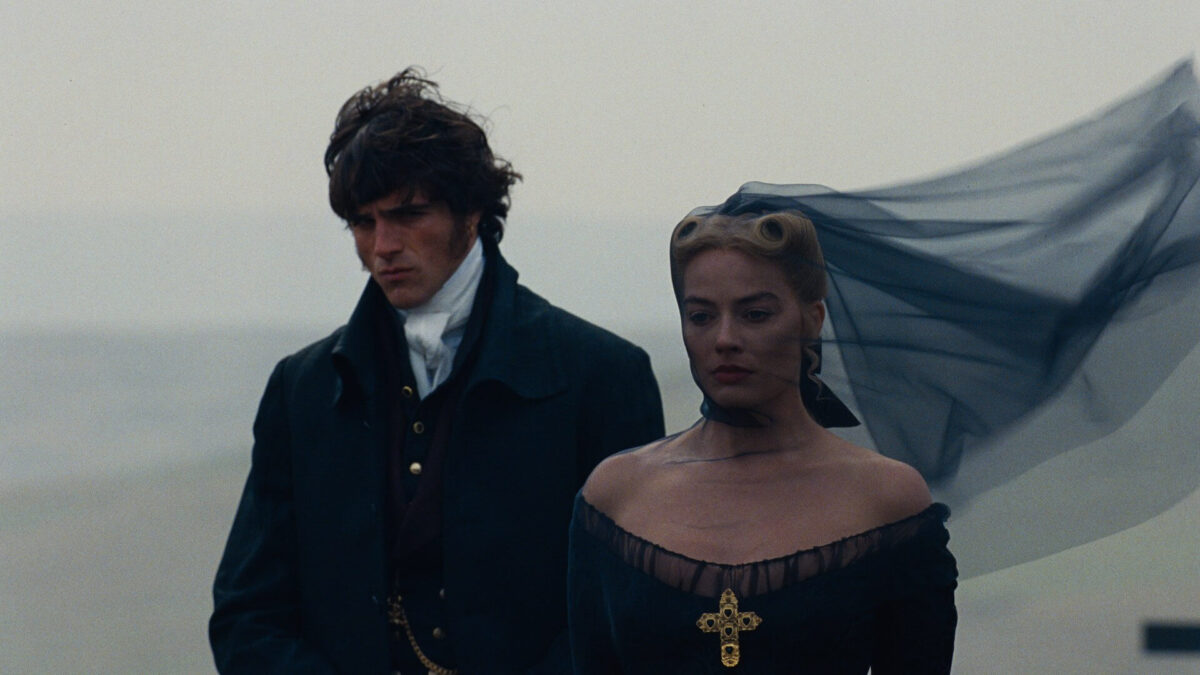
As the Epstein files continue to peel back the layers of how elite male violence is enabled and excused by the powerful, Emerald Fennell’s adaptation of Wuthering Heights arrives at a precarious cultural crossroad. It is either a catastrophic misread of the current moment or a revealing mirror of our collective appetite for gorgeous toxicity. Fennell’s track record, defined by the neon-soaked, divisive pop #MeToo rage of Promising Young Woman and the juvenile psychosexual shocks of Saltburn, suggested an adaptation that would prioritise sticky visuals over political clarity, opines a review of the film in The Guardian.
We have close-ups of snail slime, sweat beads, pig blood and a drenched Catherine and Heathcliff throughout the story. When this aesthetic approach meets Wuthering Heights, the risks multiply. Emily Brontë’s 1847 novel is not a love story about two passionate souls separated by circumstance. Heathcliff is not a romantic hero. He is a man so thoroughly destroyed by his dispossession that he becomes a destroyer in turn. The resulting adaptation confirms these fears: a visually sumptuous spectacle that frames Heathcliff’s cruelty as brooding charisma and his abuse of Isabella Linton as a stylised BDSM game.
The fundamental problem lies in the popular misapprehension of the source material, a trend Fennell leans into with “maximalist” fervour. Emily Brontë’s 1847 novel was never intended to be ‘the greatest love story of all time‘ (Fennell). The original text is a systematic dissection of how patriarchy, class violence, and racial exclusion reproduce themselves across generations, eventually destroying everyone they touch. It is a story of trauma, revenge, and the violence of a system that worships whiteness and wealth. By contrast, Fennell’s version, marketing itself with a sensuality that prioritises horny adolescence over the core of Brontë’s social critique, strips away the very elements that made the novel radical.
The question we must ask now is: can we afford another adaptation that flattens this complexity into consumable “dark romance”?
The flattening of structural violence in “Wuthering Heights”
In the original novel, the connection between Cathy and Heathcliff is a byproduct of their shared defiance of certain moral and social codes within a rigid society. Brontë’s Heathcliff is a child of likely foreign origin, ‘plucked from the streets of Liverpool‘, who faces systemic neglect and racialised abuse. However, Fennell’s casting of Jacob Elordi effectively erases the racial dynamics central to the book’s exploration of power. When Heathcliff’s cruelty is detached from his history of being a victim of a system, it becomes mere brooding, beastly posturing for the camera.
When Heathcliff’s cruelty is detached from his history of being a victim of a system, it becomes mere brooding, beastly posturing for the camera.
Linda Hutcheon defines adaptation as both a creative, interpretive process of ‘repetition with variation‘ and a product, challenging the notion that adaptations are inferior to original works. She argues that adaptations are transmedial and offer ‘the pleasure of familiarity‘ while engaging in a dialogue with the source material (114). But in this case, the adaptation does not even try to engage with the source material. Fennell, in multiple interviews, has talked about the adaptation being her interpretation of the book as a fourteen-year-old.
Multiple interpretations of one text can exist, but what Wuthering Heights does is amplify sexual tension, which is never explicilty explored in the original novel, erases the entire second section of the book and change the ending to provide a Romeo and Juliet version of the novel. The novel’s structure itself refuses this romanticisation. Told through multiple unreliable narrators, the housekeeper Nelly Dean and the gentleman visitor Mr Lockwood, we are forced to piece together a story of horror from partial, compromised accounts. We witness violence; we do not consume it as entertainment. Isabella Linton’s letters describing her abuse at Heathcliff’s hands are some of the most harrowing in Victorian literature precisely because Brontë refuses to make suffering beautiful.
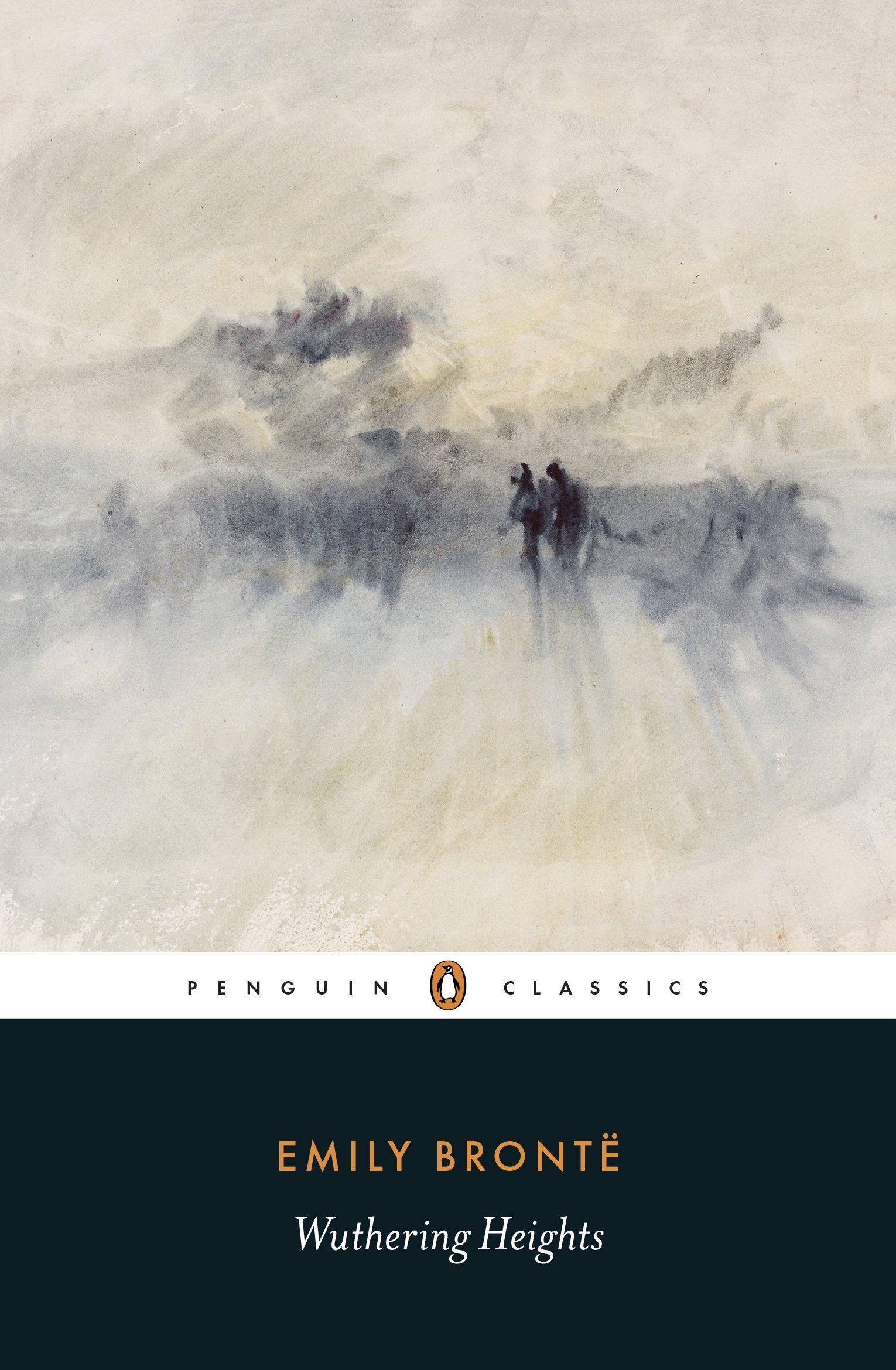
This matters because of how we consume “difficult” literature today. On platforms like BookTok, Heathcliff is often rehabilitated as a morally grey romantic hero, a flattening that Fennell’s “Wuthering Heights” embraces by focusing almost entirely on the first half of the book and the ‘corset-heaving love story‘. By omitting the second half of the novel, which follows the children of the original protagonists, Fennell discards the generational trauma and the inheritance of cruelty that gives the story its weight. What remains is what critics have called a “smooth-brained” celebration of two toxic people who refuse to quit each other, presented with the aesthetic conviction of a ‘two-hour-16-minute-long perfume advertisement‘.
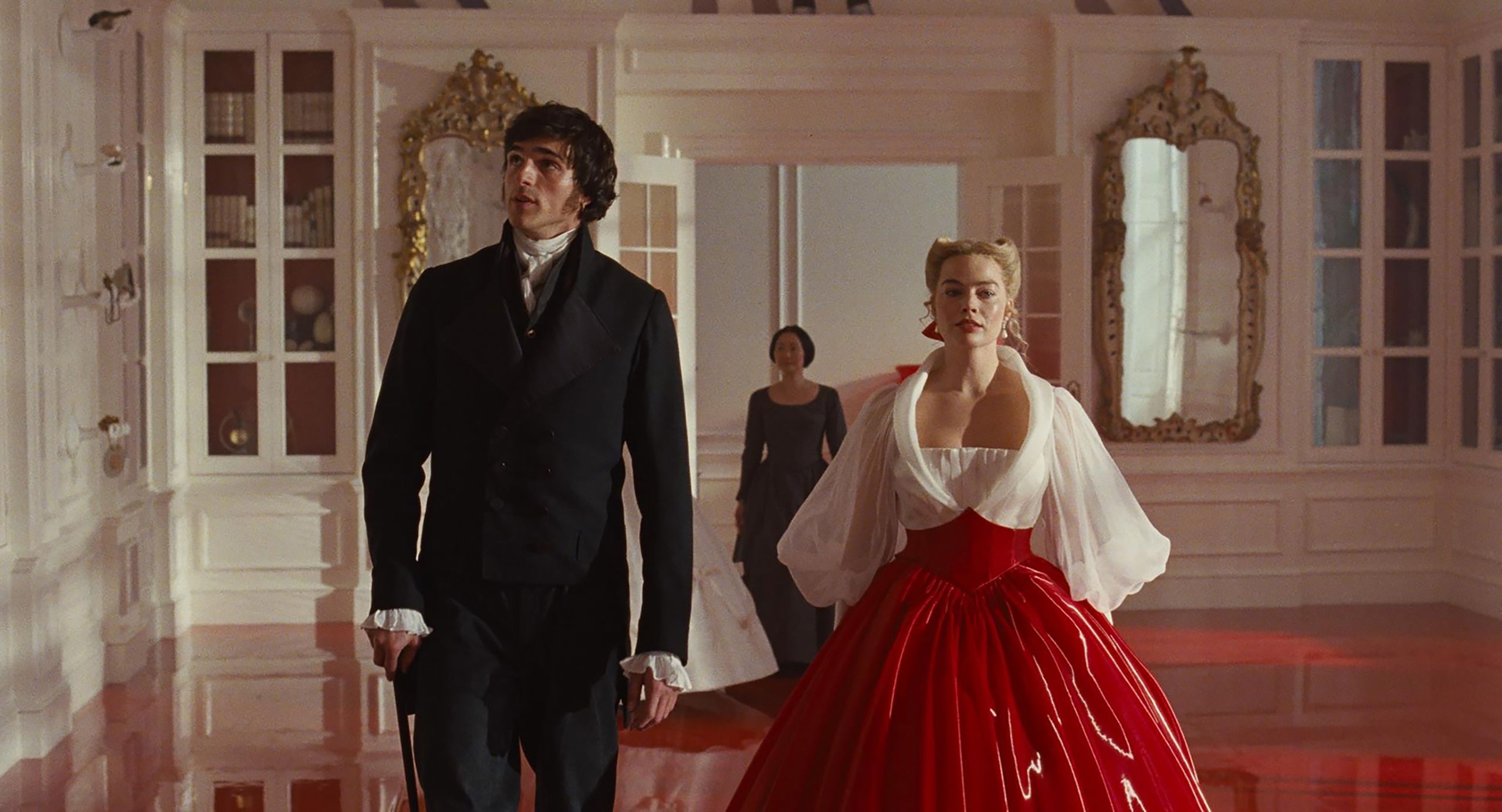
The risk of beautifying violence is most apparent in Fennell’s treatment of Isabella Linton in “Wuthering Heights”. In the novel, Isabella is a victim of systematic domestic abuse that Brontë portrays with unsparing grimness; her eventual escape, where she throws her wedding ring into the fire, was a strong depiction of female agency at a time when women were legally the property of their husbands. According to a review in The Guardian, Fennell, however, chooses to ‘literalize the book’s dom-sub valence‘, turning Isabella into a ‘simpering, daft creature‘ who wears a dog collar and is played for laughs.
According to a review in The Guardian, Fennell, however, chooses to ‘literalize the book’s dom-sub valence‘, turning Isabella into a ‘simpering, daft creature‘ who wears a dog collar and is played for laughs.
One scene even depicts Isabella pretending to be a dog owned by Heathcliff and barking when commanded. This choice transforms a narrative about the horrors of patriarchal property rights into a stylised BDSM game, suggesting that abuse is merely a facet of passionate desire. As global feminist movements grow exhausted from explaining that abuse is not passion, Fennell gives us a version of Wuthering Heights where the degradation of women is aestheticised without political clarity or moral substance.
The erasure of the female perspective
The adaptation’s strikingly dim view of its women extends to the character of Nelly Dean. While Brontë’s Nelly is an unreliable narrator, Fennell transforms her into an outright antagonist. In this version, Nelly Dean’s cruel inaction is framed as the primary cause of Cathy’s death, a change that some critics argue reflects a privileged worldview where structural tragedy is blamed on the machinations of the domestic staff, argues a review in The Guardian. Catherine Earnshaw becomes merely a canvas for the film’s excessive visual flourishes, with Margot Robbie‘s performance rendering her as a mannequin-like figure oscillating between arrogance and lust.
Brontë’s nuanced portrayal of frustrated longing gives way to hollow sexual provocation; a performance of self-destruction that rings empty because there’s no coherent self beneath it. The obsessive attention to bodily imagery in “Wuthering Heights” indulges in base sensory stimulation rather than offering substantive insight into psychology or social hierarchy.
Global resonances and the Indian context
This trend of aestheticising male violence is not limited to Western adaptations; it has a profound and dangerous resonance in the Indian context. From the classic Devdas to contemporary blockbusters that glorify passionate but possessive love stories, Indian popular culture has its own history of adaptations that strip away critique to celebrate the tortured male ego. In a cultural moment defined by rising violence against women, the rehabilitation of complicated men in art serves to further blur the lines between obsession and love.
Just as Fennell’s Heathcliff is offered a flattering filter for his brutality, many Indian films have historically framed a man’s self-destruction and the collateral damage he causes to the women around him as the ultimate proof of his romantic depth. We are in desperate need of art that helps us see structural violence clearly, rather than more gorgeous Gothic toxicity that invites the audience to find beauty in a dog collar or a brooding abuser.
Refusing the beautiful brutality
Ultimately, Fennell’s “Wuthering Heights” feels like a ‘cynical co-option‘ of a radical text. The film reaches for mature emotional complexity but lands instead on the simplistic, all-consuming feelings of teenage infatuation. By reducing Brontë’s examination of class structures and racial othering to surface-level eroticism, it sidesteps the very discomfort the novel was designed to elicit.
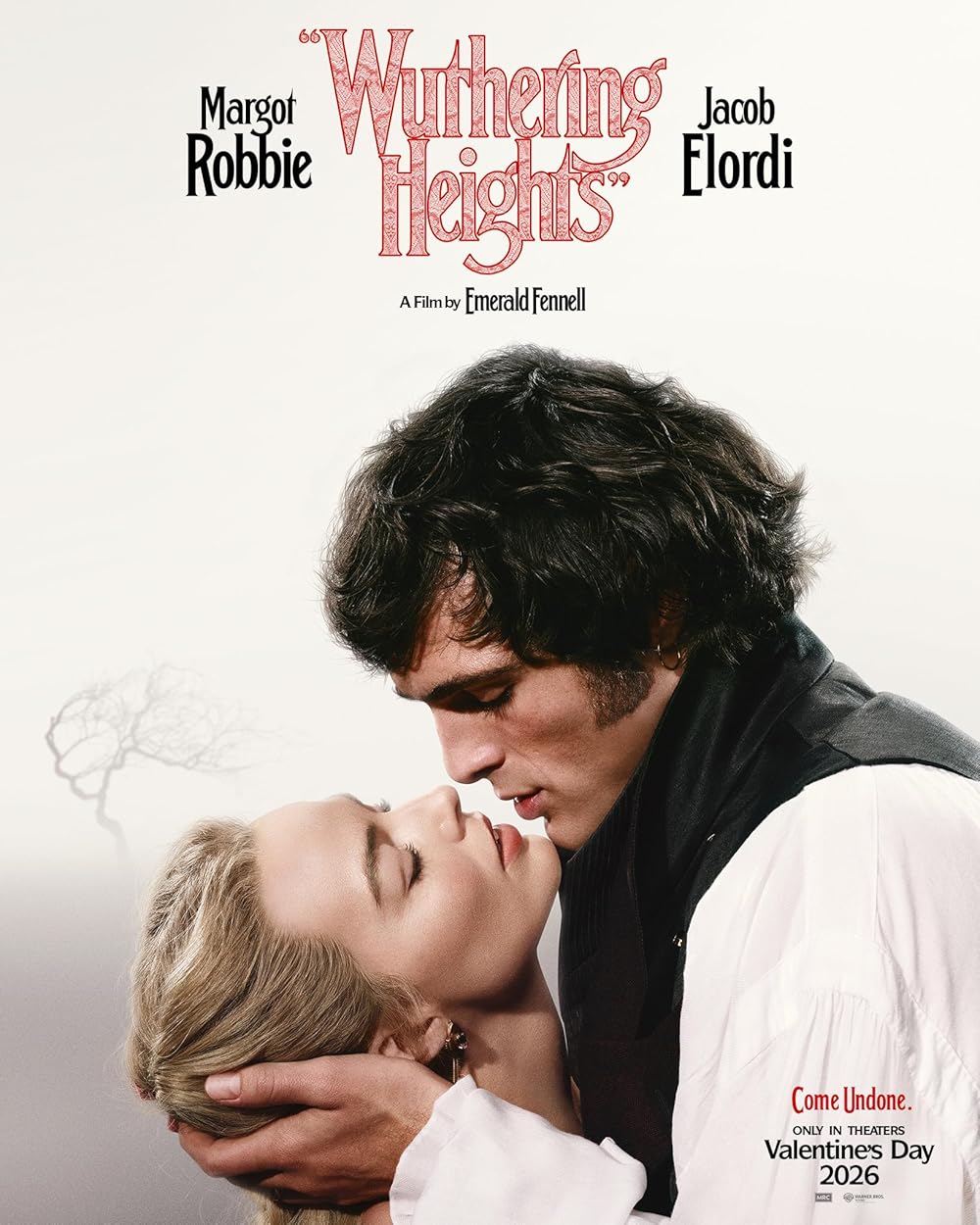
The film’s poster famously puts the title in quotation marks, perhaps signalling Fennell’s awareness that this is a limited interpretation rather than a faithful adaptation. Yet, in a world where elite male violence is still routinely excused as complicated behaviour, we do not need another “Wuthering Heights” that makes abuse look like a high-fashion editorial. We need adaptations that refuse to make the destruction of human beings look beautiful. We need art that recognises that when violence is aestheticised without political clarity, it ceases to be a critique and becomes an enablement.
We need art that recognises that when violence is aestheticised without political clarity, it ceases to be a critique and becomes an enablement.
Fennell’s “Wuthering Heights”, for all its vibrant visuals and maximalist noise, remains a missed opportunity to address the very real and ugly ghosts of our present moment.
References:
Brontë, Emily. Wuthering Heights. OUP Oxford, 2009.
Hutcheon, Linda, and Siobhan O’Flynn. A Theory of Adaptation. Routledge, 2013.
Wuthering Heights is at its heart a story of class and race. Emerald Fennell has got it all wrong
‘Wuthering Heights’ strays from source material, creates new story
Emerald Fennell’s Wuthering Heights is big movie with a very small mind
About the author(s)