For the longest time, I remember being told to calm down and not show the anger that I felt. I recall a conversation with a close friend where we discussed how we were told to be calm growing up, and how we were asked to show no emotion or discomfort, no matter what life threw at us.
I would bottle up my emotions for the longest time, until I understood that I was damaging my health to maintain the peace for the benefit of the people around me. I have always been called a woman who feels too deeply, has too much passion, and becomes angry over minuscule things, the things that the world usually overlooks.
It is bewildering that a woman is always told to watch her tone, to mince with her words, to tone down her anger, and to be subservient in every space she enters.
It is bewildering that a woman is always told to watch her tone, to mince with her words, to tone down her anger, and to be subservient in every space she enters. It was not until recently that I realised that anger in women has historically been treated as something dangerous. It has always been frowned upon for a woman to hold the most human trait of all – her rage. I learnt that women who expressed anger against the atrocities of society were always labelled as difficult women—a notion designed to deter women’s anger and discipline its expression.
A historical pattern of pathologising women’s anger
As a writer and an opinionated feminist, I have had my fair share of frustrating encounters with being called a difficult woman. Women are all too familiar with having their pain dismissed and their worries minimised. And this isn’t a new phenomenon. Throughout history, the term ‘hysteria’ was used to dismiss a woman’s emotional experiences. The signs of hysteria were thought to be emotional outbursts, hallucinations, attention-seeking tendencies, and the loss of logical thinking. The idea of hysteria was rooted in sexism, and this sexism shaped not only the beliefs of society but even those of medicine.
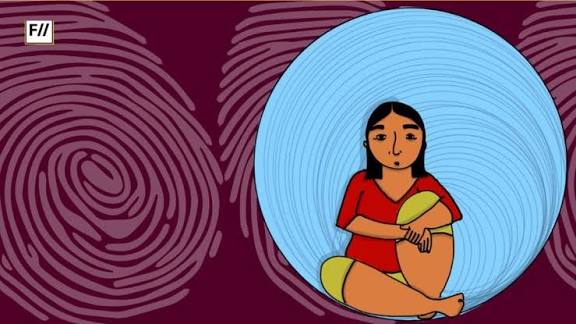
In ancient Greece, it was believed that a woman’s uterus could travel through the entire length of her body, evoking a set of physical and emotional symptoms. This idea came to be known as the wandering womb, which ultimately led to the coining of the term hysteria from the Greek word ‘hystera’ (uterus).
Today, the term hysteria draws heavy criticism and has fallen out of favour. However, where women were once called hysterical, today they are more often called difficult.
As we journey through the trenches of history, we notice a pattern of women being called hysterical for raising their voice, not conforming to societal expectations, and being unapologetically themselves. Today, the term hysteria draws heavy criticism and has fallen out of favour. However, where women were once called hysterical, today they are more often called difficult.
Today’s ‘difficult woman’
Every woman who is assertive, unapologetically herself, independent, and vocal is called ‘difficult’ or other things along similar lines, such as intimidating, bossy, or aggressive. This is often done as a means to control and shrink women, and to mould them according to societal expectations of femininity. This can be seen in online spaces, workplaces, social settings, and within the home. Women are expected to be accommodating, polite, and docile, and women’s anger and emotional expressions often contradict these expectations. Even as a response to injustice, anger or emotion is never considered acceptable in women.
Patriarchal societies are designed to suppress women’s voices. The patriarchy will always view intense, angry, emotional women as difficult, and such labelling is a control mechanism that seeks to uphold patriarchal norms and silence women for the benefit of men. As women, we must ask ourselves: If we are told to stop being difficult and remain compliant for the sake of keeping the peace, who is it benefiting from our silence?
Reframing anger as a political emotion
How many times do we as women internalise this policing and shrink ourselves and our voices? I have found myself questioning whether I am too much, too difficult. But over time, I have realised that the more we water ourselves down to fit society’s gendered expectations, the further we move away from what we truly believe in and who we really are.
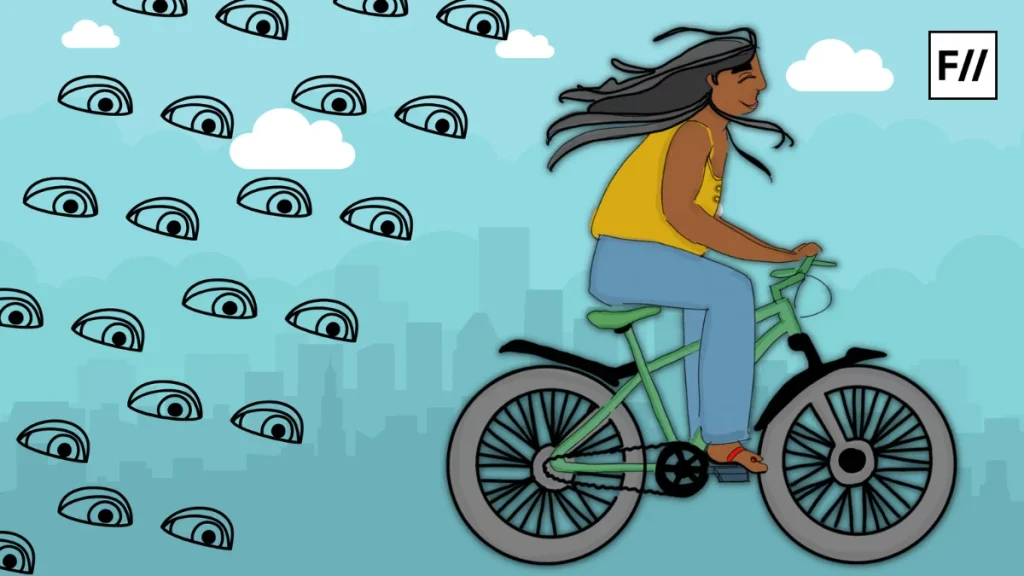
In her essay, The Uses of Anger: Women Responding to Racism, American writer and thinker Audre Lorde argued that anger in the face of oppression is a powerful tool necessary to bring about change. Anger and emotion are not forces of destruction that need to be suppressed. Emotional expression can be a catalyst for clarity rather than chaos, and women’s feminist rage can be empowering.
The label of the ‘difficult woman’ is a tool of oppression that society uses to control and diminish women. Maybe instead of asking women to silence their voices, we should reflect on what made them raise their voices in the first place. What if the difficult woman was simply the one who refused to disappear? Or a woman who refuses to remain silent in the face of injustice?
About the author(s)