Our history books are undergoing a makeover, but not in ways that empower. As the decision-makers are in the process of deleting the Mughals and the Delhi Sultanate from history books or renaming the Babri Masjid to fit a certain narrative, another erasure of the most radical figures of our past is also occurring. This revision of history to conform to patriarchal, right-wing myths about a golden age is not only disrespectful, but this selective version of the past only allows women to be two things: they can be victims to be rescued by men or mothers to be sacrificed.
Razia Sultan and Rudrama Devi are great historical examples of women who subverted patriarchal expectations of femininity, demonstrating that power is a performance, but one that is unpalatable to a patriarchal society that views women’s legitimate place as being in the domestic sphere.
We learn of Rani Lakshmi Bai not only because she was a great military strategist, but because she fought a war with her child strapped to her back. Why can she not be considered a hero just for her efforts on the battlefield, without focus being drawn to her domestic responsibilities?
On the other hand, Razia Sultan and Rudrama Devi are great historical examples of women who subverted patriarchal expectations of femininity, demonstrating that power is a performance, but one that is unpalatable to a patriarchal society that views women’s legitimate place as being in the domestic sphere.
Razia Sultan: The queen who rejected the ‘a’
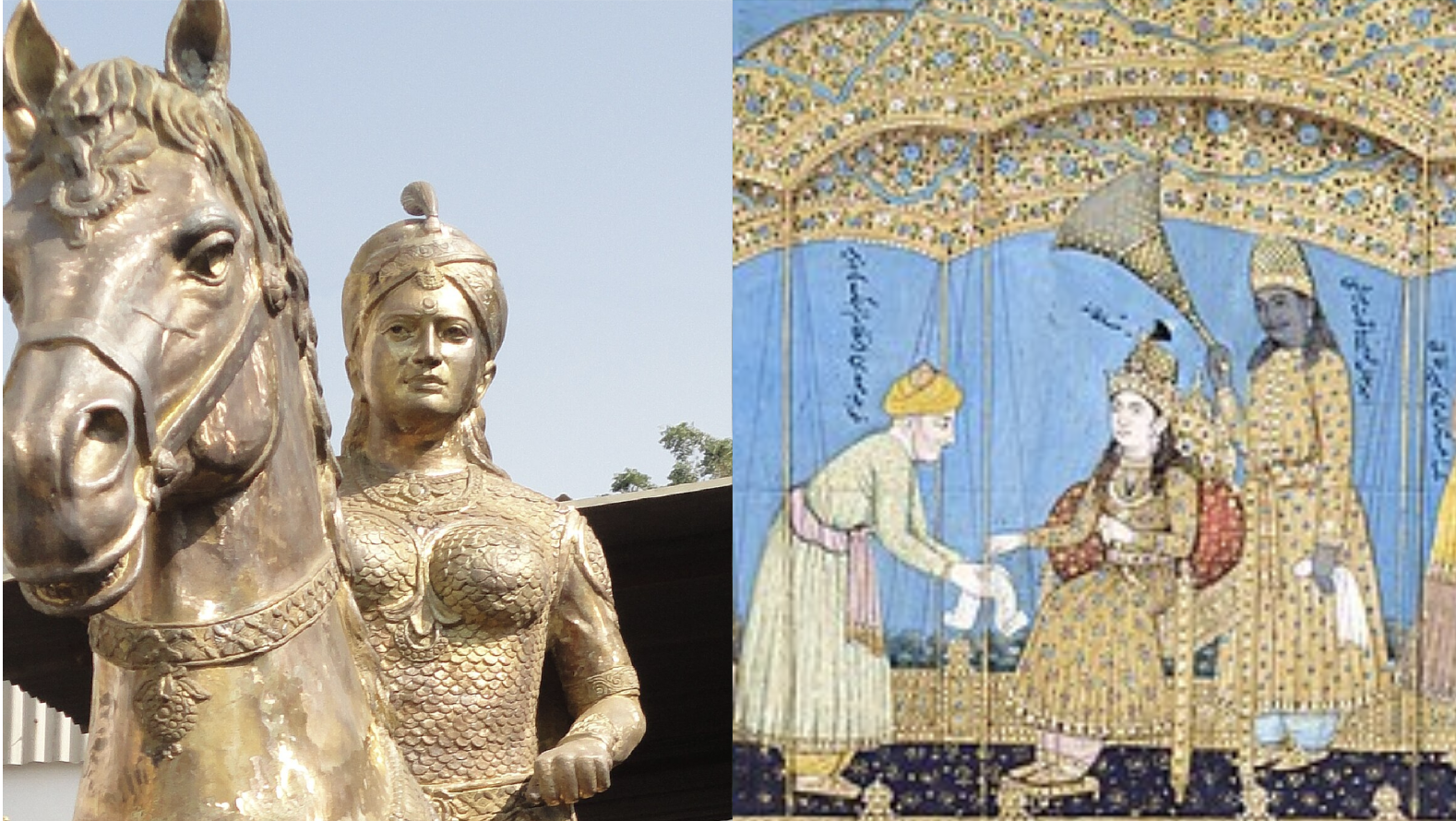
Mamluk ruler, Sultan Iltutmish, had outlived his sons and had appointed his daughter, Razia, as his heir. This was a first at a time when ascending the throne was widely viewed as a male preserve. In 1236, upon Iltutmish’s death, Razia became the first Muslim woman ruler of the Indian subcontinent and the first and only woman sultan of the Delhi Sultanate.
Razia knew that titles are important in shaping perception. She did not accept the position of ‘sultana’, which meant the sultan’s consort. Instead, she proclaimed herself as Sultan Jalalat-al-Duniya wal-Din. By losing that one vowel, she indicated that her power was not secondary and she was not ruling for a deceased husband. She was the sultan of the Delhi Sultanate; she was no consort.
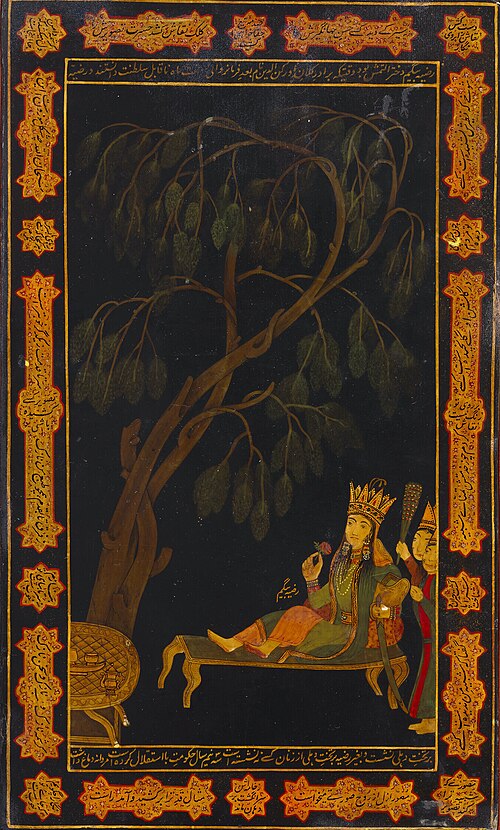
Her rebellion knew no end. She rejected the purdah and appeared in the durbar in a kaba (cloak) and kulah (hat). By riding her elephant in the city of Delhi with her face uncovered, she had confronted patriarchal norms that viewed women as ‘private property’ belonging to men and not as individuals. However, Razia was deposed and eventually murdered, demonstrating that a woman—even one with supposedly masculine virtues—wielding power was still not acceptable to a patriarchal society that saw power as the preserve of men.
Rudrama Devi: The Kakatiya son
Years after Razia Sultan’s ascension to the Delhi throne and her eventual death, the subcontinent saw another such ruler, this time in the Deccan region. Sometime in the mid-1200s, Kakatiya ruler King Ganapati Deva conducted the putrika ceremony, a legal and religious ritual, which enabled a father to designate his daughter as his son, allowing her to inherit the throne. Ganapati Deva’s daughter, Rudrama Devi, eventually became Rudra Deva Maharaja.
Where Razia failed, Rudrama succeeded because of the legal recognition of her role as the king. However, her successful and stable reign proves that ‘king’ didn’t have to be a gendered role.
Rudrama Devi was a man before the law. She was addressed by the name of Maharaja Rudradeva: her official state identity. In contrast to Razia, the performance of masculinity in Rudrama Devi’s case was supported by the law and nobles were obliged to treat her as the king. The inscriptions in the Kakatiya temples at Hanumakonda address her as the king, not the queen.
She was not just a political scholar, but also a warrior leading her cavalry. When Marco Polo visited the country, he said that Rudrama Devi was a lover of justice, equity, and peace, better than any man to rule. Where Razia failed, Rudrama succeeded because of the legal recognition of her role as the king. However, her successful and stable reign proves that ‘king’ didn’t have to be a gendered role.
The performance of power and masculinity expected of women
While women like Razia Sultan or Rudrama Devi had to perform masculinity to access power centuries ago, similar expectations exist of women even today. But why do we consider embracing masculine signifiers powerful? Perhaps because we have internalised the notion that masculinity is a prerequisite for successfully managing power.
Razia and Rudrama did not put on men’s clothes or style themselves using male titles because they desired to be men; they did so because the world does not accept powerful women. Ultimately, history reveals one truth: the only fragile thing under the leadership of women was the egos of men who witnessed it being made.