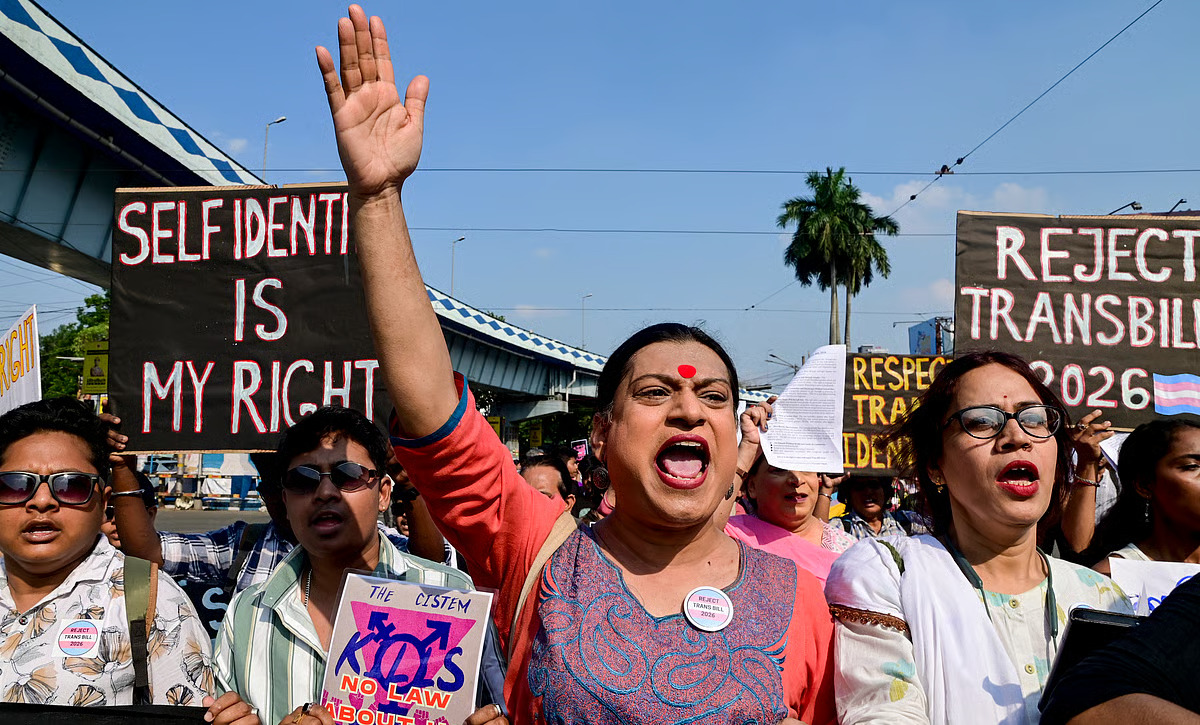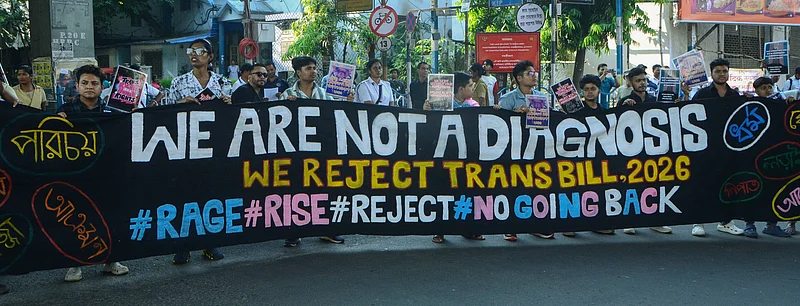
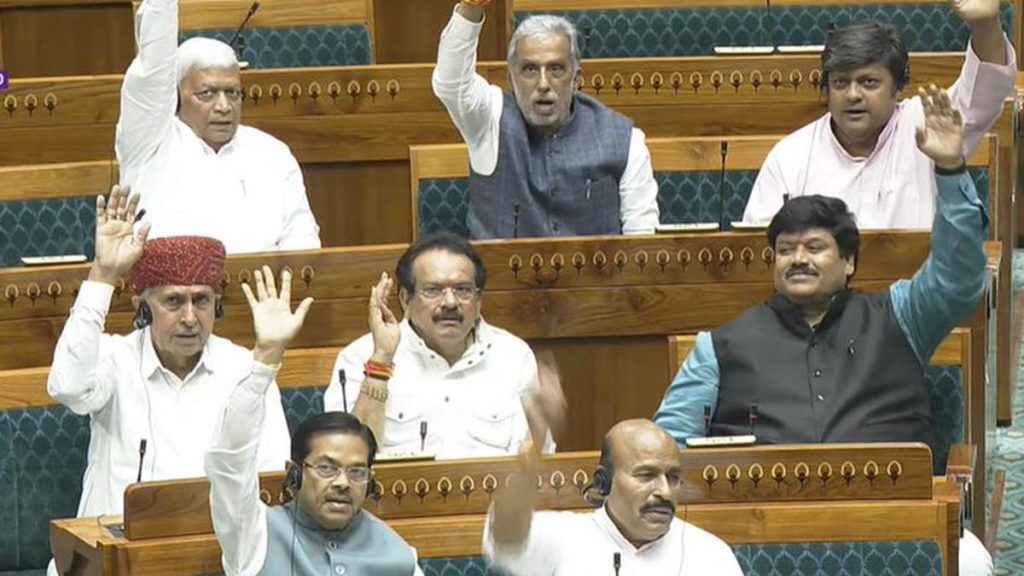
The Transgender Amendment Bill 2026 was passed in the Rajya Sabha on 25th March 2026. The bill was earlier passed by the Lok Sabha on 24th March. The bill came as a hefty blow to trans persons and non-binary individuals across the country. The bill seeks, as the Social Justice ministry has claimed, to identify “genuinely oppressed persons” while in reality it excludes transgender people, trans men and other gender minorities which do not fall under a certain bracket or do not fit the norms that are laid out by the provisions of the bill. The bill also intends to restrict the definition of who a transgender person is, reducing them to only socio-cultural identities such as ‘Kinner, Hijra, Aravani, Jogta, and eunuch’ and persons with intersex variations or someone with ‘one or more congenital variations of sex characteristics’. By providing an absolute definition, the bill contradicts the NALSA verdict of 2014, which upheld the right to self-identify.
The Trans Amendment Bill 2026 failed to take into consideration the identities of transmasculine and non-binary individuals. These identities along with other trans identitites, according to the NALSA judgement, were to be regarded as the “third-gender”. Since the court had already clarified that gender identity is “an innate perception of one’s gender”, biological contestations should not have taken place. By virtue of their natal socialisation as girls/women, transmasculine individuals have not had the liberty or freedom to mobilise themselves as transwomen could. Thus, double marginalisation rendered them virtually invisible in society.
Transmasculinity and (In)visibility
Socio-cultural visibility of transfeminine persons in South Asia is mostly due to their overt presence in Indic mythology. Transfeminine individuals, owing to their explicit visibility, have also been at the forefront of violent attacks. According to Gee Semmalar, Hijras have organised themselves into gharanas and have thus been able to “occupy public space together”. While the bill reduces transfeminine persons into a few socio-cultural categories, transmasculine people have not been mentioned at all. This invisibility stems from a misogynistic and patriarchal construct of the South Asian traditional family system, which does not allow AFAB (assigned female at birth) people to secure their independence. Their bodies are regulated and confined within the domestic, let alone the assertion of their gender identity. Low mobility, with no bodily autonomy, has led to their invisibility in government policies. What Semmalar had written about in the year 2014 stands true in 2026 – the Transgender Amendment Bill 2026 falls short on all fronts.
The bill seeks, as the Social Justice ministry has claimed, to identify “genuinely oppressed persons” while in reality it excludes transgender people, trans men and other gender minorities which do not fall under a certain bracket or do not fit the norms that are laid out by the provisions of the bill.
Violence against transmen is rarely reported owing to their marginality. While transwomen are often subjected to public violence, transmen are subjected to “corrective rapes”. With the Bharatiya Nyaya Sanhita (Sections 63 through 73) making it impossible for trans men to seek legal redressal, these offences go largely unreported.
Since the bill has not created provisions for or included transmasculine and non-binary people into its definition for a “transgender” person, their gender-affirming surgeries might also come to a standstill. Gender-affirming surgeries have helped in lowering the rates of “psychological distress and suicidal ideation”, as reported by the Harvard TH Chan School of Public Health. Thus, being unable to pursue gender-affirming surgeries or being subjected to pathologisation and unwarranted bureaucratic checks puts the populace at risk of developing psychological agony.
Discipling ‘Others’
The heteronormative patriarchalstate, through the bill, is trying to regulate the non-conforming bodies. Among these, transmasculine people, who are assigned “female” at birth, are generally considered more transgressive than others. As a part of the state’s nationalist agenda, a woman’s body is considered a site of cultural and biological reproduction. Honour had become synonymous with their bodies. Thus, a female body tends to be placed under greater control, unlike male bodies. With the introduction of the bill, the state is explicitly trying to gain control over female bodies, denying any right to self-determination of one’s gender identity.
Non-binary bodies, on the other hand, do not fall under the state’s definition of binary gender identities. Hence, to avoid any ambiguity, a complete dismissal of gender-queer, gender-fluid, and non-binary identities was charted. This makes it easier for the state to govern its citizens. The bill legitimises French philosopher Michel Foucault’s understanding of biopolitics. Biopolitics refers to the act of governing a population that is “produced by institutional mechanisms of control and exclusion”.
The National Council for Transgender Persons (NCTP)have also raised their objections to the bill, and remarked that it was not consulted. The state, therefore, is trying to enact a bill that not only delegitimises transgender people but also excludes and pathologises them.
Who is the “respectable” queer?
Kinnar Akhada’s support towards the Ram Mandir did not go unnoticed. A polarisation within the community has resulted in fragmentation. The collusion of Kinnar Ahkada with the Hindutva regime has led to the saffronisation of a section of the queer community, who have been working with and are largely supportive of the central power. Their support for the government fell on deaf ears when the NCTP lamented that the bill wasn’t discussed with them. Thus, marginalised communities should be wary of the powers that they choose to support. It does not take them long to turn their backs on the community.
The bill came at a time when there had already been a global shift in trans rights and protections. Western liberal democracies, like the United Kingdom, have rolled back on trans rights, along with the United States of America. It was only a matter of time before India followed suit. Trans communities in India have been protesting since the 13th of March, demanding a complete withdrawal of the Transgender Amendment Bill 2026. The bill stands in absolute contradiction to the NALSA judgement and needs to be withdrawn to protect the autonomy of the queer community in India. Hopefully, the national protests against the bill should set a precedent for other South Asian countries that are currently debating fundamental rights for their queer citizenry.
About the author(s)