Picture a journalist. Are they someone from an urban, middle-class background? Someone who possesses a degree (or several) in journalism? You may have pictured a man, an ‘upper’-caste one, sitting behind a desk in a studio, facing a camera, waxing eloquent in English. And what does this journalist’s audience look like? Perhaps not very different from him — English speaking, urban, middle class, and ‘upper’-caste.
Many mainstream journalists fit that mould; however, that’s not true of all journalists. Journalism exists beyond urban, English-speaking newsrooms helmed by people with considerable socio-economic, caste, and class privilege. The audience for journalism also extends beyond the urban, English-speaking milieu.
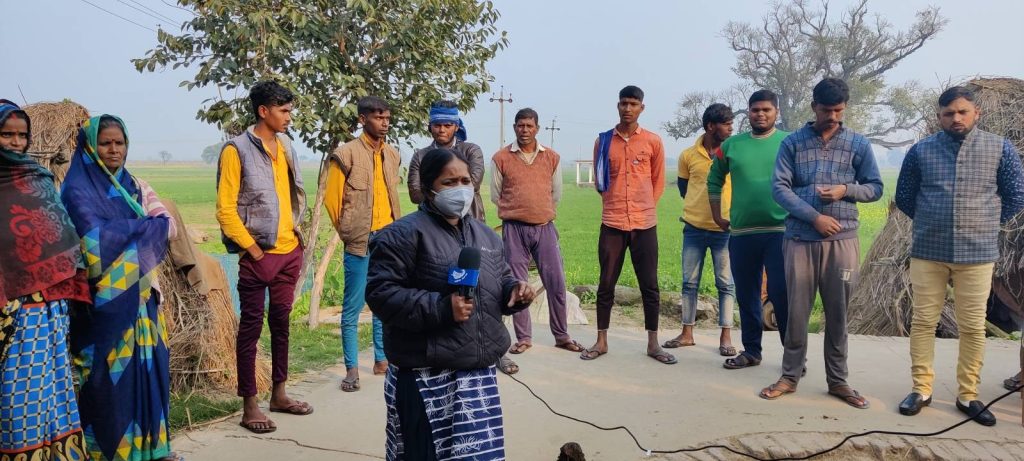
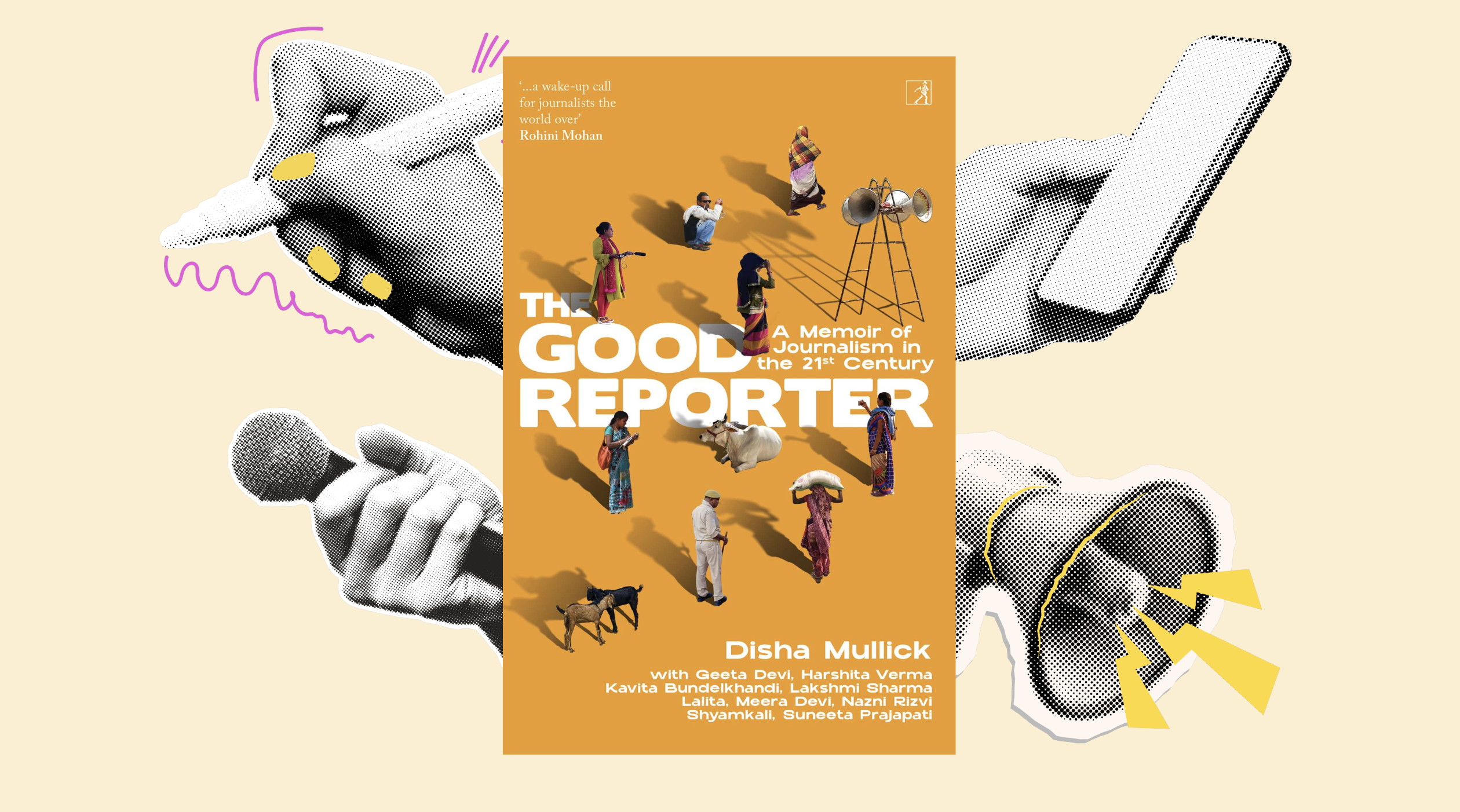
The Good Reporter: A Memoir of Journalism in the 21st Century is here to remind us of just that. The book, which is a collective biography of Khabar Lahariya, challenges this limiting idea of who a journalist is or who they ought to be to be considered ‘legitimate’ reporters. And in the process, the book challenges our deep-seated notions, shaped by gender, caste, class, and geography, of what journalism is, who practices it, and who consumes it.
The book, which is a collective biography of Khabar Lahariya, challenges this limiting idea of who a journalist is or who they ought to be to be considered ‘legitimate’ reporters.
A brief history of Khabar Lahariya
Originally conceptualised in 1993, Khabar Lahariya formally started in 2002 in the hinterlands of eastern Uttar Pradesh. The fortnightly newspaper, founded by Kavita Bundelkhandi, Meera Jataw, and Shalini Joshi, was initially published in Bundeli and Hindi. The all-women newsroom consisted mainly of reporters from marginalised communities — Dalit, Muslim, and other marginalised castes. Everything from reporting in the field and writing stories to editing, printing, and selling the newspaper was handled by the small team itself.
Over the years, the newspaper spread to other districts in Uttar Pradesh and Madhya Pradesh. The paper also went from being fortnightly to weekly. The number of pages increased, the area of reporting widened, and the team grew. And, ultimately, Khabar Lahariya took a plunge into the world of digital media.
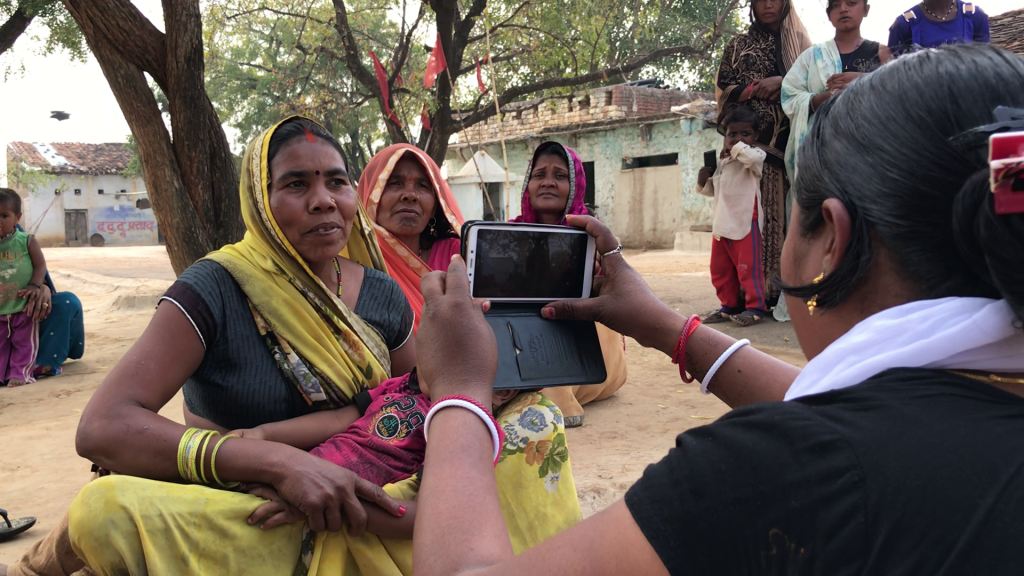
In 2015, Khabar Lahariya went entirely digital and eventually decided to end publishing the newspaper. This transition from a small rural newsroom confined to one geography to a larger newspaper spread across states in North India, and eventually to an all-digital newsroom, came with its own set of challenges, learnings, and successes, and The Good Reporter lays it all bare.
What is gained when the outside-in gaze is rejected
Often, stories like Khabar Lahariya’s, when narrated by outsiders, are shaped through an outside-in gaze, one that is, more often than not, also directed downwards. What this produces is a novel, feel-good story in which nuance and complexity are traded in for a simplistic narrative, and the individuals behind the story are flattened into a singular, monolithic identity.
The Good Reporter is written by Disha Mullick, along with Geeta Devi, Harshita Verma, Kavita Bundelkhandi, Lakshmi Sharma, Lalita, Meera Devi, Nazni Rizvi, Shyamkali, and Suneeta Prajapati, who currently helm the newspaper-turned-digital media platform. By becoming the authors of their own story, they reject this outside-in gaze that reduces their collective stories to a single narrative.
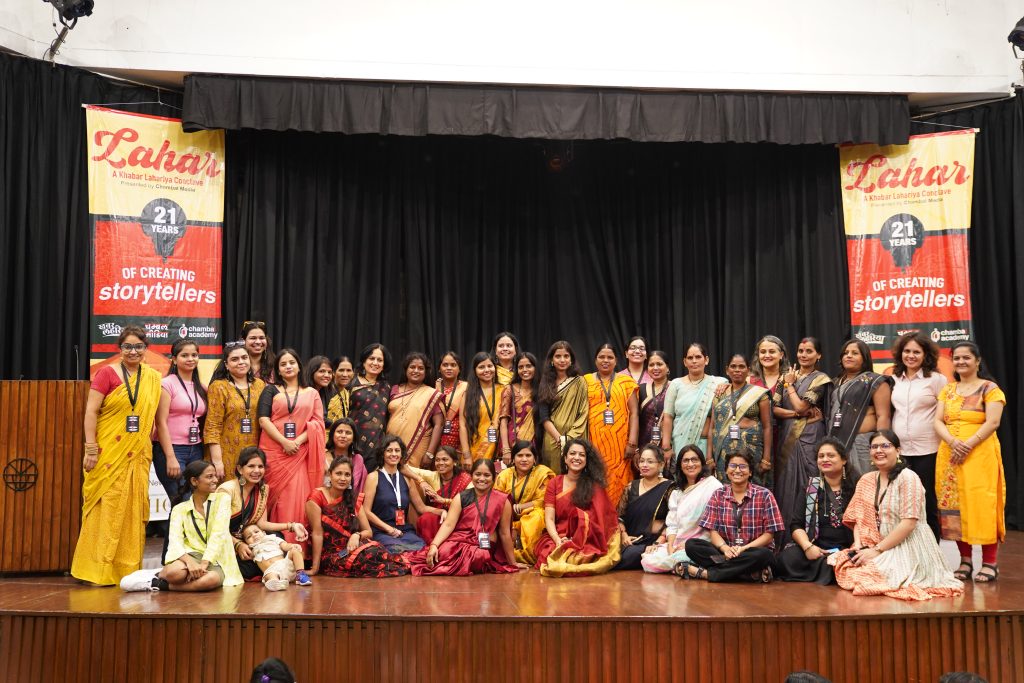
By virtue of being co-authored, the book also centres the voices, experiences, and lives of the numerous women behind Khabar Lahariya and makes room for their diverse realities. The women behind Khabar Lahariya do not always agree or get along, and there are, at times, annoyances and grievances. Diverse caste, class, and educational backgrounds, combined with differing geographic realities, create friction. Yet The Good Reporter also reveals a sense of family and camaraderie, with colleagues showing up for one another beyond work and bonds forged by a shared commitment to rural, feminist journalism.
Khabar Lahariya’s story is neither straightforward nor simple, and any attempt to present it as such would do a disservice to its subjects. That is why The Good Reporter is not interested in offering a sanitised version of what it takes to run a digital feminist newsroom for, and by, those who are often invisible in mainstream narratives.
The rise and success of Khabar Lahariya is not a feel-good story, as reducing it to one erases the everyday labour and intentionality that go into the feminist newsroom they are continually in the process of creating.
With remarkable honesty and deep reflection, The Good Reporter is an account of the grit, commitment, and resilience that go into this work. The rise and success of Khabar Lahariya is not a feel-good story, as reducing it to one erases the everyday labour and intentionality that go into the feminist newsroom they are continually in the process of creating.
The continuous making and unmaking of a feminist newsroom
The Good Reporter illustrates how caste and class dynamics insert themselves and play out even in the most feminist, progressive spaces built with intentionality. The book describes how, in an effort to build trust with their sources, reporters often ask for a glass of water when visiting Dalit households for their stories. However, members of their own team sometimes refuse to eat alongside Dalit colleagues.
Caste, class, education, and geography influence power dynamics and professional and interpersonal relationships even in this feminist newsroom, despite it being predominantly led by Dalit women and its politics being informed by marginality. In revealing this, the book exposes the everyday, unending work that goes into making a feminist newsroom, and how a commitment to feminist politics has to be supplemented by honest and frequent dialogue, the challenging of long-held beliefs, continuous reflection, and equitable sharing of power.
Power is shared at Khabar Lahariya in unconventional but equitable ways, which is where its feminist politics truly shine. Editorial decisions are made through open conversation; hierarchies are less rigid, and decision-making power is decentralised. Everyone is not only given a seat at the table, but a voice.
Power is shared at Khabar Lahariya in unconventional yet equitable ways, where its feminist politics truly shine. Editorial decisions are made through open conversation; hierarchies are less rigid, and decision-making power is decentralised. Everyone is not only given a seat at the table, but a voice.
However, The Good Reporter also reveals how Khabar Lahariya’s feminism extends beyond the newsroom and editorial processes. Its recognition of, and accommodation for, the lived realities of its reporters is central to its feminist praxis.
The book discusses at length the many dangers that come with reporting, especially for its rural, Dalit, and Muslim journalists, whose gender identity, along with their caste-class locations and religious affiliations, make the very act of reporting a transgression of accepted patriarchal and caste norms. Women undertaking risk, occupying public spaces, and being highly visible are all considered transgressive in a patriarchal society. Reporters have had to face everything from familial hostility and condemnation from their communities to sexual harassment and grave threats to their lives on the field.
A recognition of these realities means that what care and community look like differs radically from how these ideas play out in other workplaces. Policies are framed, and structures are created, by taking these realities and marginality into account. Khabar Lahariya’s newsroom is a workplace, but it is also a community. Therefore, feminist politics do not just influence the stories they choose to work on, who they hire, who is let go, or how they approach their work; it is woven into the very fabric of Khabar Lahariya.
What makes a ‘good reporter’?
The Good Reporter explores how it is futile to separate the journalist from the person. No amount of journalistic integrity or neutrality can fully separate our work from our realities and experiences. However, The Good Reporter recognises this as a strength. Reporting in the hinterlands of North India, for communities whose voices are marginalised in mainstream media, who these reporters are and what their lived experiences have been becomes crucial to enabling them to reject an outside-in gaze and report with a desire to create change beyond merely narrating stories.
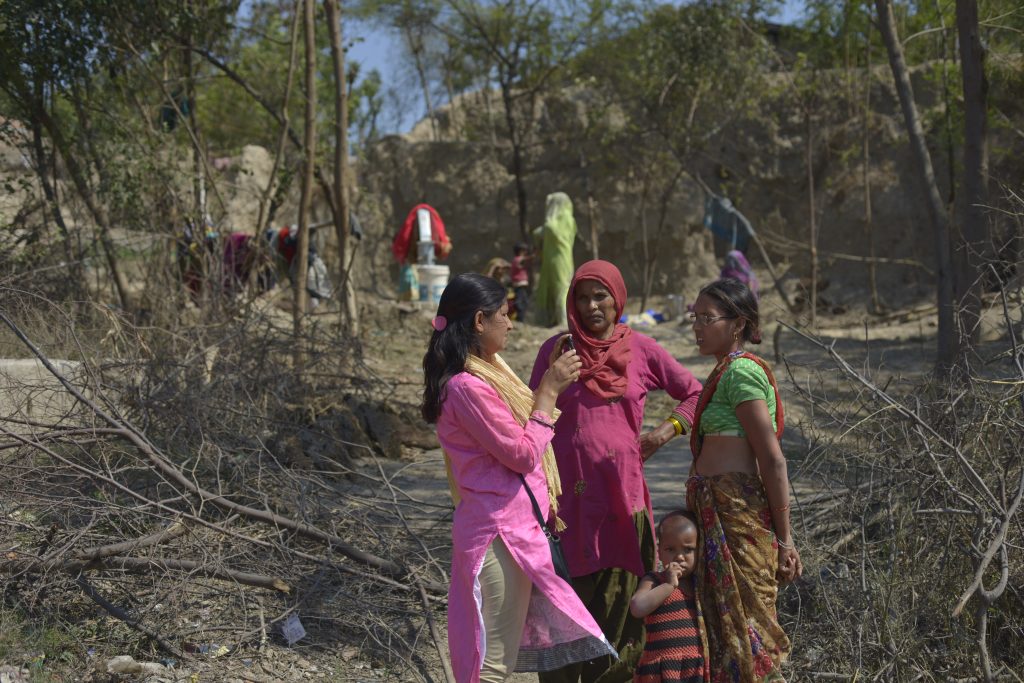
In our current media and political landscape, this serves as an especially potent reminder that, as journalists, the work we produce and the impact it has on the world are not separate from who we are. We are, therefore, forever accountable for the impact we create, especially when it is undesirable and in the service of the powers that be.
India ranked 157 on Reporters Without Borders’ World Press Freedom Index this year. Reporting in India, especially reporting that is critical of the state and vocal about its many failures, poses a direct threat to journalists. In times like these, Khabar Lahariya’s brand of journalism is integral to keeping alive the little press freedom remaining in the country. The book is a memoir insofar as it narrates the story of Khabar Lahariya, but it can also be read as a manifesto on what journalism should look like.
The Good Reporter will have readers reflect on what it means to be a ‘legitimate’ reporter and the extent to which that understanding is shaped by prejudicial ideas about gender, caste, class, education, and geography, as well as how the very notion of ‘legitimacy’ is often shaped by exclusion.
The Good Reporter will have readers reflect on what it means to be a ‘legitimate’ reporter and the extent to which that understanding is shaped by prejudicial ideas about gender, caste, class, education, and geography, as well as how the very notion of ‘legitimacy’ is often shaped by exclusion.
Read The Good Reporter and then picture a journalist once again. Hopefully, this time your idea of what a ‘legitimate’ journalist looks like is perhaps less male, ‘upper’-caste, ‘upper’-class, and urban.
‘The Good Reporter: A Memoir of Journalism in the 21st Century’, published by Simon & Schuster, is available in English and Hindi. The Hindi version is titled ‘Badi Aayi Patrakar’.
About the author(s)

Akshita Prasad is a journalist and FII's Assistant Editor. She primarily writes about politics, law and policy, socio-institutional justice, gender, women’s health, and culture. Her work engages critically with how power structures and institutional norms affect marginalised groups and public discourse, and she highlights structural inequalities through her reporting. Her work has appeared in various national publications, and she is the recipient of a Jury Appreciation Citation at the Laadli Media and Advertising Awards for Gender Sensitivity 2025. Akshita is also a Laadli Media Fellow.