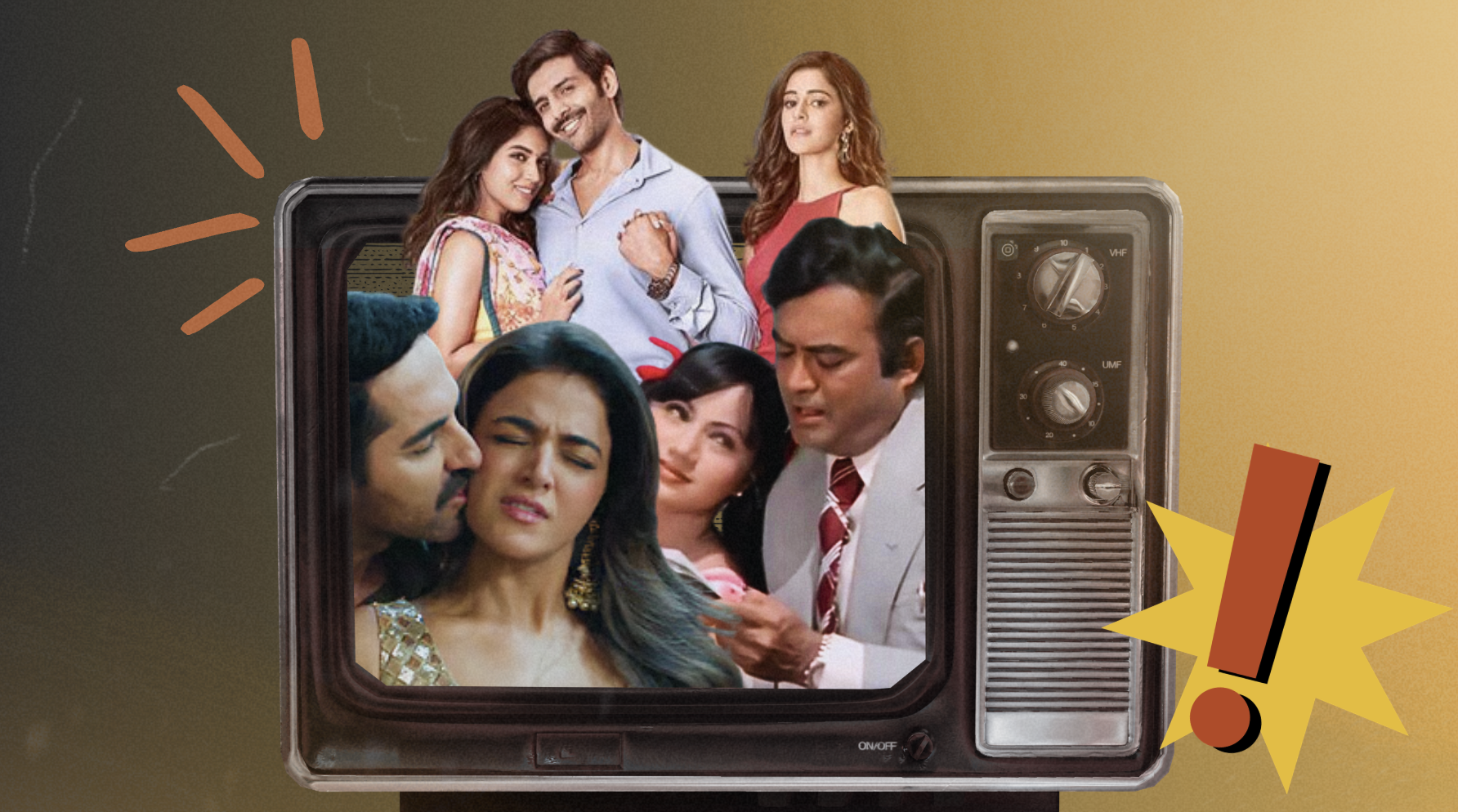
‘Samay badal gaya, par ek chiz nahi badli, patiyon ki fitrat (Times have changed, but one thing hasn’t: the nature of husbands).’
These are the narrator’s words at the start of Pati Patni Aur Woh Do, the spiritual successor to 2019’s Pati Patni Aur Woh. The first instalment gave viewers a peek into the ‘innocent’ frustrations of a husband portrayed by Karthik Aryan. However, before both films came the 1978 Sanjeev Kumar-starrer by the same name. The film followed the story of a philandering husband, setting in motion the acceptance of male infidelity on-screen, as long as it was couched in humour.
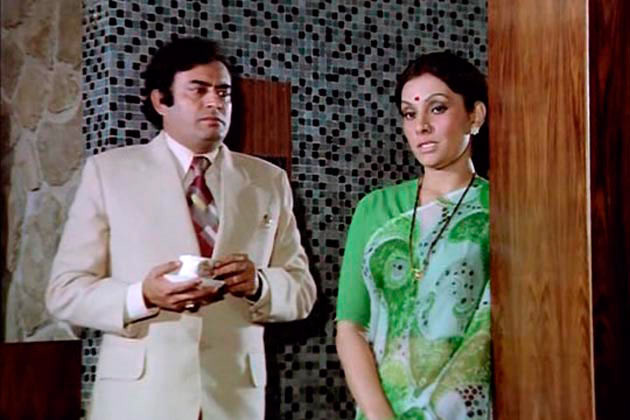
Within the last four decades, there exist many such tales centred on the same narrative: lonely married men and their choice to ‘share’ their love. Films with this trope avoid framing it as an ethical issue, instead portraying it as a situational inevitability. The husband is rarely written as someone making a deliberate choice; instead, the storyline works to remove his agency, generating sympathy for him, and eventually recasting accountability as victimhood. The husband becomes a man ‘caught between’ women, ‘trapped’ by circumstances, and ‘torn’ between desire and domesticity.
Making cheating palatable
The above narrative becomes evident not only within the films themselves but also through their paratexts: trailers, posters, OTT descriptions, interviews, and other promotional material. The films are almost always described as ‘outlandish’, ‘chaotic’, ‘funny’, ‘humorous’, or as a ‘comedy of errors’. The language surrounding them avoids the words ‘cheating’ or ‘betrayal’ almost entirely. While Pati Patni Aur Woh Do doesn’t feature cheating, it derives its ‘comedy’ from the mistaken assumption that the protagonist is unfaithful and, through its tone and treatment of the subject, ultimately makes cheating seem more palatable.
Creators and streaming platforms choose words like ‘a miserable married life’ or ‘saddled with three wives’ to talk about the philandering husband. Thus, the infidelity is then woven into the plot as ‘turmoil’, ‘confusion’, ‘temptation’, ‘thrill’, or a result of a ‘boring marriage’.
Not only do the descriptors and descriptions function as a hook for the audience, but the emotional and moral weight of infidelity is softened before the audience begins to watch.
For example, the synopsis of Pati Patni Aur Woh (1978) on a streaming platform describes the ‘other woman’ as the storm that enters the male lead’s life. Similarly, the synopsis of the film Kis Kisko Pyaar Karoon (which also features a cheating husband) on another platform reads, ‘Bhalu acquires three wives. It’s actually all his mother’s fault. She told him to never break a woman’s heart or home.’ Not only do the descriptors and descriptions function as a hook for the audience, but the emotional and moral weight of infidelity is softened before the audience begins to watch.
External crises that overshadow infidelity
Across these films, the husband’s infidelity is often paired with a larger external crisis: blackmail, mistaken identities, ‘accidental’ bigamy, ghosts, death, murder, or other such situations. This larger conflict becomes a distraction that serves to minimise the cheating and the betrayal.

By the time the wife discovers the affair or the possibility of one, the narrative has already shifted its focus, and it is now ‘the problem’ that demands greater attention. This problem also serves as a moment to bond and reconnect for the couple.
In the climax, the husband is often cornered into confessing, but this scene excessively focuses on the circumstances that lead him to cheat, rather than the hurt experienced by the wife or partner(s). He carefully structures his explanation around inevitability, loneliness, sexual deprivation, emotional neglect, temptation, thrill, boredom, or confusion, or simply states that he’s ‘a man’. The logic becomes that it happened ‘unintentionally’, so it cannot entirely qualify as betrayal.
The caricaturisation of women
For stories where infidelity is disguised as comedy, a ‘happy ending’ is a must. Therefore, reconciliation is necessary. Firstly, wives are frequently written as endlessly accommodating figures willing to preserve the marriage at all costs. Their ‘unconditional love’ never lets them believe that separation is an option, even in cases where they are financially independent.
In several cases, they are also made to accept partial responsibility for the husband’s actions. Their supposed ‘flaws’ of being overbearing, emotionally unavailable, boring, too demanding, too conservative, or too controlling are subtly positioned as contributing factors. If the husband cheats, then the wife is the one who must introspect.
While wives are written as caricatures with exaggerated flaws, the ‘other woman’ is reduced to a spectacle and a ‘temptation’. Both women are flattened so that the husband’s dissatisfaction and confusion can appear emotionally reasonable.
While wives are written as caricatures with exaggerated flaws, the ‘other woman’ is reduced to a spectacle and a ‘temptation’. Both women are flattened so that the husband’s dissatisfaction and confusion can appear emotionally reasonable.
These films depend heavily on this binary of what each woman represents. The contrast between the wife and the ‘other woman’ is intentionally exaggerated. The latter occupies a role representing youthfulness, modernity, and sexual expression, which is visually coded as freedom and thrill. Rarely written with emotional depth, she exists more as an ‘experience’ to fulfil the male lead’s fantasy. The wife symbolises stability, family, and routine, while the ‘other woman’ represents escape, risk, and excitement.
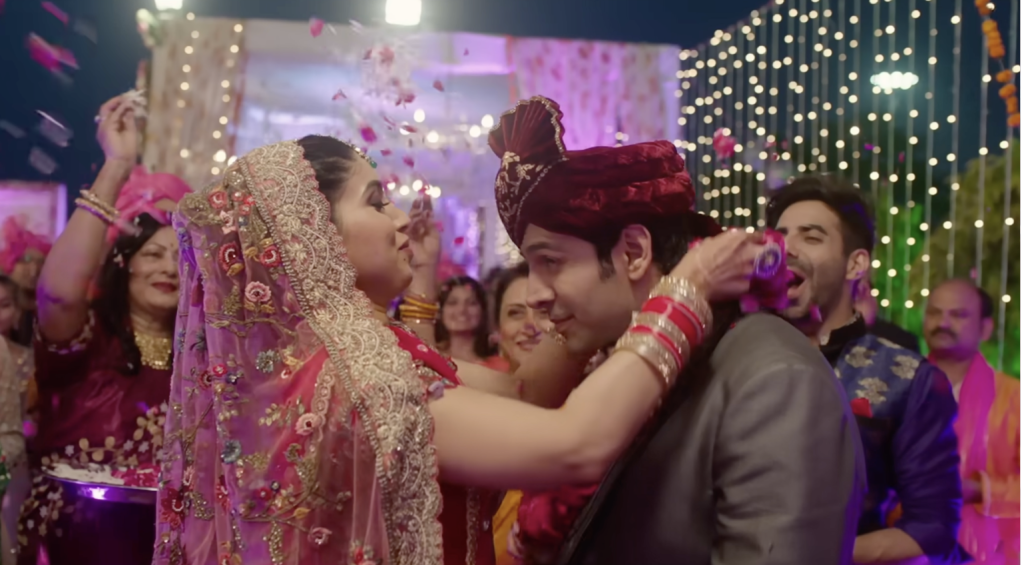
Additionally, the women with whom the men cheat are frequently held to a higher moral standard than the husband who is committing the betrayal. Anger is redirected towards the ‘other woman’ for breaking the marriage, while the husband’s role becomes negligible and emotionally explainable, and therefore, forgivable.
Movies about male infidelity also have layers of misogyny and homophobia disguised as humour. The trailer of Pati Patni Aur Who Do features an incensed patriarch saying, ‘Jise kul ka deepak samjhe the who phuljhadi nikla (The one I imagined to be a worthy successor turned out to be a phuljhadi).’ Phuljhadi, which translates to sparkler, is a derogatory term used to refer to gay men, especially those perceived to be flamboyant.
The main lead, on the other hand, is hyper masculine, and his masculinity is used to justify his cheating by claiming that such is the ‘nature’ of men. Casual jokes about wives, domestic violence, sexual violence, or marital rape are allowed to slide past because of the comedic nature of these films, where any seriousness soon devolves into ‘humour’. The constant tonal instability creates confusion about what must be taken seriously and what must simply be laughed off.
The ‘Pati Patni Aur Woh’ universe and the minimisation of cheating
The box-office success of this sub-genre in these four decades raises a question: Can these films truly be considered neutral entertainment?
The teaser of Pati Patni Aur Woh Do pays homage to the prequels, referring to all three movies as ‘patiyon ka universe‘. Although the makers of the movie insist that it does not endorse cheating, the association and categorisation with the prequels itself communicates a contradiction. And even though the film doesn’t feature cheating, its tone, its inclusion in the broader universe of the Pati Patni Aur Woh films, along with its misogynistic and homophobic humour, doesn’t support the argument that it doesn’t, at the very least, minimise the seriousness of cheating.
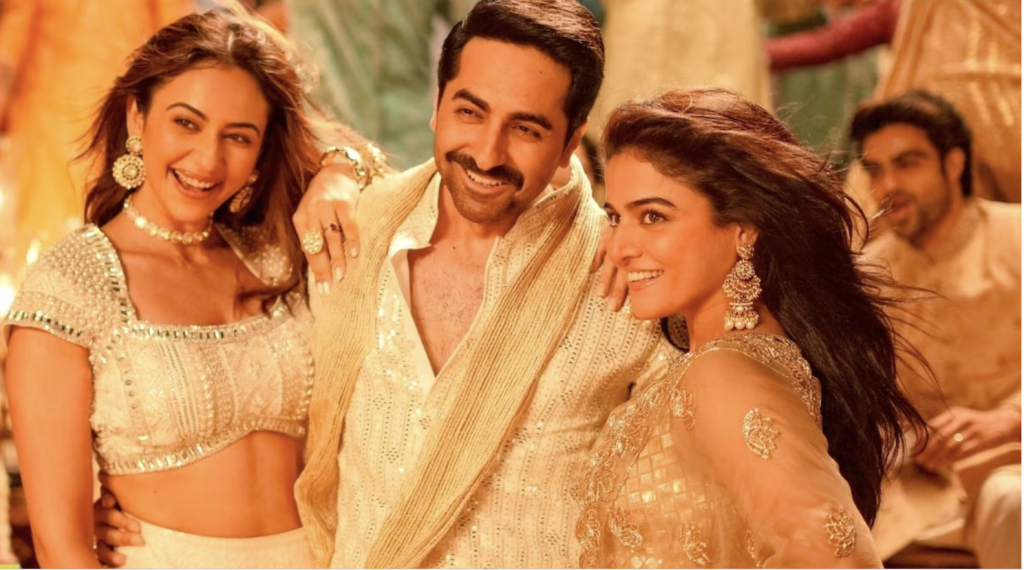
The continued production of these films indicates that they generate profit, and also the fact that they remain in demand. Such humour survives because it produces comfort, fantasy, and escapism without consequences. These films, written by male writers, also cater to the male gaze. The visual language and music further cue the audience to laugh at deception.
These films offer a moral framework where cheating is not condemned because it is unethical, but because it is difficult to manage without getting caught. That distinction speaks volumes. For now, the cheating or ‘misunderstood’ husband remains the emotional centre of these romantic comedies, while the women around him are flattened into binaries as the wife or the temptress.

Do share an article on women who cheat. I am thinking of the Tabu film, Astitva, in particular.
But isn’t it’s his choice, I mean sexuality can’t be tied due to marriage. A marriage is not certificate to giving up sexuality. It’s upto the person to have sex with their consent. Infidelity in marriage arises due to many reasons between partner. I don’t know what this author is trying to say, but clearly he is violating a person’s freedom of choice and giving emphasis on marriage as a institution which ties sexuality to this institution. Pathetic