
The 2024 release of Vaazha: Biopic of a Billion Boys marked a significant moment in Malayalam cinema by leveraging the popularity of new-media influencers to tell the story of ‘below-average’ young men. These men, dismissed by society as vaazha (plantain), a Malayalam term used to refer to someone as ‘useless’, navigate a world of unforeseen yet avoidable problems.
The second film in the Vaazha series, titled Vaazha II: Biopic of a Billion Bros, was released in early April 2026. Soon after its release, the film entered the INR 100 crore club, solidifying the franchise’s status as a commercial powerhouse. On the heels of this success, the third instalment in the franchise was announced, this time centred on girls. However, the announcement of Vaazha 3: Biopic of a Billion Girls has triggered a wave of digital anxiety that exposes the deep-seated misogyny of the current generation.
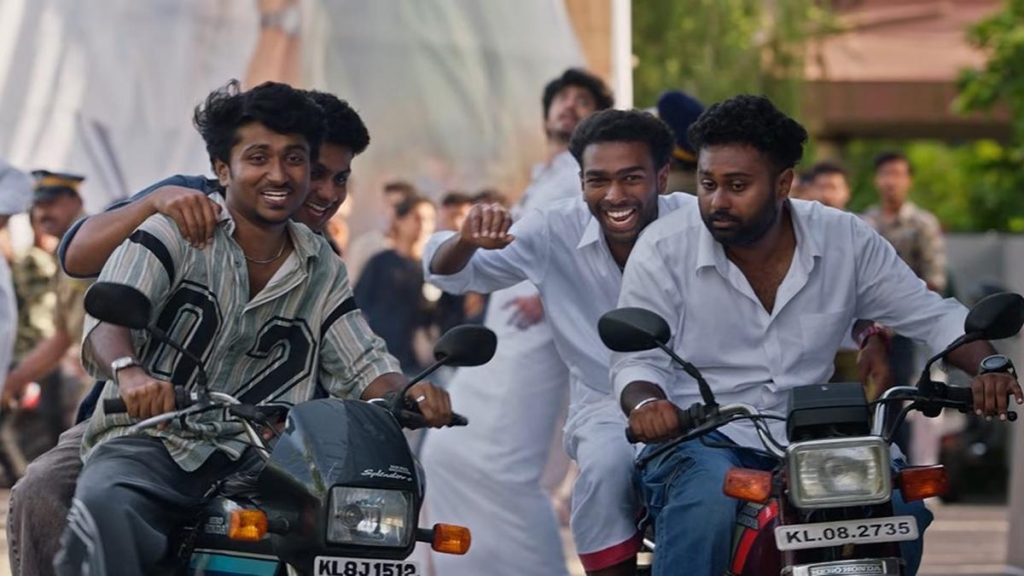
While the first two films are heavily male-dominated, they are still among the least problematic male buddy films to have come out in recent years. Unlike many youth films — Tamil actor-producer Pradeep Ranganathan’s filmography is a case in point — Vaazha does not blame women for the protagonists’ problems or strip women of their agency to gain sympathy for the heroes. It simply exists within a male-centred cultural framework without being hostile to women.
The social media reaction to the announcement revealed a deep-seated hypocrisy in modern Malayali society, amidst its illusion of progressiveness and development.
This is exactly why the announcement of Vaazha 3 is so exciting. How will the franchise translate its ‘buddy film’ formula to centre women’s points of view? We have seen relatively good glimpses of female friendships in Malayalam films such as The Notebook (2006) and Super Sharanya (2022), but those films didn’t have any commercial and critical expectations attached to them, unlike Vaazha 3. However, the social media reaction to the announcement revealed a deep-seated hypocrisy in modern Malayali society, amidst its illusion of progressiveness and development.
Decoding male fragility in digital spaces
The announcement of the sequel was met with immediate, polarised reactions on social media. Before a single teaser, poster, or cast list was even released, a section of the internet was outraged. The comments included: ‘What stories do these women have? Early marriage, periods, labour pain.‘ ‘Moodswings, besties, and (a vulgar slang for sex), etc., will be there.‘ ‘Do we need to lose the thrill of the current vaazha?‘
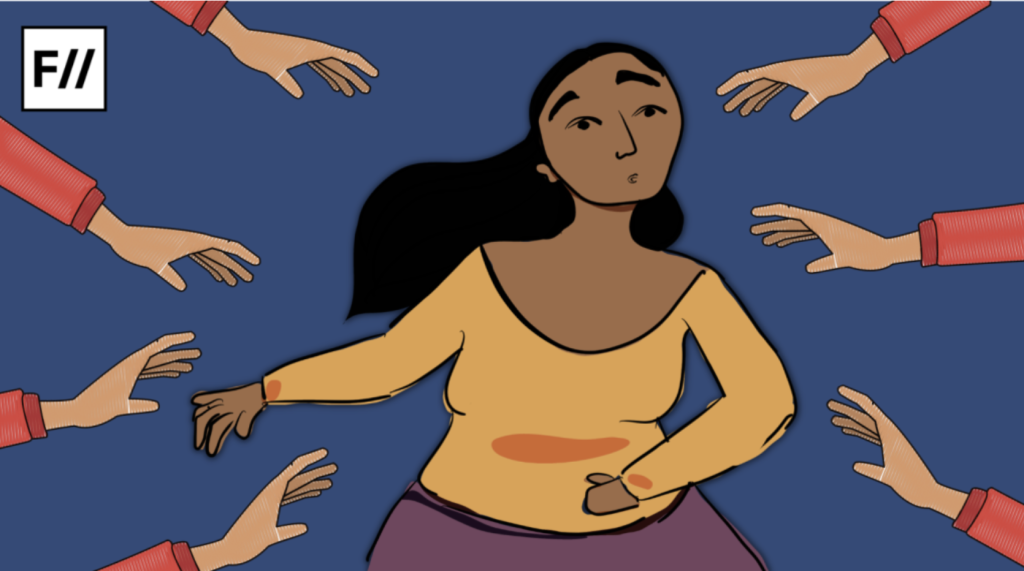
These ‘concerned users’ were not worried about the script, but were anxious about the shift in focus. Their ‘concerns’ ranged from commercial failure, limited budget, and a melodramatic quality to the new film. They also seemed to believe women’s lives lack anything of substance that warrants a narrative focused on them. While these responses are a direct reflection of the mindset of the people making these comments, it is also covertly a reflection of the systemic conditions of the Malayalam film industry, spectatorial expectations, and societal functioning.
There is an inherent assumption that male experiences are the universal standard, and female experiences are marginal, niche, and commercially unviable.
There is an inherent assumption that male experiences are the universal standard, and female experiences are marginal, niche, and commercially unviable. For example, the Vaazha narrative features boys accidentally injuring a teacher while under the influence of drugs. It is highly unlikely that this scenario is representative of the average Kerala youth’s daily life; yet it isn’t written off as unrelatable. This constructed myth of relatability sustains itself on spectacle: the thrill of seeing ordinary boys inflated to larger-than-life, yet faulty male heroes, in a realistic setup.
However, the idea of women centred in a commercial genre is deemed ‘unreal’ or ‘unworthy of hype’. These reactions are a textbook manifestation of male anxiety about male-centred narratives being replaced by those that centre women for a change.
Malayalam cinema, the manosphere, and women-centric narratives
The argument regarding the commercial viability of women’s stories is in itself ironic. Success in the industry is relative and dynamic. Women-centric films and women’s cinema are rarely given high budgets, yet they have proved successful before.
For instance, Om Shaanti Oshaana was a major hit with an INR 10 crore collection, and that too during a year when the industry reported a total loss of INR 57 crores. Similarly, Anjali Menon’s Bangalore Days was made on a modest INR 9 crore budget but collected INR 50 crores. Last year, Lokah: Chapter 1 – Chandra, which centred on a woman protagonist (and a superhero at that), became one of the highest-grossing Malayalam films of all time.
The digital furore surrounding Vaazha 3 also reflects a dangerous growth of the manosphere in Kerala.
While more women-led narratives are finding a home on OTT platforms, theatrical success is still gatekept as a male domain. The assumption that women’s stories lack spectatorial value places men’s stories on a pedestal, regardless of narrative success and commercial viability.
The digital furore surrounding Vaazha 3 also reflects a dangerous growth of the manosphere in Kerala. Influencers like Akhil Marar have built a massive following by preaching conservative gender roles and reinforcing regressive gender stereotypes. A recent UK-based study found that Gen Z men are more likely to hold patriarchal views, especially regarding marriage, than their older counterparts. We see this in Kerala, too, where even women content creators perform an acceptable version of femininity that looks progressive but remains subservient to traditional roles and endorses normative femininity.
The Vaazha 3 social media uproar echoes the backlash filmmaker Anjali Menon faced when she asked, ‘Where are the women in Malayalam cinema?‘ However, the controversy that followed paved the way for some productive discourse on gender disparity within the industry and the culture at large. These concerns were only validated by the Hema Committee report that was published a few months later.
Menon’s question has been twisted by the manosphere into: ‘Why do we need women in Malayalam cinema?‘ The Vaazha team has a golden opportunity to prove these detractors wrong by using a successful commercial template to tell diverse, gendered stories. Whether they succeed remains to be seen, but the outbursts from the manosphere due to their refusal to imagine women’s lives as interesting are only telling of their own misogyny.
Ultimately, Vaazha 3 catalyses a necessary discourse on gender disparity. And by doing so, it is a part of a gradual but important shift towards women-centric narratives in Malayalam cinema that recognise the billion ways in which women exist and view these billion stories as worthy of screen space.


Very well presented. Every quote was awesome and thanks for sharing the content. Keep sharing and keep motivating others.