What is the shape of a momo? Round, crescent-shaped, pleated or folded? These are not just mere preferences or techniques of preparation; the shape of a momo is a matter of identity, pride, continuity of tradition, and perhaps even conformity. It is within this rigid framework of tradition that an oddly shaped momo becomes an act of defiance.
Shot in the idyllic villages of East Sikkim — the kind that travel influencers are inclined to call a ‘hidden gem’ — Sikkimese director Tribeny Rai’s debut feature, Shape of Momo, is not a film about food. Rather, Rai uses the traditional Nepali dish that the rest of India enjoys as street food as a means to dive deeper into the Nepali community living in Sikkim, their day-to-day struggles with societal expectations, and threats to their security.
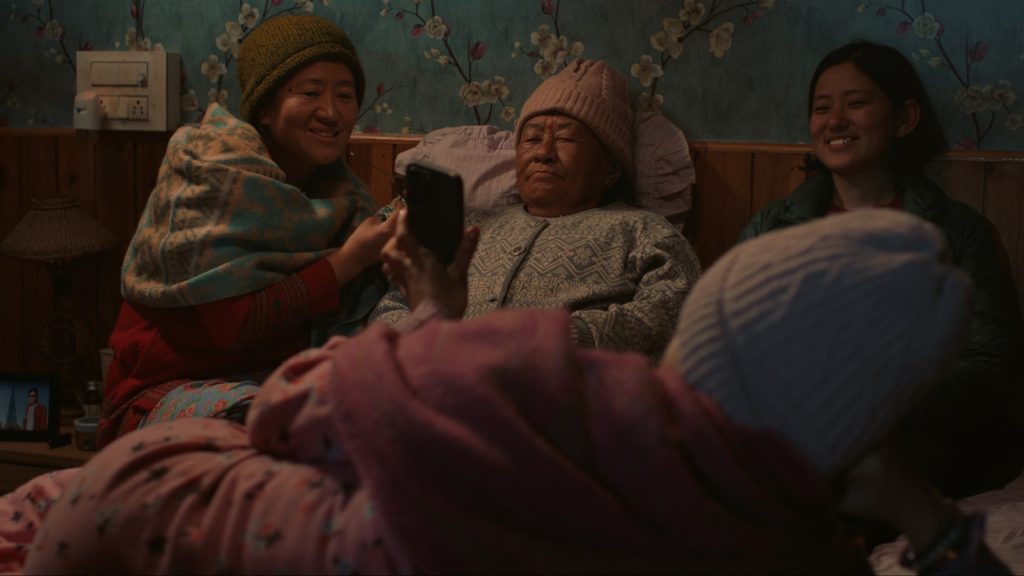
The story follows Bishnu (Gaumaya Gurung), a 32-year-old woman who returns to her ancestral home after quitting her job in Delhi. She lives in an all-women household with three generations of women— her grandmother (Bhanu Maya Rai), her widowed mother (Pashupati Rai), and her pregnant sister Junu (Shyamashree Sherpa). The first few minutes of the film establish these relationships and set context, then the Shape of Momo dives into the lived realities and inner worlds of these characters.
With backing from industry stalwarts like Zoya Akhtar, Reema Kagti, and Payal Kapadia, the film has had an incredible festival run, first at MAMI and then at Busan Film Festival, and recently at Cannes. Shape of Momo had a limited theatrical release in India on May 29.
The shape of perfection and expectation
When you’re making momo as a child, nobody expects the shape to be perfect. In fact, it is encouraged to make silly shapes, for the first introduction to culture is often through play. But as an adult, that changes. You’re expected to make perfectly-shaped momo — half crescent moons that are tender when steamed yet hold their shape. And with it, a dangerous idea permeates: as an adult, you need to be perfect, and you must follow convention. Graduating from college, finding a job, being the perfect daughter, being the perfect wife, and being the perfect woman — perfection is always expected of women, along with adherence to a predetermined script.
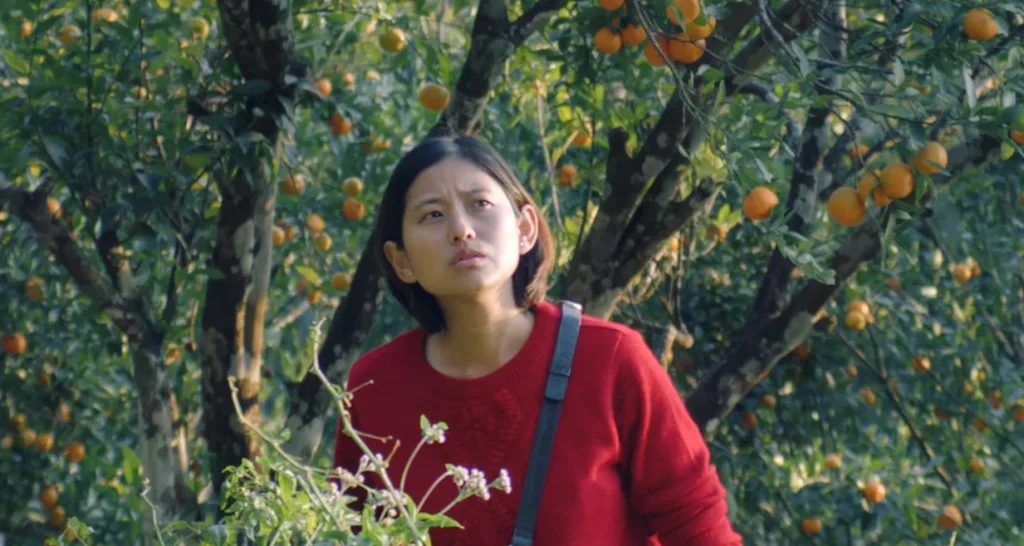
However, Bishnu is much like an oddly shaped momo. She’s out of place in her small village. Wearing a red sweater, a red coat, and driving around in a red car, she stands out visually from the rest. She’s also short-tempered, quick-witted, and hyper-independent. When she begins to point out how the neighbours and the plantation workers are taking advantage of her family, she quickly makes enemies. Her sharp tongue eventually also becomes a source of tension between her and her mother and sister.
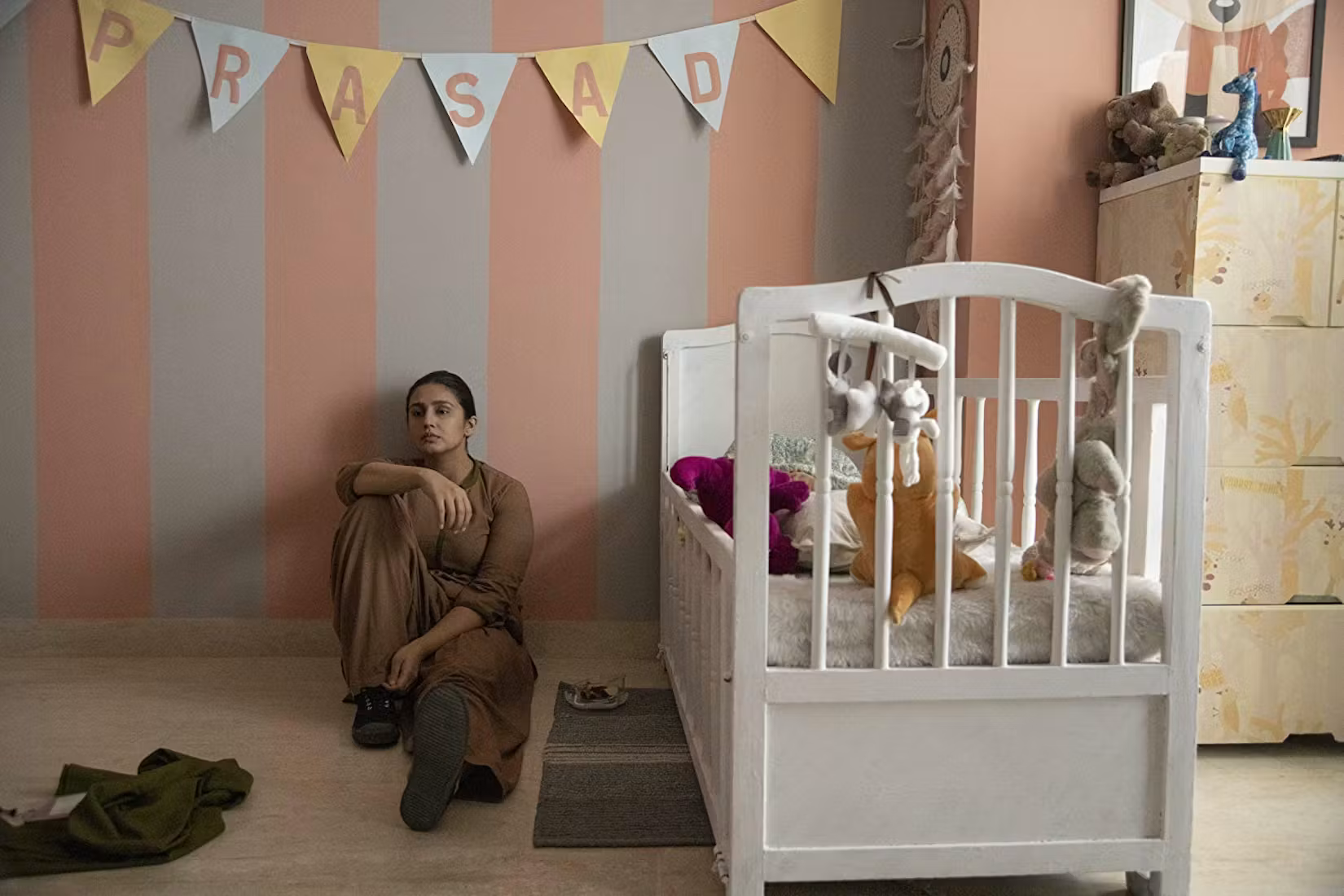
Junu, her pregnant sister, is often dressed in pink, a colour that’s a lighter tint of red. She is the more conventionally attractive of the two. She’s married and is now pregnant, like a woman her age is expected to be. However, she also carries the weight of not having completed her college degree and being financially dependent on her husband, who she faces constant pressures from. Her first act of defiance against her husband and his family is coming back home to her mother.
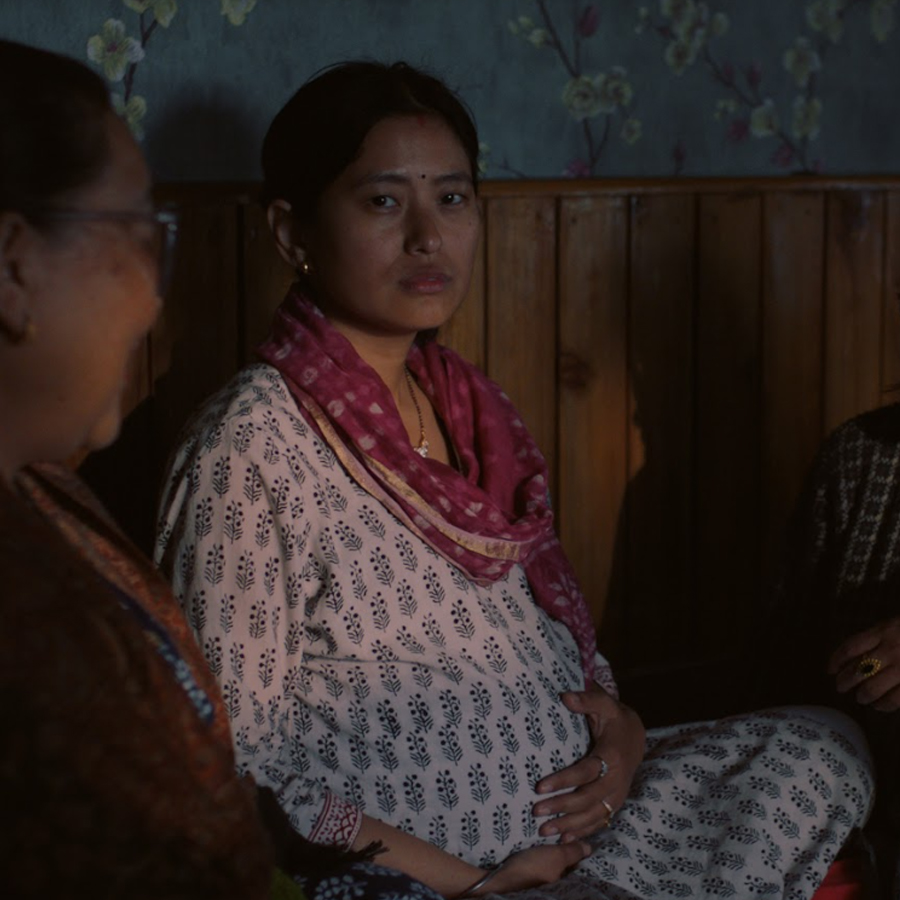
Bishnu and Junu’s mother and grandmother are the type of women who follow convention and are praised by society for it, as well as pitied in equal measure. Both women, despite having played by all the rules of the patriarchy, cannot reap the rewards of being ‘perfect’ and compliant women. The grandmother, starry-eyed, waits for her son to take her away to Dubai. For what else is he good for? The mother, always soft-spoken, tries to take care of her aged mother as well as the family’s orange orchard all on her own.
The shape of men
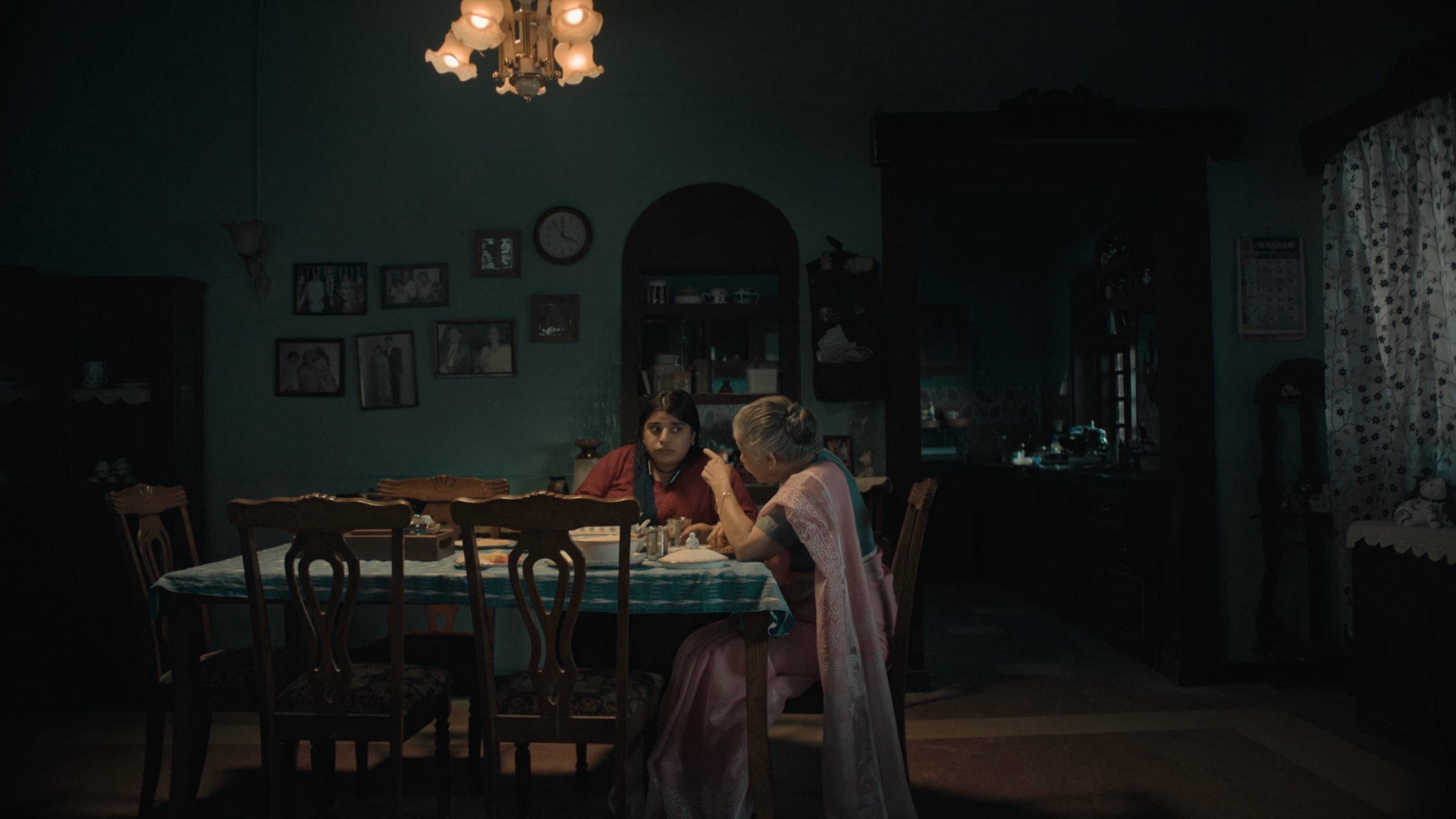
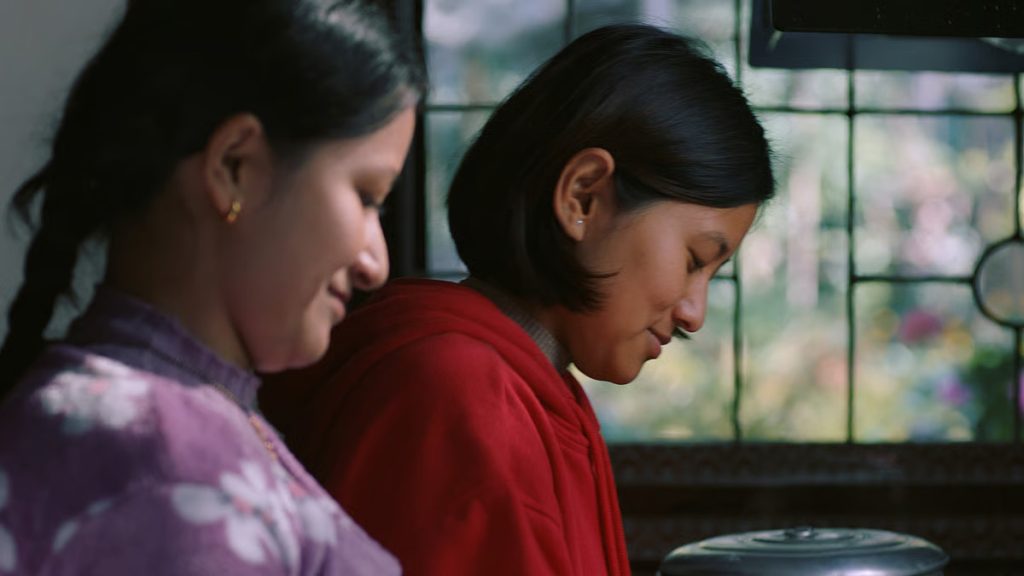
The first heartfelt moment of homecoming is witnessed when Junu and Bishnu make momo together and eat dinner with their family. This moment is significant in itself, for very rarely does cinema show three generations of women eating together, so free from patriarchal surveillance that they comfortably laugh and joke. Then comes an oddly-shaped momo onto the dinner plate, made by Bishnu. But beneath all the laughter and teasing is a different story, one that’s harder to digest: the odd shape of the momo brings with it shame, not just otherness.
This moment is significant in itself, for very rarely does cinema show three generations of women eating together, so free from patriarchal surveillance that they comfortably laugh and joke.
When the main characters sit down to share momos for the second time in the film, it is at their grandmother’s funeral. This time around, two men join the sisters — Junu’s husband and Gyan, the MLA’s son and Bishnu’s love interest. Unlike last time, there’s no laughter at this table.
The men begin talking about how their mothers and wives make excellent momos, even though they themselves have never stepped into the kitchen. Gyan is also surprised to learn that Bishnu can make momos. When the men leave the table, the empty plates seem to stare back at us. Bishnu takes on the seemingly invisible work of clearing the table, washing the dishes, and setting them out to dry. Later, when Gyan accuses Bishnu of only thinking about herself after she refuses to formally announce their relationship to his parents, she walks away.
On the other hand, Junu is preoccupied with finding out whether her unborn child is a boy. For this, she prays to the gods, listens to videos backed only by pseudoscience, frequently visits shamans, and asks nurses if the ultrasound is ‘good news’. Though the desperation for a boy is never really addressed directly, the film does make you question why the husband’s name is necessary on the ultrasound appointment when he isn’t even there at the appointment for the mother and the child.
The shape of security
In Shape of Momo, Rai directly draws attention to the migrant crisis in the state, caused by an influx of workers from neighbouring states. Despite police intervention, these workers keep appearing in the family’s backyard. At one point, the women realise that the back-door latch is broken. They panic and, in addition to locking the entire house, hang men’s clothes on the drying rack to suggest that men live there. In a separate incident, it is only after Gyan rebukes an unknown caller that the person stops calling the house.
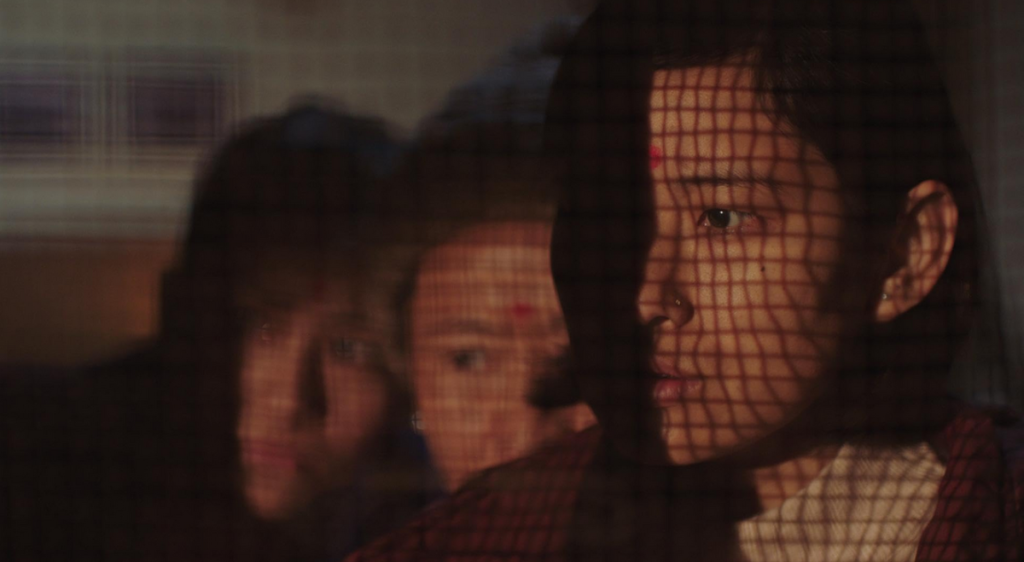
Shape of Momo also touches upon land security. Rai addresses how little compassion is extended to labourers and migrant workers simply because they do not own land and are therefore denied the right to live on it. Ironically, these idyllic lands, tended by poor migrants, welcome tourists who are willing to pay thousands for a homestay experience just to admire the shape and folds of the landscape, while the workers themselves rarely experience the same hospitality.
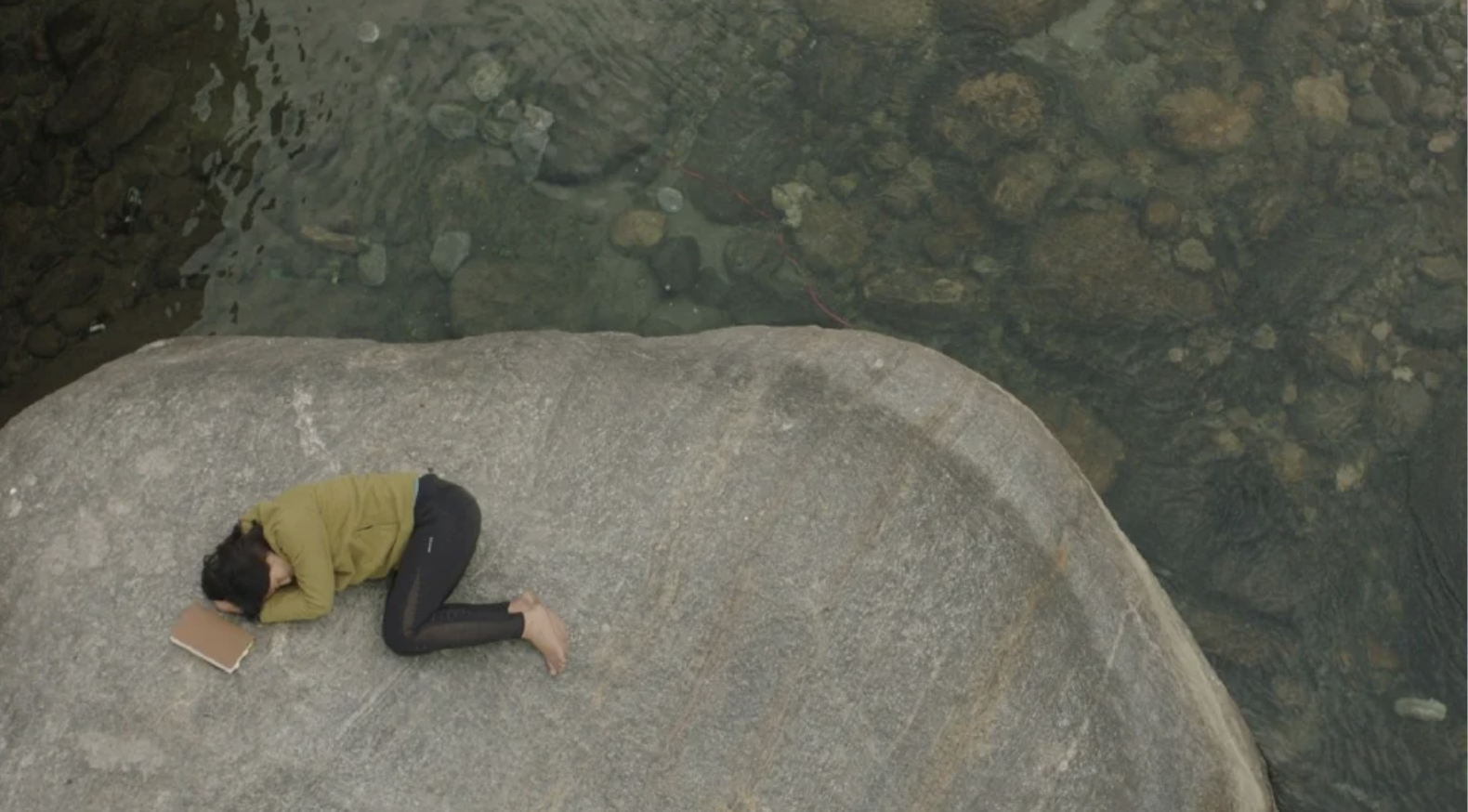
The final scene of the film is between Bishnu and her mother. As Bishnu curls up with her head on her mother’s lap — much like a momo — the mother tells her to leave the village, not in a car but in a helicopter that signals wealth and pride. She does not want her daughter’s departure to become a point of gossip because Bishnu was dumped by the MLA’s son. Instead, Bishnu leaving in a helicopter becomes a form of security for her mother, one that protects her from ridicule.
About the author(s)

Aarthi (she/they) is a young feminist, currently based out of Jodhpur, who enjoys writing on pop culture and art-related subjects. Through her writings, she attempts to position herself between self-reflection and social conversation leading to the exploration of unconventional ideas. In her free time, she travels, writes poetry, watches films and anime