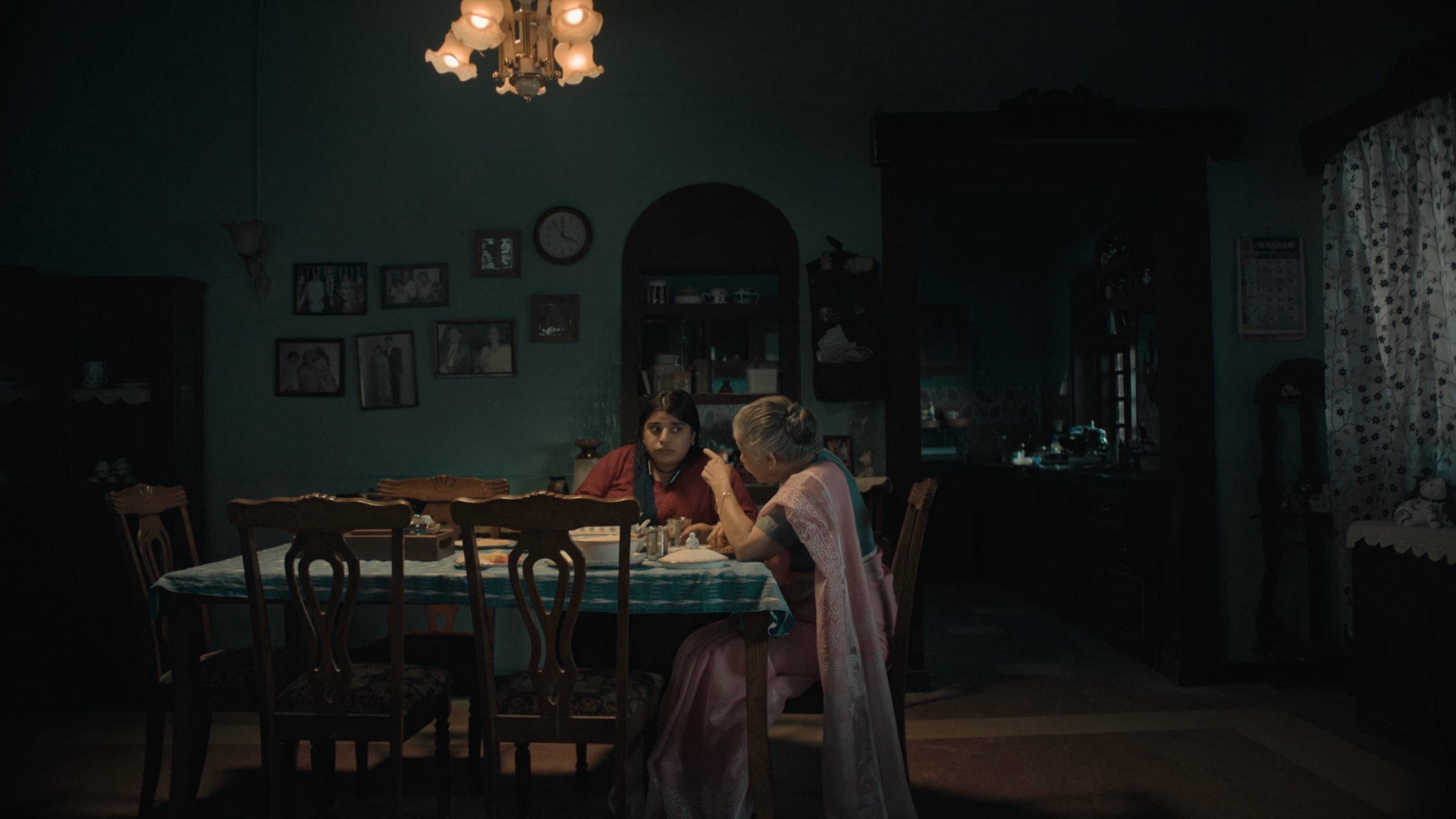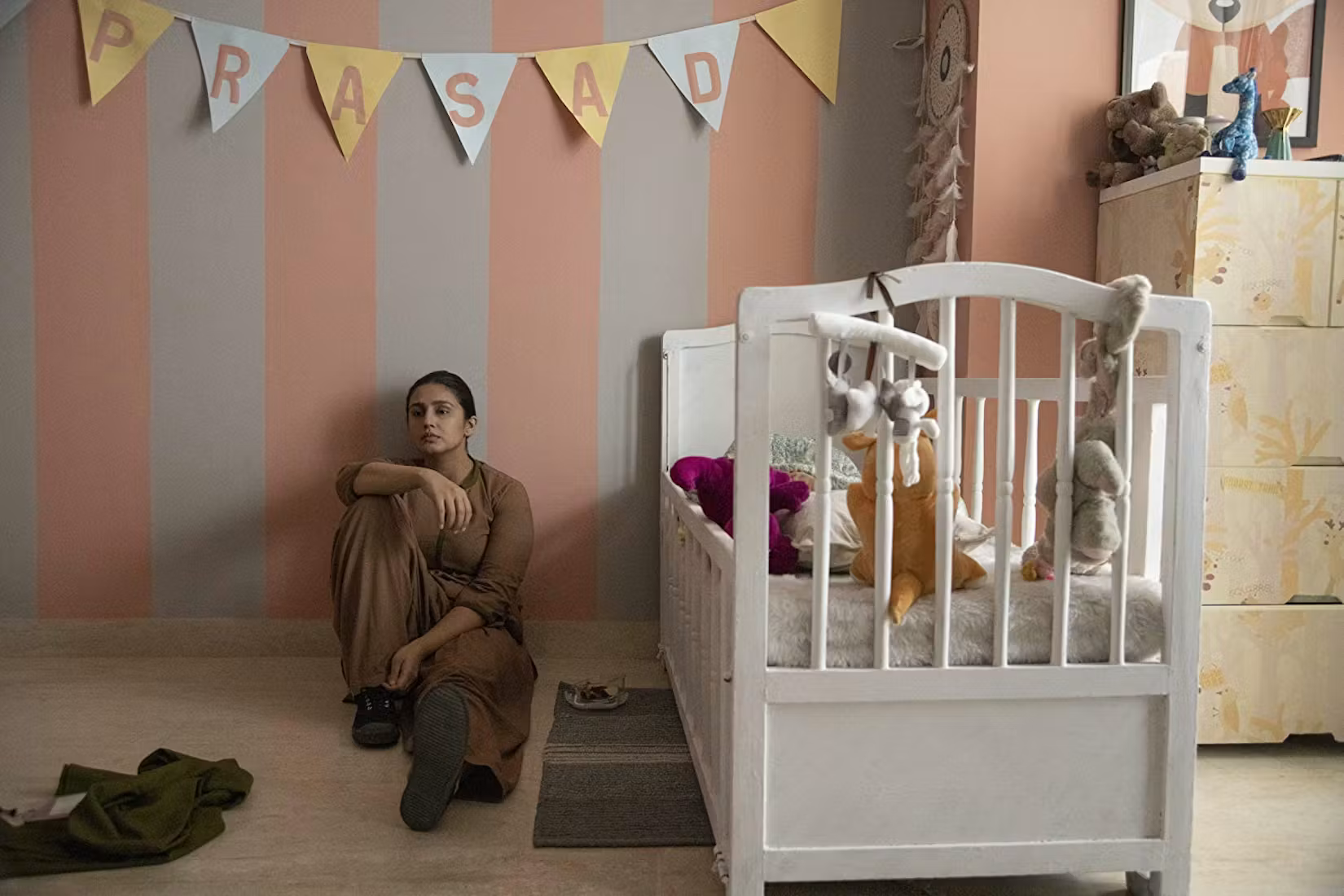
Can a transfeminine and a cis woman become friends or fall in love inside a heterosexual marriage union under patriarchy? How does a woman accept her transgender husband, coercive in-law household, homosexual son and raped motherhood?
As a trans woman, I found myself quite privileged after watching the Bengali film Onyo Opala. Because privilege comes not only spatially but also from temporal differences that determine our pursuit of happiness. For me, a queer-allied house, university, and home with chosen families are the spaces that bring happiness. But if I am temporarily choked under any past regime, where transsexuality, homosexuality, traditions, customs and religion control women’s bodies minutely; then perhaps my survival would be questionable. And it is in this time that Opala and her husband, Shyam, a transwoman, lived.

After the partition and the disintegration of zamindari tradition, the film begins to reveal the heterosexual marital union between Opala and Shyam. Shyam knew from a young age what she was. Although people view her as an able-bodied cis-masculine male, she is not. Therefore, from a young age, she became a devotee of Lord Krishna. She believed herself to be the Radha of Krishna, while in turn, after marriage, Opala too believed herself to be the Radha, her Shyam’s Radha. Shyam served both her lord Krishna and the patriarch, the Guru of her family. She was deeply attached to the Guru.
One night, Opala saw her husband having sexual intimacy behind a closed corridor with that Guru; after which she decided to die by taking poison. This made Shyam leave alone, fearful, and she finally confessed one night, in front of her wife, her true identity and requested her to be her girlfriend (in Bengali, it means Sokhi- meye bandhobi, meye=girl, bandhobi=friend), not romantically. Shaym truly loves Opala, but not in the role of a husband. She always wanted to have a girl companion from a very young age, with whom she would play and share her secrets.
False marriage promises, where one individual is secretly gay, bisexual or transgender, are unacceptable; from time immemorial, it has largely always been women who are victimised. For Shaym-Opala’s time, it’s different. Today, with the rise of globalised media, identity politics and high-rise educational awareness, where there is a possibility to consume queer content, date queer persons, join and form communities and associations, and gain economic security through independent income, false marriages hold no sympathy.
Shyam and Opala shared good moments after that incident. However, both of these girlfriends’ lives came under scrutiny when Opala was raped one night by Shyam’s guru. Shyam was heartbroken too after learning the truth, while Opala decided to keep the baby for her in-laws to prove that the child belongs to her and Shyam. Her in-laws used to blame her for being impotent, and therefore it was her only chance to make them prove wrong. This shows how patriarchal violence, abuse and torture make transfeminine/queer and women’s bodies vulnerable and violated.
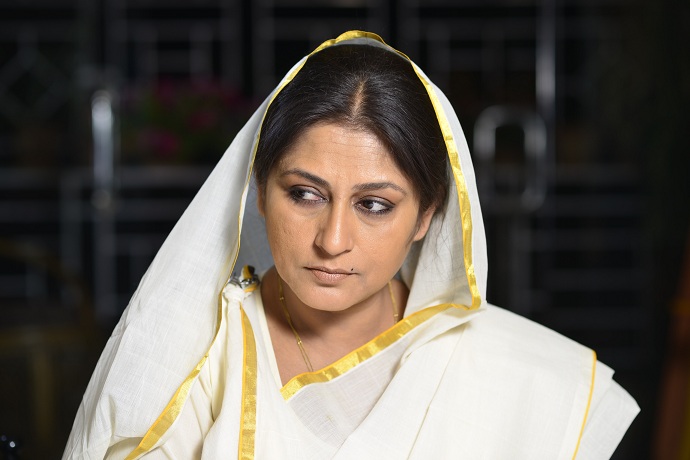
In the post-interval narrative, the film introduces a significant temporal shift. The Guru, having aged and become dependent, returns to Opala in search of care and redemption, where he finally rests his soul. His last wish was for forgiveness from Opala and to see his son, which Opala did not grant. Meanwhile, Opala’s son too returned from the United States. The narrative subsequently reveals that he is the child born as a consequence of Guru’s rape of Opala. Opala wanted her son to marry a girl. But eventually she came to know that her son is also homosexual and is in love with a guy from the USA. She accepted her fate without any resistance. The film also ends here, perhaps leaving it open for the audience to interpret.
Living under traditional times, every viewer can resonate with what she has gone through. The kind of ‘endurance’ that she holds within herself is about to finish, but never lost. Thus she again endured her faith. She doesn’t decide what is right or wrong, who is wrong; like how she has forgiven everyone, perhaps even the Guru, who raped her and came to her to seek shelter for a few days, where he finally rests his soul. Opola is perhaps and will always remain ‘different’. That’s why the film is titled ‘Onyo Opala’, where the Bengali word ‘Onyo’ means ‘different’.
Being different is something which we attach to queer bodies or bodies which are marginal. As a woman, Opala’s body and her experiences are also ‘Onyo’, i.e., ‘different’. She is different because she had accepted everything and everyone, loved and cared, except being herself. Opala has been compelled into a heterosexual marriage, which is nothing but a political institution that forces women into reproductive labour. In both ways, Opala is compelled to become a wife, and Shyam is compelled to become a husband. Neither chose those gender roles. It is patriarchy which forces both of them to adhere to the ‘compulsory heterosexual norms’, as Rich (1980) rightly puts it.
The most interesting part that made me feel connected is that the film unexpectedly anticipates transfeminist politics. Rather than positioning cis women and transfeminine people as competitors for recognition, Onyo Opala makes us realise how both become subjects of patriarchal regulation. Opala’s body is controlled through reproduction, widowhood and sexual violence, while Shyam’s body is disciplined through compulsory masculinity and heterosexual marriage. Their lives reveal different expressions of the same patriarchal order.
At a time when women’s and transgender rights are both competing concerns both in India and the outer world, especially comprising trans women’s rights over cisgender women’s rights, this film can be read as a great source to recognise shared structures of oppression and possibilities of solidarity. As Leslie Feinberg (1992) rightly puts it: “We are pitted against each other in order to keep us from seeing each other as allies. Genuine bonds of solidarity can be forged between people who respect each other’s differences and are willing to fight their enemy together.”
References
- Feinberg, L. (1992). Transgender liberation: A movement whose time has come. World View Forum.
- Rich, A. C. (1980). Compulsory heterosexuality and lesbian existence. Journal of Women’s History, 15, 3. https://doi.org/10.1353/jowh.2003.0079
About the author(s)

Suraj is an independent academician and researcher specializing in sex, gender, and sexuality studies. They run the Facebook page ‘Bengal Feminism’, where they promote critical discussions on gender rights, feminism, and social justice.