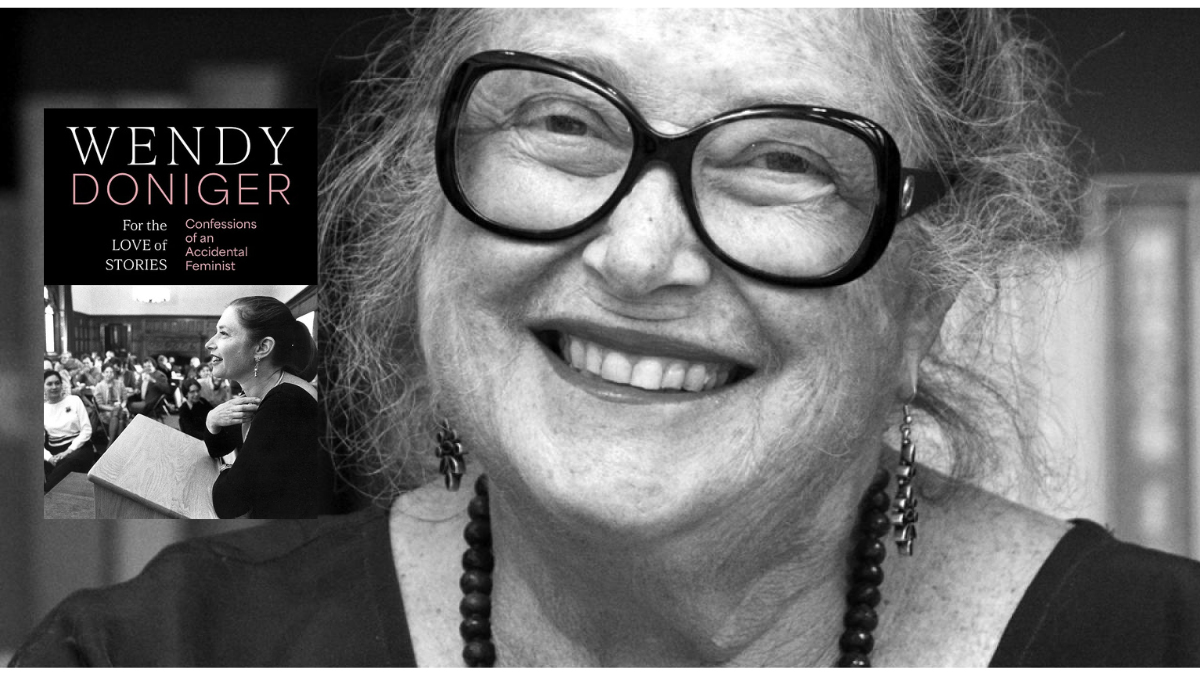
Claude Lévi Strauss wrote that “a myth is an always doomed attempt to solve an insoluble contradiction and the inevitable failure of that enterprise is what drives a culture to tell the same story over and over again, finding ever new ways to show how the square peg does not fit into the round hole.” Wendy Doniger’s memoir unfolds through the same enduring contradictions that characterises her readings of myth. For the Love of Stories: Confessions of an Accidental Feminist is a fragmented pastiche of anecdotes, memories, and digressions, all culminating in the enduring contradictions of Doniger being a square peg that never quite fits the spaces carved out for her.
What sets her memoir apart, however, is that unlike a myth, this is not a doomed attempt to solve the contradictions that inhabit her life. At Oxford, she finds herself in “an awkward limbo” between the “fairytale English world of Horses” frequented by British aristocrats and South Asianists who she closely works with throughout her life. Her time at Berkeley, described as “the absolute nadir of [her] academic life”, remains simultaneously the only university where she could teach the Sanskrit texts and Hindu myths she loved. After Penguin agreed to withdraw her book The Hindus on account of a police complaint, the international sales of book rocketed. She reflects on her failed marriage with Dennis in the following words, “I’m glad I married him and I’m glad I divorced him.” Doniger refuses to resolve these contradictions through some grand meaning-making project emphasising instead on the value of their disarray. For her, these stories exist as a reminder of how any story is shaped by complexities and contradictions that cannot be neatly disentangled.

The memoir is filled with unforgettable digressions that eventually shape the course of her life and scholarly work. Her marriage to Dennis and move to Oxford, unexpected year in Russia, move to Berkeley, appointment in the Divinity School in Chicago, learning to administer anaesthesia to a lion, time in Truro all first seem to be detours but becomes central to her becoming. While Doniger calls herself an accidental feminist, a series of accidents continue to shape her life as a daughter, academic, friend, rider, mother but the accidental nature of these incidents does not diminish her passion and conviction in pursuing each role. What initially appears to be a series of chance encounters ultimately becomes a testament to a life defined less by accident than by an unwavering commitment to embrace every unexpected turn.
Doniger describes herself as “a feminist malgré elle”, admitting to a selfish, proto-feminism concerned less with “women’s rights” than with “[her] own rights”. Yet her feminist consciousness, shaped through countless encounters with casual misogyny, institutional bias and the peculiar loneliness of being one of the few women in elite academic spaces, ultimately paves way for others to challenge and degender these very spaces. Whether it is by calling Joseph Campbell a sexist and antisemitic pig, asserting her place despite being denigrated by a handful of men within academic circles, or reflecting on why most of her successful women PhD scholars (in comparison to men) never had children, her feminist awareness eventually extends beyond her own experiences to the structural conditions that shape the lives of other women caught within the same cycle.
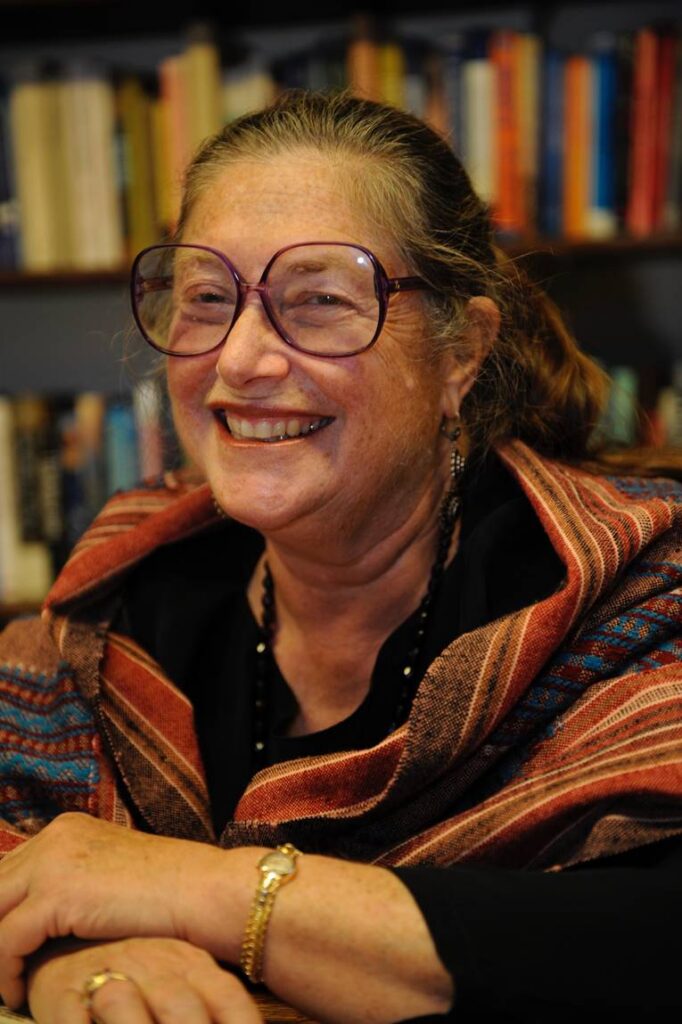
She also does not mind laying bare her vulnerabilities to the readers. She discusses her anger at Dennis after she barely makes it out alive in an accident where Dennis is driving. She confesses to battling imposter syndrome even while being considered one of the world’s foremost Sanskritists in the Western academia. She revisits the memory of remaining silent when she should have spoken against antisemite remarks in English royal circles, admitting that “the memory of [her] silence still troubles [her]”. She talks about falling in the postpartum depression after she loses her father and has her child at the same time. She tries to take her own life and writes about it with a remarkable restraint. Every completed book, she writes, remains unfinished. But this vulnerability also shows someone who is open to accept things beyond their understanding. At the same time, she does not present herself as an uncomplicatedly sympathetic figure. There are moments when she comes across as someone who knows how to keep a grudge, particularly in the way she writes about a colleague who was murdered on campus. These contradictions make her a more complex and reliable narrator, resisting idealization while inviting a nuanced reading of her life.
A significant part of memoir is devoted to Doniger’s lifelong love for various animals including horses, dogs, cows, pigs. While Elliot’s Prufrock prefers to measure life in coffee spoons, Doniger opts to measure her life in dogs. She tells her readers how to administer anaesthesia to a lion, helps deliver piglets on a farm, and ends by confessing that she misses horses more than she misses men in her old age. In the last chapter titled “Dogs as Husbands and Lovers as Horses”, Doniger recalls the episode of Mahabharata, where Yudhishthira reaches heaven with his faithful dog and refuses to enter without him, a moment that challenges the notion of caste and purity. But since the time when this text was composed wasn’t willing to “choose between the competing religious views”, the dog vanishes and is finally revealed to be Dharma in disguise. But Doniger doesn’t sidestep the controversies she meets throughout her life, she accepts them with honesty. And that is why these stories read with the same openness and authenticity.
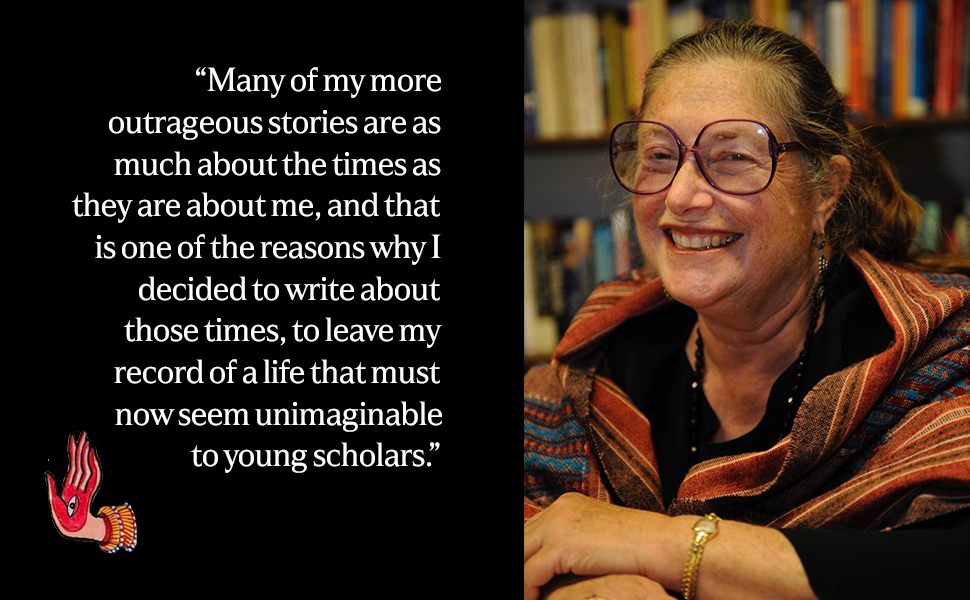
As Doniger enters what she calls the vanaprastha stage of life, embracing detachment and vairagya, the myth of self dissolves into the stories she has spent a lifetime analysing and telling. The scholar who has devoted her career to demonstrating that myths survive through endless reinterpretation ultimately allows her own life to become one more story in that tradition.
In one of the instances in the memoir, Doniger remarks that she is a slow reader. For the Love of Stories: Confessions of an Accidental Feminist is also a slow book, one that rewards lingering rather than racing ahead. Read patiently, its fragments unravel worlds that makes one wonder. Like the myths at the heart of her scholarship, Doniger circles the same questions of gender, faith, scholarship, privilege, love and storytelling without pretending they can ever be definitively answered, but definitely need to be considered, revisited and reimagined again and again.
About the author(s)

Urvi Sharma is an Assistant Professor of English and Cultural Studies at Amity University, Punjab. She specialises in studying how gender dynamics mediate our everyday lives. When she’s not explaining why men are responsible for 99 of the world’s 100 problems, she’s reading memoirs by womxn to gather citations for the remaining one.