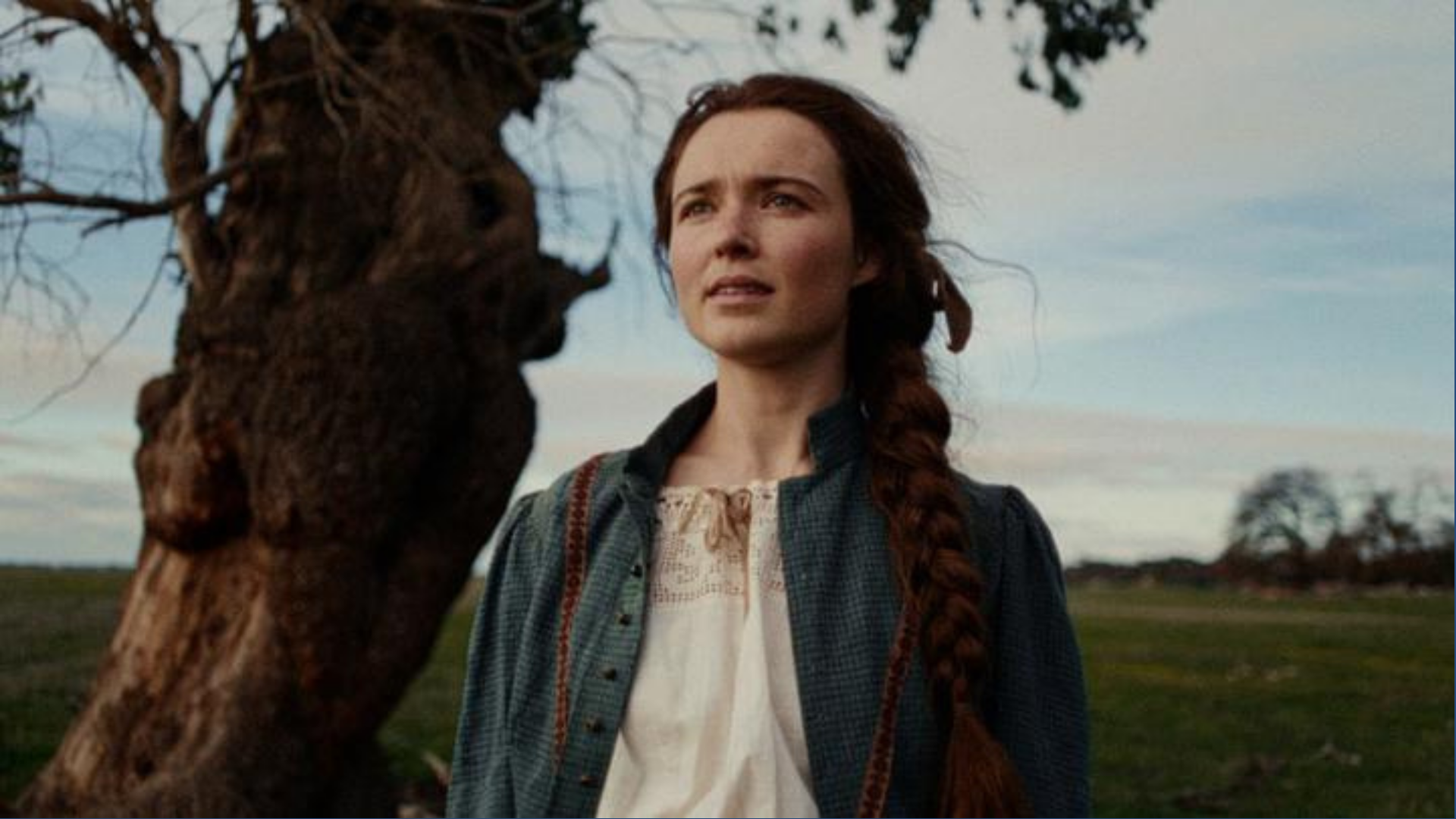
One can draw an interesting parallel between Netflix’s new series My Brilliant Career and the original source material on which it was based. In the Australian classic, published in 1901, the young author Miles Franklin wrote about a young woman who wanted to become a writer because she simply refused to let society decide what her life should be.
And this year, another crop of women storytellers from the current generation has taken Franklin’s story and done something quite similar: they have rejected the purist notion that an adaptation has to be completely faithful to the original.
This is precisely what I believe makes Liz Doran’s six-part adaptation more than just a feminist period drama. Created and written by Doran and directed by Alyssa McClelland and Anne Renton, My Brilliant Career is a vivid example of écriture féminine.
For the uninitiated, écriture féminine refers to the French feminist concept associated most closely with Hélène Cixous, in which women reclaim the authority to represent the female experience rather than allowing it to be defined by structures historically shaped by men.
A woman determined to become her own author
If one looks at the protagonist of the book, Sybylla Melvyn, she is, above all, fighting for this very authority. All she desires is to write. But her family, much like most families of the time, doesn’t support her aspirations.
Her parents want her to help solve her father’s financial problems. Her grandmother, Mrs Bossier, sees marriage as the one and only respectable destination for a woman. The men around her judge her only through the lens of whether she would make a suitable wife. Even her relationship with her romantic interest, Harry Beecham, seems to be drawing her into a life already mapped out for her by someone else.

Her rebellion, therefore, is not simply confined to her refusal to marry. What she is actually resisting is society’s preconceived notion that someone else should get to decide the present and future trajectory of her life.
While it initially seems like a foregone conclusion that Sybylla loves Harry and is prepared to wait for him after his financial collapse, when he eventually returns, ready to marry her, she refuses, to the surprise of most viewers. This is because, over time, she has realised that becoming his wife could mean giving up writing, which has become the most important aspect of her life — or, one could even say, her identity.
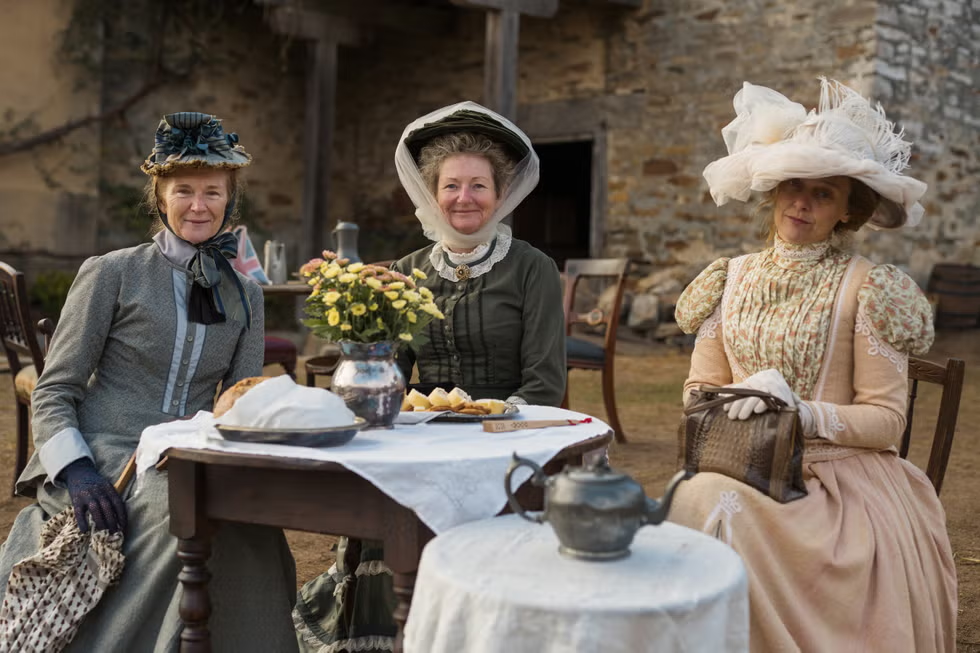
Hence, she decides to stay at her parents’ house for the time being, as her mother encourages her to write about her own experiences and provides her with the freedom and material means to do so. Sybylla then sets out to write about Caddagat, her grandmother’s homestead.
And just like that, after spending the whole story up until that point pushing back against the future others have imagined for her, she finally takes charge of her own destiny.
What was missing from Franklin’s Australia?
However, as already mentioned, the Netflix adaptation is much more than that. Rising above simple storytelling, the writers essentially pose the question: who, or what, was missing from Franklin’s Australia? And the answer they find is what transforms the story.
Harry Beecham, who is depicted in the novel as a relatively wealthy white landowner, is reimagined in the series as Chinese Australian. Granted, his vast inherited wealth allows him entry into a society that might otherwise exclude him. But even that privilege comes with its own limitations.

Sisters Nell and Betty Kirby, who are Indigenous, also become more prominent in the series, with their characters carrying considerably more weight. Nell is a highly skilled stockwoman whose ambition is to become Caddagat’s foreman someday, only to find herself confronting racism and sexism. Betty, meanwhile, is in a discreet relationship with a police officer who refuses to marry her because being with an Indigenous woman could put his career at risk.
The list further extends to Julius Bossier. In Franklin’s novel, he is a jovial bachelor with a fondness for women. However, in the Netflix series, he is reimagined as a gay man secretly involved with Everard Grey, who was actually a potential suitor for Sybylla in the original text.
These changes are interesting and go beyond simply being an effort to include diversity. Instead, they seem like a genuine and well-intentioned effort to explore the lives and experiences that Franklin’s original was unable to delve into.
After all, what a story does not say can sometimes be way more revealing than what it does. But make no mistake: Franklin was writing in 1901, within the social and literary limitations of her time. Nearly 125 years later, Doran’s writers’ room is now able to look back at that world and ask different questions.
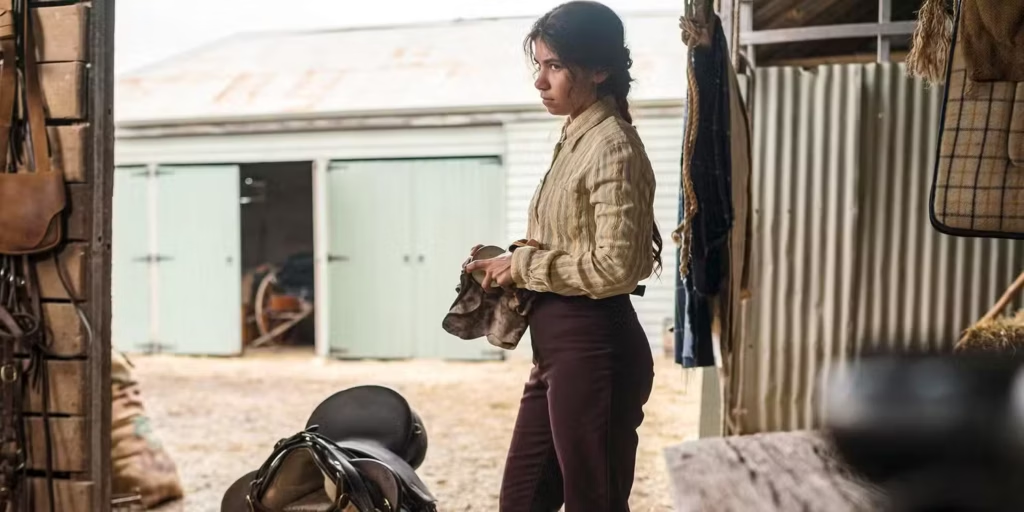
What happens to an Indigenous woman whose talent is something one cannot simply deny, but whose society is not yet ready to accept it? What does it mean to be gay in a society where one is not allowed to embrace one’s sexuality in public? What does it mean to be Chinese Australian in a society historically known to have been structured around racial exclusion?
Saying all this is not to say that the adaptation rejects Franklin’s feminism. If anything, it builds on it and extends it further. In that sense, My Brilliant Career joins a much older practice of returning to the work of earlier women — or men, for that matter — and unearthing stories that were left unexplored in the original.
When the female body becomes its own story
The series takes a similar approach to Sybylla’s body. It moves away from the restrained sexuality often seen in earlier period dramas, where a woman’s desire is either implied, punished, or viewed through the male gaze.
Sybylla urinates outdoors, swims, dances, masturbates, has sex, and openly enjoys her own body. Even the opening scene, which features an erotic poem followed by Sybylla pulling down her clothes and jumping into a pond, makes it clear that this Netflix adaptation has zero interest in keeping female desire concealed.

While it is easy to reduce this aspect of the series to its eroticism, that would be unfair. Doran has described the series as ‘unashamedly’ made for a female audience. Sybylla is therefore not simply presented as a woman to be looked at; she is someone who looks, desires, touches, imagines, and acts.
This is where the series comes remarkably close to the idea of the female gaze. Having women behind the camera doesn’t automatically make something a work centred on the female gaze. What matters is the attention the series gives to women’s inner lives and to how they experience and understand their own bodies.
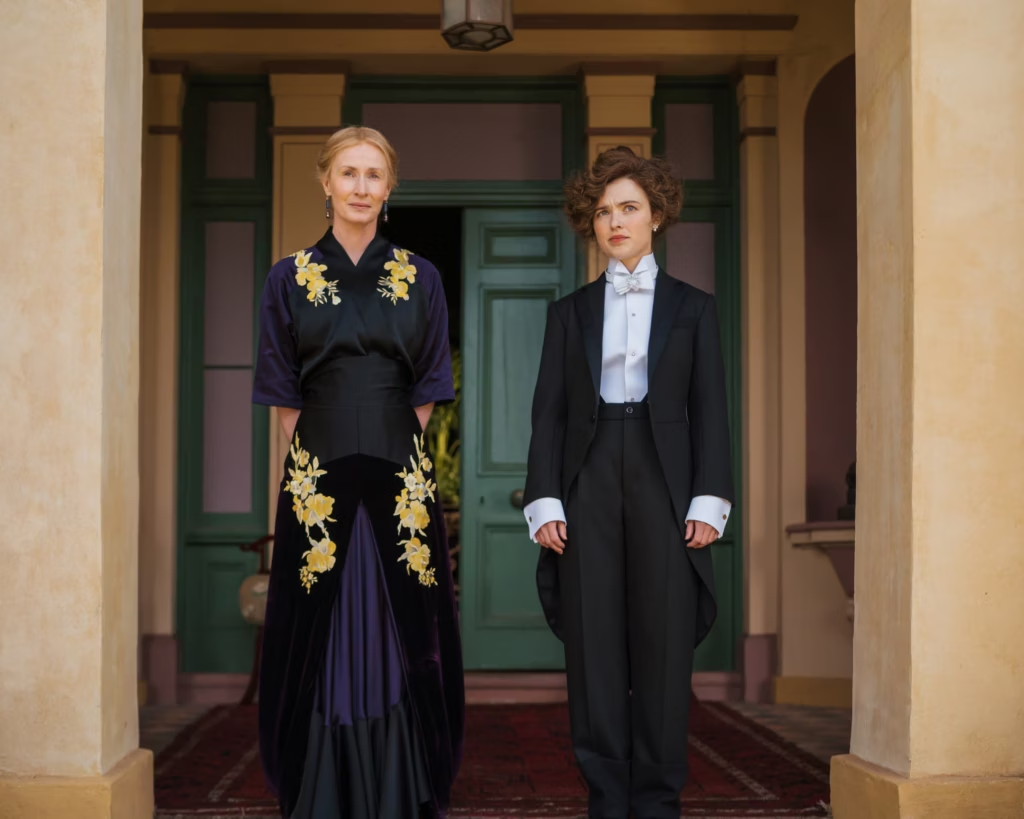
Sybylla’s aunt Helen cannot inherit Caddagat simply because she is not a man. Nell comes to realise that professional ability cannot alone overcome racial and gender hierarchies. Betty finds that private love cannot escape public prejudice. Blanche, on the other hand, finds herself trapped in an engagement where social expectations matter more than what she wants or doesn’t want.
Together, their stories show that Sybylla is not alone. Her struggle is part of a much larger question: who gets to decide what a woman’s life can look like?
The art of writing back
That is ultimately what makes My Brilliant Career more ambitious than a straightforward feminist adaptation. It is not simply updating Franklin’s story but answering back to it, both earnestly and graciously. Franklin gave Sybylla the courage to write her own story. Doran’s My Brilliant Career extends that gesture to the women Franklin could not write.
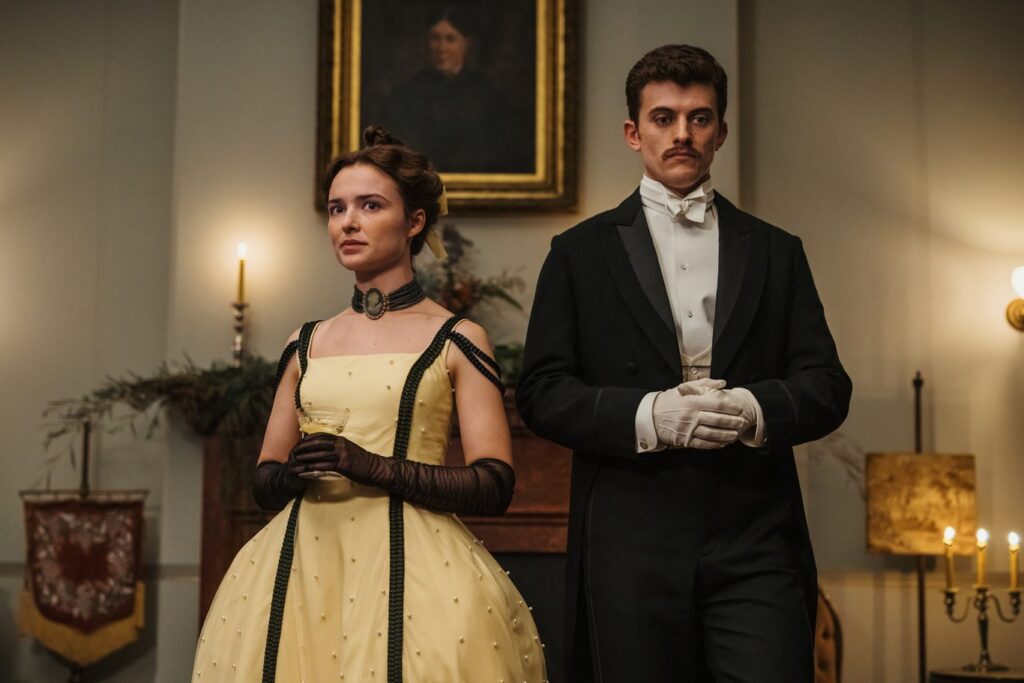
And perhaps that is the most significant achievement of this series: a tale of a woman refusing to let others decide who she should become has itself been reclaimed by women who refuse to let an old story determine what it can mean.
My Brilliant Career is, in that sense, écriture féminine brought to television — not simply women writing about women, but women writing back.
About the author(s)

Jannatul Naym Piealis a Bangladesh-based writer, researcher, and journalist.