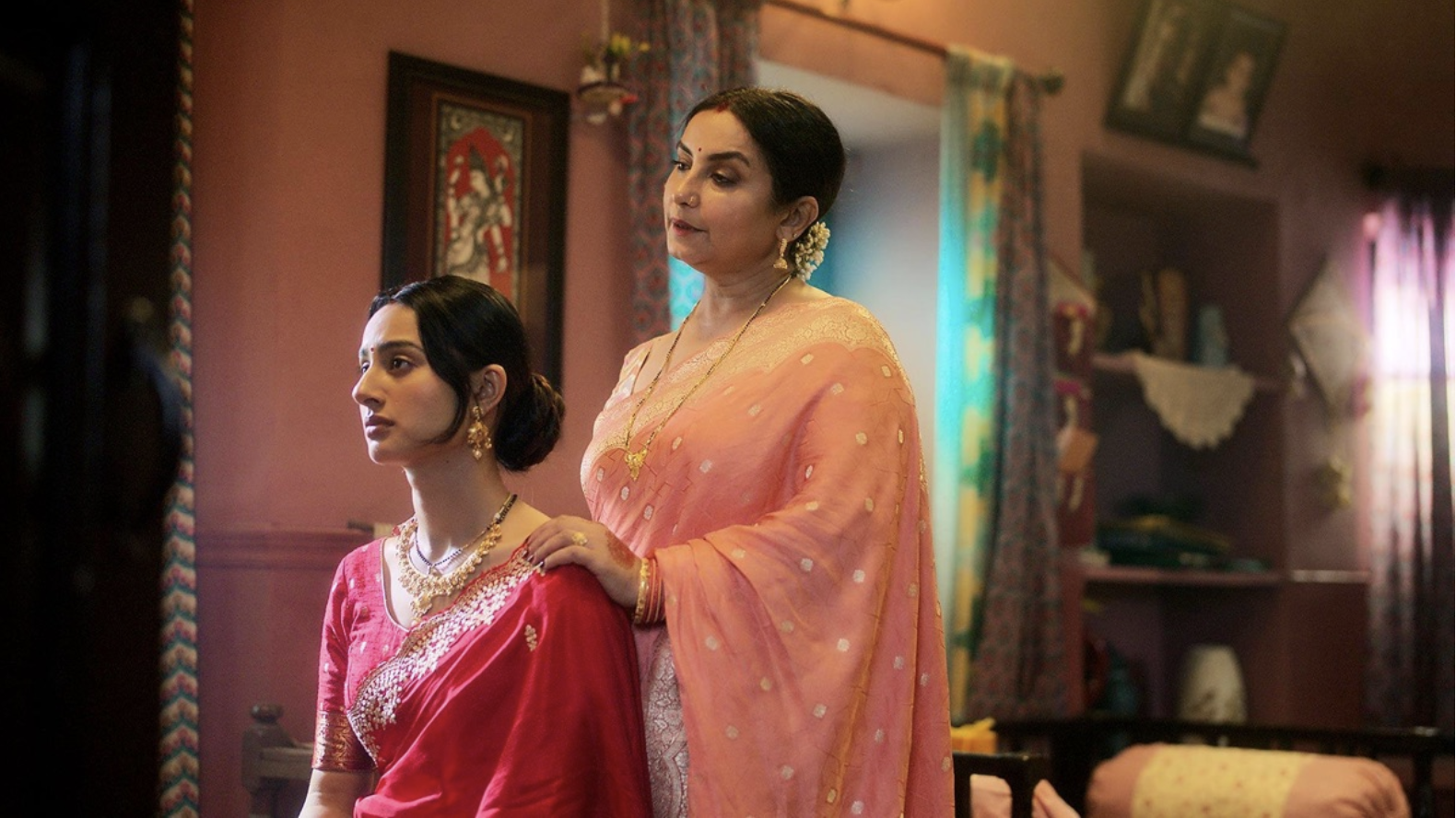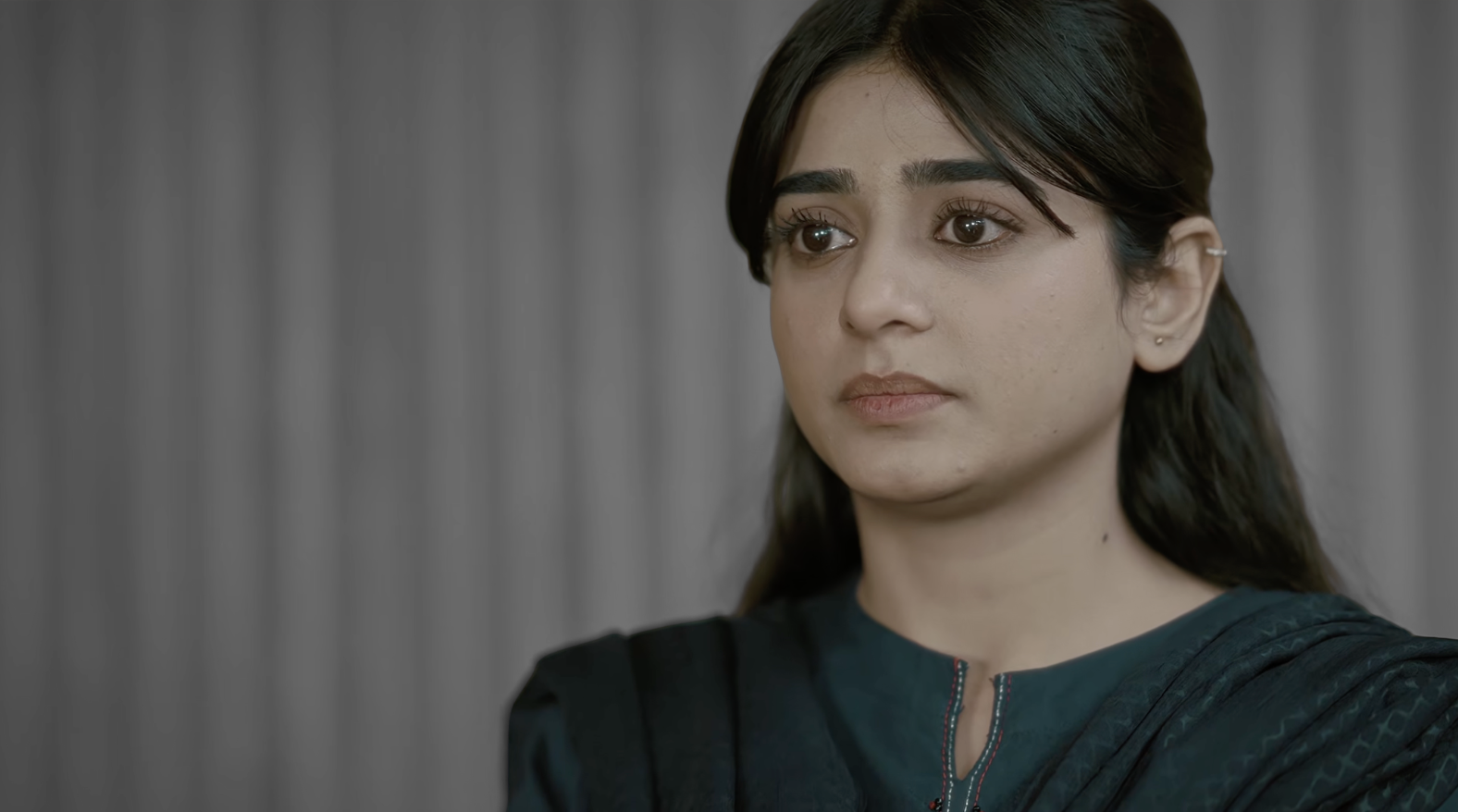
The very first episode of Aik Aur Pakeezah grimly conveys the depth of trauma the titular character endures. Her quirky mimicry of cricket commentary is now a haunting reminder of a violent incident. The Pakistani show directed by Kashif Nisar and written by Bee Gul has 27 episodes and is available on YouTube.
The show centres around the character Pakeezah (Sehar Khan), who is in love with Faraz (Nameer Khan). While on a date, the couple is tracked down by Yaseen, a man Pakeezah had rejected. They are cornered in a hotel room, assaulted, and recorded. Yaseen then uploads the video online. However, the video, which soon becomes viral, paints a starkly different picture of the situation. The video is shot in a way that viewers cannot tell that Pakeezah and Faraz were assaulted; instead, it misrepresents the situation as an unmarried couple caught in the ‘act’. This exposes the couple and their families to societal judgment and patriarchal stigma, and to protect their ‘honour’, Pakeezah is hurriedly married off to Faraz. But the nightmare has only just begun.
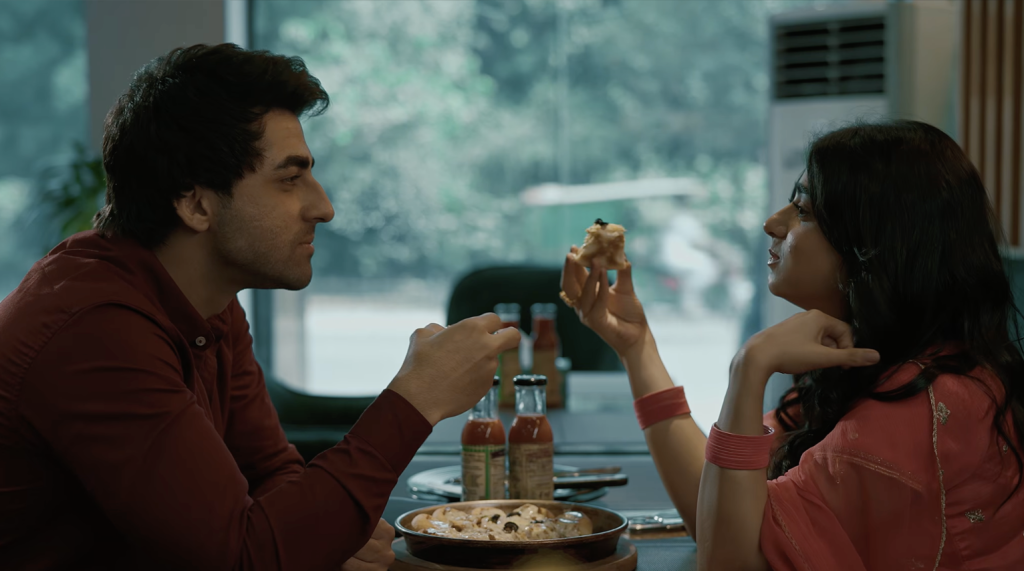
Eventually, Pakeezah decides to seek justice and pursue the matter legally. The show then traces her journey as she fights to place the ‘shame’ back where it belongs: on the perpetrator. Aik Aur Pakeezah reflects a reality common across the subcontinent. Similar issues of victim-blaming, gender-based violence, and honour-based violence plague the region, traversing national borders. In the case of India, the issues highlighted by the show are extremely relevant, with the National Crime Records Bureau’s recent Crime in India 2024 report showing an increase in cybercrime and digital violence in the country by 17.9 per cent.
In the case of India, the issues highlighted by the show are extremely relevant, with the National Crime Records Bureau’s recent Crime in India 2024 report showing an increase in cybercrime and digital violence in the country by 17.9 per cent.
Fragile male egos and patriarchal notions of community honour
Yaseen targets the couple because Pakeezah rejects him, and when he keeps pestering and harassing her anyway, she slaps him. The act of physical and digital violence allows him to get his revenge and establish his ‘masculinity’. He sees violence against the woman as a way to mend his battered male ego.
However, patriarchal ideas of ‘community honour’ allow him to claim the moral high ground, despite being the perpetrator. Pakeezah and Yaseen live in the same mohalla (locality). These mohallas are often tight-knit communities where men tend to exert patriarchal control on all women residents, even if they are not directly related. This control is often positioned as protection but translates into paternalism and surveillance. The underlying idea isn’t to ‘protect’ the woman but to guard the patriarchal respectability of the mohalla by controlling its women.
However, patriarchal ideas of ‘community honour’, allow him to claim the moral high ground, despite being the perpetrator. Pakeezah and Yaseen live in the same mohalla (locality). These mohalla’s are often tight knit communities where men tend to exert patriarchal control on all women residents, even if they are not directly related.
Yaseen latches on to these patriarchal notions to justify his actions, repositioning himself from a criminal to someone who is conferring protection to the community. He frames his violence as a justified reaction to the alleged moral failing of a woman from his mohalla. According to this logic, he is not committing a crime but punishing Pakeezah for committing one. And recording the violence and uploading it online serves as a punitive measure against a woman who tried to resist such patriarchal control.
Honour becomes a woman’s burden in patriarchal societies
The show urges its audience to think about how a woman’s body as a site of honour strips her of her agency and transfers accountability for violence from the man to the woman. Despite Pakeezah being the victim, her older brother, Akbar, sees the family’s honour as the real casualty. He has no empathy for his sister and, in fact, blames her for bringing dishonour to the family. His frustration intensifies when Pakeezah decides to approach the court, eventually culminating in a failed attempt to kill her.
His obsession with the family’s honour and increasing hostility towards Pakeezah — and women in general — make his honour killing attempt hardly surprising. The show, by tracing his arc very clearly, sends out a strong message: hostile attitudes and violent language against women are not merely angry outbursts, but a precursor to violent crimes against them.
When men in the subcontinent take pride in being ready to kill for honour, for women, this means that their bodies are turned into mere vessels holding such honour. In India, in particular, honour killings of both men and women have to be read in tandem with caste-based violence and a shift towards right-wing conservative politics that vehemently oppose interfaith and intercaste unions.
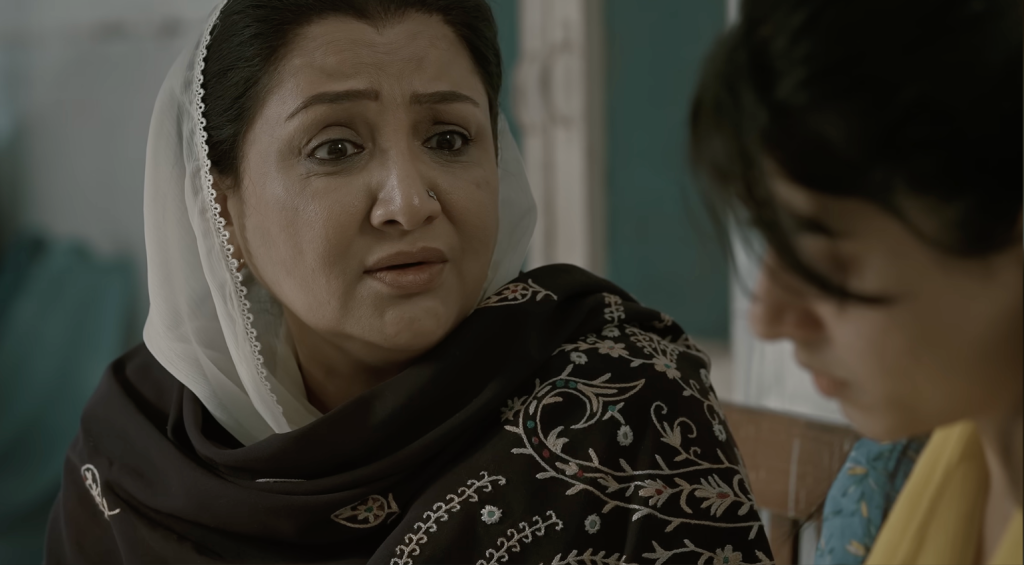
After Yaseen is put behind bars, it is revealed that Akbar can be released from prison if Pakeezah and Faraz forgive him. In Pakistan, crimes against women have in the past been forgiven through the Qisas and Diyat Ordinance, which allows the family of the victim to forgive the perpetrator. This has worked in favour of the killers in the case of honour killings, for the victim and the perpetrators belong to the same family. However, in Aik Aur Pakeezah, Pakeezah’s mother talks her out of forgiving Akbar, believing that he must be punished for attempting to kill Pakeezah. The messaging of the show goes beyond legal measures to challenge the very morality of families forgiving the perpetrators of violence against their daughters.
Sisterhood and solidarity
One of the most striking characters in the show is perhaps Pakeezah’s mother. On the eve of Pakeezah’s wedding to Faraz, she is seen aggressively scrubbing utensils. Her helplessness is evident and portrays how she’s the only one in the house who can’t truly choose to embrace how she’s feeling. As the show proceeds, we see the character evolve and stand alongside Pakeezah in her fight for justice. But to be able to do so, she must first learn to stand up for herself. To this end, she begins asserting her agency by wearing lipstick, using perfume, and cooking her favourite meals; she stops worrying about the disapproval of the male members of the family.
However, Pakeezah’s greatest ally is Saman, a lawyer she knows through her father. Saman not only fights her case but also consistently provides her with professional guidance. Pakeezah, who is a law graduate, takes on her first case under Saman’s mentorship. Most importantly, even when Pakeezah makes decisions that don’t immediately make sense to Saman, she remains supportive and non-judgemental.
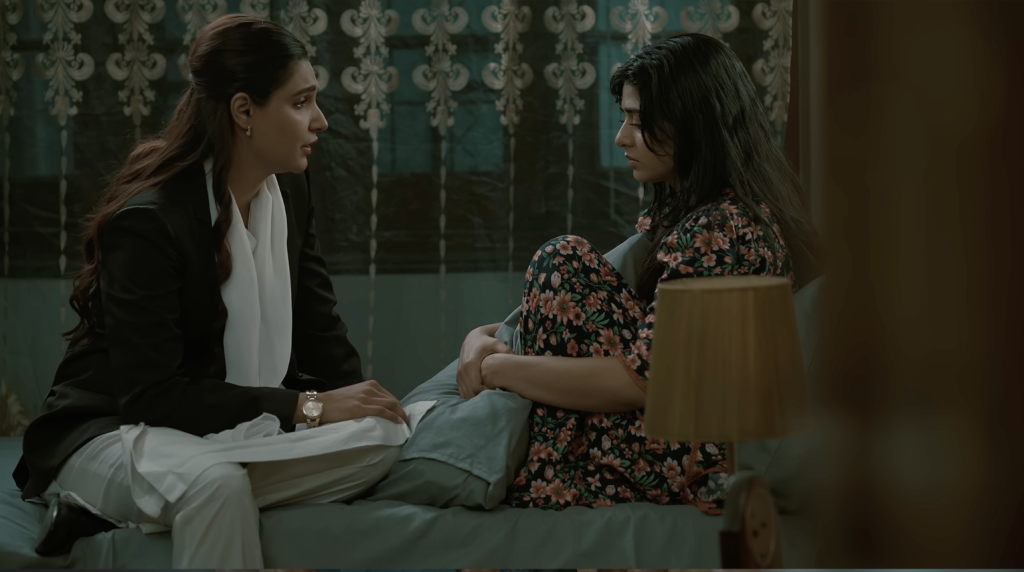
Even Yaseen’s wife, in secretly handing evidence to Pakeezah, chooses solidarity with her over loyalty to her husband. Lastly, Saman’s stepmother (Hina Bayat) is a delight to watch. She smokes a hookah, wears colourful salwar kameez, and her dialogues are loaded with wit. She, despite having lived a stifling life, warmly welcomes women who were wronged by society into her home. Even though she could not stand up for herself before, she now stands by women who need her. In Aik Aur Pakeezah, solidarity is not simple or black and white; it is learnt, negotiated, and forged every day.
The gendered nature of patriarchal policing in the digital landscape
Punitive non-consensual virality has emerged as a way to police women and reinforce patriarchal notions of sexual purity. The digital landscape has become an arena where masculine honour is enacted and reconfigured, especially in smaller cities and towns in India, where this phenomenon has taken the shape of a new panopticon. Instances of young couples in public places being stealthily recorded and blackmailed have emerged. While many incidents go unreported, some rackets involving private spaces such as Oyo rooms have been busted.
Non-consensual recordings have long been reported in women’s changing rooms, washrooms, and hostels. Recordings of women are also likely to go viral quickly, considering the existence of all-male ‘locker room’ groups on social media where such content is frequently shared. Another form of privacy violation involves men secretly recording women in public places like metros and uploading those photos to social media platforms such as Instagram pages and Telegram groups. One such Instagram handle was recently exposed in Bengaluru. Such forms of digital violence make public and semi-public spaces even more inaccessible to women.
While digital violence does not necessarily have to be gendered, a large proportion of such crimes are gendered in nature and fall under technology-facilitated gender-based violence (TFGBV). In refusing to draw a false equivalence between the impact of the incident on Faraz and Pakeezah, the makers of the show acknowledge this gendered dimension.
While digital violence does not necessarily have to be gendered, a large proportion of such crimes are gendered in nature and fall under technology-facilitated gender-based violence (TFGBV). In refusing to draw a false equivalence between the impact of the incident on Faraz and Pakeezah, the makers of the show acknowledge this gendered dimension. At the same time, the impact on Faraz is neither trivialised nor ignored; rather, the differences in their experiences are preserved. This allows the show to explore the gendered nature of such crimes in a nuanced manner. Throughout the show, one can see how the woman victim encounters far greater and more vicious social stigma than that faced by the man. Aik Aur Pakeezah does an excellent job of handling such sensitive issues with nuance, carefully avoiding alienating the community and instead drawing them into the conversation.
About the author(s)

Shimaila Mushtaq is a Political Science graduate from Jamia Millia Islamia. She currently works as the Social Media Consultant for The Book Review Journal.