The auto driver didn’t want to take me when I told him where I was going: Shivaji Nagar, Govandi. He turned around to look at me properly. It was 2022, and I was a social work student doing fieldwork in the area. That day, my field partner had not come, and I was a woman, alone. The auto driver asked me why I wanted to go there. I told him I had to work. He drove, but he talked the whole way about goons, drugs, and the area being unsafe for women. At one point, he asked, not unkindly, if I was sure I wanted to go.
I didn’t tell him that the women I was going to meet had no such option. That they woke up in Shivaji Nagar every morning, worked there, raised children there, and would, in all likelihood, die there, at an average age of 39. Mumbai’s M-East ward has the lowest Human Development Index (HDI) of any ward in the city. More than half the children there are malnourished, and the ward sits next to the Baiganwadi-Deonar dumping ground, India’s oldest and Asia’s largest, which has been burning periodically and emits toxic fumes since 1927.
This is where much of Mumbai’s bridal zari embroidery is made.
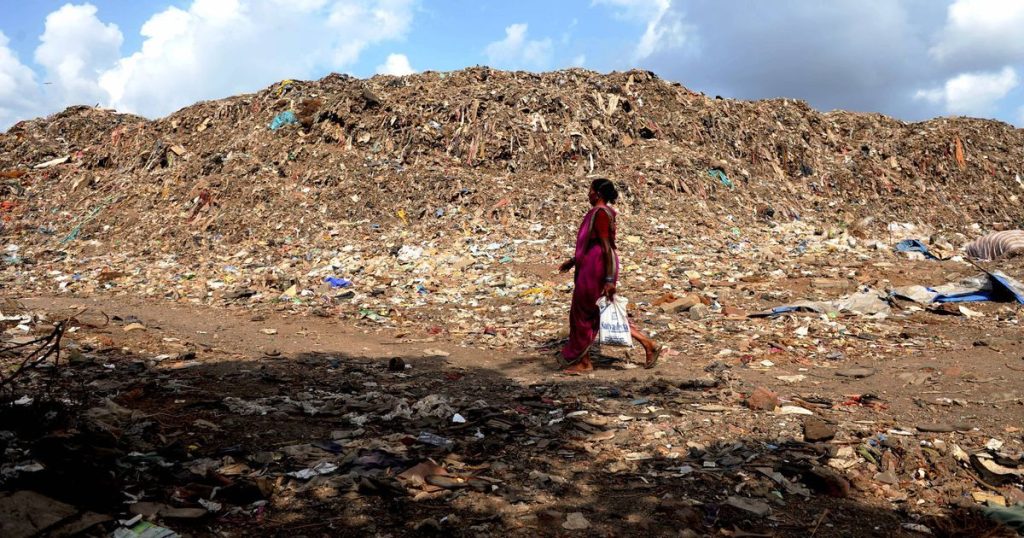
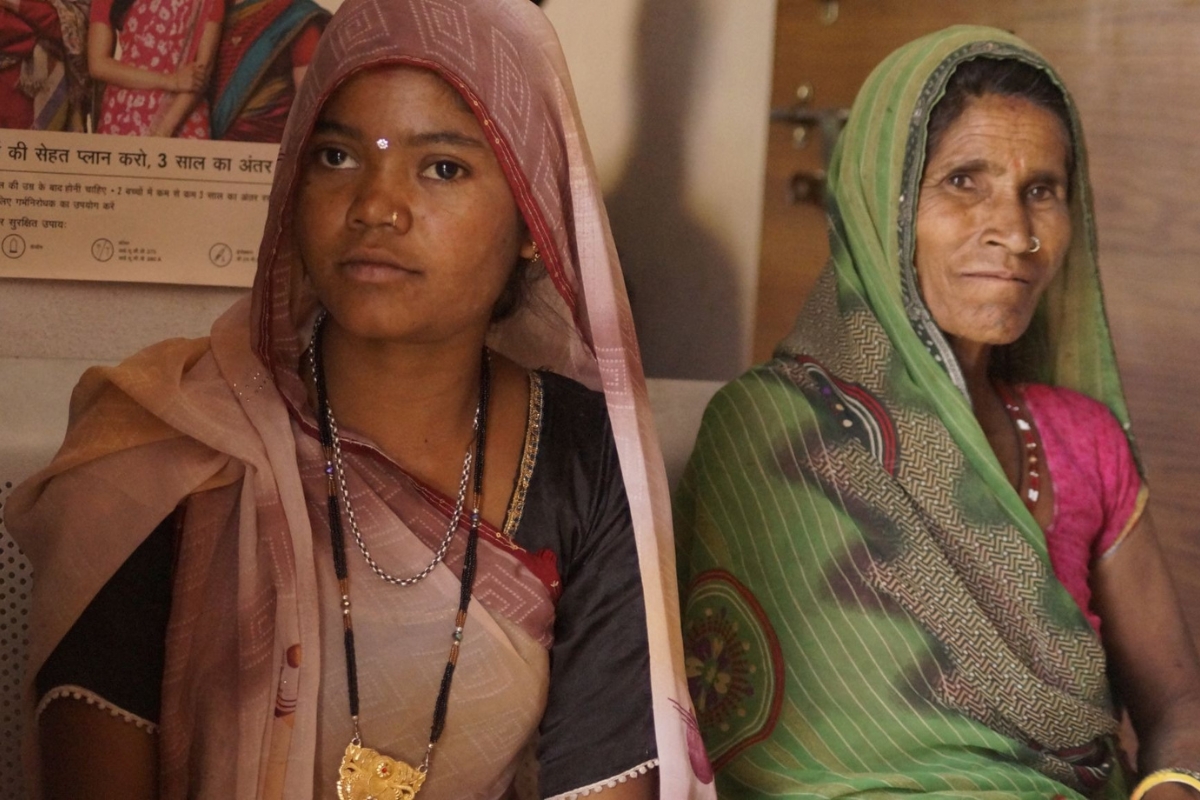
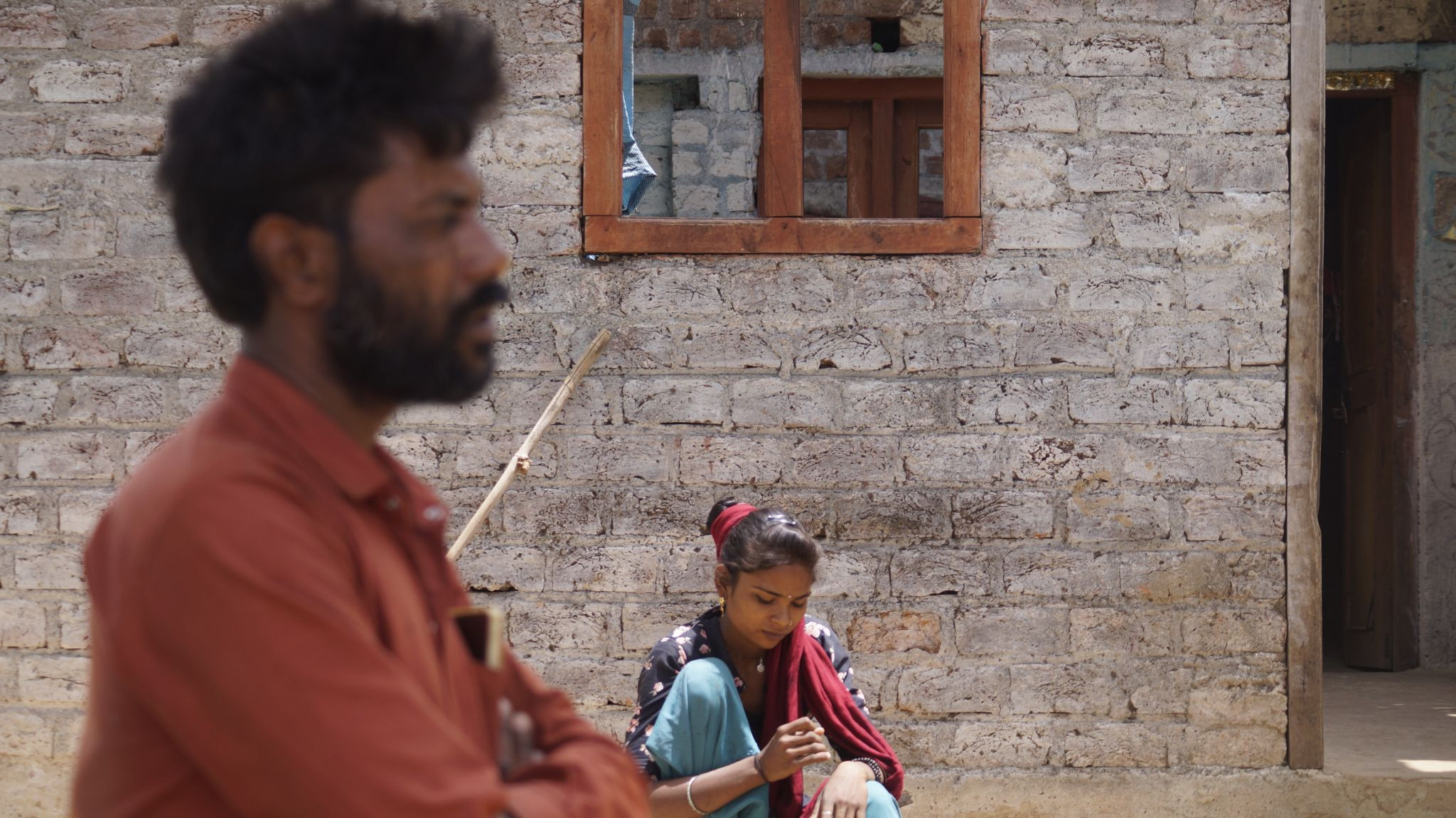
Sanjay Nagar basti, where I did my fieldwork, sits within the larger Shivaji Nagar area. The lanes are narrow enough that two people must turn sideways to pass each other. Homes are single rooms of roughly 10 by 15 feet, housing entire families. Open drains overflow during Mumbai’s intense monsoon. The dumping ground is close enough that its putrid stench has become part of the air here, and most have learnt to live with it. Most residents have migrated from Uttar Pradesh and Bihar and have lived here for a decade or more, yet the city still calls them ‘migrants’. If that is so, then who exactly are the locals? This is their home. The city simply refuses to accept that.
The work, what it pays, and who does it
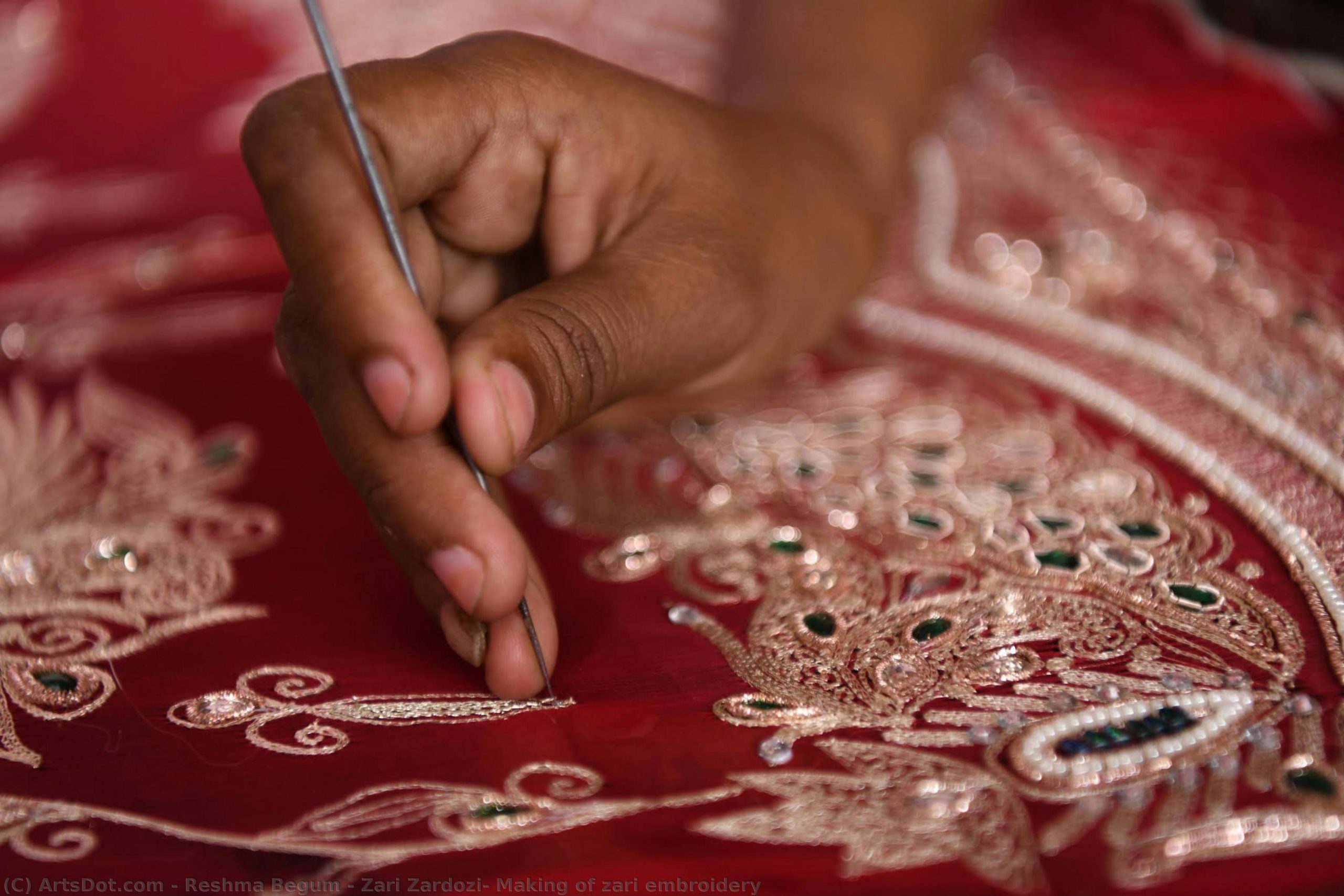
The work they do is called stone-sticking. A garment arrives — a lehenga panel, a dupatta, or a neckline piece — and a woman sits with it in that 10-by-15-foot room, fixing rhinestones onto the fabric one by one for hours, in whatever light comes through the single window. Her eyes and shoulders bear the strain. When the work is done, she passes it back through the chain from which it came: a local contact passes it to a contractor, who then passes it to someone at Crawford Market, Dadar, or a textile shop where a bridal lehenga will eventually be priced at INR 25,000 or more. Yet for two days of this work, she is paid just INR 300.
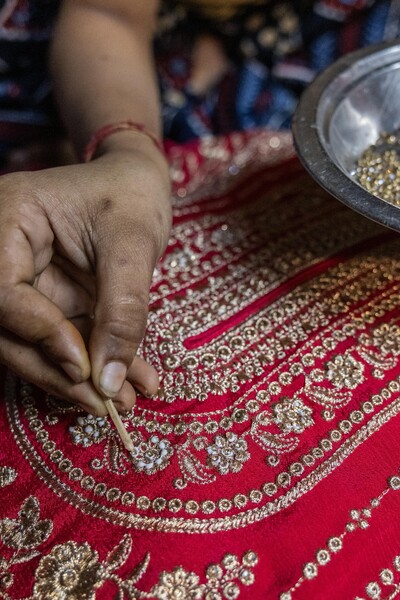
Maharashtra’s Minimum Wages Act, 1948, mandates a daily wage of approximately INR 430 for unskilled workers in Mumbai. A woman working two days should earn a minimum of INR 860; she earns INR 300. Some earn less: INR 60 per piece, INR 25, INR 12, and even INR 5. The Labour Enforcement Officer at the Shram Raksha Bhawan confirmed it was a clear violation; workers must be paid on a daily or hourly basis, she said. Piece-rate payment falls outside the Act’s enforcement reach. Piece-rate is not a neutral payment system; it is how the minimum wage law is made intentionally unenforceable. And it works because when women call their own work leisure, no one rushes to correct them.
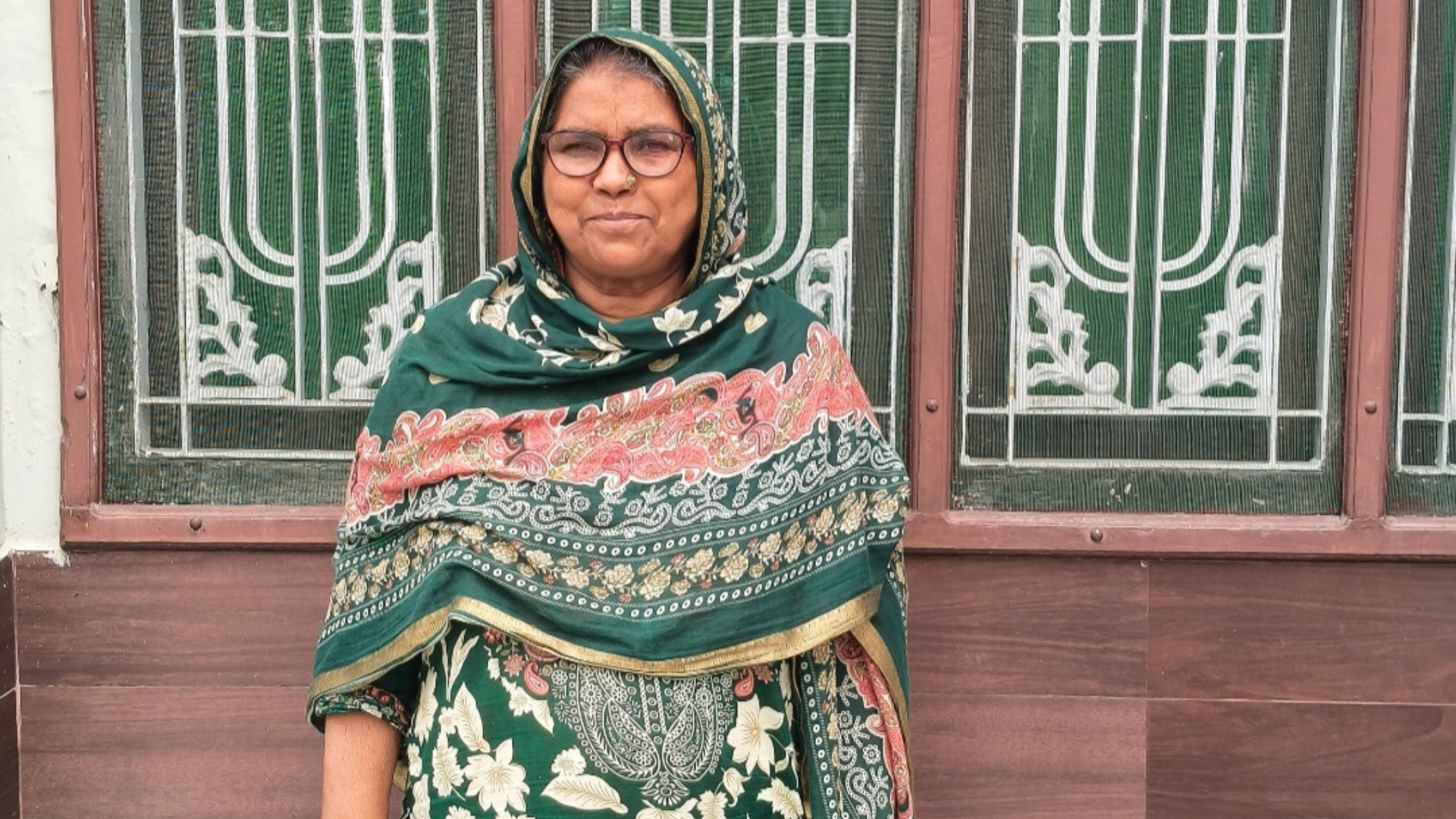
One of the first women I met in the basti was Khatunisa. Before she did zari, she sorted waste at the Deonar dumping ground. She earned INR 225 a day there, more than what most women earned from zari. However, she had to stop because of what the work did to her body. When we met her, she told us she still could not eat fish because the smell takes her back. She is now a zari stone-sticker in the same ward, breathing the same air, from the same dump. The move from waste-picker to home-based embroidery worker is not a story of mobility; the exploitation just moved indoors, into a private space where it becomes even harder for any enforcement mechanism to reach workers.
The move from waste-picker to home-based embroidery worker is not a story of mobility; the exploitation just moved indoors, into a private space where it becomes even harder for any enforcement mechanism to reach workers.
Not far from where Khatunisa works, Farida, a twenty-year-old woman, does zari stone-sticking and also teaches at the community learning centre in the basti. When we first met her, she described the zari work as a leisure activity. Then, almost immediately, she corrected herself: ‘It isn’t relaxing, actually. You have to be extremely careful. If a stone is placed incorrectly, the piece is rejected, and payment is denied.‘ Her eyes hurt. Her shoulders hurt. She did the work for the income, and also because her husband was a zari weaver and the work came to her through him. She called it leisure. But leisure does not give you eye strain.
Nine years: that is how long Fatima has been doing this work. She earns INR 50 per piece for neck designs, each of which takes two days to complete. Her husband is an alcoholic who does not work. He takes the money she earns and spends it on alcohol. She has been experiencing seizures for several years, which she says began after the physical abuse escalated. Fatima earns money. She has earned it for nine years, but she does not own anything. Even if she were paid fairly, the wage would still pass through a household that gives her no claim to it. What a woman earns and how much of it she owns are two very different things.
Zehra is thirteen. She said she loved the work, and she earned INR 60 a day. However, she had to stop. Her father was bedridden, and after her elder sisters were married off, someone had to look after him. She had already left school after Class 6. When I asked her why she had left school, she said, ‘Karna padta tha, aur koi option nahi tha (It had to be done; there was no other choice)‘. She said it the way you say something that has already been decided, long before you were asked about it.
Who gets a choice
When we tried to trace the value chain, to find out who the contractors were and where the finished garments went, we kept hitting the same wall. Nadia, who had been doing this work for twelve years, called her husband so that we could speak with him. She told us she knew nothing about it; she simply collected the work from him. Another woman did not know her contractor’s name at all; she referred to him only as bhai (brother).
When we needed to find someone, the easiest way was through the names of their children at the local learning centre, not through their own names. This is not just about social invisibility. Filing a minimum-wage complaint requires knowing who your employer is. Organising requires knowing who your coworkers are. When neither is possible, the law simply cannot function here.
When we went back to find the women we had met, nobody could identify them by name. Women were identified as someone’s wife, someone’s daughter, or someone’s sister. Even among themselves, they called one another khala (auntie) or referred to each other by their relationship to a male relative. When we needed to find someone, the easiest way was through the names of their children at the local learning centre, not through their own names. This is not just about social invisibility. Filing a minimum-wage complaint requires knowing who your employer is. Organising requires knowing who your coworkers are. When neither is possible, the law simply cannot function here.
The informal contractor networks that employ these women remain largely outside the reach of labour law. That has not changed. The Deonar dumping ground is still burning. What has happened to the women themselves, I cannot say, because I have not gone back. Nadia’s contractor had no name. Fatima’s earnings went to a man she could not leave. Khatunisa could not eat fish. Zehra left school to care for her father. Trade unions in the area are trying to organise these women, and that is where the story might, slowly, go next. But first, they need to be seen. Not as a policy problem to be solved or a statistic in a labour report, but as women who live in a ward the rest of Mumbai would rather ignore; who spend their days making clothes for weddings they will never attend; and who have learned to call their work ‘leisure’ because nobody ever told them about their rights.
The auto driver asked me if I was sure I wanted to go to Shivaji Nagar. These women, however, were never asked.
Names in this article have been changed to protect the privacy of individuals.
The fieldwork this article is based on was done between 2022 and 2023.
About the author(s)

Sreya holds a Master of Social Work from the Tata Institute of Social Sciences, Mumbai. She writes on gender, urban informality, labour, and development. She currently works as a Development Consultant at MicroSave Consulting, where her work spans inclusive and digital finance, as well as startup ecosystems.