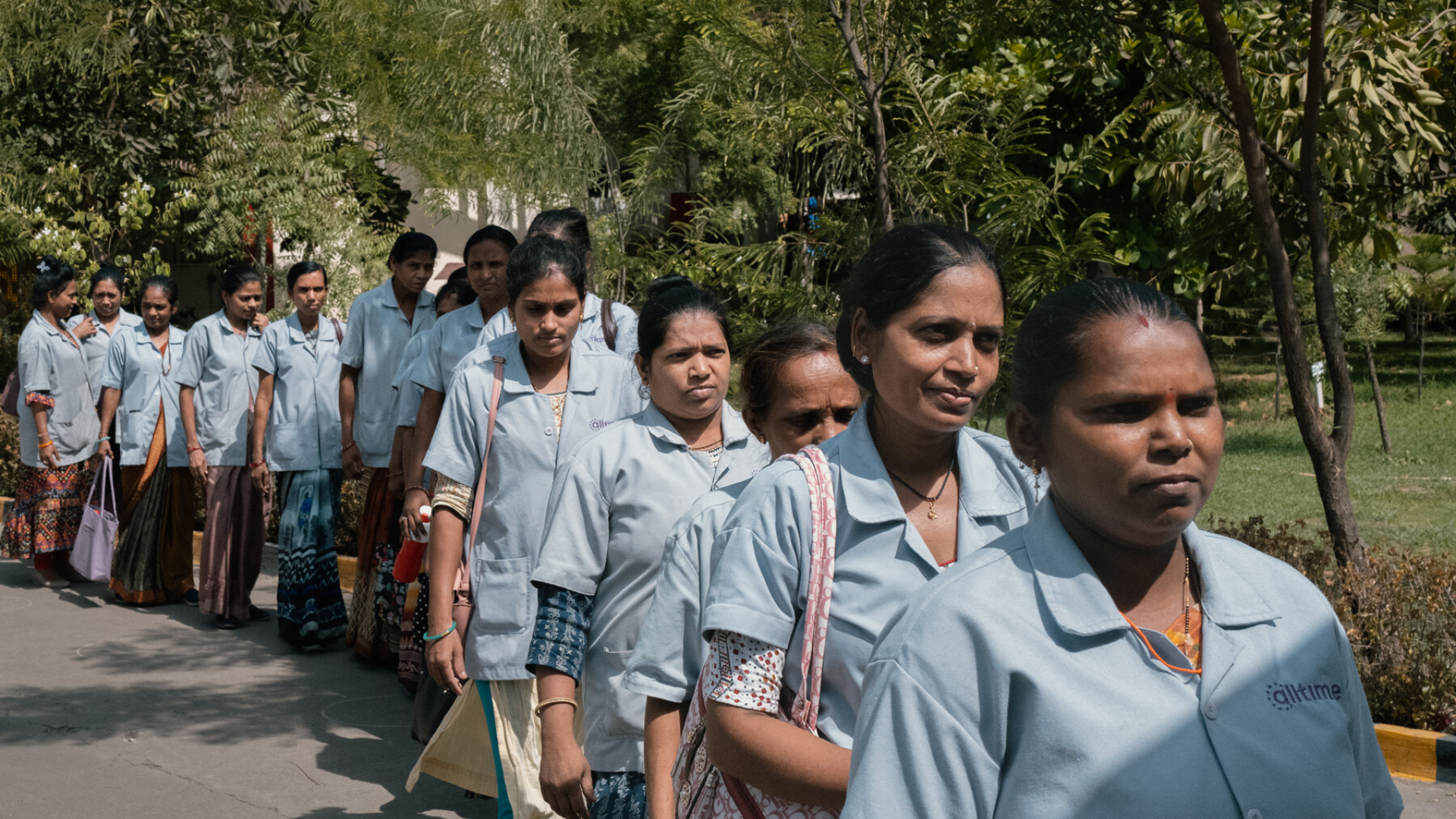
Domestic work in India has always operated on informal, verbal contracts that are shaped by caste, class, and gender. While a limited number of states, such as Andhra Pradesh, Jharkhand, Karnataka, Kerala, Odisha, Rajasthan, Haryana, Punjab, Tamil Nadu, and Tripura, have notified domestic workers under the scheduled employment category within the Minimum Wages Act, more than half of Indian states have no enforceable minimum wage and weak institutional recourse against exploitation for domestic workers.
According to NITI Aayog, India’s gig workforce is projected to grow from 7.7 million in 2020-21 to 23.5 million by 2030. Within this, domestic work remains one of the largest and most invisible segments. The International Labour Organisation (ILO) reports that over 75 million domestic workers are employed globally, the vast majority of whom are women who are informally employed.
In India, official estimates of the number of informally employed workers, as per the National Domestic Workers Movement (NDWM), hover around 4.75 million, while unofficial estimates range from 10 to 50 million. Most of these workers are women from Dalit, tribal, and OBC communities. The vast gap between official and unofficial estimates speaks to how haphazardly this workforce is counted.
The question that remains is: why are fundamental worker protections being delivered by startups instead of the state?
In urban India, tech platforms now allow hiring of domestic workers on an hourly or full-time basis. These platforms provide features such as verified customer identities, considering the woman domestic worker’s safety; fixed monthly salaries; paid time off; the ability to rate customers; attendance tracking; and health insurance. These are basic safeguards that should ideally exist across the sector, irrespective of the involvement of private players. The question that remains is: why are fundamental worker protections being delivered by startups instead of the state?
Skill recognition by the state
The gaps become more visible when it’s viewed against India’s own labour and skill-development ecosystem. Sector Skill Councils, backed by the Ministry of Skill Development & Entrepreneurship, alongside the Skill India initiative and NSDC, offer programmes that train people in cleaning, elder care, hygiene maintenance, housekeeping, and general domestic assistance, and provide certification and employment opportunities.
The existence of such programmes confirms that the state already acknowledges that domestic work is labour that requires skill and efficiency. However, the domestic workforce still remains outside the purview of enforceable labour protection safeguards.
The existence of such programmes confirms that the state already acknowledges that domestic work is labour that requires skill and efficiency. However, the domestic workforce still remains outside the purview of enforceable labour protection safeguards. For women who have lived through years of exploitative practices in the domestic workforce, tech-enabled features can act as a safety net that ensures structured payments and their safety in an environment that is mired in power imbalances.
The perils of platform-mediated agency
Tech-enabled agency in domestic work should not be interpreted as a solution from the startup industry for historical problems; instead, it should be read as private platforms taking institutional gaps in this country and marketing those as their USPs. The private platform system creates a dependency and even a system of surveillance. Furthermore, there is a chance of misinterpreting basic labour dignity as accessible only through platform participation, instead of recognising it for the universal right it is. At the end of the day, the benefits of being a part of the corporate ecosystem and labour rights that are legally enforceable protections instituted by the government are not the same thing.
These platforms currently offer insurance, paid leave, and fixed salaries. However, these features are susceptible to change with respect to their independent policy revisions and the company’s profitability. The Indian gig economy already demonstrated this fragility of platform-dependent protections. Across the transportation and delivery sectors, workers have raised concerns around algorithmic management, ratings pressure, and unstable incomes. Domestic work platforms may currently offer comparatively stable structures, but those are susceptible to change as well.
As of May 2026, the Code on Social Security, 2020, includes gig and platform workers, and has provisions for social security funds, maternity benefits, and more for workers who have been affiliated with a platform for at least 90 days. However, this new advancement doesn’t change anything for unorganised domestic workers who aren’t affiliated with these platforms, especially in rural and semi-urban India. The state indeed seems to be willing to recognise domestic work as a profession that meets the demands of the service sector, all the while showing reluctance in fully formalising it through enforceable rights.
Tech-enabled systems are further formalising the domestic work sector through attendance tracking, client rating systems, and customer reviews. These features can improve accountability on both ends, but they can simultaneously increase worker surveillance. Rating a worker within a platform-mediated system is generally presented as an indicator of the quality of service provided by the worker. Because these systems operate within already unequal labour relationships, a low rating not only reflects the client’s dissatisfaction but also impacts the worker’s future work prospects. Then again, the same platforms allow the workers to rate their clients as well.
The ability to reject a client booking based on prior ratings from workers can be seen as empowering and crucial to the exercise of the worker’s agency. While acknowledging its advantages, it is, however, important to see this as a conditional benefit that can be withdrawn at a company’s discretion.
The ability to reject a client booking based on prior ratings from workers can be seen as empowering and crucial to the exercise of the worker’s agency. And while it does not resolve structural imbalances and power differentials, it offers documented evidence that will defend a worker’s refusal. While this too is a platform policy that is vulnerable to changes in the future, it still offers a power redistribution mechanism that is generally not available to domestic workers in traditional settings. While acknowledging its advantages, it is, however, important to see this as a conditional benefit that can be withdrawn at a company’s discretion.
Ensuring labour rights irrespective of platform affiliation
Millions of Indian domestic workers fall outside this tech-enabled ecosystem, largely due to structural barriers such as a lack of digital literacy and access to smartphones, geographical location, and language. When labour safeguards remain tied to being affiliated with a platform, the most geographically isolated and economically vulnerable within the workforce are the ones who will remain excluded from even minimal institutional protections. It has been proven to an extent that private tech involvement can improve labour conditions. The larger policy question, however, is whether such labour protections should depend on tech mediation from private platforms at all.
When labour safeguards remain tied to being affiliated with a platform, the most geographically isolated and economically vulnerable within the workforce are the ones who will remain excluded from even minimal institutional protections.
India must conceptualise a meaningful policy response that recognises domestic work as a formal labour sector and ensures enforceable protections for domestic workers. This includes standardised minimum wages, written employment contracts, healthcare benefits and maternity care, and grievance redressal mechanisms. This requires accountability frameworks that extend to platform-affiliated workers without making platform association a prerequisite for basic dignity. The intention behind such a policy should be to ensure that women domestic workers, regardless of their association with platforms, geographic location, or digital literacy, are equipped with the tools necessary to exercise their agency.
About the author(s)