India’s seafood industry has expanded rapidly over the past decade. According to the Ministry of Commerce and Industry, India exported 19,72,018 metric tonnes (MT) of seafood valued at ₹73,890.46 crore (USD 8.46 billion) during 2025-26, the highest export volume recorded. Beyond these record figures lies a labour regime overwhelmingly sustained by women workers whose low wages, precarious employment and hazardous working conditions remain largely invisible within the success narratives of export-led economic growth.
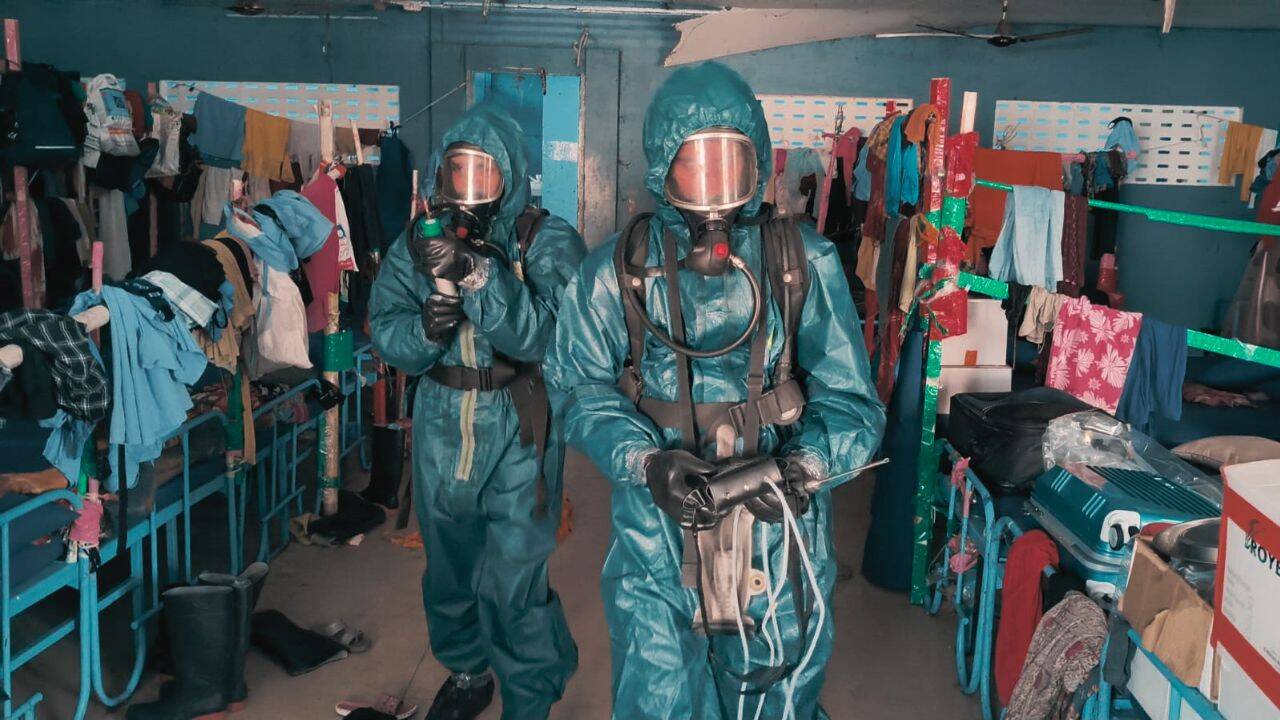
In the early hours of June 21, 2026, an ammonia gas leak tore through the manufacturing unit of Peter & Paul Seafood Export Company, a private company near Periyapalayam in Tamil Nadu’s Tiruvallur district. Ammonia is a key component in the cooling/refrigeration process and can be life-threatening when inhaled in high concentrations. As temperatures rose and pressure built up in the system, an ammonia pipeline ruptured, and the toxic gas spread rapidly through the unit’s first floor. Significantly, the women’s residential quarters were also on the first floor, where roughly 120 migrant workers – mostly from Assam, Odisha and Jharkhand – lived. The leak resulted in the death of 18 women, and 80 people were hospitalised, with several being on ventilator support. Tamil Nadu’s government has announced ₹2 lakh compensation for each deceased worker’s family, and Odisha’s has added ₹10 lakh in ex gratia payments. An inquiry has been formed, and FIRs have been filed.
What happened in Tiruvallur was not a freak accident but a manifestation of a labour system built, quite deliberately, on gendered precarity. This necessitates an exploration into how gender, caste, migration status, and regulatory neglect were not incidental to the women’s deaths; they were structural preconditions for them.
When the Factory Follows Women Home
One detail deserves more attention than it has received: the women workers who died were not working when the leak occurred. They were sleeping in their residential quarters, on a Sunday, their designated day off, after completing a 12-hour shift. Their exposure was not an occupational accident in the conventional sense; it was a consequence of being confined to factory-owned accommodation within the industrial premises.
Their proximity to the leak reveals much about how migrant women’s labour is organised in India’s seafood export sector. Workers are mostly housed within or immediately adjacent to the facilities where they work, blurring the boundaries between life and labour. Al Jazeera’s report on similar shrimp processing operations in Andhra Pradesh revealed that migrant women were only allowed to leave the factory campus once a week, for a few hours, while chaperoned by a contractor. The women described the exploitative conditions: not being paid for overtime work, having no health insurance, and being under constant surveillance through cameras, trapped in what felt like an “open prison”. Legal experts have pointed out that this kind of confinement could meet the threshold of forced labour under India’s Bonded Labour (Abolition) Act, since curtailing their movement is a marker of coercion, not simply a housing convenience.
The fusion of workplace and living space can be understood through Tithi Bhattarcharya’s social reproduction theory (SRT), which argues that capitalism not only depends on the extraction of labour during production but also on the systems that sustain workers’ bodies and their capacity to continue working. Here, the employers not only regulate women’s labour inside the processing unit but also control the conditions under which that labour is reproduced. When housing is inseparable from the hazard zone, the “day off” offers no protection for women because recovery itself occurs in the same environment of risk.
The Gendered Foundations of India’s Seafood Export Economy
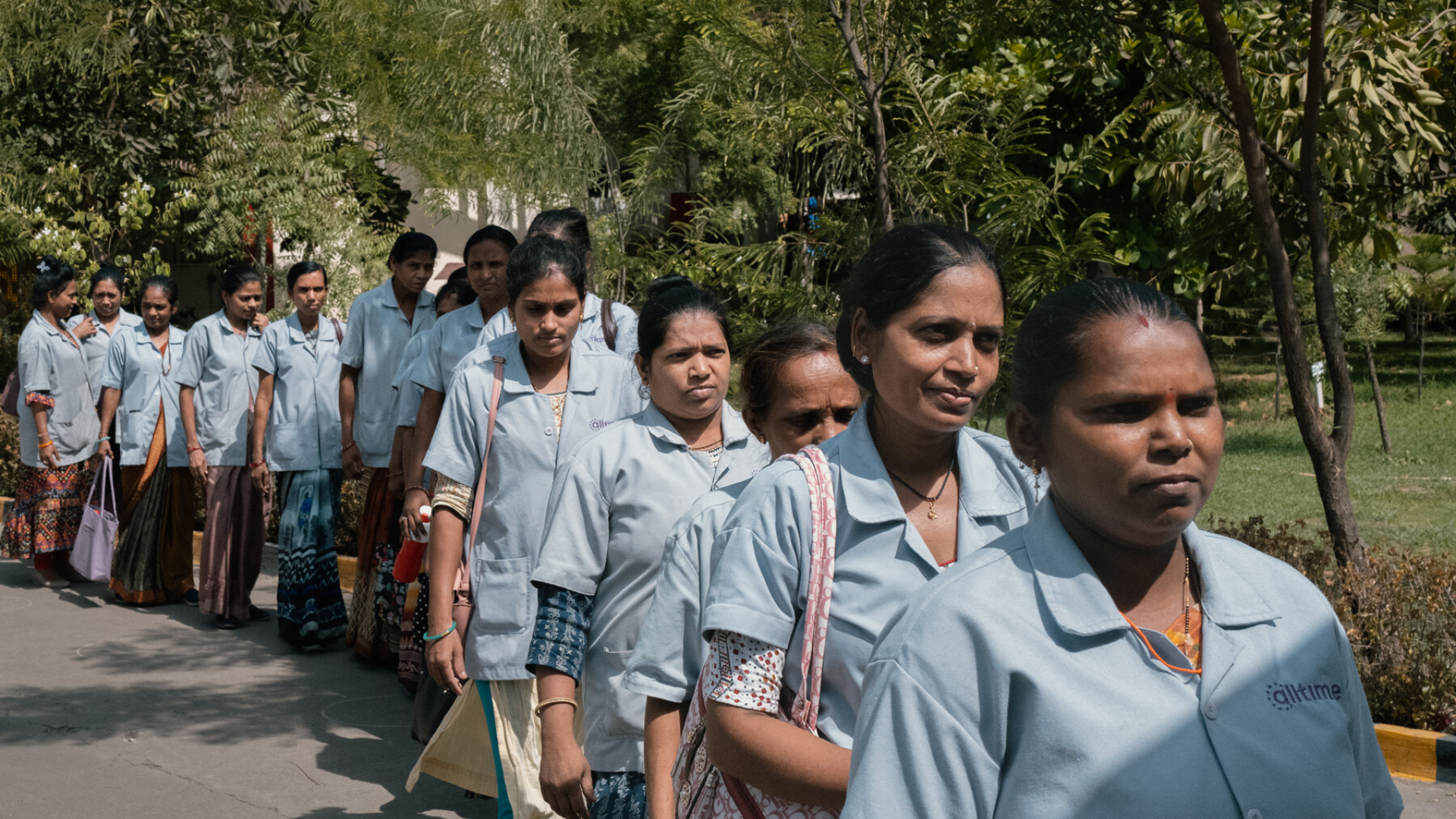
More than 75% of the seafood industry workforce in India is women, and the industry contributes 1% to India’s GDP. Frozen shrimp is the country’s largest export commodity, and the USA is its largest buyer. Shrimp processors have gendered roles, Benoy Peter, executive director of Centre for Migration and Inclusive Development (CMID) said that recruiters often target young girls because their “nimble fingers” are considered well-suited for seafood work that entails peeling, de-heading, freezing and packing shrimp. These workers stand for hours in extremely cold environments because the temperature must be maintained at 4 degrees Celsius. After the accident, a worker shared that the job was physically demanding, leading to recurring headaches, backache, bacterial infections, skin diseases and UTIs due to lack of access to toilets- while the wages remained relatively low- around ₹12,000- ₹15,000 a month.
Feminist economist Naila Kabeer has examined how capitalism relies on gendered inequalities of labour. Kabeer shows that export-oriented industries repeatedly recruit women as they are perceived as a source of flexible, compliant and low-cost labour. Non-contractual employment, low wages, inadequate workplace protections and limited bargaining power are deliberate conditions that make them profitable enterprises. The seafood export sector demonstrates how global supply chains generate value through systematic exploitation of women’s labour while offloading production risks onto them.
Intersectionality and the Political Economy of Labour
Anti-caste feminist scholar Sharmila Rege argued that caste and gender cannot be analysed separately because Dalit women’s experiences of labour are fundamentally constructed by both. Dangerous, low-paid and insecure work is disproportionately performed by women from historically marginalised caste communities. The incident exposes the structural inequalities that determine who is recruited into hazardous occupations and who ultimately bears the consequences of unsafe labour conditions. The affected women were predominantly young Adivasi migrant workers whose experiences were shaped by the intersecting forces of gender, caste, class, age and migration status.
Of the eighteen deceased workers, fifteen were from Odisha, two from Assam and one from Jharkhand. A majority were teenagers from the Juang community – a Particularly Vulnerable Tribal Group (PVTG) in Keonjhar district, Odisha, which historically depended on forest-based livelihoods and subsistence economies. According to the Indian Express, Rangamatia village, Odisha, home to two of the deceased workers, faces severe infrastructural deprivation. The village lacks proper roads, has a school only up to Grade 5, is 40 kilometres away from the nearest hospital and did not have mobile connectivity until last year. Poverty, unemployment and lack of sustainable livelihood options drove these young women 1,500-3,000 kilometres away from their homes in search of regular wage labour. Their migration was facilitated through informal networks of relatives and labour intermediaries who connected rural workers to distant industrial employment.
Odisha labour officials’ investigation revealed that several workers were recruited using forged or borrowed Aadhaar documents, and some workers were found to be minors. The labour intermediary, Srikanta Juanga, who reportedly facilitated hiring from Odisha, is absconding following the incident. These migration pathways reproduced conditions of dependency and vulnerability. According to the International Labour Organisation (ILO), most workers in India’s shrimp processing industry are recruited via contractors rather than being directly employed by the processing unit. This subcontracting model enables companies to evade responsibility for providing health insurance, Provident Fund, social security, and compliance with labour law. Such arrangements weaken accountability mechanisms, leaving the migrant workers reliant on intermediaries for basic protections.
Corporate Negligence and Failure
India is not short of legislation that should have prevented this. Under the Occupational Safety, Health and Working Conditions Code, 2020, employers are required to provide a safe working environment, welfare facilities, and appropriate safeguards in establishments that involve hazardous processes. According to The News Minute, workers had reported recurring minor leaks earlier, but their concerns were dismissed, showing corporate negligence. Housing workers on the same premises as an industrial refrigeration system that handles ammonia calls into question whether these obligations were meaningfully considered. The Inter-State Migrant Workmen Act requires labour contractors to hold a recruiting license. The worker’s account of physically demanding conditions and lack of health insurance further points to potential failures under the Code on Social Security 2020, which aims to extend social protection, including health and employment-related benefits, to workers. The relatively low wages reported by workers invite scrutiny under the Code of Wages 2019, which guarantees statutory minimum wages and seeks to reduce wage insecurity in vulnerable sectors. Meanwhile, the ex gratia payments by the state governments represent a reactive rather than a structural response. The tragedy exposes gaps between statutory protections and workers’ lived realities.
The Right to Work Without Risk
A feminist response would move beyond mourning and monetary compensation towards structural demands: mandatory registration and documentation of all migrant workers regardless of contractor arrangements. Workers should be provided with separate housing away from hazardous industrial zones. There is a need for adequately staffed factory inspectorates with the power to shut down non-compliant facilities rather than merely fining them in the aftermath of tragedy. Freedom of movement and association – including the right to organise – remains important for migrant workers to resist this kind of exploitation.
These women should not be remembered as victims of an industrial tragedy; they were workers whose labour sustained their families and global communities, and they sought economic independence and dignity through employment. Yet the very system that relied on their labour failed to recognise their lives as worthy of equal protection.
About the author(s)

Simran Dhingra is a recent graduate from Geneva Graduate Institute. Her research interests lie at the intersections of gender, peace, and migration. Her work examines how digital infrastructures reproduce power hierarchies, shape vulnerabilities, and influence policy responses at multilateral and institutional levels.