Growing up, I thought I knew what freedom looked like for a woman. The idea aligned with the way Bollywood depicts it: a woman who is well spoken, educated, works in corporate, financially independent, parties, travels alone, and most importantly, doesn’t seek permission from others and makes her own choices. Subsequently, the women I looked up to woke up early and had their coffee, wore sharp sarees or suits, drove to their offices, and flew internationally for meetings and conferences. They were doctors, academics, executives, consultants, and educators. I absorbed this idea without questioning it, and aspired to be this woman. However, what I’d overlooked was who made this liberation possible.
The overlooked reality of urban women’s freedom — the outsourcing of women’s labour
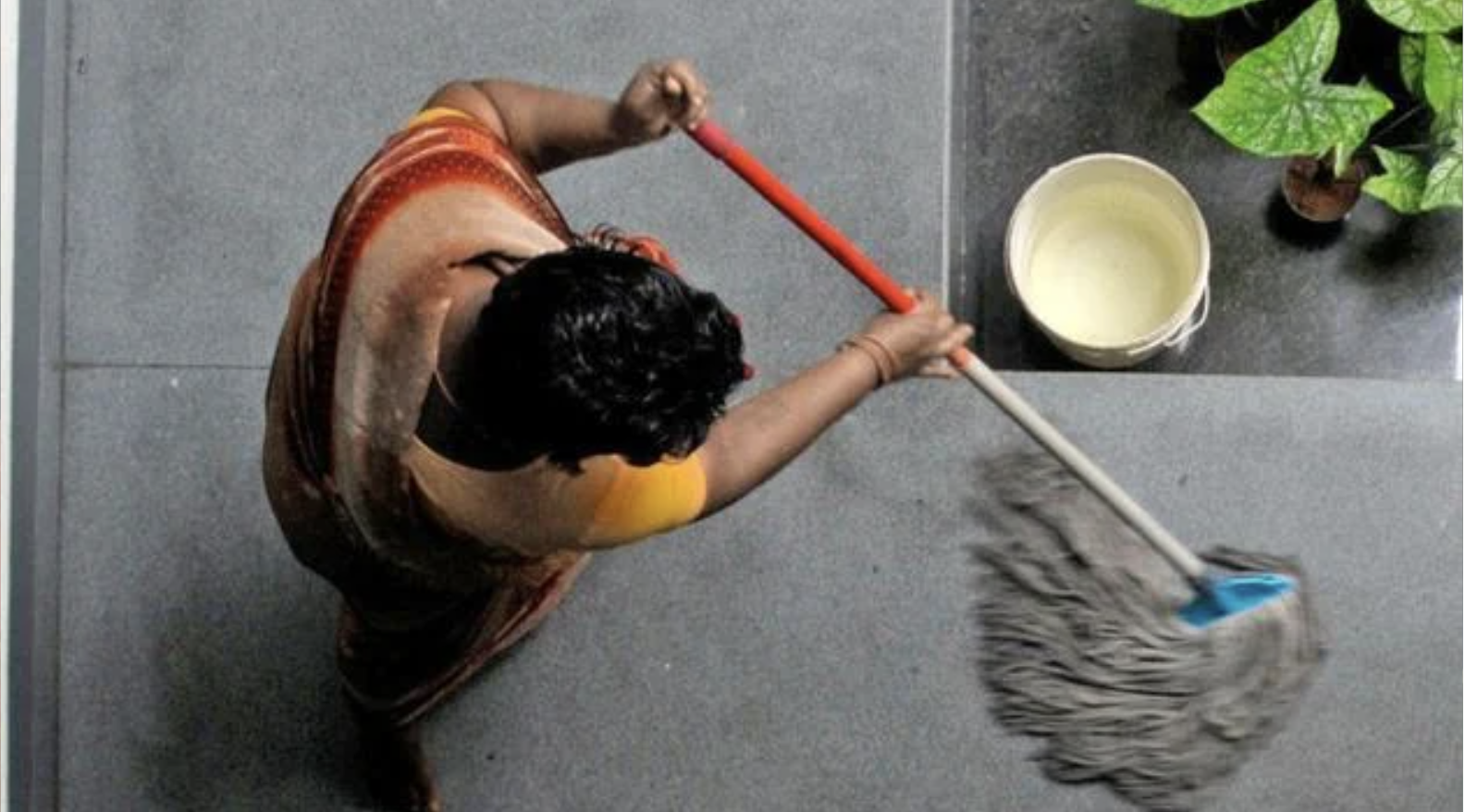
Most successful urban women I have known have an army of domestic workers behind them. A cook who comes before sunrise to prepare meals, pack lunches, and sends children off to school. A driver who drops the children off at school. Later, another domestic worker cleans and sweeps the house. A nanny — or sometimes a naani (maternal grandmother) — who helps raise the children. And in 2026, delivery ‘boys’ who bring everything to the doorstep within minutes. Often, these workers are treated ‘respectfully’ in modern, liberal homes, and are paid ‘market rates’ for their time. Urban women can lean into ambition because other women — mostly poor women — lean into survival. My feminism, similar to most urban, privileged Indian women, rests quietly on an economic arrangement which we never call political: the outsourcing of labour.
Urban women can lean into ambition because other women — mostly poor women — lean into survival. My feminism, similar to most urban, privileged Indian women, rests quietly on an economic arrangement which we never call political: the outsourcing of labour.
It’s convenient to ignore the caste and class implications of this freedom. For a long time. I used to think feminism meant succeeding in a man’s world by working hard, earning equally, and breaking glass ceilings in boardrooms. Somewhere along the way, it got reduced to not cooking or outsourcing caregiving, and thus, the measure of success became proximity to male privilege. We don’t cook, but someone does! We don’t interrogate the relationship between privilege, caste, and class. And thus, we continue to congratulate ourselves for being progressive while maintaining deeply feudal domestic arrangements in our own homes.
I vividly remember the moment my discomfort crept in. A classmate told me proudly that she returned to work merely six weeks after having a child. She proudly exclaimed that she couldn’t have done it without her jaapa (postpartum rest) and domestic worker. I don’t question whether her feminism is real; after all, she worked hard for many years, fought expectations, and accepted the trade-offs between being a mother and an employee. What irked me, however, was that her domestic worker had to leave her own child behind in her village, hundreds of kilometres away. Two truths existed at once: one woman was free and another woman’s choices were shrinking. I realised then that the cost of urban feminism is borne by a woman from a rural area, most likely one from a marginalised caste.
The labour market and informal economy
Feminism allows women to work. But which women and where? Note who is doing the domestic labour that makes urban professional life possible. The International Labour Organisation (ILO) estimated in 2016 that there are nearly 3 to 10 million domestic workers in the country, while worker collectives put the figure as high as 50 to 90 million. More than 90 per cent are women, almost entirely without legal protection or formal contracting. Domestic workers are technically excluded from the country’s formal labour rights framework because India’s four labour codes don’t recognise private homes as ‘workplaces’.
Domestic workers are technically excluded from the country’s formal labour rights framework because India’s four labour codes don’t recognise private homes as ‘workplaces’.
As a result, ‘upper’-class and ‘upper’-caste women enter professional spaces, while poor women enter their homes as workers. One’s liberation creates employment for another, but that employment comes without security, dignity, and mobility. Furthermore, many estimates suggest that most domestic workers earn less than INR 10,000 in a month. We are, then, quite literally buying our freedom at a fraction of its true cost from someone else. Our version of progress not only ignores this inequality, but it also depends on it remaining intact. If this ecosystem of caregiving through exploitation of the poor and marginalised didn’t exist, we would not even know what modern urban feminism looks like, because what are its foundations if not outsourcing labour to those less privileged?
The hardest part of this realisation is recognition. I am not just an outsider who is observing this system; I benefit from it. The time to study, write, travel, and think — all the things I associate with intellectual freedom — exists because domestic and care work is cheaply available to me. I have the privilege of reading my morning newspaper with coffee because my domestic worker sweeps the floor of my house. My complicity only tells me one thing: a feminism that only expands opportunity for already privileged women risks becoming an elite project, one that simply rearranges power without questioning it.
This obviously does not mean professional ambition is wrong or that women should return to unpaid domesticity. The answer is not any one person’s individual guilt. However, a more honest feminism in India would ask the following questions:
Who performs domestic labour and care work, and under what conditions? We still haven’t managed to legalise minimum wages for domestic workers. Earlier this year, the Supreme Court disposed a petition filed by domestic workers for legal recognition of their rights. These women, who are overwhelmingly poor and marginalised, are still waiting for their due.
Why is domestic labour still excluded from labour rights and social security? We demand more and more employment protections from our own employers, maternity leave, holidays, PF, insurance, pension, and more recently, menstrual leaves, while wilfully ignoring the plight of the women who work in our houses and offices. Even now, India refuses to ratify ILO Convention 189, which guarantees domestic workers the same basic protections as other workers. India voted in favour of adopting it in 2011, 14 years later, it is still pending.
Why do we measure success by the ability to outsource housework? I think feminism is defined by whether a woman’s success leads to her freedoms multiplying. But should our advancement mean that exploitation is simply pushed downwards?
I am still unlearning the feminism I inherited. It had once taught me to look upward, towards power and authority. I am learning instead to look at the women whose cheap labour holds up our lives and to ask whether a movement that forgets them can ever truly call itself feminist.
For most urban Indian women, the question arrives quietly but relentlessly: can you really have everything? Behind any optimism in answering that lies a harsher reality, one that is not said out loud but is understood. If you want to work seriously, someone else must work in your home. If you want to succeed professionally, someone else must cook your meals. If you want rest, someone else must absorb your exhaustion. And in India, that someone is overwhelmingly poor, female, from a marginalised caste, and likely a migrant.
As mentioned earlier, individual guilt is not the answer. Instead, we need to think about a fairer world for all, not just for ourselves. The answer is refusing a world where my freedom depends on another person’s exploitation. But when you can hire a cook at less than one-tenth of your salary, would you even bother asking what a fair world would look like?
About the author(s)