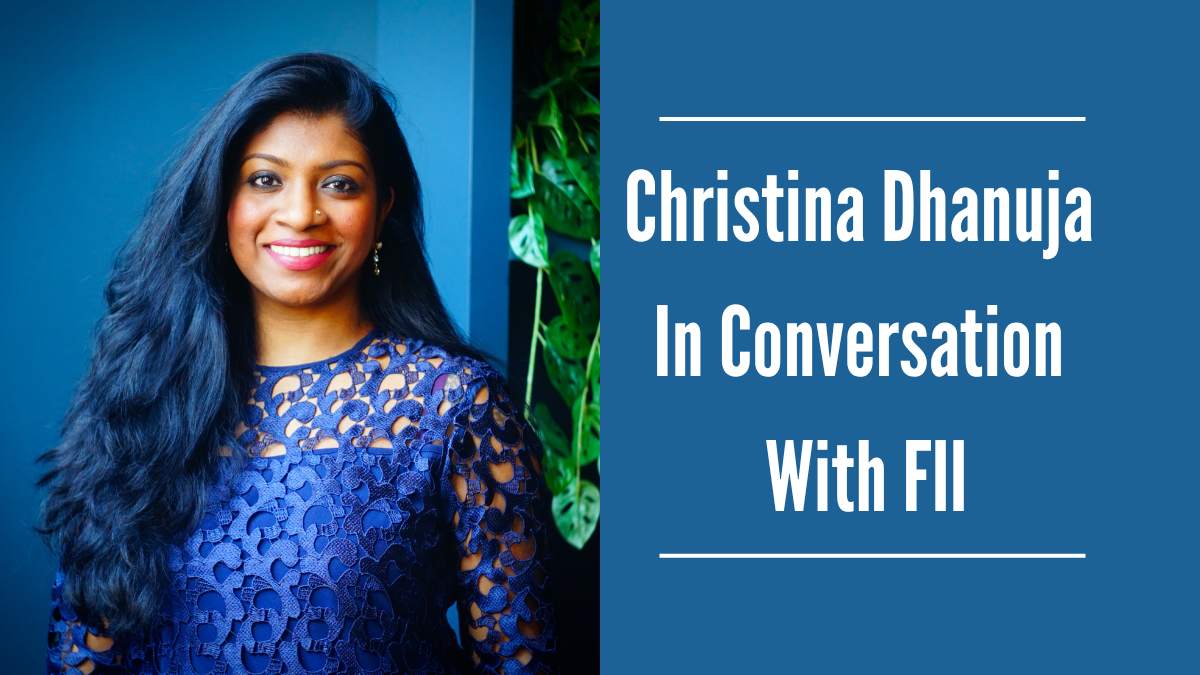
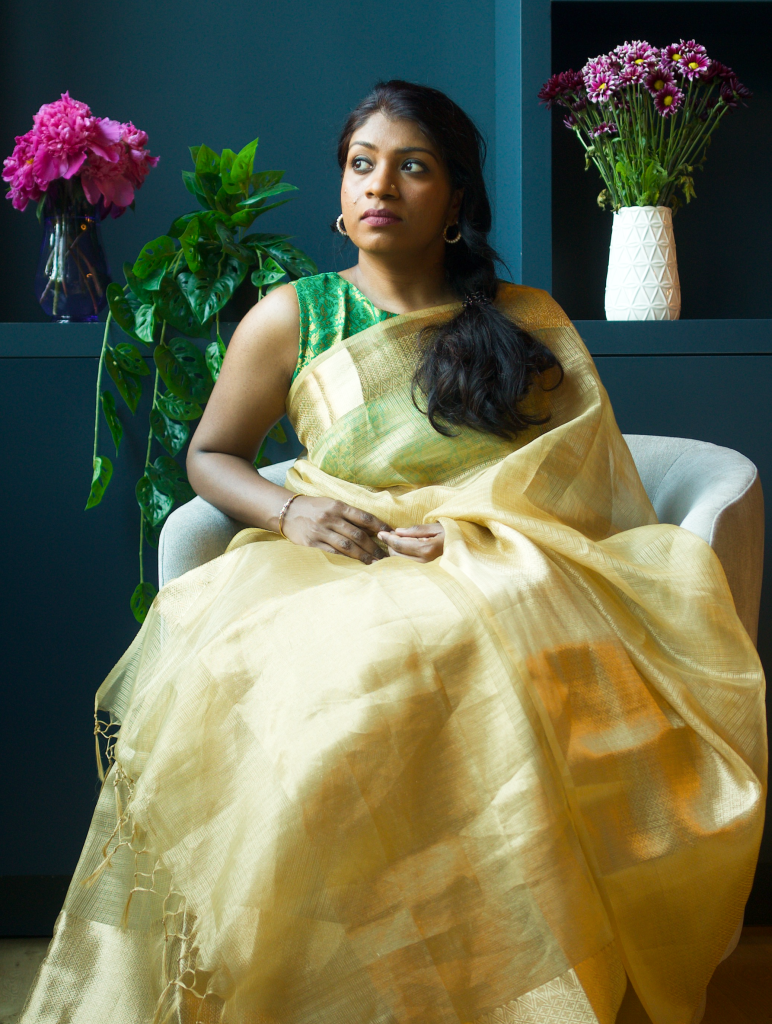
Christina Dhanuja is a writer, researcher, and strategist whose work sits at the intersections of caste, gender, faith, and justice. A third-generation Christian Dalit woman, she has spent over sixteen years working across India, China, Singapore, and the Netherlands, as an External Relations Advisor at Shell headquarters in The Hague, as a government affairs and business advisor to Shell China’s country chair, and subsequently as a consultant to corporates, nonprofits, faith-based institutions, and universities on leadership development, caste equity, and accountability frameworks.
She is the co-founder of the #DalitHistoryMonth project and a founding member of the Global Campaign for Dalit Women, a minority-led initiative working with survivors of sexual violence, caste atrocities, climate change, and economic oppression.
Her writing has appeared in The Wire, Outlook India, HuffPost, The Swaddle, GenderIT, and Verve, among others.
Her debut book, ‘Dalit Women and the Fullness of Life‘, published by Penguin Random House India, begins with a problem that is also a provocation: that writing on Dalit women has long been shaped by two dominant frameworks, structural analysis and narratives of suffering or resilience. Both matter, but neither is sufficient. What they consistently leave out are the textures of everyday life, i.e. how Dalit women experience desire, navigate relationships, negotiate faith, or make meaning of their own identities.
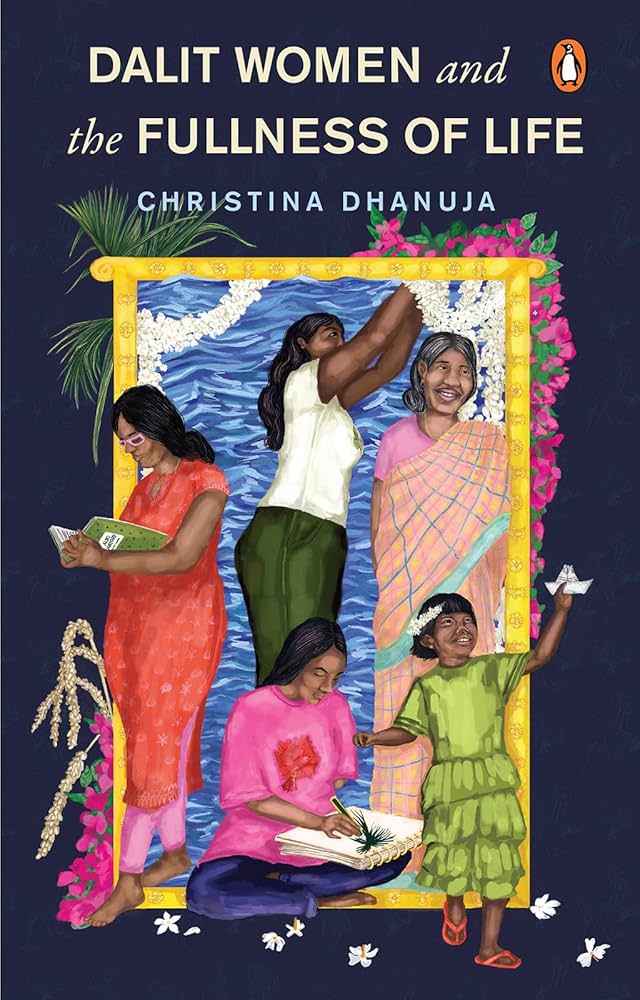
The book, written across several years and cities including New York, Chennai, and Visakhapatnam, works across ten thematic chapters: Identity, Movements, Work, Community, Sisterhood, Body, Desire, Trauma, Faith, and Joy. It blends memoir with social inquiry, using personal experience as a method for examining larger structures. Caste, in Dhanuja’s reading, is not only a system of external violence, but it is something internalised, something that shapes self-worth, emotional life, and the smallest daily decisions: whom to trust, how to belong, what to want.
We spoke with Christina Dhanuja about the making of the book, the arguments it presses, and the silences it refuses to keep.
FII: Dalit women’s lives in public discourse tend to get collapsed into two registers, i.e. victimhood or exceptional resilience. How do each of these do damage?
Christina: Both do damage in different ways. Victimhood flattens Dalit women into objects of suffering; as those who don’t have the agency or the ability to make decisions for themselves and their families. Resilience burdens us with the expectation of endless strength — regardless of what happens, or how the world treats us, we’d come through. Ergo, no systemic change needed!
More broadly, they not only serve to misrepresent us in public (and in private) but also curb our imaginations of who we could be. The many possibilities that exist ahead of us become difficult to access because of this hyperfocus on stereotypes. Where is the space to be human? Where is the space to be everything and anything and not just something?
FII: A lot of writing on caste focuses on its external violence, atrocities, discrimination, and systemic exclusion. Your book seems equally invested in how caste lives inside a person, in self-worth, desire, and the decisions one makes about who to trust. What made you want to write toward that interior dimension?
Christina: Because that perspective is long overdue. Growing up, I struggled to make sense of the world around me. I did not know how to process the complicated experiences I was having on account of my social location. I did not have the language to understand why I was feeling the way I was, when those around me kept saying that caste had nothing to do with it — that the world had somehow become so post- and anti-caste that there was no way caste could shape how people saw each other. And literature, what little existed, focused more on the external. But what do caste-based experiences do to a child? How does she grow into this confident, young woman that progressive society expects, while doing everything to pull her down?
In that sense, I wrote this book for myself as much as I did for others. I wanted to read a book that would help me make sense of the world. I wanted to read how stereotypes of Dalit women can be dismantled. I wanted to read about Dalit women’s sisterhood and Dalit women’s joy — and if I would ever find it. I wanted language. I wanted a narrative.
In that sense, I wrote this book for myself as much as I did for others. I wanted to read a book that would help me make sense of the world. I wanted to read how stereotypes of Dalit women can be dismantled. I wanted to read about Dalit women’s sisterhood and Dalit women’s joy — and if I would ever find it. I wanted language. I wanted a narrative.
FII: How did your relationship with faith, specifically the Dalit Christian identity, shape what you were able to see and say in this book that a secular framework might have missed.
Christina: I wouldn’t necessarily frame it that way. It doesn’t feel right to compare Dalit Christianity to a secular framework, as though the former were somehow less rational than the latter. What Dalit Christianity is in opposition to is traditional Christianity, Indianised Christianity, white evangelicalism, and faith traditions that ascertain differential value to human beings. My faith is an integral part of who I am and my personhood. And Dalit Christianity, as a theological worldview, helped me see the divine in myself and my women, which, to me, feels like a powerful intervention given how caste sees us as spiritually impure.
FII: Joy is the hardest thing to write about politically without it tipping into either sentimentality or performance. How did you approach writing joy for Dalit women without it becoming a reassurance for non-Dalit readers?
Christina: I thoroughly loved writing the joy chapter, and that it did not sound sentimental was very intentional. I loved that the writer in me refused to settle for platitudes because, quite honestly I was tired of reading pieces that infantilised the process of finding and sustaining joy. So, it felt really important to establish how joy, too, is essentially a caste-based commodity — something that is, unsurprisingly, rationed based on one’s caste (and gender, as you will see). And it is only by deconstructing that can we reimagine what joy might look like for Dalit women.
FII: The book blends personal experience with structural analysis. When you were writing, how did you decide what stayed as a memoir and what got lifted into argument, and was there material you knew belonged in the book but couldn’t bring yourself to include?
Christina: My political writing has always stemmed from the personal, and in many cases the two are indistinguishable. So, at this point, it is more of a habit than a consciously structured process. And I pretty much wrote about everything that I wanted to write about.
FII: ‘Fullness’ could easily become a soft word, aspirational, vague, and safe. In the book, you’re using it as something more exacting. How do you define it, and what does it demand?
Christina: Fullness of life, in the way I see it, and in the way the book articulates it, is essentially the opportunity for Dalit women, at systemic, collective, and individual levels, to experience the full spectrum of possibilities that life has to offer. That demands far more than symbolic inclusion and tokenistic representation. It demands a complete reimagination — and in some contexts an overhaul — of the social, political, emotional, spiritual, and material realities under which Dalit women live and are expected to endure. It also demands a revision of public and academic discourses, which, in turn, determine a range of things from policies to organizational dynamics to healthcare practices to how we run movements.
FII: When you were writing, who were you in conversation with: Dalit women reading themselves in these pages, or the institutions and movements that have consistently flattened them?
Christina: Both. Some pages speak primarily to Dalit women, while the rest should be listening in and taking notes. Other pages address institutions, movements, and the public, while Dalit women are listening in, and hopefully, cheering.
‘Dalit Women and the Fullness of Life by Christina Dhanuja’, published by Penguin Random House, is available for sale.
About the author(s)

Japleen smashes the patriarchy for a living! She is the founder-CEO of Feminism in India, an award-winning digital, bilingual, intersectional feminist media platform. She is also an Acumen Fellow, a TEDx speaker and a UN World Summit Young Innovator. Japleen likes to garden, travel, swim and cycle.