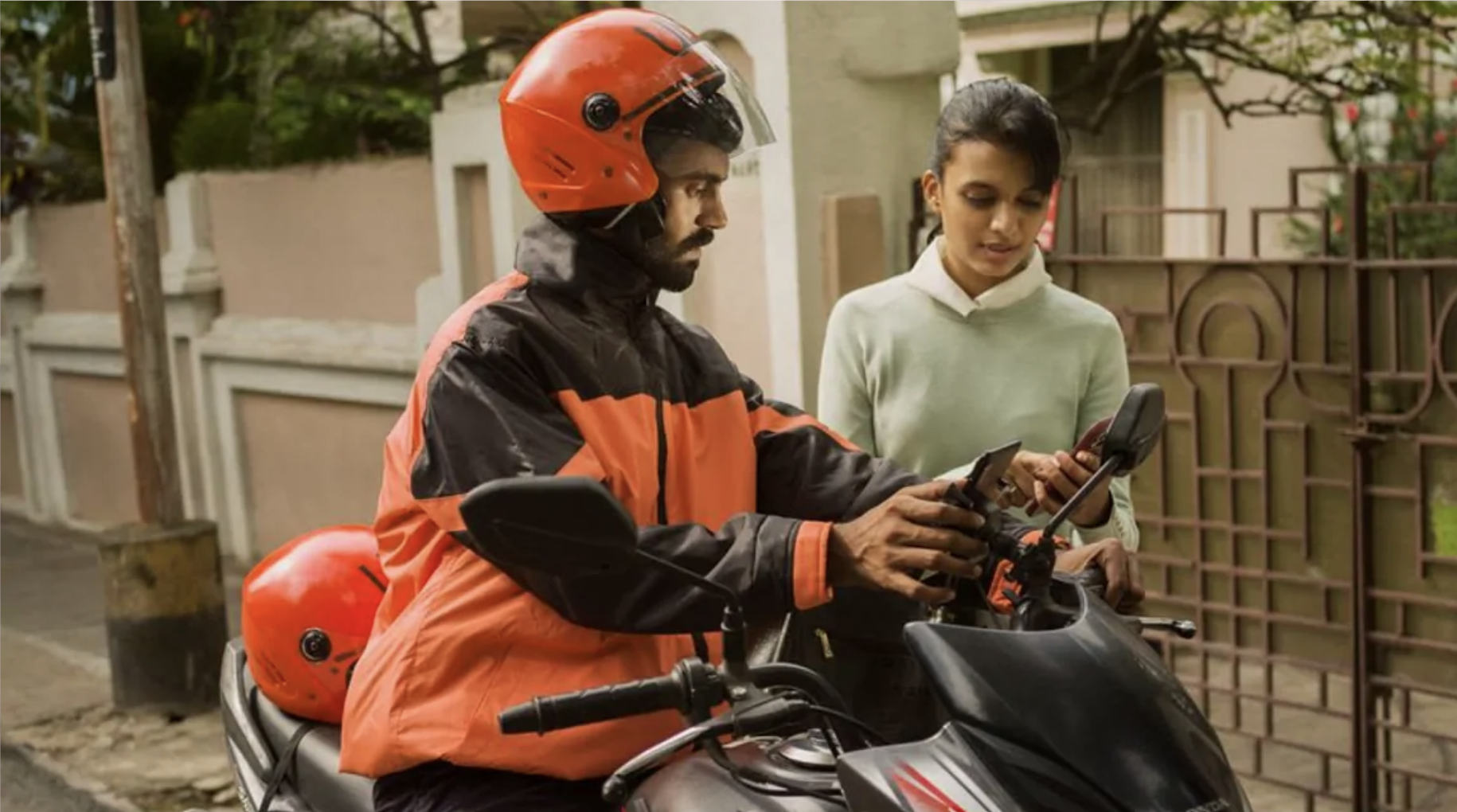
‘I love speed, and I get to ride on a lot of sports bikes,’ says Akanksha, a postgraduate student from Delhi, about her experience using bike taxis booked on ride-hailing applications.
India, structured along caste and class lines, polices women who cross the rigidly drawn patriarchal boundaries of respectability and chastity. Women’s complicated and often regulated relationship with mobility changes when they migrate away from home, either for work or education. Their frequency of commuting increases dramatically, expanding the possibilities for how, why, and when they move. And digital ride-hailing services, especially bike taxis, have impacted how young urban women negotiate mobility, autonomy, and ideas of freedom.
Reclaiming autonomy, navigating judgement
‘It was my boyfriend who first introduced it [bike taxis] to me during the pandemic. I booked a bike ride but was hesitant. I thought people would see me and would talk. I set my pickup location a little further from my house. Agra is a small city, and everywhere you go, you end up bumping into someone you know. I couldn’t risk someone seeing me sit behind a stranger on a bike, that too a man,’ recalls Akanksha of the first time she used a bike taxi.
This experience is neither singular nor shocking. When I moved to New Delhi in 2023 as a 22-year-old to pursue my master’s degree, my first few months were spent mapping the city’s breadth — its unending flyovers and the contours of the metro lines. However, a careful list of dos and don’ts, helpline numbers, and safety measures always lingered in the back of my mind. Early on, when I was leaving from Noida, I stealthily booked a bike taxi, instead of a rickshaw, less to save money and more to try something from the list of ‘don’ts’.
A strange seduction of freedom took over me as my body felt the rush of speed; my world had just become unrestricted.
It was raining briskly, and the wide roads of the Noida-Delhi Direct Flyway were empty. Taking advantage of this, the driver raced past larger vehicles, almost gliding airless on the concrete roads as raindrops pattered over my helmet. A visceral thrill coursed through me as I rode with a stranger in such close proximity. A strange seduction of freedom took over me as my body felt the rush of speed; my world had just become unrestricted.
Bike rides, then on, became the way in which I conquered the fatigue and relentlessness of the city. That was until I was ‘caught’ on a bike taxi by my parents. An intervention was called, and I was asked if I realised what I had done. A question that dripped in shame, disgust, and judgement. I was made to promise that I would never use bike taxis again.
Patriarchal restrictions on women’s mobility
On Instagram, several reels show women recording themselves on bike taxis with the caption being a variation of ‘Rapido book kiya that aur pados wale uncle ne papa ko bola main roz naye ladke ke saath ghum rahi hoon (I booked a Rapido and the neighbour told my father that I am seen with a new man each day).’
Questions are routinely asked of women who use bike taxis, and moral judgements are often made regarding them. This stems from the fact that such physical proximity blurs the rigid boundaries of patriarchal ideas of ‘decency’ and ‘respectability’ in this otherwise routine, transactional activity.
Riding pillion behind male drivers on a bike involves sharing space with and having physical proximity to a stranger. The bike, as opposed to rickshaws or cars, doesn’t have a physical demarcation, and thus distance, between the passenger and the driver. Questions are routinely asked of women who use bike taxis, and moral judgements are often made regarding them. This stems from the fact that such physical proximity blurs the rigid boundaries of patriarchal ideas of ‘decency’ and ‘respectability’ in this otherwise routine, transactional activity. Many women admit to keeping a bag between them and the driver to create an artificial boundary and indicate to passersby that the ride is nothing more than a transactional activity.
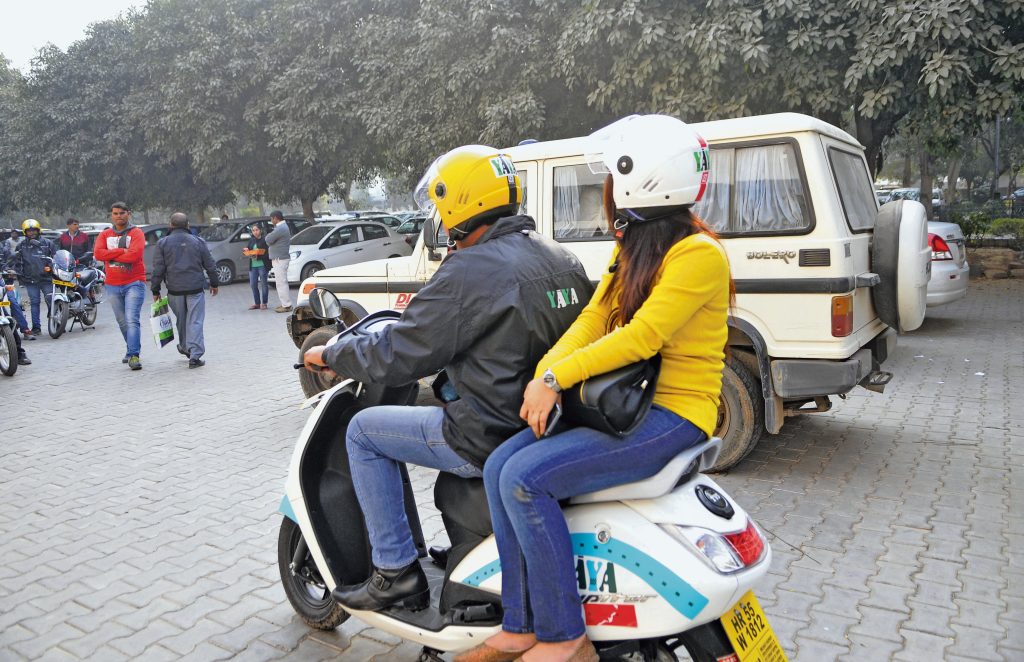
When I started to speak to young women about their experiences with mobility, especially with regard to their use of bike taxis, despite their differing experiences, there existed one commonality: Gendered restrictions on mobility radically reduced their ability to exercise their autonomy, restricted their freedom of movement, and reduced their chances of discovering the city. However, migration allowed them, for the first time, to move for joy or leisure. In my interviews, for those who had migrated to the city for work or education, the economics of choosing bike taxis, along with the pleasures of the ride, led them to choose bike taxis repeatedly over other ways of commuting.
Between conversations, connections, and fleeting class boundaries
For Safa (24), commuting by bike in her hometown of Malappuram in Kerala meant that she had to rely on male friends or relatives. However, now away from home, she prefers bike taxis to the Delhi metro because she believes the metro comes with the baggage of class. ‘Metro travel is boring. It’s very silent and filled with posh people,‘ she says.
Interestingly, her intermediate understanding of Hindi and strong accent often draw inquisitive questions from bike drivers. ‘Some drivers talk to me, especially due to my accented Hindi. They ask me where I am from or enquire if I am from Kerala. And many Uber drivers tend to express a liking for the state,’ she shares.
Further, boundaries erected by class also rupture when other identities take over and facilitate connection. ‘My previous office was in Faridabad, in a Hindu-dominant colony. Upon entering the colony, the driver, who was Muslim, saw saffron flags hoisted on the apartments. He knew that I was also a Muslim and asked me whether there were any other Muslims in my office. He seemed concerned about me, which made me feel a sense of community and care,’ reveals Safa.
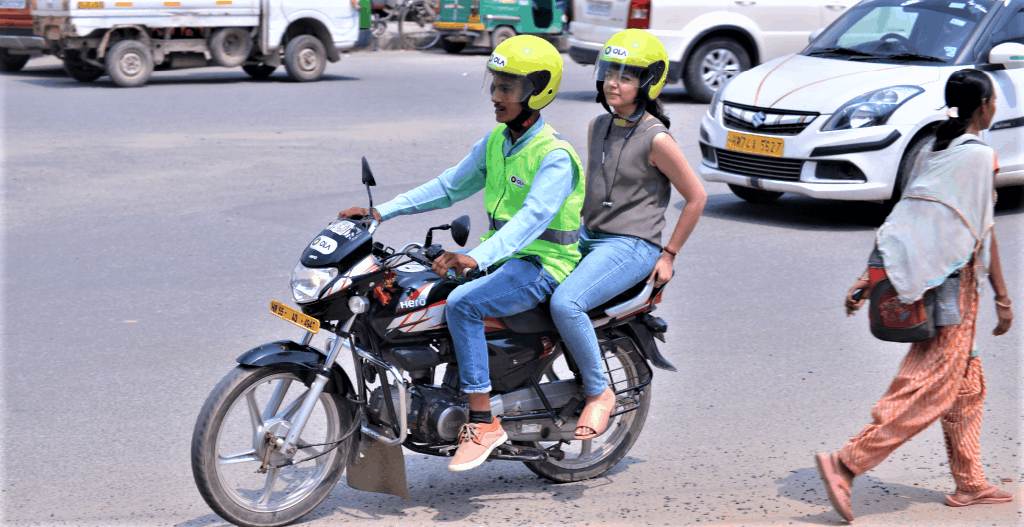
Ria, a researcher and journalist working in Delhi, shares that bike rides open doors for human connections. ‘Once, during a particularly busy day, I struck up a great conversation with the rider. I somehow felt a sense of connection as we both aired out our frustrations. And it was incredible. I did not feel very connected to Delhi as a city, but I felt very good in that moment. I think that is a thrill for me: to talk to people and connect with them.’
Scrutiny, ratings, and questions
While connections are possible, that is not always the case. For many men, being a rider on ride-hailing applications is not their primary, full-time job; it is something they do on the side. They own the bikes, as opposed to many rickshaw drivers who rent their vehicles. This allows them to be active agents of their work, managing when and how they carry it out.
Many of Akanksha’s experiences while riding bike taxis have been those of scrutiny and moral policing. She says, ‘A lot of times I have noticed that I get a one-star rating from older men when I am wearing short clothes.‘
Many of Akanksha’s experiences while riding bike taxis have been those of scrutiny and moral policing. She says, ‘A lot of times I have noticed that I get a one-star rating from older men when I am wearing short clothes. Riders often get angry with me, and it feels like I am being looked down upon.‘ Such moral policing is a product of the same patriarchal ideas of ‘decency’ and ‘respectability’ that lead to families policing women.
For Ria too, conversations that started off on a friendly note, soon turned into misogynistic scrutiny. They share, ‘A Rapido driver once asked me if I wanted a massage or if I wanted to drive the bike while he sat pillion. Plenty of times, I was asked about my surname, my caste, my religion, and my marital status as well. However, they don’t seem to have a problem with anything other than my marital status. They will also sometimes ask me how I get to work outside the home.‘
Making way for more women riders
In March 2025, Rapido partnered with Azad Foundation and Sakha Consulting Wings to expand the nascent ‘Rapido Pink’ fleet of women drivers to 2,00,000. For this, women from economically marginalised backgrounds would be trained and recruited as riders and provided support for acquiring vehicles.
Touted as an initiative to empower young women, it highlights both the steep gender divide when it comes to mobility and the fact that early opportunities in gig work were asymmetrically filled by men. It is also a strategic business move undertaken by platforms to prevent women users from dropping off from the bike taxi segment.
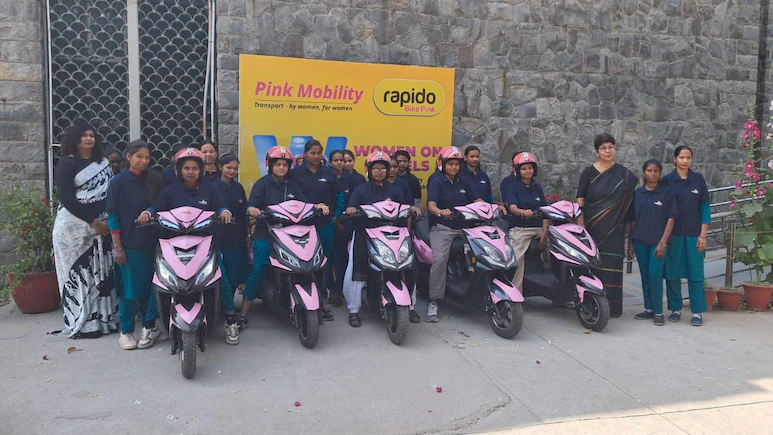
When asked about her views on more women riders working for ride-hailing platforms now, Akanksha says, ‘I feel women are better drivers, and more patient, too. But the best thing about more women riders would be that I would be more comfortable. No more objectification and judgement.‘
Quotes in this article have been edited for length and clarity.





It feels personal, deeply interesting and the feeling ” finally kisine toh bola”, but it is very characteristic of Vrinda Rawal, my classmate, who is never afraid to speak up. A very powerful piece which deeply resonates with so many of us. Off to share this in my residential society group and piss off a few aunties and uncles!!!!!!
Riding Pillion Into The Sunset” is an engaging and refreshing article that explores the freedom, challenges, and social scrutiny faced by women using bike taxis in urban spaces. The writer beautifully captures how mobility represents independence for women while also highlighting the judgments and safety concerns they continue to face. Overall, it is a thoughtful and relatable piece that blends personal experience with wider social realities in a powerful way.
Riding Pillion Into The Sunset” is a beautifully written article that explores the freedom and challenges women experience while using bike taxis in urban spaces. The writer effectively highlights how mobility is connected to independence, confidence, and social perception. Overall, it is an engaging and meaningful read that encourages reflection on women’s freedom in public spaces.
This article offers a refreshing perspective on women’s mobility and the everyday realities of traveling through cities on bike taxis. The storytelling feels honest and relatable, while also addressing issues like safety, judgment, and gender expectations. It is a thoughtful and impactful piece with strong social relevance.
Riding Pillion Into The Sunset” thoughtfully captures the excitement and freedom that bike taxis can offer women, while also discussing the social scrutiny they often face. The article blends personal experiences with wider cultural observations in a simple yet powerful way. Overall, it is an insightful and engaging read.