The cruel irony that queer young adults living in urban cities face today is that although they may live in places where Pride flags are visible during the month of June, they often find themselves completely on their own when they need accurate, non-judgemental information about their bodies, desires, or health.
The visibility of queerness in public culture has long outpaced the institutional infrastructure needed to support it. One cannot call this an information vacuum, as this space is, unfortunately, filled with the digital chaos of disinformation, algorithmic prioritisation, and artificial intelligence (AI)-generated slop that one cannot opt out of.
Young people already have limited options to turn towards when seeking answers related to sexuality. The options further narrow for those who may explore intimacy outside a traditional heterosexual romantic or sexual relationship.
Young people already have limited options to turn towards when seeking answers related to sexuality. The options further narrow for those who may explore intimacy outside a traditional heterosexual romantic or sexual relationship. This failure to create accessible and accurate avenues for information regarding sexual and reproductive health and rights is the result of specific shortcomings that can be traced by examining the institutions that queer young people may turn to for help.
Comprehensive sexuality education: classrooms that teach silence
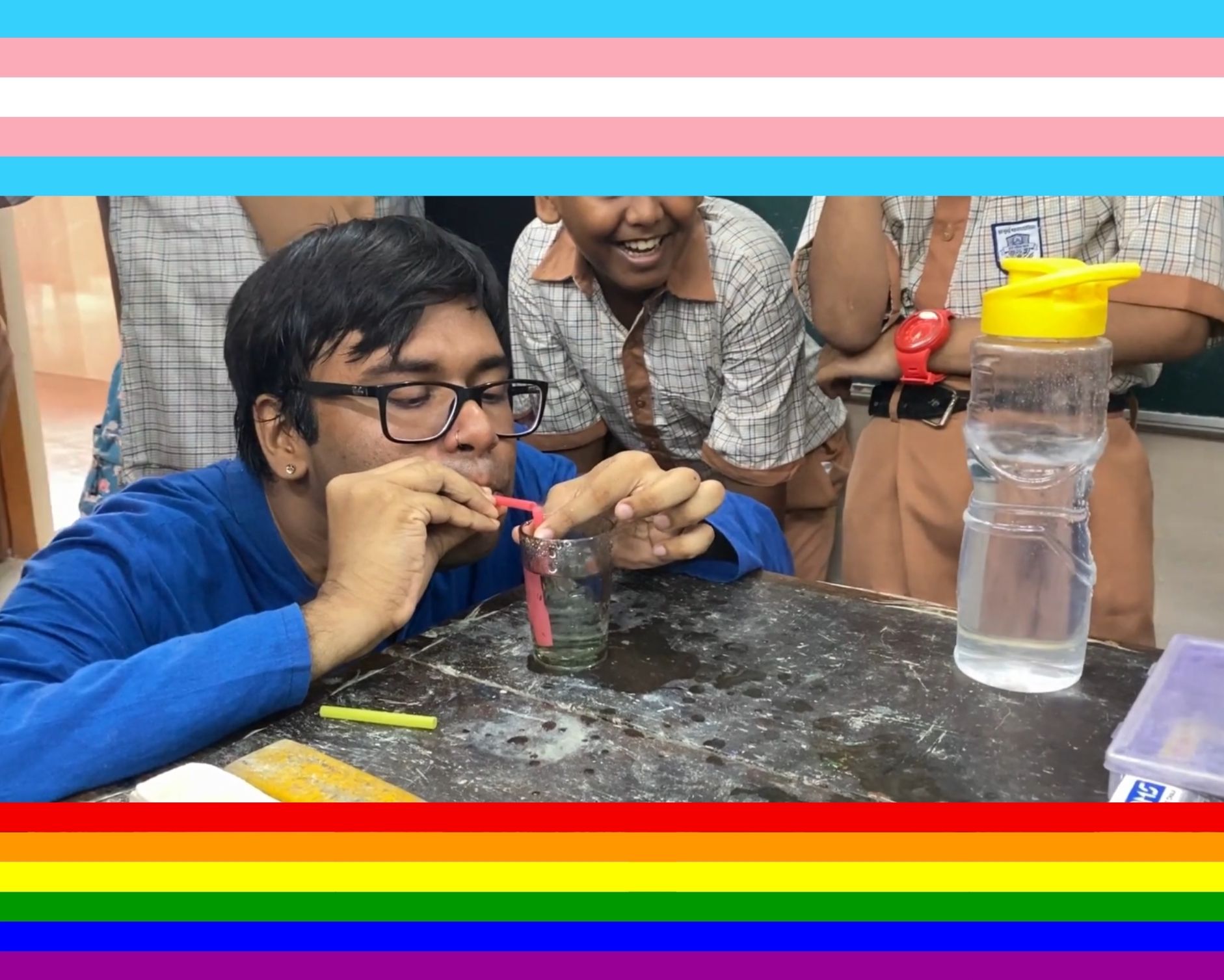
The first brush with information about sex in schools is often the dreaded chapter on human reproduction in Grade 8. Depending on the teacher’s level of discomfort, it may be skimmed over, rushed through, assigned as self-study, or taught with the warning of ‘no questions allowed’. Instead of receiving comprehensive sexuality education (CSE), students are left with the understanding that ‘such matters’ must not be discussed.
For a student whose questions fall outside the heterosexual reproductive frame, this can signal that their concerns are beyond the scope of legitimate inquiry. This effect is compounded by the institutional withholding of the language through which students might articulate their own experiences, leaving them unequipped to navigate the healthcare system or identify misinformation.
For a student whose questions fall outside the heterosexual reproductive frame, this can signal that their concerns are beyond the scope of legitimate inquiry. This effect is compounded by the institutional withholding of the language through which students might articulate their own experiences, leaving them unequipped to navigate the healthcare system or identify misinformation.
Universities may compensate for what other avenues fail to provide by creating cultural spaces that foster conversations about autonomy, privacy, and sexual health. Yet campus sexual health infrastructure is often absent or poorly publicised. Contraception remains physically inaccessible and access also remain fraught with social stigma. This lack of institutional care does not simply result in inconvenience; it also exposes students to significant health risks.
For a queer person, disclosing personal information comes with the risk of judgement and unsolicited advice. And clinics that are supposed to provide health information instead become sites of surveillance.
Attempts to access formal healthcare requires one to overcome the barriers of cost and stigma. Even then, medical professionals more often than not treat the consultation as an opportunity for moral assessment, asking invasive questions about marital and relationship status, particularly of young women. For a queer person, disclosing personal information comes with the risk of judgement and unsolicited advice. And clinics that are supposed to provide health information instead become sites of surveillance.
Furthermore, taboos around contraception operate at every level of the information ecosystem, from the awkward classroom interaction with a teacher to the uncomfortable encounter at a pharmacy. The silence surrounding conversations about safe sex, which aims to push young adults towards abstinence, instead deprioritises the safety of young, sexually active people for whom access to contraception is a matter of both health and autonomy.
The risks of algorithmic logic
In a scenario such as this, where institutional failure occupies centre stage, the internet steps in to fill the gaps. Shaped by engagement-driven logic and advertiser preferences, the algorithms of social media platforms are anything but neutral resources. Added to this are content moderation choices based on the social norms of specific geographies, which often lead to sexual health information being shadow-banned or removed, while queer content is disproportionately flagged.
With the overcommercialisation of Pride Month and large corporations stepping in to celebrate Pride on LinkedIn, Pride Month in urban cities may represent a genuine expansion of cultural spaces, but Pride also requires a call for institutional accountability.
This systemic fracture in access to information is rarely visible. What is visible are queer characters on our television screens and Pride parades in our cities, but visibility without infrastructure is insufficient. With the overcommercialisation of Pride Month and large corporations stepping in to celebrate Pride on LinkedIn, Pride Month in urban cities may represent a genuine expansion of cultural spaces, but Pride also requires a call for institutional accountability.
When our institutions skip the chapter on reproduction, fail to sensitise healthcare providers who ask invasive questions, or do not stock university health centres, sexual and reproductive health knowledge and access are distributed unevenly and unreliably. In a scenario such as this, it is of utmost importance that institutions prioritise ensuring young people’s holistic access to health resources.
About the author(s)

Ambica Shailja Naithani holds an MA in Gender, Violence, Conflict (International Development) from the University of Sussex, UK, and a BA (Hons) History from Miranda House, University of Delhi. She currently works at the Centre for Law and Policy Research. Her research interests lie in Sexual and Reproductive Health and Rights (SRHR),conflict transformation, peacebuilding, oral traditions, and literature.