Two men offered an 11-year-old girl from their village a lift on their motorcycle in November 2021. However, they did not take her home. Instead, they stopped near a culvert, touched her inappropriately, snapped the string of her pyjamas, and tried to drag her away to sexually assault her. People nearby heard her screams and ran towards the sound. And the men fled.
When the case reached the Allahabad High Court in 2025, the court held that this act amounted only to ‘preparation’ and not an attempt to rape. In February 2026, the Supreme Court reversed that finding.
When the case reached the Allahabad High Court in 2025, the court held that this act amounted only to ‘preparation’ and not an attempt to rape. In February 2026, the Supreme Court reversed that finding, holding that once the accused had torn the child’s clothes and dragged her towards a secluded place, their conduct had moved beyond mere preparation and constituted an attempt to commit the crime. The Supreme Court described the High Court’s reasoning as ‘patently erroneous‘.
The law changed, the reasoning didn’t
Under Indian criminal law, a crime moves from ‘preparation’ to an ‘attempt’ the moment the accused actively acts on their criminal intent. Enacted after the 2012 Delhi rape and murder, the Criminal Law (Amendment) Act, 2013, expanded the legal definition of sexual offences to look beyond narrow, technical definitions. It established that sexual assault does not need to follow a specific pattern or reach ‘completion’ to be considered a crime.
The Allahabad High Court’s reasoning fragmented one continuous assault into separate legal acts. More than a decade after the 2013 reforms, assaulting an 11-year-old child was seen as mere ‘preparation’ to commit assault rather than as a single, ongoing act of violence.
The Allahabad High Court’s reasoning fragmented one continuous assault into separate legal acts. More than a decade after the 2013 reforms, assaulting an 11-year-old child was seen as mere ‘preparation’ to commit assault rather than as a single, ongoing act of violence. The problem was never the law or its word itself, but how courts tend to interpret sexual violence as separate acts instead of as one continuous act of violence.
The Justice J.S. Verma Committee, on whose recommendations the 2013 Act was based, explicitly called for criminal law to recognise women’s dignity, bodily autonomy, and integrity, and to reject narrow notions of consent. The Committee warned that legal changes alone would not suffice without shifts in police and judicial attitudes.
In Surviving Sexual Violence (1988), feminist scholar Liz Kelly wrote that sexual violence exists on a continuum, with acts of coercion often unfolding as part of a larger pattern rather than as isolated incidents.
In Surviving Sexual Violence (1988), feminist scholar Liz Kelly wrote that sexual violence exists on a continuum, with acts of coercion often unfolding as part of a larger pattern rather than as isolated incidents. Whether courts recognise that continuum often depends on whose experiences they consider legitimate and legible.
Who is believed and who isn’t
Legal scholars have long argued that credibility within the criminal justice system is shaped not only by gender but also by caste, class, and social location. In her landmark essay Demarginalizing the Intersection of Race and Sex (1989), Kimberlé Crenshaw explains how systems of discrimination intersect to shape people’s experiences of injustice. And Indian feminist scholar Sharmila Rege argues in Dalit Women Talk Differently (1998) that caste profoundly influences whose suffering is recognised and whose voice is heard.
Whose account is considered credible and whose suffering is treated as legally sufficient are often shaped by entrenched hierarchies of caste, gender, and class.
Together, their work shows that courts do not approach every survivor’s testimony with the same degree of belief. Whose account is considered credible and whose suffering is treated as legally sufficient are often shaped by entrenched hierarchies of caste, gender, and class.
The case of Bhanwari Devi illustrates this clearly. In 1992, Bhanwari Devi, a Dalit saathin (grassroots social worker) in Rajasthan, was gang raped after trying to stop a child marriage as part of her work. The trial court later acquitted the accused in a judgement that drew widespread criticism for relying on caste and gender stereotypes. Her case exposed the gap between the Constitution’s promise of equality and the realities of the justice system, where survivors’ social location can influence how their testimony is received.
In response, women’s rights organisations approached the Supreme Court in Vishaka & Ors v State of Rajasthan & Ors, arguing that the absence of a legal framework to address workplace sexual harassment violated Articles 14, 15, 19, and 21 of the Constitution. In 1997, the Supreme Court issued the Vishaka guidelines, recognising workplace sexual harassment as a violation of constitutional rights. These guidelines served as the primary framework for addressing workplace sexual harassment until Parliament enacted the Sexual Harassment of Women at Workplace (Prevention, Prohibition and Redressal) Act, 2013 (POSH Act).
As Kalpana Kannabiran argues in Tools of Justice, constitutional rights have little meaning unless legal institutions confront the inequalities that shape people’s lives. Flavia Agnes similarly argues in Law and Gender Inequality that progressive laws alone cannot transform the justice system if judges and legal institutions continue to interpret them through gendered assumptions.
The case also raises a more unsettling question: how many survivors, without institutional support, public attention, or legal networks, never have someone write that letter on their behalf?
That question remains just as relevant today. An 11-year-old from a family without political influence or the resources to engage experienced, senior lawyers would not ordinarily receive a suo motu intervention from the Supreme Court. In this instance, the matter reached the Court because the women’s collective, We the Women of India, led by Senior Advocate Shobha Gupta, wrote to the Court seeking its intervention. But the case also raises a more unsettling question: how many survivors, without institutional support, public attention, or legal networks, never have someone write that letter on their behalf?
This concern extends far beyond one case. According to the National Crime Records Bureau’s Crime in India 2023 report, more than 2.5 lakh cases involving crimes against women remained pending for trial at the end of 2023. The backlog included thousands of rape and POCSO cases, highlighting the persistent delays survivors face in accessing justice.
Judicial reasoning shapes far more than the outcomes of individual cases. It influences how police investigate sexual violence, how prosecutors present their cases, and whether survivors trust the justice system enough to seek justice. Court judgements also shape public understanding of sexual violence by signalling what the law recognises as harm.
Judicial reasoning shapes far more than the outcomes of individual cases. It influences how police investigate sexual violence, how prosecutors present their cases, and whether survivors trust the justice system enough to seek justice. Court judgements also shape public understanding of sexual violence by signalling what the law recognises as harm. When delays and harmful assumptions become routine, the issue is no longer a flawed judgement. It is whether judges are equipped to recognise sexual violence without relying on stereotypes.
Why gender-sensitive judicial training still faces resistance
In 2023, under Chief Justice D.Y. Chandrachud, the Supreme Court released the Handbook on Combating Gender Stereotypes. The Handbook urged judges to recognise and avoid stereotypes that continue to shape judicial reasoning. It cautioned courts against relying on assumptions such as ‘chaste women’, women being ‘habituated to sex’, expectations of physical resistance, or delayed reporting while assessing a survivor’s credibility.
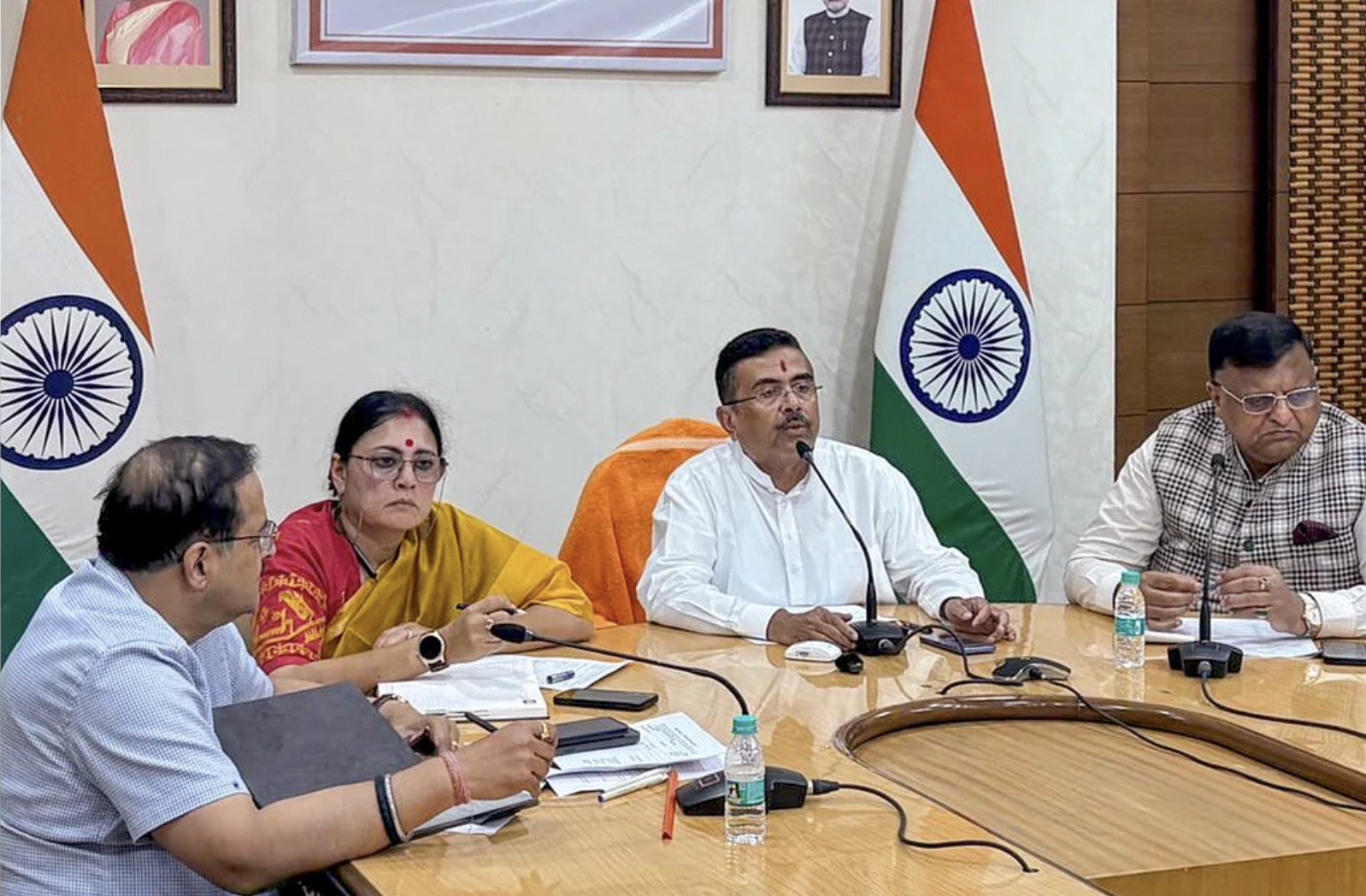
During the February 2026 hearing in the 11-year-old child’s case, Chief Justice Surya Kant reportedly described the handbook as ‘too technical’ and ‘too Harvard-oriented’, adding that it would be of little assistance to a rape survivor, her family, or the police officer recording the survivor’s statement.
During the February 2026 hearing in the 11-year-old child’s case, Chief Justice Surya Kant reportedly described the handbook as ‘too technical’ and ‘too Harvard-oriented’, adding that it would be of little assistance to a rape survivor, her family, or the police officer recording the survivor’s statement. The Bench subsequently directed the National Judicial Academy to prepare fresh gender-sensitive guidelines for judges. The development reflected competing ideas about how judges should be trained to recognise and address gender bias in the courtroom.
Whether one agrees with that criticism or not, the debate ultimately raises a broader question: should gender-sensitive courtroom practices be assessed by where its ideas originate, or by whether they help judges recognise and move beyond harmful stereotypes? The success of the National Judicial Academy’s guidelines will ultimately depend less on producing another document and more on whether judges internalise its principles in their everyday decision-making.
Another document will not fix this
The National Judicial Academy’s task is not simply to draft another set of guidelines, but to ensure that empathy, equality, and an understanding of gender justice are treated as essential judicial skills rather than optional considerations addressed only after injustice has occurred. For the 11-year-old survivor in this case, the injustice did not end with the assault. It continued through a lower court ruling that effectively told her that what happened to her was not serious enough to count.
While this survivor ultimately received relief from the Supreme Court, many women and marginalised survivors never do. Their cases often end at the trial court level.
While this survivor ultimately received relief from the Supreme Court, many women and marginalised survivors never do. Their cases often end at the trial court level, without the support of activist collectives, sustained public attention, or the possibility of suo motu intervention by the Supreme Court.
The question is whether judges are willing to recognise gender equality as a constitutional commitment in their everyday decision-making. Rights fail not only because laws are inadequate, but also because those entrusted with interpreting them continue to treat gender equality as an external influence rather than as a constitutional commitment. Framing gender-sensitive judicial education as ‘foreign’ or ‘elite’ shifts attention away from the real issue: whether judges are willing to confront the stereotypes that continue to shape their own reasoning.
Gender-sensitive courtrooms are not an imported ideal but a constitutional imperative. Articles 14, 15, and 21 guarantee equality, prohibit discrimination, and uphold the dignity of every individual. Courts are therefore expected to interpret the law in a manner consistent with these constitutional values.
Gender-sensitive courtrooms are not an imported ideal but a constitutional imperative. Articles 14, 15, and 21 guarantee equality, prohibit discrimination, and uphold the dignity of every individual. Courts are therefore expected to interpret the law in a manner consistent with these constitutional values. The Supreme Court has repeatedly affirmed this approach, from the judgement in Vishaka case, which recognised a safe workplace as part of women’s fundamental rights, to Joseph Shine v. Union of India, which held that constitutional morality must prevail over patriarchal social norms.
These constitutional commitments are also reflected in the Convention on the Elimination of All Forms of Discrimination against Women (CEDAW), an international treaty that calls on States to eliminate gender stereotypes and ensure women’s equal access to justice.
Justice cannot depend on whether a survivor’s case attracts public attention or reaches the Supreme Court. It must begin in the very first courtroom where her testimony is heard. Laws alone cannot secure equality if those interpreting them continue to view sexual violence through patriarchal assumptions. The Constitution demands more—not only better laws, but better judging.
About the author(s)

Aradhana Singh is a third-year LL.B. student at G.J. Advani Law College, Mumbai University. Her writing focuses on constitutional law, gender justice, criminal law, and the impact of technology on rights and society. She is passionate about making legal issues accessible through research-driven public writing.