Trigger Warning: References to rape, gang rape, and rape videos
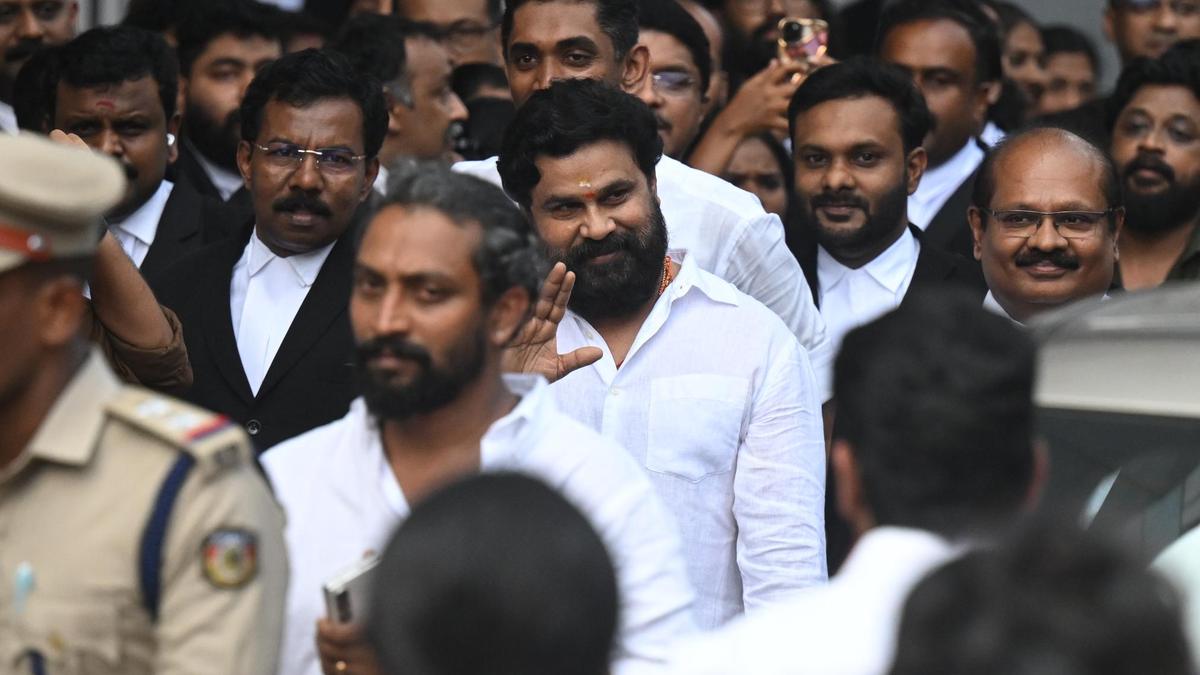
The full judgement is not released to the public yet, but the recent acquittal of the popular Malayalam commercial film actor Dileep charged with alleged criminal conspiracy to abduct, rape, and videotape the rape of a prominent fellow woman actor in the Kerala film industry in February 2017 appears to legally sanction both rape as revenge and the making and circulation of the rape video. After an in-camera trial that lasted nearly eight years, Ernakulam Principal Sessions Court Judge Honey Varghese acquitted Dileep and three others of the alleged criminal conspiracy charges, while convicting the prime accused, “Pulsar” Suni and five others of offences ranging from abduction to gang rape to criminal conspiracy.
Initial media analysis of the acquittal verdict appears to point to the prosecution’s failure to prove the criminal conspiracy charges. For a case that has seen the resignation of two public prosecutors, 28 prosecution witnesses who turned hostile witnesses during the trial, and multiple appeals by the plaintiff to remove the case from Judge Honey Varghese’s trial court alleging judicial bias and hostility, the 2017 Actor Assault Case once again brings to the surface the fundamental problems plaguing the Malayalam film industry that were documented in the Hema Committee Report, and in the efforts of the Women in Cinema Collective (WCC) to ensure gender dignity and equality in the film industry.
This questionable acquittal should also serve as a wake-up call to the civil society of Kerala and those who want to “Stand with Her”, or “Avalkkoppam”.
This questionable acquittal should also serve as a wake-up call to the civil society of Kerala and those who want to “Stand with Her”, or “Avalkkoppam”. The survivor did everything that victims of sexual violence are encouraged to do. She reported it to the police immediately. She gave clear testimony. She gave indisputable forensic evidence. She did not settle the case out of court. She patiently waited eight years and endured overwhelming instances of public humiliation, social and cultural aggression, and personal trauma—all to receive justice. She stood by those who stood with her. She came out and identified herself by face and name. With this disturbing verdict of acquittal, however, once again, the long-anticipated implementation of justice for a victim of gendered sexual violence appears tainted.
Dileep’s dubious acquittal: 28 hostile witnesses and 1 whistleblower
The full judgement is eagerly anticipated for several reasons, the most serious of which is to understand: 1) How the judgement handled the 28 hostile witnesses who largely upended the prosecution’s case, and 2) who, how, and why did the film recording of the rape break the chain of judicial custody? The judgement needs to answer both questions in the document.

Since the acquittal verdict, Dileep has told the media that he was falsely accused and framed in the case by a handful of police personnel, his ex-wife Manju Warrier, and a senior woman IPS officer. According to Dileep, they wanted to destroy his career, image, and reputation. He has threatened legal action against all three. However, Dileep was implicated in the crime by the first accused “Pulsar” Suni, the rapist, who wrote to Dileep from prison asking for financial help in return for maintaining his silence. Dileep’s arrest was based on objective and verifiable facts.
The motive for the rape is of prime importance here. The first accused, “Pulsar” Suni, had no probable cause or personal vendetta against the survivor to rape her and then film himself committing the rape, thus incriminating himself in a crime. Furthermore, the fact that he was a rapist on hire is mentioned by him during the commission of the crime; he had told the survivor that it was a “quotation” rape, meaning that he was hired to rape the survivor.
Thus, a more plausible and less contorted motive is the one that several witnesses submitted to the police in the initial days of the investigation. This motive revealed that Dileep held a well-known vengeful grudge against the survivor for exposing his extra-marital affair with Kavya Madhavan to his then wife, Manju Warrier. However, 28 witnesses changed their statements during the trial and became hostile witnesses to the prosecution, denying their previous statements or claiming that the events they had claimed to have happened did not happen.
The motive for the rape is of prime importance here. The first accused, Pulsar Suni, had no probable cause or personal vendetta against the survivor to rape her and then film himself committing the rape, thus incriminating himself in a crime. Furthermore, the fact that he was a rapist on hire is mentioned by him during the commission of the crime.
It remains to be seen in the full judgement, when it is released, how the judge in the case held the hostile witnesses accountable for their changed statements. Judges have the legal authority to hold hostile witnesses in contempt of court for perjury and obstruction of justice under the Indian Constitution.
Equally puzzling is the trial court’s decision to dismiss the whistleblowing testimony of film director Balachandra Kumar that suggested Dileep’s personal knowledge and involvement in orchestrating the rape, its remuneration of 1.5 crores, and its filming. It again remains to be seen in the published final judgement how the judge explains her decision to discount Balachandra Kumar’s powerful testimony.
Rape is a patriarchal weapon of power to exert control over a woman for her perceived betrayal, disobedience, or autonomy, to punish her body, and to terrify her mind. “Pulsar” Suni had zero motive to rape the survivor for any of the above. Kerala police, Manju Warrier, and a senior police officer had zero motive to hatch a plan to have the survivor raped and then frame Dileep for the rape. The search for motive points directly at Dileep. Occam’s razor stipulates that the simplest explanation is often the correct one.
Dileep’s acquittal: Filming the rape is an offence
The six accused were convicted on charges related to the Information Technology (IT) Act under sections 66 (E) and 67 (A) for filming and publishing sexually explicit material. Here it is significant that the prime accused Pulsar Suni did not ask the survivor for money or initiate demands for blackmail. On the contrary, he has admitted to news media that he made three copies of the rape film, and that his responsibility was to hand it over to the person who paid for it, that is, by his admission, Dileep.
The Kerala state government has stated that they would file an appeal against the acquittal verdict in the High Court. The survivor has maintained her silence since the announcement of the verdict. We should remember that Dileep has been acquitted not because he is innocent, but because prosecutors did not prove his guilt.
During the trial it has been revealed that the recorded evidence of the filmed assault had broken its judicial chain of custody several timesa nd that the memory card on which the recording was stored had been illegally accessed multiple times and manipulated. However, Judge Honey Varghese apparently did not document this forensic technological evidence for two years, did not share the findings with the prosecution, and appointed a fact-finding team to investigate the tampering only when ordered by the high court to do so. The bench of the Kerala High Court under Justice K. Babu noted the following:
‘On three occasions, the memory card was connected to computer systems installed with devices capable of copying or transferring the electronic record or mutating the contents. The necessary conclusion would be that we failed to protect the victim’s interest, which resulted in the violation of her fundamental constitutional right. The victim alleges that the contents of the video footage were copied and transmitted. The emotional and psychological harm being suffered by the victim is beyond imagination.’
The individuals who accessed the film illegally have been identified but they have not admitted what they did with the film. They have not been prosecuted. It remains to be seen in the final judgement how Judge Honey Varghese explains this breach of judicial custody of highly sensitive material under her watch. The rape was revenge. Filming the rape is an offence. Distributing the rape video is the final crime in this series.
Dileep’s defence team, moreover, was implicated in allegations that they arranged for Dileep’s phones to be wiped clean after the court had ordered them to be surrendered. The senior defence counsel, in addition, has extensive experience representing several high-profile defendants in rape and sexual assault cases. These include Bishop Franco Mulakkal, the Catholic priest accused of raping a nun; Father Thomas Kottoor in the Sister Abhaya murder case; Father Robin Mathew Vadakkamcherry in the rape and impregnation of a minor; businessman Bobby Chemmannur in the Honey Rose case; IAS officer Sriram Venkataraman whose driving after drinking killed journalist K. M. Basheer; and actor Siddique accused of raping a woman actor, to name a few. Dileep’s defence team has also been accused of alleged witness coercion and witness intimidation over the years, which might account for the 28 hostile witnesses.
We stand with her
The Kerala state government has stated that they would file an appeal against the acquittal verdict in the High Court. The survivor has maintained her silence since the announcement of the verdict. We should remember that Dileep has been acquitted not because he is innocent, but because prosecutors did not prove his guilt. In the meantime, it is critical that Kerala civil society remains engaged with the case and stands with the survivor to ensure that she receives the justice that is due to her.
About the author(s)