Statement by Feminist Policy Collective
Given the vision of achieving a ‘Viksit Bharat@2047’ where ‘Saksham Naari’ (the capable/ empowered woman) is at the core of the vision, the impact on women by the replacement of the Mahatma Gandhi National Rural Employment Guarantee Act (MGNREGA, 2005) with the Viksit Bharat–Guarantee for Rozgar and Ajeevika Mission (Gramin) Act, 2025 is a matter of deep concern to the Feminist Policy Collective (FPC). We are a voluntary group working towards transformative financing for gender justice in India. We urgently call upon the government to provide an opportunity for wider public discussion on the new law before the formulation of Rules for its implementation.
MGNREGA: a lifeline for poor rural women
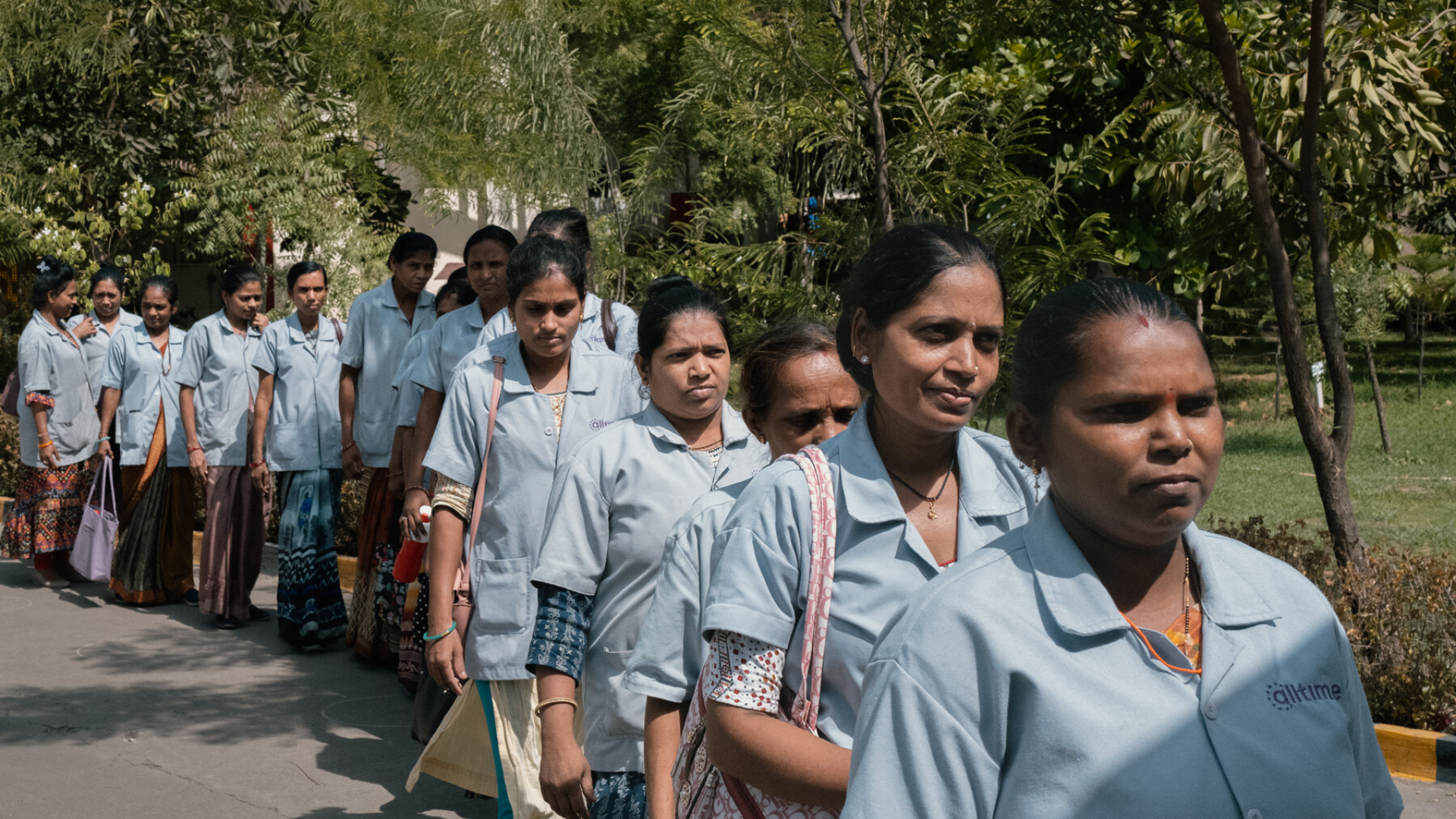
Cited in many government and international publications, MGNREGA has provided a universal guarantee of employment and livelihood to rural poor, especially the unskilled rural women, based on self-selection, demand for jobs and decentralised planning along with important care provisions. MGNREGA became a lifeline during the COVID-19 pandemic catastrophe for millions of rural poor since it safeguarded the minimum wages. MGNREGA generated 286.18 crores of person-days in last financial year (2024-25), supporting 5.78 crore households and providing employment to 7.88 crore individuals. The impact on social justice is evident from the fact that 58% of the beneficiaries of MGNREGA are women, 18% are SC and 18% are from ST communities. Further, MGNREGA included provisions of special works for aged senior citizens and differently abled; records show that in 2024-25, 4.82 lakhs of the beneficiaries are differently abled. A key strength of the MGNREGA was availability of work closer to home, with maternity protection and provisions for crèche facility.
Decentralised planning and local work opportunities
MGNREGA was a demand-based programme that allowed the Gram Panchayats to select the works to be done under the MGNREGA, as an important part of the Gram Panchayat Development Plan (GPDP) that addresses local priorities and develops community assets, such as soil and conservation works including farm bunds, desilting ponds/canals, internal roads in villages, compound walls for schools, local crematorium/ burial ground and so forth. This will now become doubtful since the VBGRAMG Act significantly alters decentralised micro-planning by reducing the autonomy of Gram Panchayats and eroding the inclusivity of guaranteed work for unskilled rural women workers.
Instead of independently planning works, Panchayats will be supplied with muster rolls and lists of employment opportunities, including those outside their jurisdiction. They may undertake projects only from the Viksit Gram Panchayat Plan, subject to approval by district programme coordinators and block-level programme officers appointed by the state government. These officers will consolidate Panchayat plans, match employment demand with available works, and decide where workers are allotted, even in neighbouring Panchayats.
This centralisation makes access to guaranteed employment harder for women workers, especially those unable to travel outside their villages, thereby weakening inclusivity. It does not mention good quality creches (likeKoosina Mane in Karnataka) or maternity protection; minimum wages are no longer safeguarded as the wage rate will now be set by the Central government. Further, it shifts decision-making power away from local bodies and makes the fate of the GPDP uncertain. By linking rural employment schemes to large infrastructure projects under PM Gati Shakti, the Act risks sidelining small-scale, unskilled rural employment. This incompatibility may undermine the accessibility and inclusivity of guaranteed work for marginalised rural communities, especially women.
Burden on states
The VBGRAMG Act shifts greater financial responsibility onto state governments. Any expenditure beyond the approved normative allocation must be borne by the states, meaning they must fund additional workdays from their own budgets. Unlike MGNREGA, where the central government covered 100% of labour costs and 75% of material costs—amounting to nearly 90% of total expenditure—the new Act alters the cost-sharing ratio. For most states, the central government will now contribute only 60%, leaving 40% to be managed by the states, significantly increasing fiscal strain on already burdened state finances. Exceptions apply to North-Eastern states, Himalayan states, and Union Territories, where the ratio remains 90:10.
Digital difficulties
The proposed Act emphasises technology for planning, implementation, monitoring, and social audits. Clause 24 mandates transparency through biometric authentication, geospatial planning, mobile dashboards, weekly disclosures, and stronger audits. However, gram panchayats, elected representatives, staff, and rural workers lack the constant internet connectivity required to navigate such complex digital systems. Most gram panchayats struggle even to upload their GPDP on the mandatory e-gramswaraj portal, a task usually handled by a single, often untrained MIS staff member at the block office. This reliance on technology risks excluding rural communities and weakens the accessibility of employment guarantee programmes.
Days of employment uncertainty
While VBGRAMG rhetorically promises to increase employment from 100 to 125 days in a year to every rural household whose adult members volunteer to undertake unskilled manual work, this, however, will depend entirely on the central government’s allocation of budget, countering the earlier demand-driven approach. The Central Government shall make normative allocation to each State, to be estimated based on objective parameters, as prescribed in the rules of the Bill. The very real risk is that the central government’s allocations may not provide 125 days of guaranteed employment. In recent years, very few households (about 7%) were able to complete 100 days of employment.
Economic insecurity for agricultural workers
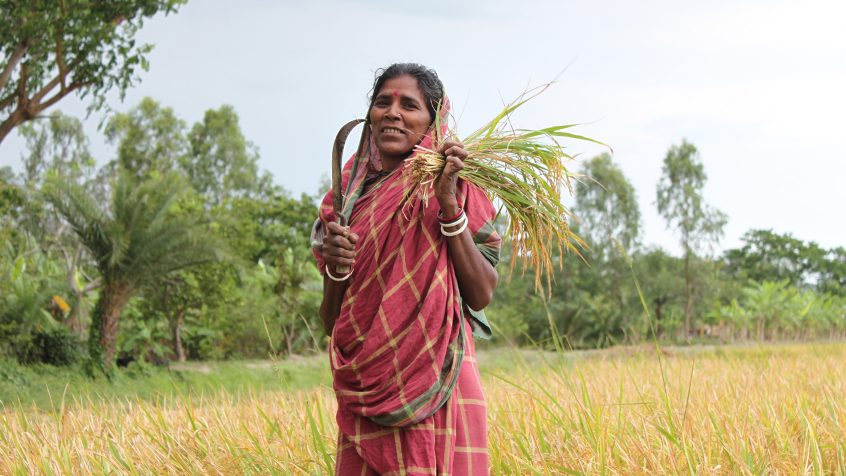
We are extremely disturbed to note that the new Act will disproportionately impact women workers from marginalised communities, for whom MGNREGA has been a crucial support system. While the Act claims to ensure adequate farm labour during peak agricultural seasons, it mandates a two-month suspension of rural employment work. This measure assumes farming requires more labour, yet agriculture already absorbs 46% of India’s workforce while contributing only 18% to Gross Value Addition, according to the latest PLFS. In rural areas, 60% of workers are engaged in agriculture, while a striking 77% of the rural women workers are working in agriculture. By halting guaranteed employment during peak farming seasons, the Act takes away the choice of poor rural workers—especially women, SCs, and STs— exposing them to exploitation by large landowners and diminishing bargaining power. This will push rural and farm wages downward while further driving down gender wage parity. The structural vulnerabilities of women agricultural workers, already well documented in the FPC-MAKAAM study, risk deepening under this policy, increasing economic insecurity and social marginalisation.
Conclusion
The Feminist Policy Collective registers its anguish at the transformation of a legally binding entitlement guaranteeing employment for the most vulnerable to a budget-capped government scheme: from providing demand-based livelihood generation for women and marginalised groups to being supply-dependent and from being entirely financed by the Central government to high dependency on cash-strapped state governments. We are deeply disappointed that the VB-GRAMG Act 2025 has changed the nature of local employment that prioritised local assets decided by the people and planned through their Gram Panchayats to large infrastructure projects at any given distance, with decision-making by government functionaries, making it harder for women and marginalised groups to secure employment where and when they need it most. We are most apprehensive that the expectation of 40% expenditure by states runs the very real risk of creating hurdles in the implementation of the new Act itself.
For more details, please contact:
Dr Nesar Ahmad – +91 98284-88855
Jashodhara Dasgupta – +91 99102 03477
Dr. Sona Mitra – +91 98180 11934
About the author(s)

Feminism In India is an award-winning digital intersectional feminist media organisation to learn, educate and develop a feminist sensibility and unravel the F-word among the youth in India.