‘Makeup is malleable and mercurial: The biggest joy I have every day is the opportunity to create, to play, and to invent with something I’ve loved forever.’
– Pat McGrath
When Pat McGrath, who Vogue calls the world’s most influential make-up artist, says this, it brings to light makeup’s role as a means of expression, a means of exploration, a means of activism and a means of showing solidarity. Makeup has frequently been used to propagate the patriarchal ideals of beauty rather than one’s own interpretations. But amidst rapidly spreading violence and hatred for women and gender non-conforming individuals, we see the rise of a unique form of protest, retort, even art, through makeup—the Man-Repellent Makeup trend.
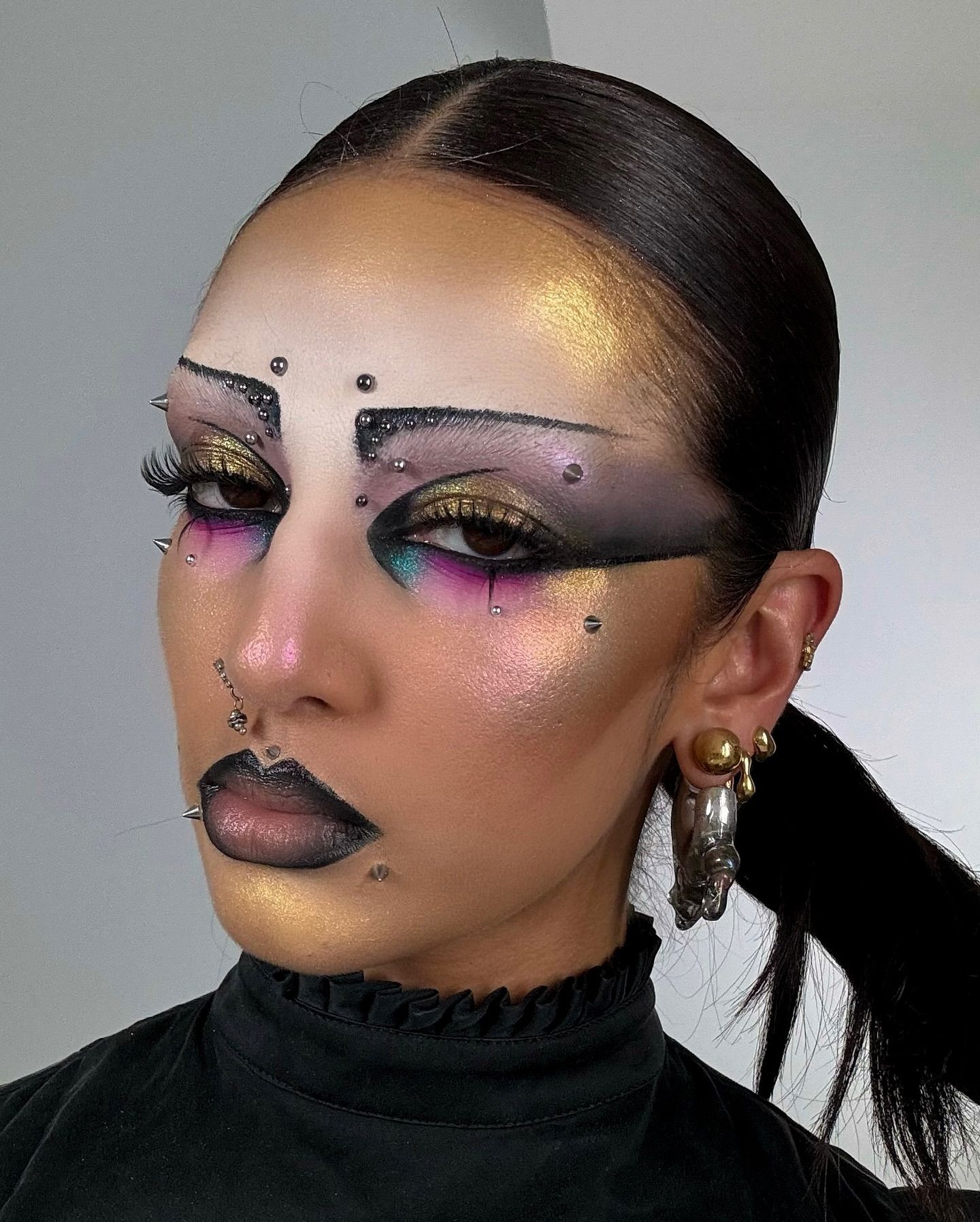
With a bold, theatrical approach, this trend borrows heavily from the art and practice of Drag Makeup. Historically, both of these movements have been political and economic in nature, questioning at every step who gets visibility and safety through these forms, and who profits from their popularity. But how have they actually empowered partakers? Have they really continued their political purpose? Or have they become separated from their true intent?
History of non-binary makeup in the Indian context
Historical instances of makeup in the Indian subcontinent are abundant. The Hijra community forms one of the most continuously documented gender-variant communities in the region, beginning from as early as the 16th century. Makeup, for them, signifies ritual authority and solidification of identity. Their aesthetic was often meant to command attention and legitimacy; survival and power.
Kathakali is another useful example. A classical dance-drama tradition originating in 17th century Kerala, codified facial expressions here were often supplemented by striking and bold makeup. Each ‘look’ would portray distinct emotions. Privilege mattered, but makeup wasn’t gendered; as long as you were an artist, you used makeup. Bhavai, a folk theatre form Gujarat and Rajasthan, similarly commonly used face-paint to depict satire, humour, and social critique. Makeup was deliberately used to distort and exaggerate features to parody power, caste and gender roles. The goal was provocation.
Makeup was deliberately used to distort and exaggerate features to parody power, caste and gender roles. The goal was provocation.
These examples highlight well how the aim of makeup wasn’t primarily to appease the male gaze. The change in this mentality was seen post the Colonial era (18th century). With Victorian moral binaries imposed, makeup became increasingly gendered and restricted to themes such as respectability and marriageability. Queer and gender-nonconforming uses of makeup, thus, survived majorly in marginalised performance spaces, not mainstream beauty culture.
Man-repellent makeup as digital practice
Cut to the 21st century, our primary form of media is social—Instagram, TikTok and YouTube are at the frontline of popular news. Intending to move away from this long lasting patriarchal understanding of makeup, the man-repellent makeup trend, seen everywhere online, is characterised by the rejection of symmetry, softness, and “natural” beauty norms.
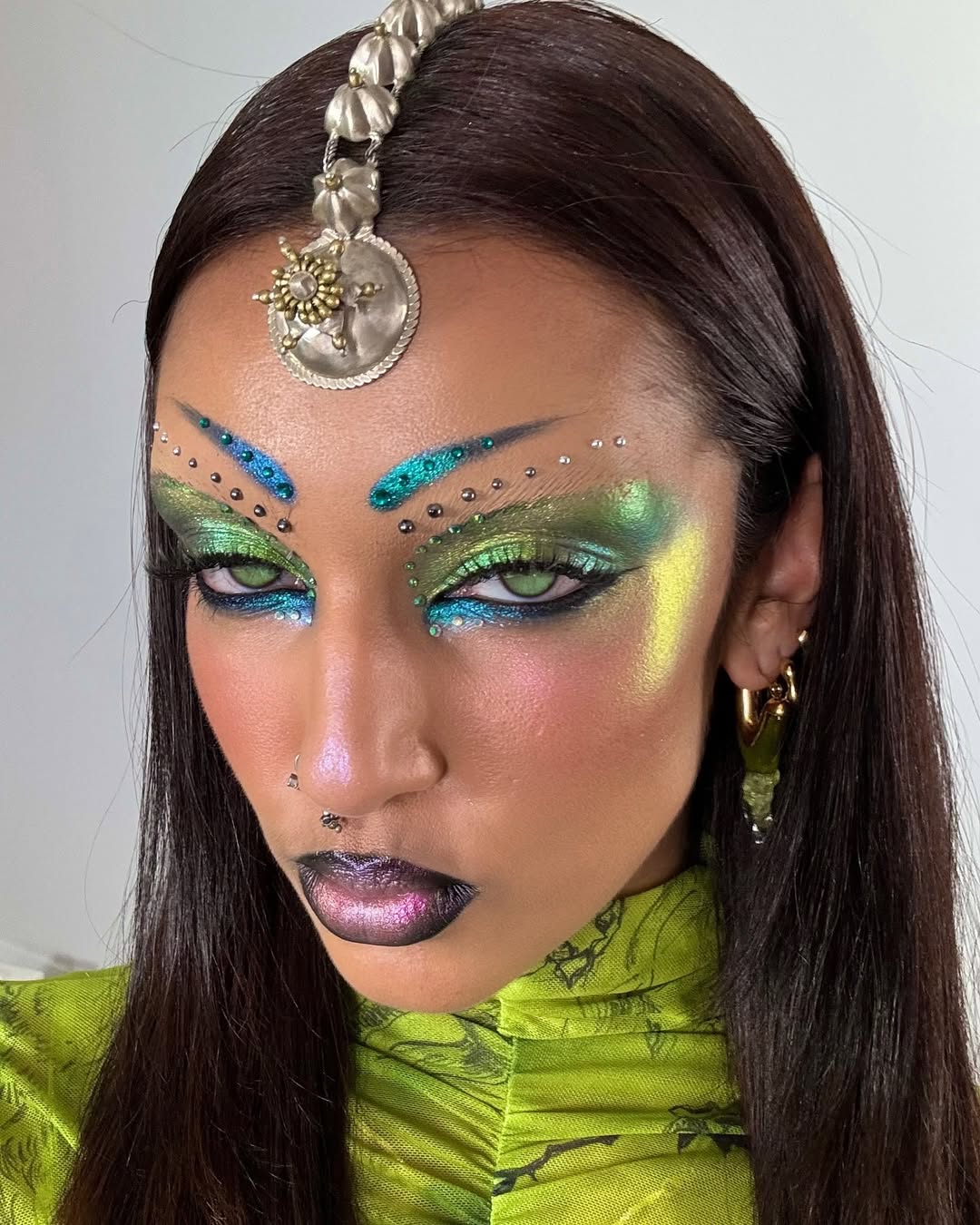
Social media becomes the perfect platform for these art forms as well—enabling self-curated visibility on reels, stories and posts without institutional gatekeeping. In today’s context of increasing hatred toward anyone marginalised, this type of content commonly includes in the caption ‘For the Girls/For the Queers/Not made for Men’. This signal of non-availability enables these posts to serve as protective aesthetics. By ‘warding off’ the male gaze through its conventionally unattractive nature, the consumer and engager of such content enters a safe space where judgement is suspended and some comfort is established. But is it really safe for all?
The algorithm of these platforms rewards novelty and shock—pushing newly emerging content as this much further. However, viralising content risks trivialising and depoliticising it. Once the novelty wears off, the audience risks forgetting the intent. Man-repellent trends borrow heavily from Drag traditions—hyperbole, theatricality and the face as a costume rather than enhancement. Drag, too, historically mocked gender norms and exposed femininity as constructed and performative.
Drag’s political intent is aestheticised without credit and often cisgender, heterosexual creators adopt elements without acknowledging lineage.
However, in many mainstream man-repellent trends, Drag’s political intent is aestheticised without credit and often cisgender, heterosexual creators adopt elements without acknowledging lineage. This absence raises concerns of cultural extraction—of whether Drag has moved from being survival art to mere consumable online content.
Beauty as capital
Beauty often operates as capital—one that can translate into social acceptance and economic opportunity. In the case of man-repellent makeup, however, this conversion is uneven. The common phenomena of brands separating the politics from the aesthetic hurt creators in the long run. Moreover, while commercialising may assure visibility, it alone rarely guarantees payment, protection or long-term support. Platforms shadow banning visibly queer content only complicates the interaction further; the promise of safety and recognition remaining conditional. The ‘safe space’ thus is shaped more by market logic than intent.
The final verdict—empowering or limiting?
Man-repellent makeup is neither a complete rejection of beauty culture nor a simple extension of it. It does, however, offer something far more real: a refusal of male approval and a shared visual language through which queer and gender non-conforming individuals recognise one another. It creates moments of relief, solidarity, and control within an otherwise hostile dimension. Aestheticising resistance risks its absorption.
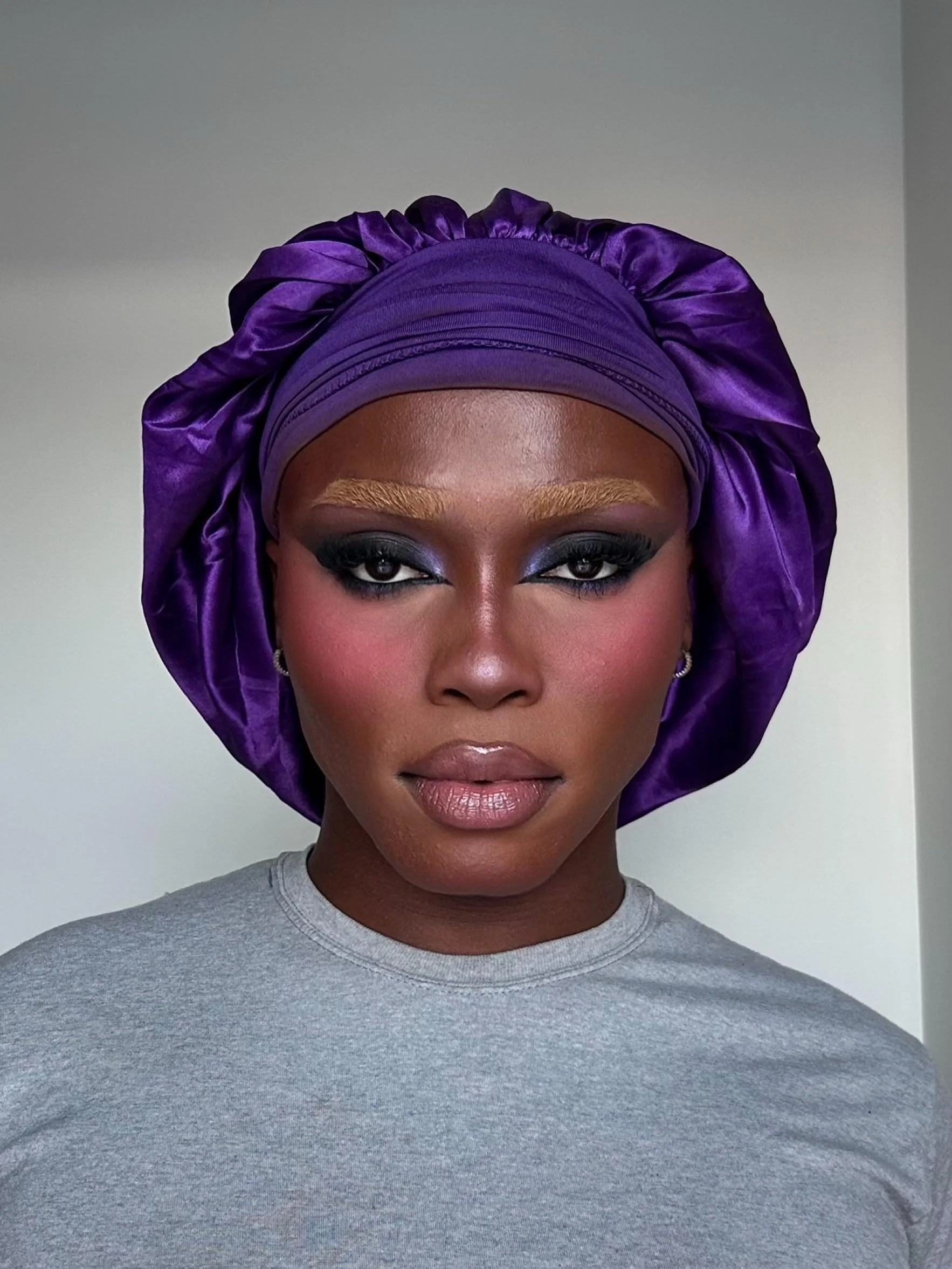
Man-repellent makeup, then, presents itself to us as a strategy—a way for us to question who gets to be visible, who gets to be safe, and who ultimately profits from defiance.