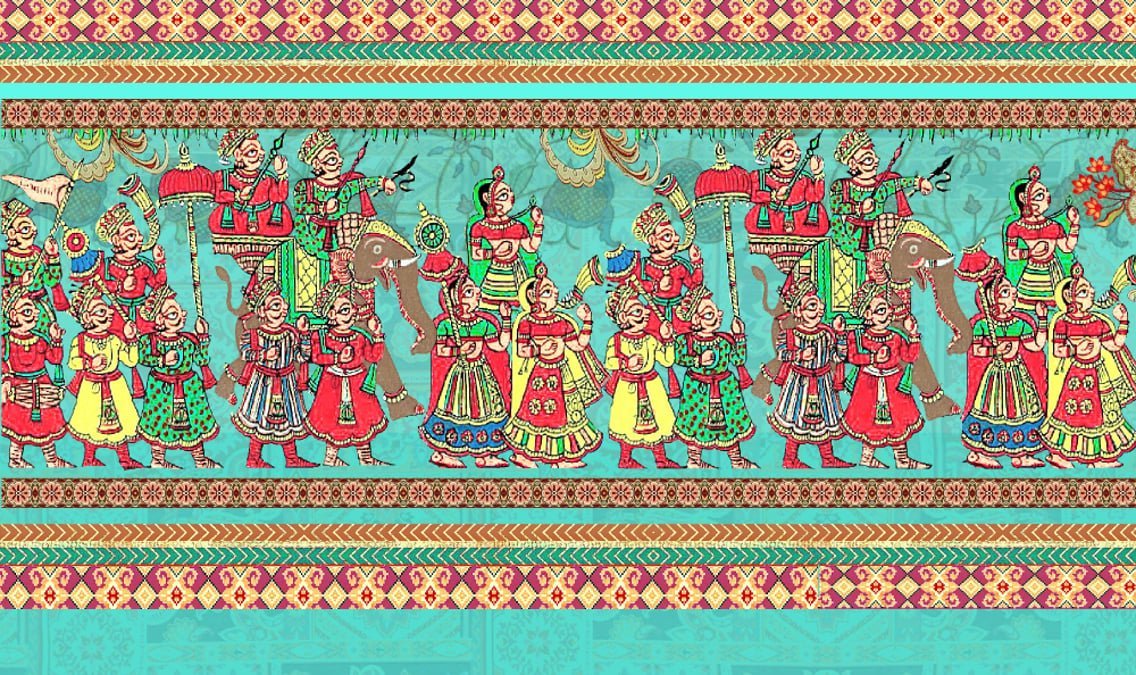
In India, folk art is not just a decorative tradition or an art; it is a living language. A language spoken by our mothers, sisters and lakhs of Indian women living in the innermost part of India, it lives through them and their memories. This language is drawn on the mud kaccha houses of Indian villages, which have tales of Ramayana beautifully carved on them. Or through threads embroidered into the clothes or painted on handmade papers these papers are also often made by them only. And all of these across all the regions of India tell a story which has been passed from women to women. These women are the creators of their culture and traditions. They record their daily lives, special rituals, and beliefs through them. In short, these folk arts are their identity.
In rural India, where half of the Indian population lives, formal ways for expression were negligible, especially for women; women’s voices are often suppressed under the heavy burdens of responsibilities (children, household work and family) or maybe sometimes ignored or given less importance. Reason being? Them being women. Folk art gives a way of expression to this suppressed voice. A weapon or a canvas for these women to express themselves through. They sew these threads through their imaginations; they tell the stories which nobody heard or tried to hear their happiness or sadness through these folk arts. Village households and these women carry a legacy with them in their hearts, memories and hands.
As women are often not literate in villages, they transfer all these through paintings, folk art or orally. And now this way has become a way for the empowerment of these women. This folk art has now become a link between these old traditions and the modern world. Now, these voices are being heard at a global level, a prime example of sustainability, Indian art and culture.
These stories of daily lives, traditions, rituals, social realities are passed on by mothers to their daughters, granddaughters, daughters-in-law, etc. As women are often not literate in villages, they transfer all these through paintings, folk art or orally. And now this way has become a way for the empowerment of these women. This folk art has now become a link between these old traditions and the modern world. Now, these voices are being heard at a global level, a prime example of sustainability, Indian art and culture.
Warli art: rituals and womanhood
Warli art originates from the Adivasi communities of Maharashtra and parts of Gujarat. And how do I know this? Because of my roommate, she comes from this very part of Gujarat, and this is where I first saw Warli art… what beautiful intricate designs. She told me that it is inextricably linked with the life of women. In the old days, her grandmom/artists used rice paste to paint on mud walls. Warli murals depict various occasions of daily life: farming, festivals, marriage, and nature. But one of my roommate’s favourite designs of Warli or we can say the legend which still lives on, is of Lagan Chowk, which is drawn during weddings and is made only by married women, known as ‘savasinis’. Using simple geometric shapes, these Adivasi woman artists transform everyday experiences into something special: a community story, a spiritual story which makes them keepers of this ritual knowledge.
Madhubani art: from mud walls to global canvases
Madhubani Art, which is also known as Mithila art, from the state of Bihar. The speciality of this art is associated with the Mithila region and the stories of Ramayana depicted on the walls of villages by women with bamboo brushes, twigs, etc. Also, these paints were originally homemade with turmeric etc. Major example of sustainable living taught by these women artists. If you go to the innermost parts of Bihar or the area near the border of Nepal you can see lanes of houses having this beautiful folk art on their walls.
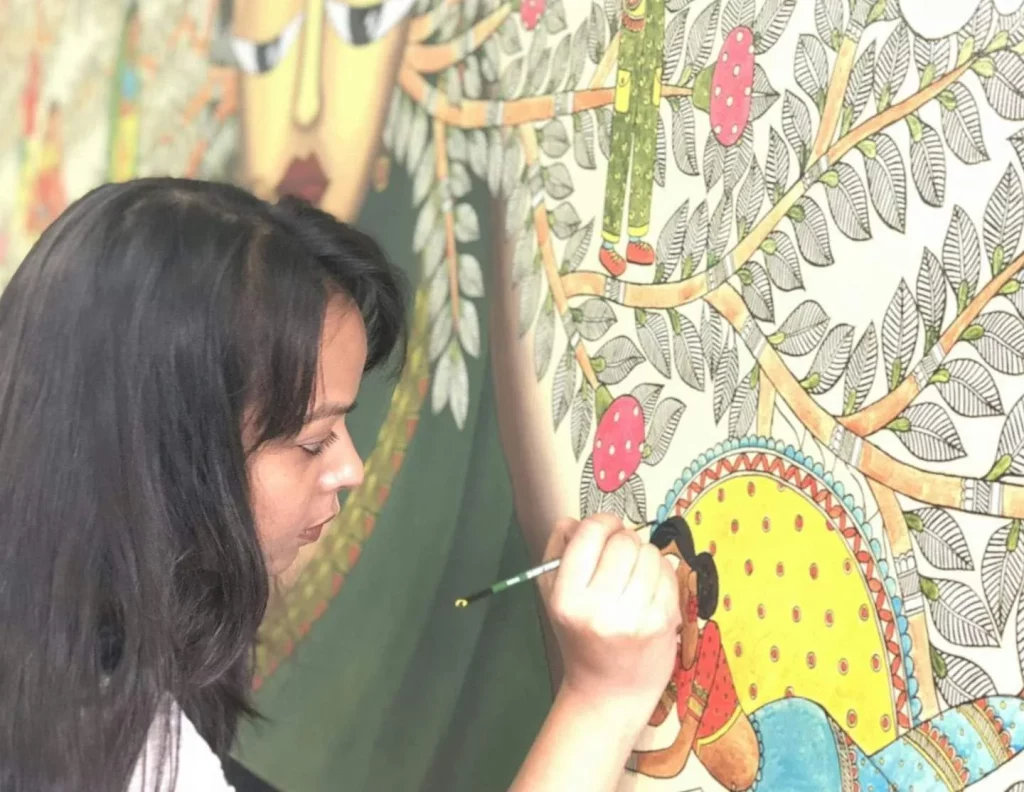
Especially during weddings. The art of Madhubani has been passed down from mother to daughter and it has been practiced by women during festivities and marriages. Or you can say during happy times and memories. Even though the origin of this art lies in mythology and religion, the women of today use this art to express themselves on issues of their lives. It has become their voice. a way to empowerment.
Kutchi embroidery: stitching identity of young girls
Kutchi embroidery comes from the Kutch region of Gujarat; embroidery is more than mere aesthetics – it is telling a story. A story which is often not read by everyone. Story told by young tribal girls. The colours of this embroidery reflect the imaginations and ambitions of these little girls and women. The tribals, like the Rabari and Meghwal initiate young girls into learning the art of stitching at an early age. You know, because girls are supposed to learn this kind of household work even if they don’t like it. Each of the threads of this design tells a story of their lives, their pain, stories of their community, beliefs and often routes of migrations. Now it has become a means of financial independence for these women.
It is a technique or a way that connects traditional skills to a world craft market today. With needle, thread and mirror these women are preserving their heritage and culture. Kutch which is a desert area lives colourfully through these along with a message of sustainable living like every other tribal community.
Folk art as empowerment
A common thread among all these is that folk art becomes women’s power, the voice of these often-neglected women in all three aspects: cultural, social, and economic. It gives them the chance to not only preserve but also to connect with the world today… to go global and it also gives them an identity of their own. With folk art increasingly recognized worldwide in museums, exhibitions, and global gatherings, women artists are slowly but surely coming out of the shadows and are becoming main characters in their own stories. This is no longer a hobby or something which is forced upon them but now they have become involved with professionals who are telling their stories to the world out and loud!
Indian folk art is a mix of old traditions, culture, identity and new trends, where women mainly take the lead in this art. Women painters/artists are the backbone of the Indian folk-art scene currently and are presenting their art in new ways, like a power play, showing off their characters and identities. And by doing this, they are changing the world of art and the meaning behind the art form itself. Because their art is a reflection of themselves and their lives. Their existence is living proof that folk art is not a relic of the past but a living canvas that is constantly drawn by women through their brush, colour and threads.
References –
- https://www.undp.org/india/publications/stories-women-artisans
- https://scroll.in/article/1026111/the-women-who-are-reclaiming-warli-art
- https://en.wikipedia.org/wiki/Kutch_embroidery
- https://en.gaonconnection.com/our-life/livelihood/bihar-sujani-embroidery-women-empowerment-unesco-handicraft-mithila-livelihood-fashion-covid19-pandemic/
- https://en.wikipedia.org/wiki/Pabiben_Rabar
- Adivasi Women Are Reclaiming Centuries-Old Warli Art With GI-Tags & Huge Murals

This article adds value for men exploring ethnic wear.
Very nice, keep it up ???