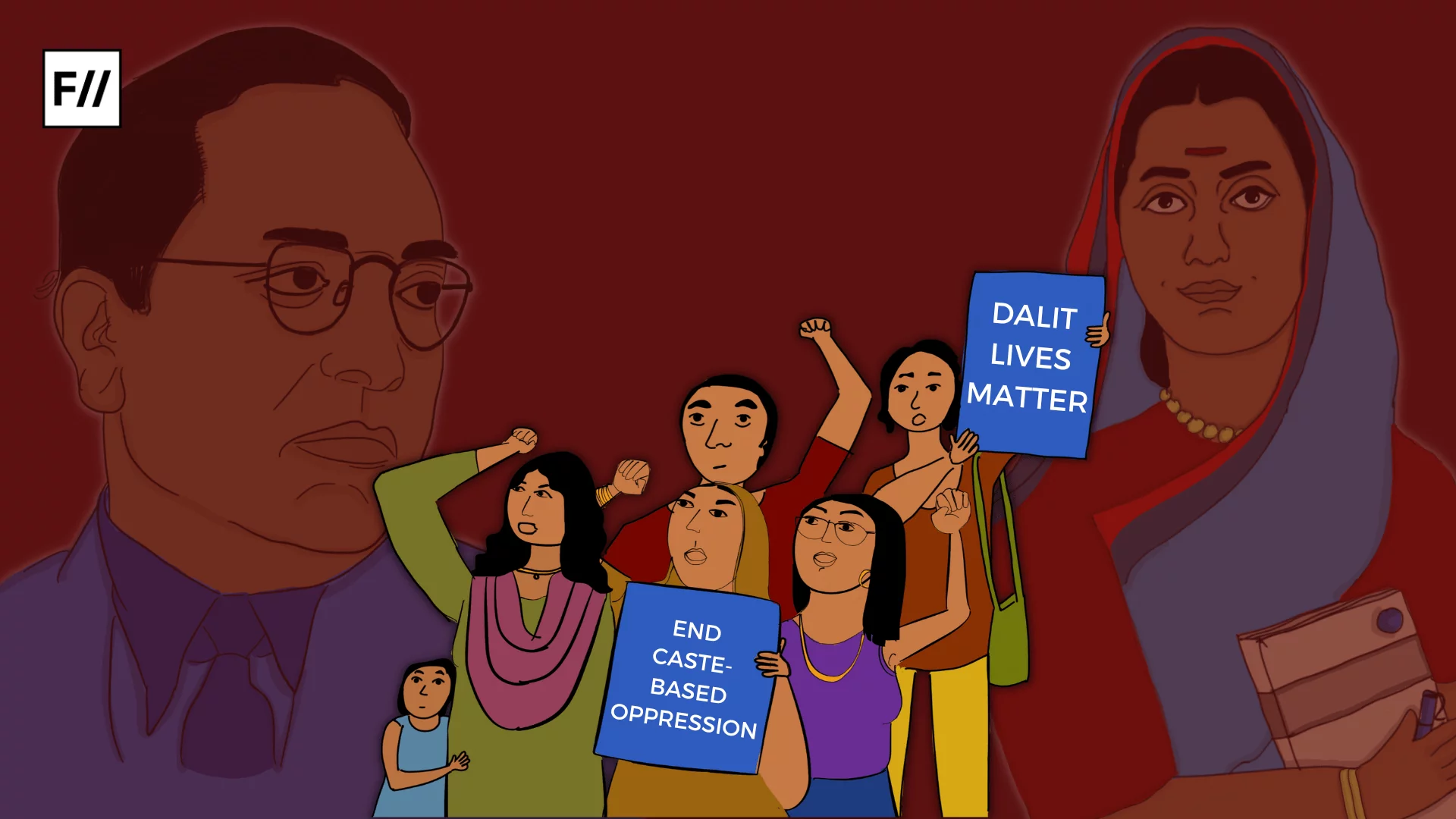
Leather has been bearing the burden of stigmatization in the Indian caste system for a very long time. It is not only a substance, but an indicator of social order, pollution and isolation. Throughout the centuries, the Dalit communities had to deal with animal hides, tan and stitching since the caste society had chosen that some bodies could touch what other bodies could never touch. But in this forced labour there were concentrated abundant forms of creativity, skill, and aesthetic knowledge. Dalit leatherwork thus cannot simply be considered art; it is history on skin, it is memory recreated through hands, and it is resistance being chiselled in material.
Leather as a tool of caste control
According to the Brahmanical caste system, leather is regarded as dirty since it is the skin of the dead animals. This concept of pollution was not confined to the material and was placed on the people who handled it. Chamars, Madigas, Mochis and Arunthathiyars were pushed into the periphery of social life, deprived of dignity, and their social life was reduced to mere labour. Caste, as sociologist Sharmila Rege is reminding us, functions as a body- and labour-control to determine whose work is honoured and whose work is abhorred.
According to the Brahmanical caste system, leather is regarded as dirty since it is the skin of the dead animals. This concept of pollution was not confined to the material and was placed on the people who handled it. Chamars, Madigas, Mochis and Arunthathiyars were pushed into the periphery of social life, deprived of dignity, and their social life was reduced to mere labour.
Nonetheless, Dalit leather artisans evolved into strong artistic experiences. Leather has been moulded into useful and beautiful forms such as Kolhapuri chappals, drums such as the Parai and Dappu, and belts, bags, and other ritual articles. However, these objects are hardly accepted as art. They are branded folk craft or traditional work, which silently eliminates the issue of caste. Art historian Yashpal Jogdand posits that Dalit creativity frequently manifests itself as aesthetic labour without authorship, whereby the objects circulate as the creators remain unidentified. The art endures, and the artist is lost.
This invisibility does not occur by chance. The history of mainstream Indian art has been greatly influenced by Savarna views, where painting, sculpture, and gallery art are highly admired, but caste-based work is kept out of the aesthetic circle. This is because by referring to Dalit leatherwork as heritage or handicraft, the mainstream culture devours the beauty without addressing the violence that created it. According to Chinnaiah Jangam, Dalit art should be interpreted as a counter-archive, which contains narratives of oppression, survival and assertion, but not romanticised tradition.
However, in recent decades, leather has become another powerful Dalit symbol. The Parai drum has been reclaimed across South India into a caste-tinted instrument of pride and protest. Not only is it now played in the streets, demonstrations, and culture festivals, but it is also being beaten as well, as they did in death rituals. This reappropriation of leather is very political. Anand Teltumbde believes that a situation unfolds when Dalits reuse the stigmatized labour and materials; they question the very basis of caste ethical principles. Leather, which was formerly a means to humiliate, becomes a language of denial.
Erased knowledge of Dalit women
The correlation of Dalit women to the art of leather provides another twist to this tale. The least visible is usually their labour. Females get engaged in cleaning hides, softening leather, stitching, and polishing, which are not named but take patience and skill. Concurrently, the bodies of Dalit women have in the past been centres of caste and sexual violence. Scholar Shailaja Paik demonstrates the importance of the erased labour of Dalit women alongside their silent generational transfer of knowledge. Women possess methods, surfaces and rhythms that hardly make it into written history in the leatherwork.
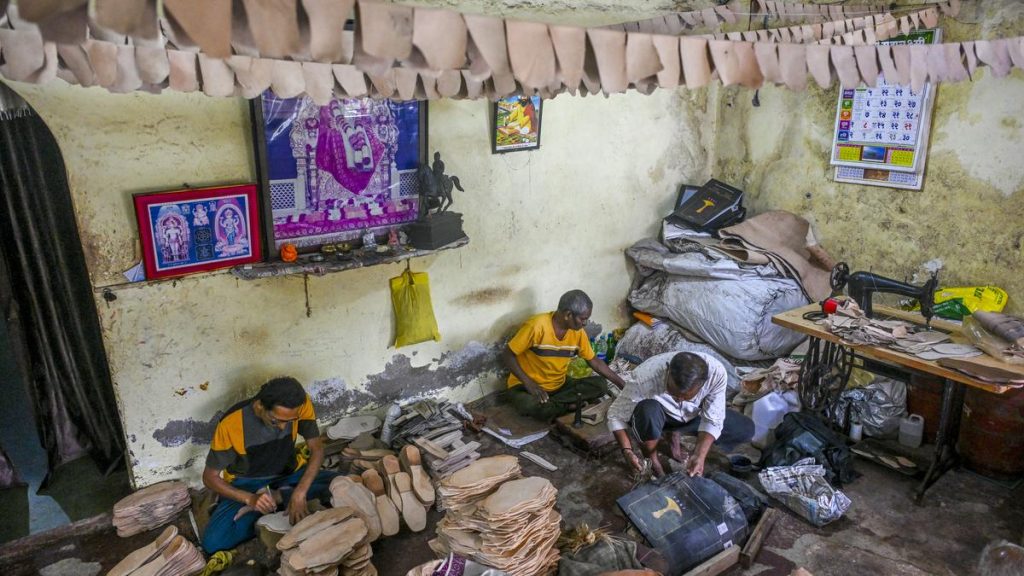
We should also redefine art in order to perceive Dalit leathercraft as art. When art is what is in galleries, then the caste society has a choice as to who is to be an artist. However, when art is perceived as being made with the experience we live in, then Dalit leather work itself is a potent aesthetic practice. Here the body is an artistic medium, not an abstract performance in itself, but a repetitive, skilled labour that is characterized by caste memory. Stories of survival are attached to every cut, every stitch and every polish.
The correlation of Dalit women to the art of leather provides another twist to this tale. The least visible is usually their labour.
Leather, however, is not numbed; it recollects the touch. It takes recalling who was permitted to touch and who was scolded for it. When Dalit artists and groups reappropriate leather in contemporary society by means of music, fashion, visual art, and protest, they make society face unpleasant realities of purity, dignity, and value. The Dalit leather art does not seek sympathy but recognition. When we listen to leather, we are listening to histories that were never intended to be listened to. And by perceiving Dalit leather craft to be art, we make a little but significant step in the context of reversing caste blindness, which continues to influence the ways art is perceived, appreciated, and remembered.
About the author(s)

Dharanesh Ramesh is a native of Coimbatore and a postgraduate student of Gender and Development Studies at the Tata Institute of Social Sciences, Hyderabad. Rooted in the belief that stories shape structures, his study and work explore the intersections of gender, caste, and public policy through an intersectional feminist lens. He is particularly drawn to understanding how power, privilege, and policy weave together to define inclusion and equity in everyday life. Inquisitive by nature, Dharanesh often turns to drawing, painting, photography, and writing as extensions of his reflective practice. His work seeks to bridge thought and experience, analysis and art, in the pursuit of justice and representation.

Comments:
Comments are closed.