I returned to Annie Ernaux in the summer of 2024 and picked up Exteriors. Partly because it was a short read and partly because of the title. Exteriors felt very strangely familiar yet mysterious and it was time to find out exactly what it was that the title invoked. Ernaux begins the book with an apposite epigraph ‘notre vrai moi n est pas tout entier en nous‘ which translates to ‘our true self is not entirely within‘, a theme that this impersonal series of journal entries have embodied so poignantly.
In 2022, at the wake of the U.S Supreme Court’s overturning of Roe v. Wade, Annie Ernaux won the Nobel Prize for Literature. Here was a writer who wrote so lyrically about the experience of her illegal abortion in Happening. She is also known for her raw accounts of sex, passion and what it means to be a woman through it all, in her books La Passion Simple (Simple Passion) and Se perdre (Getting Lost).

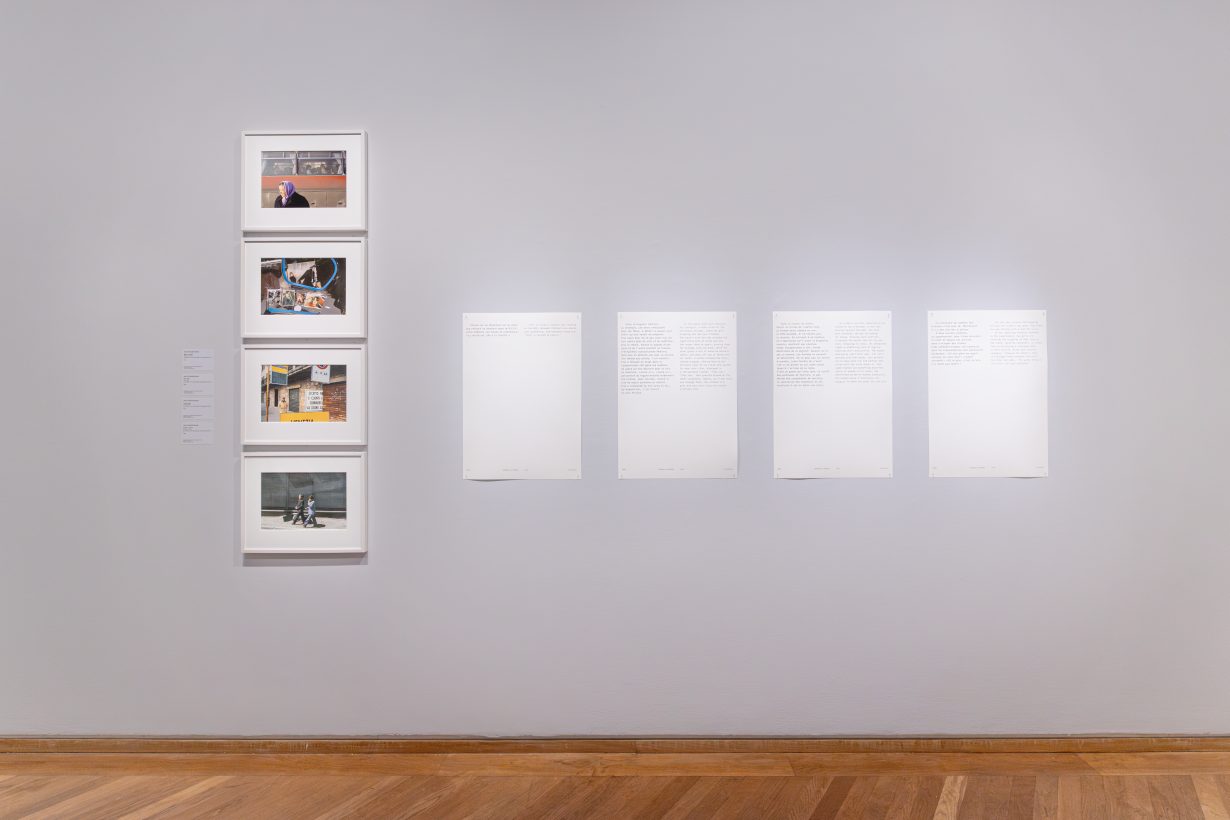
In Exteriors, however, Ernaux has taken on the role of the observer as opposed to that of a writer. A collection of vignettes of everyday life in the suburbs of Paris, Exteriors, translated by Tanya Leslie from the French, was initially a journal that Ernaux had kept between 1985 to 1992. Devoid of any public performance for a literary audience, Exteriors is a telling of public memories, often working class, as she goes on about her days in her town: of passengers commuting, of customers and cashiers, of children and teenagers and also of objects in public spaces. Through this process, she also reflects on the transcendental “I”, the role that she plays and invariably, that we all play in public life and in the life of others.
The suspension of the “self” in autosociobiography
In Exteriors, Ernaux has recorded the otherwise invisible ordinary lives navigating through systemic labour and class hierarchies in the public space. She has provided an honest account of the symbolic violence in everyday life. Most notably, Ernaux suggests that desire, frustration and social and cultural inequality are reflected in the way we examine the most mundane of events in life, such as examining our shopping carts, or paying tribute to a painting or the contempt we show towards a cashier, in’anything that appears to be unimportant or meaningless‘.
Ernaux’s books have been largely classified into the autofiction genre of literature, which she has often disagreed with. However, this work moves away from that practice and instead, serves as an autosociobiography, a term that Ernaux coined. Autosociobiography locates writing at the intersection of literature and sociology, which also invariably takes the form of a larger political commentary. In this detailed memoir of her everyday life in Cergy and Paris, Ernaux attempts to convey reality as it is. She writes in the preface that: ‘the feelings and thoughts inspired by places and objects have nothing to do with their cultural content‘.
She writes in the preface that: ‘the feelings and thoughts inspired by places and objects have nothing to do with their cultural content‘.
Thus she has maintained the separation without tainting reality and the meaning derived out of these places and objects with the feelings they invoke in the implacable “I”, the self. One of the principal elements of an autosociobiography includes flat writing, i.e., writing that says it as it is seen without any interior exploration of themes or thoughts from the perspective of the writer. Ernaux too, in Exteriors has maintained simplicity in her writing, avoiding subjectivity. For subjectivity and introduction of one’s own feelings can distort the image and account of reality.
The Exteriors through split consciousness
Ernaux grew up working class in Normandy, France. In this examination of her exteriors especially, it can be noted that while maintaining sociological objectivity, she has taken the position of a class-defector, one who has transitioned from her rural working class upbringing to now forming a part of the educated, French literary elite. She now belongs to the bourgeois literary world. Yet, in her writing, she is rooted in the estrangements and the memory of her class origins. Through Exteriors, Ernaux archives the world around her, and the conditions of everyday life.
To state it as it is without clouding her observations with romance or redemption, she believes, is the only way she can make them visible as they are. This also leads one to her Nobel acceptance speech: ‘I will write to avenge my people‘. What once started as a promise to herself to ground her writing in recording the work and life of her people in her twenties, to now taking tangible form such as her own books, one being, Exteriors, Ernaux has conducted an inquiry into how gender, class and power are organised in public spaces, such as trains, hypermarkets, etc. She has documented other invisible and ordinary people, lives and bodies, navigating through systems of labour.
In Exteriors, we witness a kind of writing that reduces itself to the writer’s and equally the reader’s unconscious responses to the world. Through a plain reading of this work, the reader too comes in close contact with the realities of their own gaze and its accuracy. It makes one investigate their responses to their own exteriors as well as Ernaux’s accounts. Ernaux, in her closing paragraph, writes: ‘It is outside my own life that my past existence lies: in passengers commuting on the Metro or the RER; in shoppers glimpsed on escalators at Auchan or in the Galleries Lafayette; in complete strangers who cannot know that they possess part of my story; in faces and bodies which I shall never see again. In the same way, I myself, anonymous among the bustling crowds on streets and in department stores, must secretly play a role in the lives of others.‘
Ernaux subverts the idea that an autobiographical work should include the narration of the self with personal and intimate revelations. Exteriors thus locates itself across spaces and routines shared by strangers, within the collective and material memory of our immediate world. Through this record, Ernaux has not only preserved the nature of the society but also the conditions and transient intersections which form the base of a complex web of relationships.
Through this record, Ernaux has not only preserved the nature of the society but also the conditions and transient intersections which form the base of a complex web of relationships.
Our exteriors do not exist as they are. In fact, it is through our lived experience and unconsciousness that our exteriors are born. For, as Anais Nin famously said, we do not see things as they are, we see them as we are. In this exercise, however, while still maintaining her position within the society that she is observing, on a daily but conscious basis, Ernaux has attempted to separate subjective feelings from the conscious images that her memory, and at large, public memory has captured.

Exteriors has been written to be read like a photograph rather than a forgiving prose. Any addition to this memory, poetic or romantic, would render the very account fallacious. Exteriors therefore is an account of how lives are shaped by material conditions and how life endures through the very conditions shaping it.
About the author(s)

Shreenithi Annadurai is a lawyer based out of India. Her areas of interest include art as political expression and questions of representation and resistance, drawing on rights-based perspectives and feminist media practices.