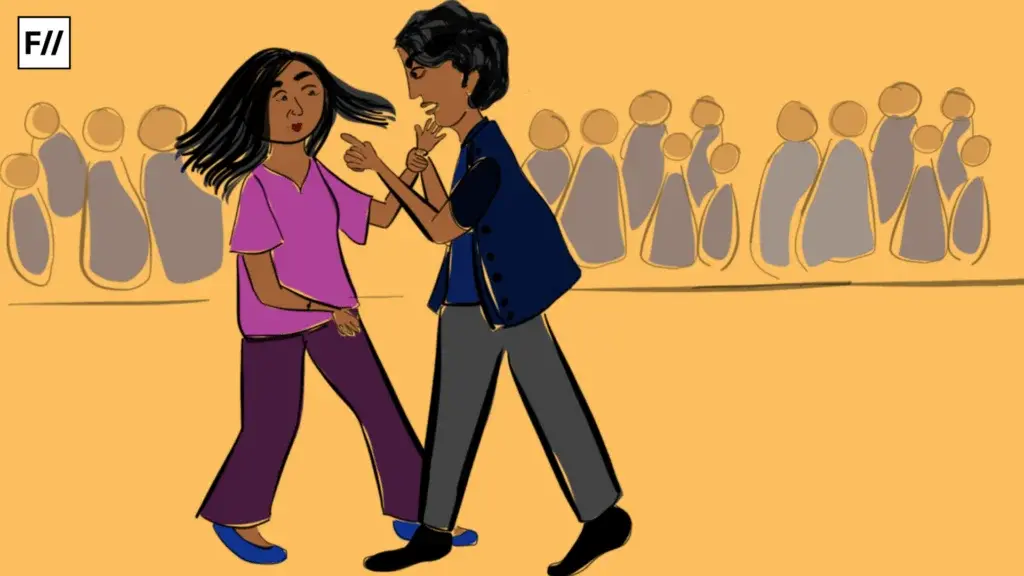
In Kerala, a man named U Deepak died by suicide two days after a video accusing him of sexual harassment went viral. Incidents like this are deeply tragic and raise important questions about due process, misinformation, and the dangers of online trials. However, the social response to this case cannot be understood in isolation. It must be examined within a larger socio-political context, one where violence against women is widespread, underreported, and routinely dismissed. In a country where cases of sexual harassment against women are rising sharply, and where countless women are still denied justice, the trend of online outrage aimed at female survivors is deeply troubling.
Public reaction: Selective outrage and ‘Not All Men’
Deepak’s suicide has provoked intense reactions among many men in Kerala. Suddenly, there are demands for men’s rights, separate seats on public transport, and even a commission for men. But in this moment of outrage, this reaction raises an uncomfortable but necessary question: Why does public outrage become so intense only when a man is affected, while the everyday suffering of women remains largely invisible? Also, why are so many men forgetting their long-held social privilege?
Deepak’s suicide has provoked intense reactions among many men in Kerala. Suddenly, there are demands for men’s rights, separate seats on public transport, and even a commission for men. But in this moment of outrage, this reaction raises an uncomfortable but necessary question: Why does public outrage become so intense only when a man is affected, while the everyday suffering of women remains largely invisible?
Violence against women is not new. Women have been carrying the fear of being touched without consent, groped and raped for centuries. Whenever violence is committed against women, society responds with doubt, silence or victim blaming. Few may stand with her, but many more ask, “What was she wearing?” or “Why was she out at that time?” as if her choices, rather than the perpetrator’s actions, were on trial. Women endure profound psychological suffering throughout this process. They grow exhausted from constantly having to prove their innocence, and in the midst of it all, their dignity is slowly eroded.
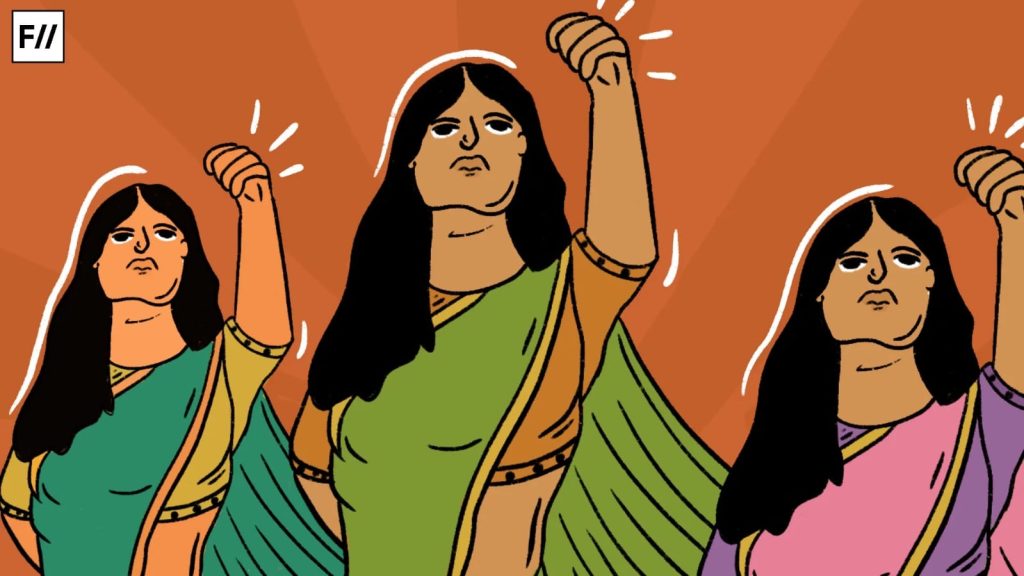
Another troubling trend is the rise of “not all men” hashtags. Far from contributing meaningfully to the conversation, these slogans often derail it. They function less as a call for reflection and more as a display of defensiveness, revealing how privilege seeks attention instead of accountability. Algorithms play a vital role in amplifying outrage against women. In a world driven by capitalist incentives, influencers often profit from anti-feminist content, as controversy and hatred generate more engagement than empathy or truth. What many men forget is this: not all men, but almost every woman on earth has experienced some form of abuse, harassment, or violation yet the response they insist on centering is “not all men.”
Gendered analysis: Performative misogyny and privilege
Gender is performative, and so is misogyny. Judith Butler, in their book Gender Trouble, says, “Gender is not something that one is; it is something one does, an act … a ‘doing’ rather than a ‘being’”. If gender is constituted through repeated performances, then misogyny too can be understood as performative. A repeated display of patriarchal behaviour used to prove masculinity and gain validation. To say that misogyny is performative is to argue that it is not merely an inner attitude or hatred toward women, but a social practice enacted through language, behaviour, rituals and repetition. The constant attempts by some men to demand a separate commission for themselves, under the guise of protecting their rights, often reflect not equality but a deep-rooted resistance to women’s struggle and, in many cases, a form of modern misogyny.
The question is why does demand for men’s rights become loudest not in response to male mental health crises, workplace exploitation (by men), or social pressure, but specifically when women begin to speak more forcefully about their oppression ?
How did legal protections for women emerge? Why were women’s commissions established? Why did laws such as Section 498A, the Sexual Harassment guidelines, and the Domestic Violence Act come into existence? These safeguards were not privileges granted out of favour; they were the hard-won outcomes of decades of feminist struggle. They arose in response to systemic violence, deep-rooted inequality, and the long-standing neglect of women’s suffering. These measures exist not to elevate women above men, but to correct an imbalance that society refused to acknowledge for far too long. An imbalance so deeply entrenched that its effects cannot be erased overnight.
What we often see is not a sustained concern for men’s well-being, but a reactionary movement that emerges whenever feminism gains visibility. The demand for men’s commission and the rise of men’s rights activism become connected to misogyny when they are driven not by genuine care for men’s wellbeing, but by hostility toward women and feminism.
What we often see is not a sustained concern for men’s well-being, but a reactionary movement that emerges whenever feminism gains visibility. The demand for men’s commission and the rise of men’s rights activism become connected to misogyny when they are driven not by genuine care for men’s wellbeing, but by hostility toward women and feminism. In a society where thousands of everyday cases of violence against women remain invisible and unheard, a single tragic case involving a man becomes viral and dominates public discourse. This selective outrage reveals the deep-rooted whataboutery many men resort to when confronted with women’s suffering. Such backlash against women is not a pursuit of justice; it is often a public display of defensiveness that ultimately exposes their own unresolved misogyny.
Socio-political implications: media, algorithms, and power
The public discourse surrounding gendered violence today is not shaped only by social attitudes but also by political power structures and digital economies. In a society driven by capitalism, the digital ecosystem plays a powerful role in shaping this discourse. Algorithms reward outrage, not nuance. Content that attacks feminism, mocks survivors, or fuels gender antagonism generates more engagement and is therefore amplified. Influencers and media platforms often benefit financially from polarisation. Anti-feminist narratives become profitable. Misogyny becomes monetised. Meanwhile, stories of everyday violence against women rarely receive sustained attention.
The debate sparked by isolated incidents should never be allowed to overshadow the structural reality of gendered violence. Justice must be rooted in truth, due process, and compassion for all. But justice also demands that we do not erase the long history of women’s suffering in the name of momentary outrage. Feminist legal protections, social movements, and institutional safeguards were not born out of privilege, but out of necessity.
What is urgently needed today is not reactionary defensiveness, but collective introspection, not as a backlash against women’s rights. Genuine equality can only emerge when society is willing to confront its own patriarchal conditioning, challenge performative misogyny, and listen to women’s voices without suspicion or hostility.
Until then, silence will continue to protect violence, algorithms will continue to reward hate, and women will continue to carry the burden of fear. The choice before us is clear: we either move towards a more empathetic society, or we remain trapped in cycles of denial, outrage, and inequality.