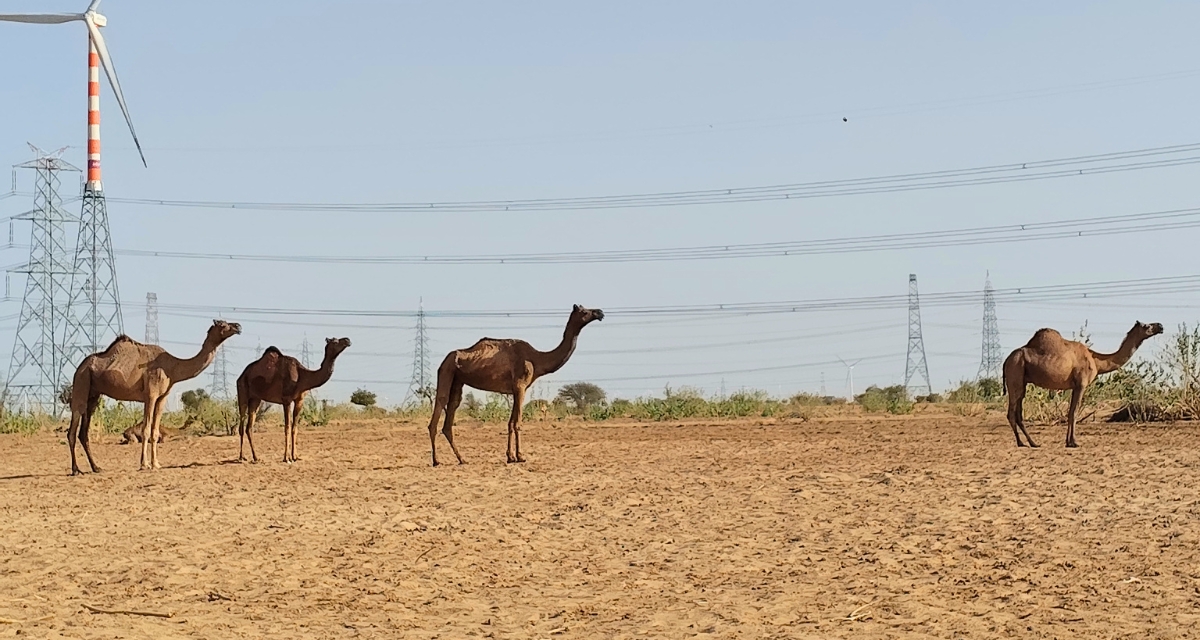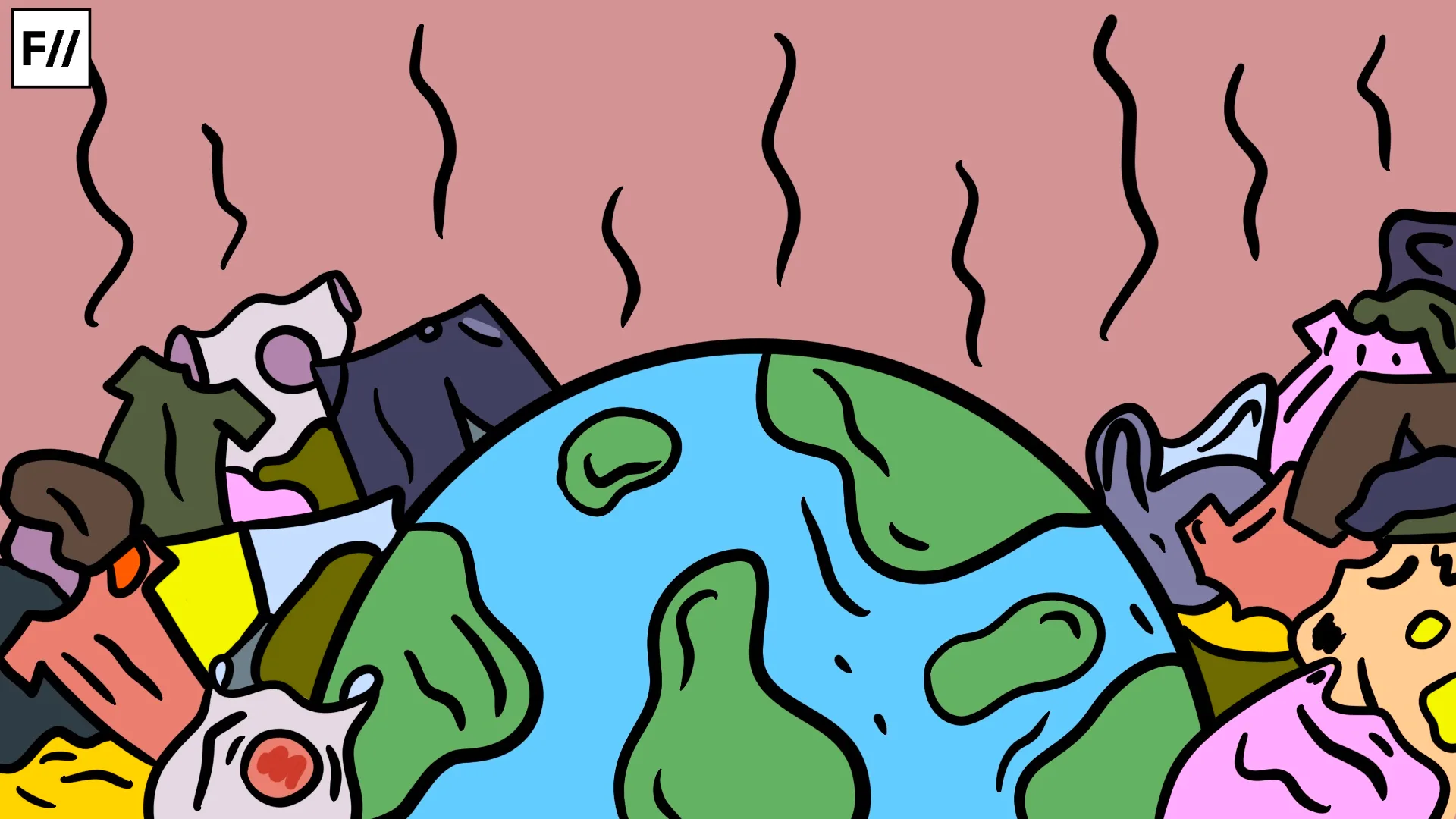
In India, there is a surge in the demand for ‘green jobs’. Career-orientated people are encouraged to pursue higher education in environmental studies. There is a focus on providing employment opportunities and protecting the environment through green jobs, regardless of whether deliberate attempts are made to ruin the ecosystem. India is losing forests to industrial and infrastructure projects on a large scale. In fact, Global Forest Watch monitored that more than 348,000 hectares of forest cover have been lost since 2002. Despite having a robust list of environmental legislations – the Forest Rights Act, the Forest Conservation Act, Joint Forest Management, the Green India Mission, and Compensatory Afforestation Fund Management and Planning Authority – losing forest cover disrupts the ecosystem and contributes to environmental degradation.
It is important to understand that the focus on green jobs is not to sustain the environment but to shape public opinion that there is a willingness to provide people with employment opportunities while contributing to protecting the environment. In shaping public opinion, it also blurs manual labour in solar and waste management.
It is important to understand that the focus on green jobs is not to sustain the environment but to shape public opinion that there is a willingness to provide people with employment opportunities while contributing to protecting the environment. In shaping public opinion, it also blurs manual labour in solar and waste management.
Under the guise of promoting green jobs for people so that their contributions could benefit the environment, human manual and time-intensive labour as blue jobs is hidden. Before gaining insights into this, it is very significant to understand old blue jobs in simple words. Basically, blue jobs consist of workers who do not receive a fixed monthly salary but are paid on an hourly and daily basis. ‘Blue collar’ denotes manual labour of both male and female workers. In India, blue-collar jobs are disguised as green jobs where men in general, and women in particular, are marginalized.
Disguised as Green Jobs to Blur Women’s Manual Labour
According to research published by the Impact and Policy Research Institute, over 62 million tonnes of waste are gathered annually, and there is a marginalised workforce that is supposed to clean the streets. This workforce consists of informal workers, both men and women, who are responsible for segregating and recycling waste. Female workers who earn less than their male counterparts, and they mostly come from marginalized communities, struggle to gain recognition despite their significant contributions to waste management. They do not have basic rights and cannot access fair wages or social protection.
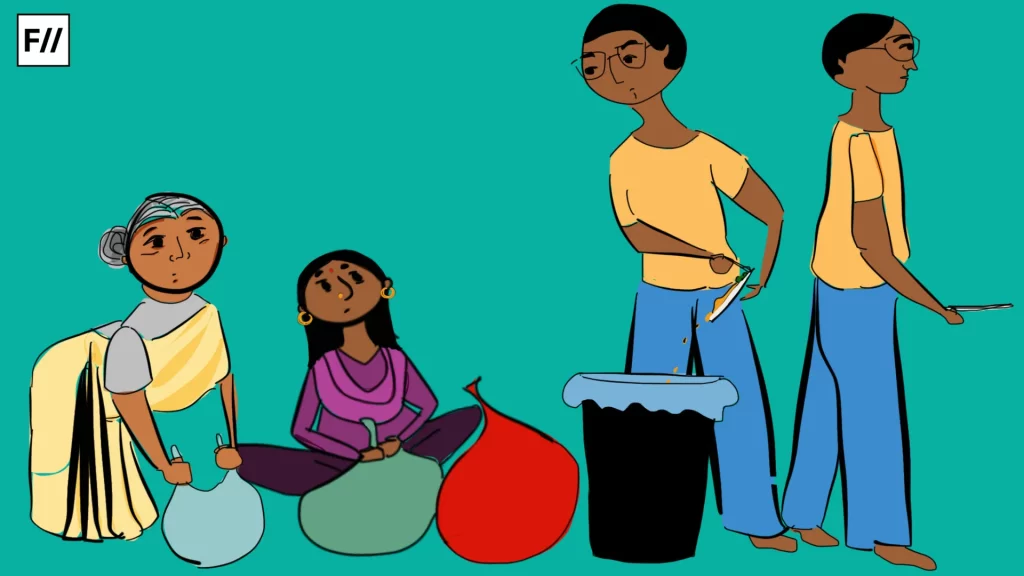
Workers who share multiple identities of caste, class, and gender are vulnerable to discrimination and sexual exploitation. In fact, their children have to face verbal abuse in schools. There is a report from Bihar where children who mostly come from marginalized communities and whose parents are waste pickers face verbal abuse such as Kachra wali. They are even forced to drop out of school and accompany their parents to dumpsites. In the Ramchak Bairiya dumping yard that is located outside Patna, female waste workers, lacking effective protective gear, toil to earn approximately 150-200 for a day. In spite of managing Bihar’s 26,000 tonnes of daily waste, these workers face social isolation. They inhabit makeshift settlements without getting access to clean water and electricity. Since they are informal workers, they do not receive social security.
Despite Bihar’s waste management projects in keeping with Swachh Bharat Mission, the Plastic Waste Management Rules, 2016, and the Global Sustainable Development Goals (SDGs), female workers are the most marginalised. On the ground, there are no initiatives taken to improve their socio-economic conditions so that they could enjoy dignity.
One can look at Ahmedabad, India’s declared cleanest city in Swachh Survekshan. It is followed by Bhopal, Lucknow, Raipur and Jabalpur. In Ahmedabad, female waste pickers that dominate the informal sector are less or not recognised. Josie Wittmer, who earned a PhD from the University of Guelph, has extensively worked on female waste pickers. These waste pickers are supposed to earn their daily subsistence by collecting waste in a big sack that makes it heavy for them. After segregating waste materials, they sell them to local dealers for Rs 100-150. After returning from waste picking work to their homes, they are supposed to do unpaid work, such as taking care of their children and family members. They also face discrimination and sexual exploitation based on their multiple identities, which are intersectional. In India, there are social norms imposed on female workers associated with waste picking. It is considered suitable for women from marginalised communities because it does not require education but does require flexible working hours that women can provide along with unpaid household management. Since they are at the bottom of urban waste management in Ahmedabad, they experience hardships in the context of the privatization and mechanization of waste management. Due to a dustbin setup outside residential spaces and fining people for throwing waste on roads, particularly as a result of Swachh Bharat Abhiyaan, female waste pickers struggle to get sufficient waste on the roads. They face difficulty in accessing waste materials outside residential spaces. There is increasing competition with workers from private companies who are starting to enter their space and marginalizing them. Although female waste pickers have been doing the same work for years, due to the privatization of waste management in urban areas, it is difficult for them to get minimum wages from waste materials as they have a family to feed.
In India, there are social norms imposed on female workers associated with waste picking. It is considered suitable for women from marginalised communities because it does not require education but does require flexible working hours that women can provide along with unpaid household management.
Being informal workers, they do not have written contracts to demand fair wages, legal protection, and social security. The revised Solid Waste Management Rules (2016), along with the Municipal Solid Waste Manual under the Swachh Bharat Mission consider waste workers as self-help groups (SHGs) for the recycling chain. However, these policies do not significantly take into consideration women falling victim to the privatization and mechanization of waste management along with caste discrimination, sexual exploitation and domestic violence.
These blue-collar workers significantly contribute to sustaining the environment, but their labour is still invisible in green-collar activities. Their marginalization due to social norms, mechanization, privatization, is not yet recognized.
Informal Female Workers in Solar Management
Taking an example of salt workers from Gujarat that has surfaced on social media with a headline that says the Self-Employed Women’s Association (SEWA) helps female salt workers become solar engineers and technicians. It helps boost their incomes and cut CO₂ emissions at the same time. India produces 30 million tonnes of salt a year, and 80% comes from Gujarat. Female workers form the majority in the salt industry and are known as Agariya. SEWA helps female workers replace diesel pumps with solar panels to draw brine from underground reservoirs. Although SEWA is recognized for addressing the issues of female workers in the informal sector, including those of salt workers, it draws criticism for its links with capitalist agendas, using the issues of informal female workers for capitalist interests. There is a critical review done by Timothy Kerswell and Surendra Pratap in their work, “Labour Imperialism in India: The Case of SEWA”, where it is argued that SEWA’s dependence on International donor agencies, and encouraging workers to align with the capitalist framework.
The International Renewable Energy Agency (IRENA) estimated that India will be one of the five generators of photovoltaic waste by 2025. A large number of female pickers are involved in e-waste management who mostly come from marginalized groups of Dalits and Adivasis and are limited to traditional roles of collecting and sorting waste. In fact, their male workers are engaged in waste aggregation, processing, and selling, which brings them better compensation than women engaged in traditional activities.
India is determined to make progress and developments, whereas the waste that is generated from development programmes needs to be taken into consideration. Blue collar under the guise of green collar must be recognised by the government and the citizens to understand the hardships of informal female workers and their cycle of poverty in which they are trapped. Female waste pickers should be given legal recognition, and initiatives must be taken to legally protect them from sexual exploitation, caste discrimination and domestic violence.
About the author(s)

Nashra Rehman finds her profound interest in addressing the plight of Muslim women and their unappreciated marginalisation. Her focus remains on bringing a novel argument to life.