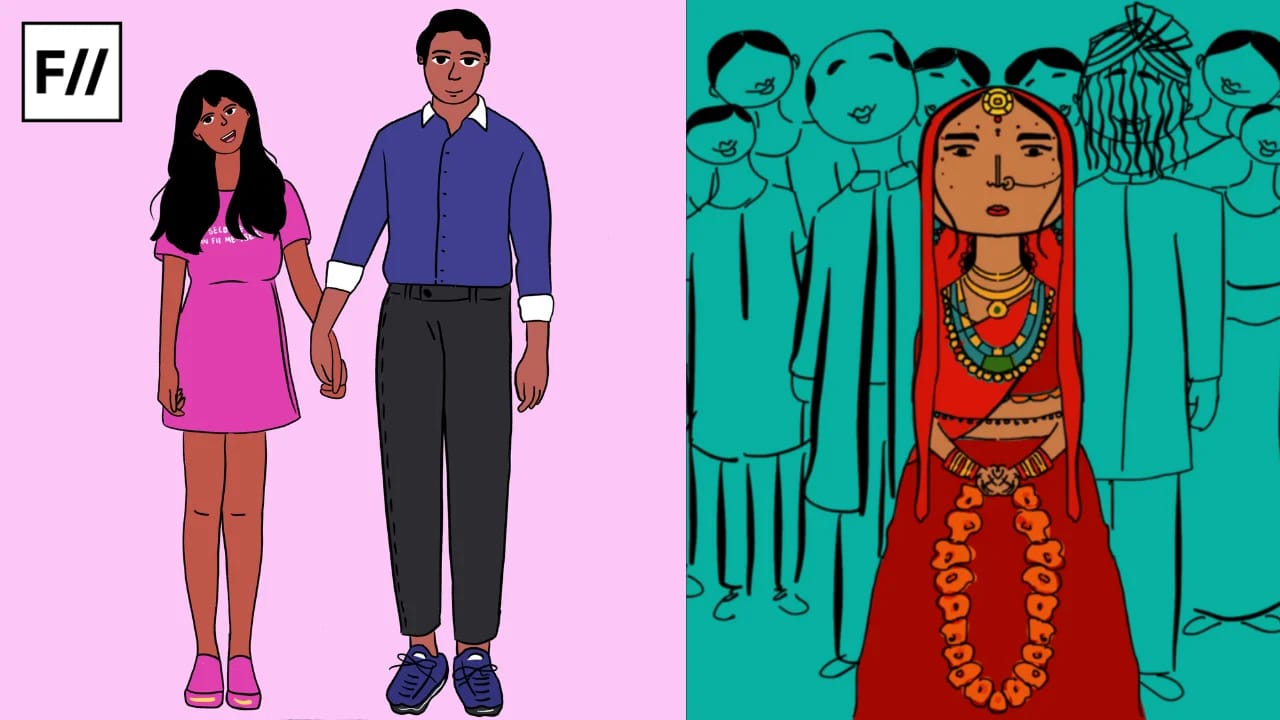
While hearing a bail plea in a case of rape on the false promise of marriage, a bench of Justices BV Nagarathna and Ujjal Bhuyan could not seperate their personal morality with that of constitutional morality as they expressed great dismay over young individuals engaging in sexual relations before marriage.
Reimagining the medieval ages, the courtroom hearings became a moral science classroom as the focus shifted from sexual violence by the perpetrator to the extent to which the victim’s bodily autonomy can be exercised.
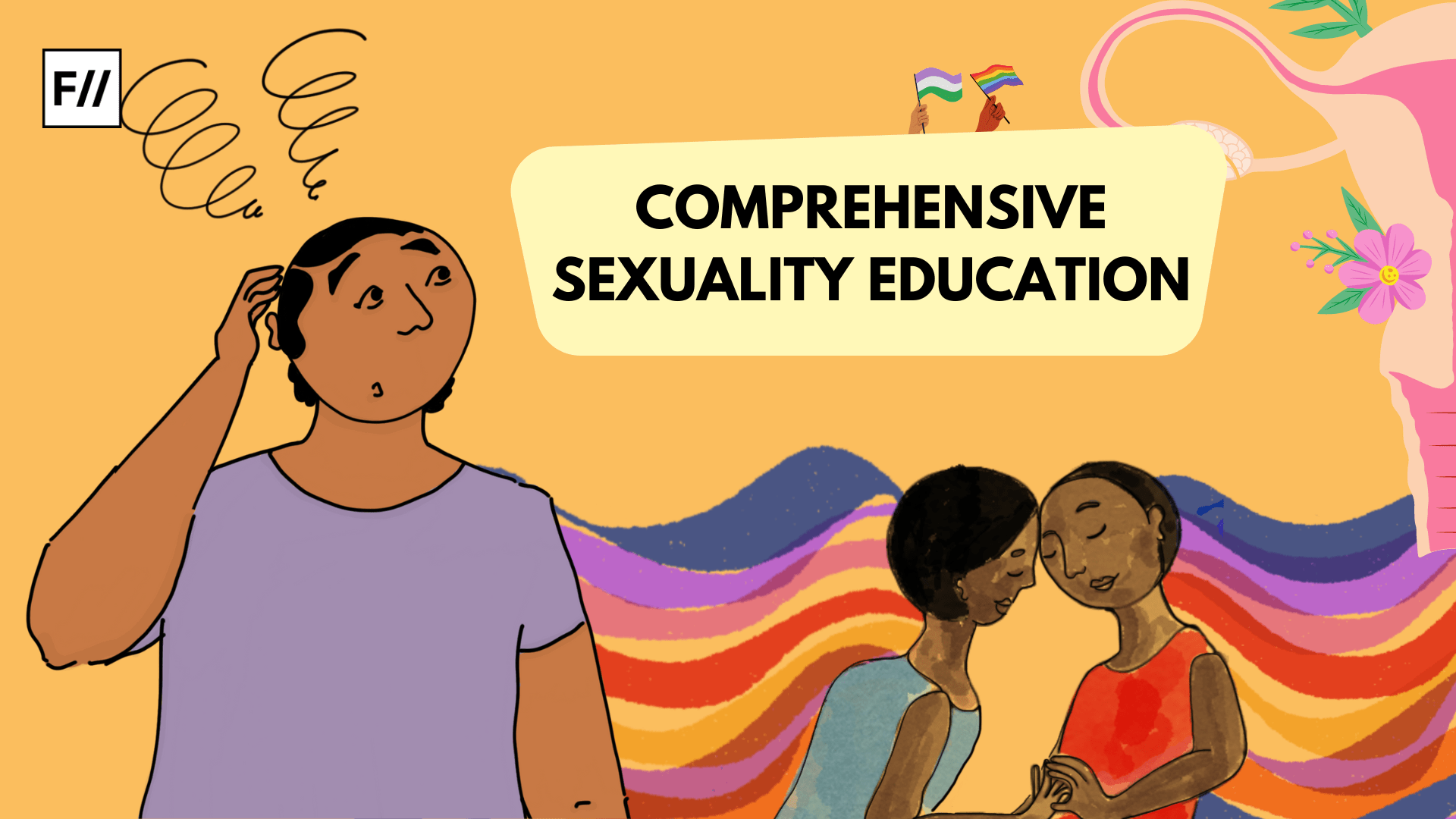
The Supreme Court could have used this as an opportunity to strengthen the demand for a national Comprehensive Sexuality Education (CSE) framework and emphasised on the importance of Sexual and Reproductive Health and Rights (SRHR). Instead, it chose to abide by the long-standing understanding of sex as not being an activity of pleasure but a duty to procreate.
Justice protects but judge rejects
In this case of Y.K. versus Government of NCT of Delhi, the complainant met the petitioner on a matrimonial website in 2022 and that he established physical relations with her on multiple occasions during their meetings in Delhi and Dubai on the false promise of marriage. The complainant has also alleged that the petitioner recorded intimate videos of them and threatened to circulate them if she resisted. It was much later that the complainant found out that the petitioner married for the second time in 2024.
Amidst the web of these allegations of lies and deception, Justice BV Nagarathna raised the question of why a thirty-year-old woman chose to visit a man she met on a matrimonial website and intended to marry in Dubai before marriage. She said, ‘She should not have gone before marriage if she was so strict about it.‘ Strangely, the Court does not consider meeting on the day of the marriage in front of the holy fire for the first time an oddity and accepts it as the reality of many marriages, especially in India.
Strangely, the Court does not consider meeting on the day of the marriage in front of the holy fire for the first time an oddity and accepts it as the reality of many marriages, especially in India.
While she was right in advising that trust must not be bestowed blindly, her condition of earning it was a marriage ceremony as she warned, ‘You must be very careful, nobody should believe anybody before marriage. This was premised on the understanding that, in her own words, “before marriage a boy and a girl are strangers. Whatever may be the thick and thin of their relationship.‘
The case had come to the Supreme Court after the Sessions Court and the Delhi High Court had dismissed the petitioner’s bail applications. The High Court held that the petitioner’s promise of marriage was false from inception as he was already married and had married again in 2024.
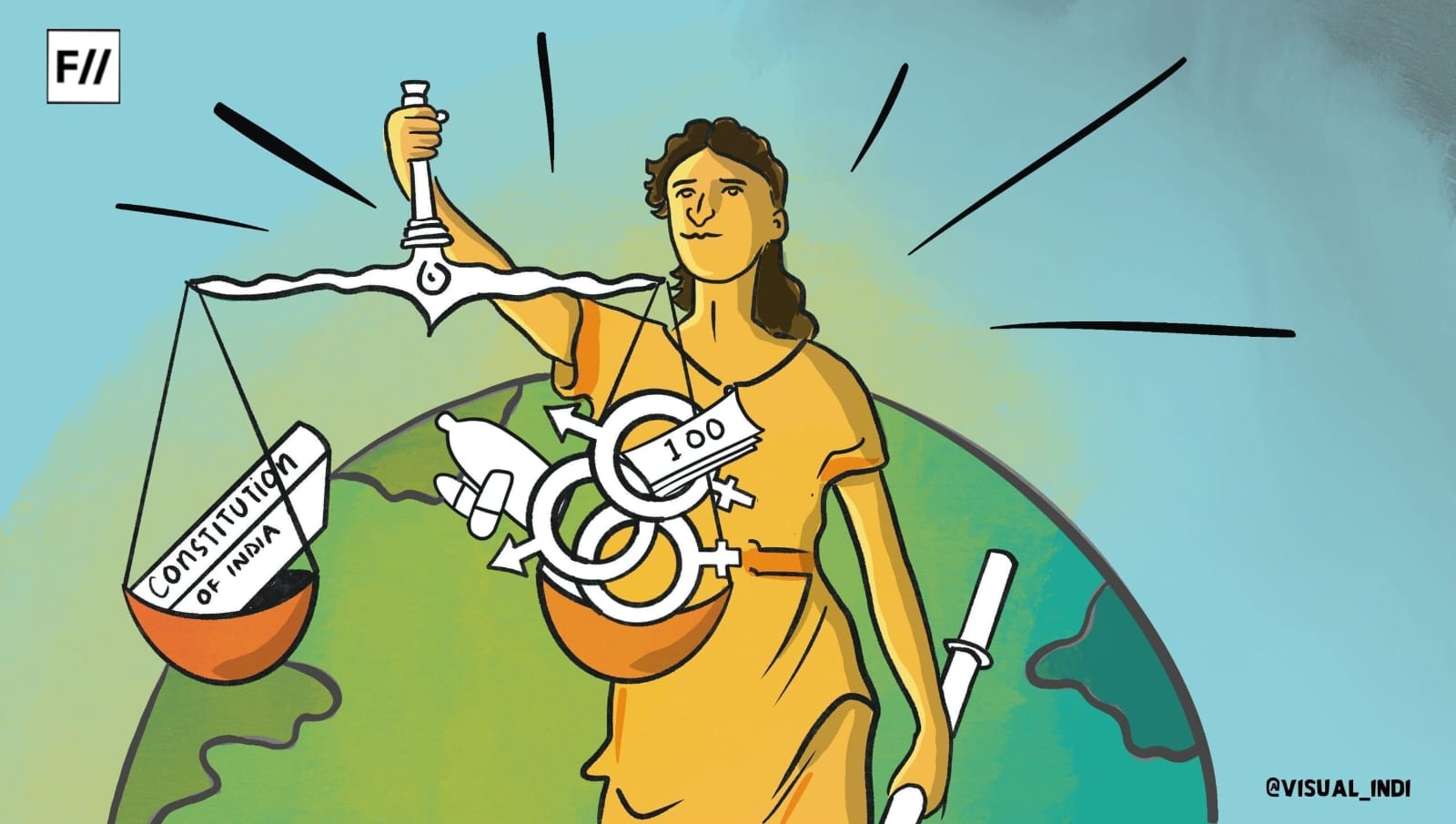
The sincerely contested fact of this case is why it did not fit the criminal code Bharatiya Nyaya Sanhita, 2023’s Section 69 which holds sexual intercourse, consent for which was obtained on a false promise of marriage, with no intention of fulfilling it, as a criminal offense in India. Given that the crime is punishable for up to ten years of imprisonment, the courts have exercised restraint in its application by making a distinction between a simple breach of promise to marry where the intention was genuine and a fraudulent scheme to cause misconception from the beginning. The petitioner in question already had a wife and he married another one, all while keeping the complainant in the dark. This is indeed what the High Court took notice of when it emphasised that the promise of marriage was vitiated, made in bad faith and without intention to marry.
However, Justice Nagarathna ignored the black letter of law to shift the burden of consent violation and the incidence of sexual abuse on the complainant by remarking, ‘She should not have gone before marriage if she was so strict about it….These are not cases which are to be tried and convicted when there is consensual relationship‘.
Strangers before marriage, best friends after
The eighteenth birthday is when an individual magically transforms into a responsible and adequately literate human being overnight and is qualified to vote, obtain a driver’s license, open a bank account etc. Interestingly, it is the age when women become eligible to marry in India, but not men because they require an extra three years of preparation to catch-up with the “matured” female race.
It is a logic as absurd as the expectation of being willing and knowing what to do when establishing physical relationships with the spouse on the first night, regardless of how well you know of them or what it entails. The popular belief is that women must ‘save themselves for marriage‘ and that entails being a virgin and hence, “pure” and unknowing. In this system, the bodies of women are treated as a currency and by decisively integrating theology with biology, misinformation regarding virginity has been passed down through generations.
The popular belief is that women must ‘save themselves for marriage‘ and that entails being a virgin and hence, “pure” and unknowing.
This was the case in point when up until 2013, the two-finger test, was used in India to determine whether a woman was raped or not. It was a medically accepted and required assessment and this reliance on whether the hymen tore or not, historically disenfranchised many women from fighting for justice. The Supreme Court banned it and the Criminal Law (Amendment) Act of 2013 prohibited it mandating that the sexual history of a victim is irrelevant to the present case. Yet, in the case of Jharkhand versus Shailendra Kumar 2022, the Court had to reiterate this law as the practice continued.

It must be clarified that there is more to physical relationships between individuals than penal-vaginal intercourse, and it is a personal right to decide when, whether, with whom and what extent one wishes to be sexually active. Several factors influence how people perceive sexual and romantic relationships and intimacy. This in turn, has a deep influence on how the self, marriage and family is pictured. Outlook India reported that nearly 13% of survey participants who openly admitted to having had premarital sex said that they had more than nine partners before marriage and Tamil Nadu emerged as the state with the highest prevalence of premarital sex at 60% in India.
With the plurality of sexual identities, and growing acceptance and opportunities to explore in the present age, it is critical to “achieve” identity during adolescence to successfully gain the virtue of fidelity in adulthood. Psychoanalyst Erik Erikson’s Stages of Development theory brilliantly described it as the ability to remain true to oneself to be able to commit to others. This does not necessarily require exploring sexual pleasure before marriage but it remains a plausible factor as it may affect one’s self-esteem and self-concept.
Sex positivity in the judiciary: expectation versus reality
Cases such as Y.K. versus Government of NCT of Delhi should have become precedents for SRHR and consent education. Instead, they become headlines and strengthen rigid social norms. The failure to distinguish between popular and constitutional morality raises questions on the extent to which judicial discretion can be exercised and undermines public trust in the institution.
The failure to distinguish between popular and constitutional morality raises questions on the extent to which judicial discretion can be exercised and undermines public trust in the institution.
The bench candidly accepted that they may be called ‘old-fashioned‘, however the debate goes beyond that of ‘generational gaps‘ and the understanding of contemporary societal undercurrents. It is about the right to exercise one’s sexual autonomy amidst moral policing and victim-blaming by the very institution that swears by impartiality. The history of how homosexuality was decriminalised in India is a testament to how real sense is required to reevaluate personal conscience and the majoritarian voice to do the judicial duty one is entrusted with.
Conclusively, there is more to justice than what is done or what is seen to be done. Justice is about creating conditions that are better than when the need for it arose. It is about redefining progress to mean more than growth by reworking the social structures and giving due credit to historical struggles. Moreover, the idea is not to dismiss cultural practices and beliefs but to negotiate, rationalise, and compromise with them to meet the common goal of living dignified and empowered lives.
About the author(s)

Second year student of Media Studies at CHRIST (Deemed to be University), BRC, Bangalore. A trained Kathak dancer, theatre artist and political nerd.



What do you expect from her when the CJI is changing the gender handbook because he considers it Harvard-oriented. Eyeroll.