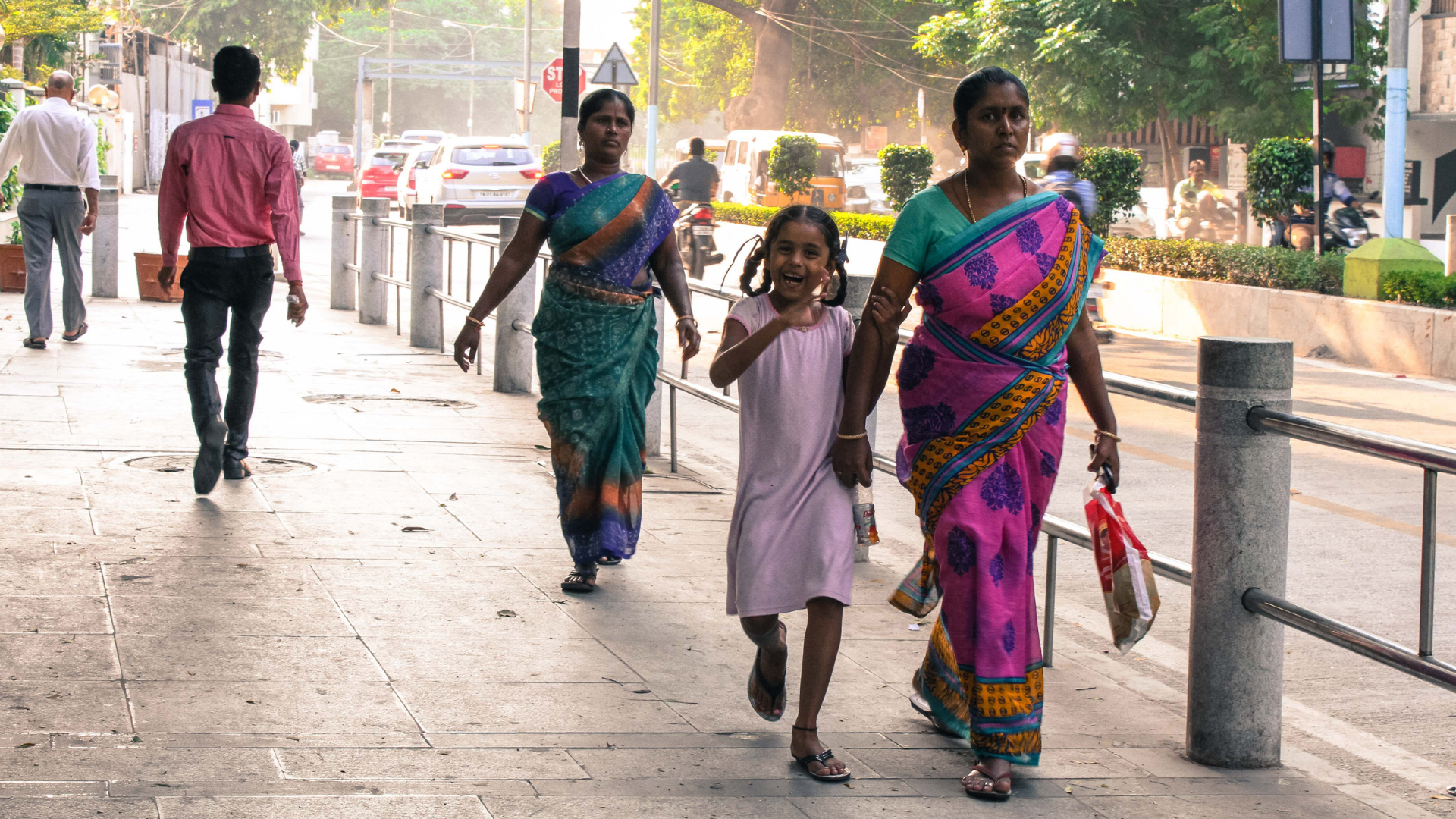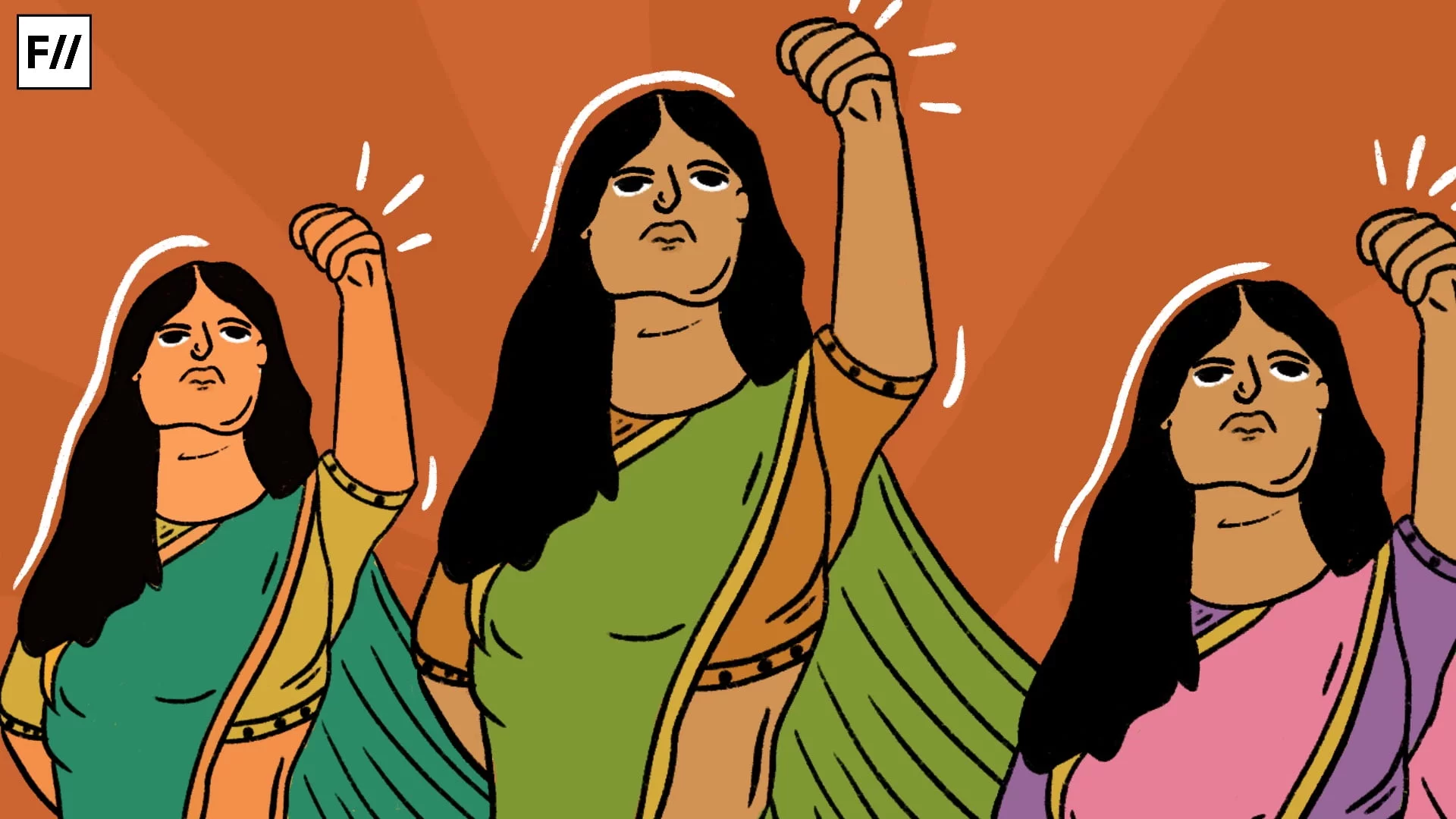
On 2 March 2013, around 200 women from Konar village near Sasaram in Bihar’s Rohtas district launched a quiet revolt that would go on to alter the state’s political future. For decades, they had lived through the same cycle: men spending their day’s wages on liquor, nights erupting with violence, and families sinking deeper into poverty. They clung to the fragile hope that their children might escape this life of addiction and fear. But when they began seeing their own children indulging in the cheaply available liquor pouches strewn across the village, something snapped. The future they had clung to was collapsing before their eyes. Enraged, the women marched together, surrounding liquor shops, destroying bottles worth nearly one lakh rupees, and attacking the men who tried to stop them. Their demand was simple and final: choose our dignity, or choose liquor. “The sale of liquor will not continue at the cost of our honour” became the rallying cry for the women. (Zumbish 2019).
As the protests gained momentum, Sunita Devi, a grassroots organiser and founder of the Pragatisheel Mahila Manch, helped channel this outrage into a broader movement. What began as a small village uprising soon spread across Bihar, drawing thousands of women behind a collective cause that neither they nor the state’s political establishment could ignore.
“I was only 14 or 15 when I got married,” said Baby Kumari, a domestic abuse survivor and ardent supporter of prohibition. “My husband would waste every rupee he earned on alcohol, and if I didn’t give him money, we would fight. He would beat me up and snatch it. ”.
Nitish Kumar’s Promise and the Women’s Vote Bank
While campaigning for the 2015 state election, Chief Minister Nitish Kumar pledged that, if re-elected, he would impose a liquor ban. The promise soon became central to the Janata Dal United’s (JDU) appeal among its expanding women voter base. According to multiple analyses and election reports, women voted at 60.48%, significantly higher than men at 53.32% (Sharma 2020). Political analysts such as Md Asghar Khan (2025) link this turnout gap to Nitish Kumar’s long-term, women-focused welfare strategy, from strengthening self-help groups to promising prohibition.
At the heart of the government’s justification for prohibition lay the claim that restricting alcohol would enhance safety for women. Several reports suggested that violence fell after prohibition.
“Just before the 2015 Assembly elections, Kumar promised to bring a prohibition law. A hope was awakened among women, and Kumar benefited from this,” said Sunita Devi (Ray 2023).
After securing re-election with overwhelming support from women, the Chief Minister moved quickly to fulfil his promise. In April 2016, the government first imposed a partial ban on country liquor, which soon expanded into a complete statewide prohibition. Later that year, Bihar enacted the Bihar Prohibition and Excise Act, 2016, introducing stringent penalties, imprisonment provisions, and collective fines.
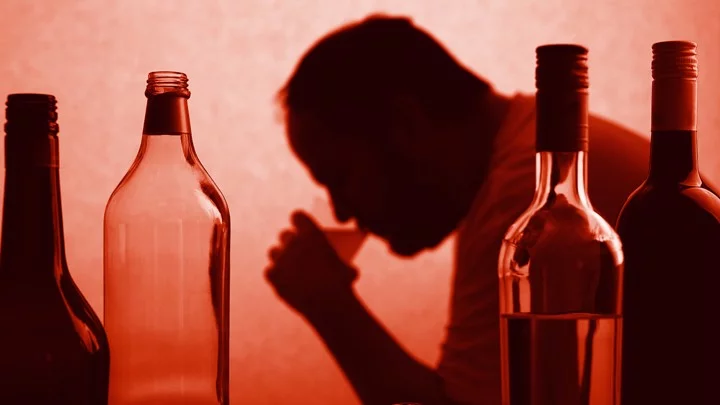
Given how prohibition has continued to shape Bihar’s electoral landscape, it becomes essential to ask whether the promises that helped create and solidify women as a political bloc were truly fulfilled. Did the ban protect the women who fought for it, or did its gains remain uneven across caste, class, and rural–urban lines? Did it strengthen household well-being, or merely shift burdens in new ways? To answer these questions, we must move beyond promises and political rhetoric and examine what prohibition actually changed in the everyday lives of Bihar’s women.
At the heart of the government’s justification for prohibition lay the claim that restricting alcohol would enhance safety for women. Several reports suggested that violence fell after prohibition. A quasi-experimental study published in The Lancet Regional Health (2024) estimated that the 2016 ban prevented roughly 2.1 million cases of intimate-partner violence and found reductions in frequent alcohol consumption (as cited in Business Standard 2024). Yet official crime statistics alone cannot establish causality. Self-reported survey data from NFHS-4 (2015-2016) (2017) show extremely high prevalence of spousal violence in Bihar, often comprising 40–43% of recorded crimes against women. There is also a substantial reporting gap. Researchers rely on survey-based methods, and changes in crime data may reflect shifts in reporting and policing rather than actual reductions in violence.
“Our fight against alcoholism must have curbed instances of eve-teasing and hooliganism, but women still have stories of suppression,” said Lalsa Devi, a resident of Karwandia (Zumbish 2019). “Violence has returned to my house, but it is not as common in all households as before” (Zumbish 2019).
For nearly a decade, the political case for prohibition rested on the idea that women’s welfare is family welfare. But as the policy unfolded, illicit liquor tragedies surged. Instead of eliminating alcohol-related harm, the ban appears to have pushed it into unregulated and more dangerous spaces.
“They say it has been banned, but the people selling it won’t stop,” said Lalita Devi, whose husband died after consuming toxic liquor (Zumbish 2019). “Alcohol will never be stopped in Bihar” (Zumbish 2019).
Uneven Outcomes
Several studies indicate that prohibition initially increased household savings and altered spending patterns. The Asian Development Research Institute (2016) reported increases in purchases of food, clothing, furniture, and vehicles in the months after the ban (as cited in The Indian Express 2018). The same report estimated that households could save approximately ₹440 crore per month. Women said money once spent on alcohol was redirected to groceries and children’s education.
“A lot of money that used to get wasted is now coming home,” said Dukhiya Devi of Yarpur slum in Patna (Zumbish 2019).
However, these gains were uneven. The manufacture of country liquor had long provided a survival livelihood for marginalised castes, particularly Musahar communities, where women often participated in brewing mahua. Prohibition abruptly removed this income without alternatives. “I do not have food in my belly,” said a Musahar woman. “What else can I do? Beg?”
For nearly a decade, the political case for prohibition rested on the idea that women’s welfare is family welfare. But as the policy unfolded, illicit liquor tragedies surged.
Enforcement data reveals disproportionate criminalisation. Data compiled by prison officials found that of 122,392 arrests under the prohibition law, 67% were from SC, ST, and OBC communities, with SCs accounting for 27.1% of arrests despite reported increases of about 16% of the population (as cited in The Indian Express 2018).
Taken together, prohibition reduced certain harms while producing new ones, especially for the poorest and most criminalised communities. To understand whether the policy fulfilled its promises, the perspectives of feminist scholars, activists, and grassroots women must be considered.
Investigations by Zumbish (2019) and Kumar and Jafri (2025) document women’s ambivalence. Activists like Sudha Verghese praised the reform as transformative, yet her work also shows severe livelihood loss in Musahar settlements (Joshi 2019). Sunita Devi echoed this duality: “We were not against prohibition. We were against alcoholism… illegal liquor trade has taken its place” (Kumar, 2023). Feminists such as Kavita Krishnan criticised the punitive enforcement, arguing that carceral approaches cannot substitute for structural gender justice (TNN 2017). Meanwhile, many Dalit women remained supportive, insisting they did not want prohibition to end but to be enforced fairly. SHG leaders raised concerns about the lack of alternative livelihoods, while human rights groups highlighted caste injustice.
Prohibition in Bihar was embraced by women with extraordinary hope, strong enough to shape multiple elections, including the 2025 Vidhan Sabha elections. Yet this mandate demands scrutiny. On safety, declining violence claims cannot be taken at face value without survivor-centred reporting and transparent data. On family welfare, illicit liquor has created new risks that undermine the promise of stability. Economically, savings coexist with a costly black market that pushes alcoholism underground rather than erasing it.
The deepest fault line lies along caste and class. Livelihood losses, mass arrests, and cultural erasure turned prohibition into a site of inequality. A policy launched “for women” cannot succeed while sidelining the most vulnerable women it affects.
Ultimately, prohibition created a powerful women’s vote bank, but its outcomes remain uneven and deeply structured by inequality. In the name of women, there is no picking and choosing. A promise to women must protect every woman, completely, consistently, and without exception.
References:
Bali, Meghna. 2025. “The Deadly Price of the World’s Biggest Prohibition Experiment.” Produced by Ellie Grounds. ABC News. ABC. March 11, 2025. https://www.abc.net.au/news/2025-03-11/india-deadly-prohibition-state-bihar/105010860 ?.
International Institute for Population Sciences. 2017. “National Family Health Survey (NFHS-4) (2015-2016).” The Hindu Centre. Mumbai: Ministry of Health and Family Welfare (GOI). https://www.thehinducentre.com/multimedia/archive/03222/India_compressed_3222741a.pdf.
Joshi, Hridayesh. 2019. “Nitish Kumar’s Prohibition Era and Its Political Fallout.” Newslaundry. Newslaundry. April 5, 2019. https://www.newslaundry.com/2019/04/05/bihar-prohibition-elections-2019-nitish-kumar ?.
Khan, Md Asgar. 2025. “How Nitish Kumar Built the Most Powerful Women Vote Bank in Bihar.” Outlook, November 18, 2025. https://www.outlookindia.com/elections/how-nitish-kumar-built-the-most-powerful-women-vote-bank-in-bihar?.
Khan, Mohd Imran. 2024. “Why Most Women in Bihar Want Liquor Ban to Continue.” The Federal. The Federal. October 12, 2024. https://thefederal.com/category/states/north/bihar/bihar-women-liquor-prohibition-nitish-kumar-prashant-kishor-149848 ?.
Kumar, Vipul, and Alishan Jafri. 2025. “Poverty & Joblessness Drive Bihar’s Bootleggers, as Poisoned Brews Kill & Blind the Poorest in a Supposedly Dry State.” Article 14 (blog). March 17, 2025. https://tribe.article-14.com/post/poverty-joblessness-drive-bihar-s-bootleggers-as-poisoned-brews-kill-blind-the-poorest-in-a-supposedly-dry-state-67d78ac8dcb3a?.
Kumar, Umesh Ray. 2023. “Bihar’s Electoral Secret: How Nitish Kumar Created Women’s Vote Bank with Women-Centric Policies.” Outlook, October 1, 2023. https://www.outlookindia.com/amp/story/national/bihar-s-electoral-secret-magazine-321538 ?.
Press Trust of India. 2024. “Bihar Alcohol Ban Prevented 2.1 Mn Cases of Partner Violence: Lancet Study.” Business Standard. Business Standard. May 26, 2024. https://www.business-standard.com/india-news/bihar-alcohol-ban-prevented-2-1-mn-cases-of-partner-violence-lancet-study-124052600105_1.html.
PTI. 2018. “Studies Show Bihar Turning to Expensive Clothes, Honey, Cheese after Liquor Ban.” The Indian Express. The Indian Express. June 17, 2018. https://indianexpress.com/article/cities/patna/studies-show-bihar-turning-to-expensive-clothes-honey-cheese-after-liquor-ban-5221285/.
Sharma, Harikishan. 2020. “Bihar Elections 2020: On Rise, Women Voters Outnumber Men.” The Indian Express. The Indian Express. October 24, 2020. https://indianexpress.com/elections/bihar-elections-2020-on-rise-women-voters-outnumber-men-6856533/.
Singh, Abhay. 2025. “Nine Years into Liquor Ban, State Logs 190 Hooch Deaths.” The Times of India. The Times Of India. April 4, 2025. https://timesofindia.indiatimes.com/city/patna/nine-years-into-liquor-ban-state-logs-190-hooch-deaths/articleshow/119986482.cms?.
Singh, Santosh. 2018. “Bihar’s Prohibition Crackdown: Two Years Later, OBC, EBC, SC, ST Face the Brunt.” The Indian Express. The Indian Express. May 29, 2018. https://indianexpress.com/article/india/bihars-prohibition-crackdown-two-years-later-obc-ebc-sc-st-face-brunt-nitish-kumar-liquor-ban-5193755/.
State Government of Bihar. 2016. The Bihar Prohibition and Excise Act, 2016. Vol. Act 20 of 2016. https://prsindia.org/files/bills_acts/acts_states/bihar/2016/2016%20Bihar%2020.pdf .
TNN. 2017. “Women’s Body Condemns Draconian Alcohol Laws in Bihar.” The Times of India. Times Of India. April 16, 2017. https://timesofindia.indiatimes.com/city/ranchi/womens-body-condemns-draconian-alcohol-laws-in-bihar/articleshow/58199727.cms? .
Tripathi, Piyush. 2018. “Booze Ban: People Saving Rs 5,280 Crore Every Year.” The Times of India. The Times Of India. April 4, 2018. https://timesofindia.indiatimes.com/city/patna/booze-ban-people-saving-rs-5-2k-crore-every-year/articleshow/63617158.cms ?.
Zumbish. 2019. “For Bihar’s Women, Benefits of Prohibition Wane as Alcoholism Persists in Their Villages.” The Caravan, March 20, 2019. https://caravanmagazine.in/gender/bihar-women-prohibition-benefits-wane-alcoholism-persists.