The Quit India Movement led by Mahatma Gandhi marked a major turning point in India’s freedom struggle against British rule. However, while people were mobilising on the streets to push back against colonial rule, a different kind of resistance was brewing behind the high walls of the Lahore jail.
Without violence or the use of any weapons, they staged a bold act of resistance in 1942, one that has largely been forgotten 84 years on, but deserves recognition.
Lahore jail housed several women and girls, as well as women freedom fighters, at the time. However, these women showed that their resistance efforts would not be suppressed only because they were prisoners. Without violence or the use of any weapons, they staged a bold act of resistance in 1942, one that has largely been forgotten 84 years on, but deserves recognition.
This act of resistance was the hoisting of the Congress flag within the prison walls. The women of Lahore jail had secretly stitched a flag using whatever fabric they could gather inside the prison, including their own clothes, after their demands for better prison conditions for political prisoners were not heeded. In the darkness of the early dawn on October 9, 1942, they stacked their wooden charpoys one on top of the other and created a platform on which to climb. They then hoisted the Congress flag in Lahore jail’s courtyard, replacing the Union Jack.
As the flag stood tall, the women began a dharna near the prison gates and raised their voices in a fierce chant: ‘Fasi de takhte pe chadh ke geet vatan de gavenge (We will stand at the gallows and sing praises of our homeland)’, among other resistance chants and songs.
As the flag stood tall, the women began a dharna near the prison gates and raised their voices in a fierce chant: ‘Fasi de takhte pe chadh ke geet vatan de gavenge (We will stand at the gallows and sing praises of our homeland)’, among other resistance chants and songs. The words echoed across the prison, drawing armed guards who stormed into the courtyard. But the women remained resolute.
Subhadra Khosla, a fighter involved in this act of resistance, told writer and filmmaker Sagari Chhabra in an interview for NewsClick that the police were called and asked to shoot at the women and children staging the dharna. She further recalls that the women began to sing a resistance song, upon hearing which, the police men were moved to tears and refused to shoot, declaring that they wouldn’t harm fellow Indians.
The women behind the flag
Who were these women who dared to replace the Union Jack in Lahore jail in 1942? Hamaara Itihaas Archives of Freedom Fighters, curated by Sagari Chhabra, answers just this question by preserving their names and stories. Among the women who raised the flag that day were Savitri Ramkishan, Pushpa Gujral, Freda Houlston Bedi, Subhadra Khosla, Satyavati Devi, and Nirmal Kant.
Satyavati Devi was a freedom fighter from Punjab. She had been arrested on August 26, 1942, along with her three young children. During her time in prison, she organised protests over the poor conditions political prisoners were forced to live in. On October 9, 1942, she was instrumental in rallying fellow prisoners to replace the Union Jack.
Savitri Ramkishan was jailed alongside her young children, as well, and was pregnant at the time of her arrest and incarceration. Pushpa Gujral (mother of former Prime Minister Inder Kumar Gujral) was a dedicated freedom fighter. Post-independence, she focused on humanitarian work and co-founded a trust in Jalandhar, the Nari Niketan, with her husband. Nari Niketan supported women who had been abandoned or widowed during the Partition. The trust is operational to this day and now functions as an organisation for abandoned, destitute, and underprivileged children
Then there was Freda Houlston Bedi, an Englishwoman. She married a Sikh intellectual, Baba Pyare Lal, and lived in India. Bedi found herself on the other side of the colonial divide — an Englishwoman imprisoned by the British Raj, singing songs of resistance for India’s independence in a Lahore prison.
However, the youngest freedom fighter among these women was Subhadra Khosla. Born in 1928, she grew up in Lahore, in a family dedicated to the freedom struggle. Khosla’s parents were heavily involved in resistance activities, and her brother, Krishna Kant, would later serve as the Vice-President of India.
At just 12 years old, Subhadra was arrested while picketing at Anarkali Bazaar in Lahore and imprisoned for over a year alongside her mother, Satyavati, making her the youngest freedom fighter to be arrested during the independence struggle.
At just 12 years old, Subhadra was arrested while picketing at Anarkali Bazaar in Lahore and imprisoned for over a year alongside her mother, Satyavati, making her the youngest freedom fighter to be arrested during the independence struggle. During Partition, she and her family helped provide shelter and transport to refugees in Lahore before migrating to Delhi, where they continued to serve the nation.
Preserving hidden histories
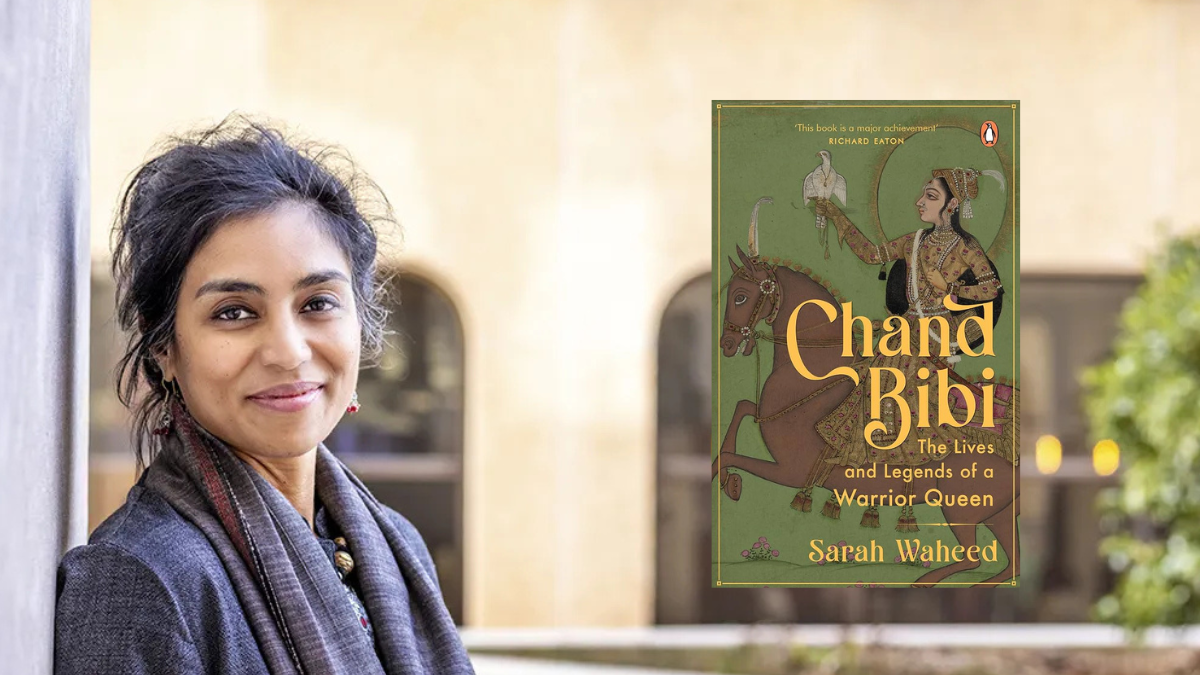
Discourse surrounding the freedom struggle typically focuses on the well-known leaders, mass movements, and the contributions of men. However, the stories of the women of the Lahore jail resistance, like those of countless other unsung heroines, are buried beneath those mainstream histories. That was until Sagari Chhabra decided to change that in the 90s and created a documentary titled Asli Azaadi. She also began to document these histories, work that ultimately made Hamaara Itihaas possible.
Text found at Hamaara Itihaas regarding the Lahore jail resistance reads, ‘Even as armed forces stormed in and the jail whistle screamed, they (women) remained unshaken – chanting, fasting, and flying the flag of freedom.’ The women of Lahore jail remind us that resistance comes in many different forms. Sometimes it looks like taking to the streets, while other times it’s a group of women making a flag from their clothes, hoisting it, and singing resistance songs in front of armed guards.
Today, the women of the Lahore jail resistance present an uncomfortable question: How many more such stories remain untold? How many Satyavatis, Savitris, Pushpas, Fredas, and Subhadras have we forgotten?
Their story matters today because it challenges us to reconsider what the freedom struggle truly looked like. Independence wasn’t achieved by well-known men alone, but also by the women who fought just as fiercely but were sidelined by history. Today, the women of the Lahore jail resistance present an uncomfortable question: How many more such stories remain untold? How many Satyavatis, Savitris, Pushpas, Fredas, and Subhadras have we forgotten?
About the author(s)

Gunn Bhargava (she/her) is a Political Science undergraduate at the University of Delhi and a feminist writer focusing on gender justice, power, and human rights. Her work engages with feminist media, pop culture and political analysis, drawing from her experience with platforms such as Feminism in India, Writing Women and The Women Story. She is keen on contributing to transnational feminist conversations through progressive journalism.