“I am not afraid of storms, for I am learning how to sail my ship.” – Louisa May Alcott
But what if they never let you near the water?
What if women were allowed to write? Not one woman, but the millions of women who were systematically excluded from formal civic and philosophical discussions. What if they had the chance to think and write without having to manage homes in precarious conditions? What if they had a room and an afternoon with nothing to do but think, as Descartes did?
The Architecture of Exclusion
This exclusion was inherent in the way society was structured. Women were not allowed to enter Oxford University until 1920. They were not allowed to get degrees until 1948. They would take exams and sometimes even score higher than men, but only the men would still get fellowships and awards. In France, important ideas were discussed in schools that only men could attend. It was not until 1985 that one of these schools, the École Normale Supérieure, started accepting women. In Germany, women could not enter university until 1908. And this is the same place where famous philosophers like Kant and Hegel developed their ideas.
Gaps in the Wall
There were some women who were recognised in philosophy, but they were exceptions. They usually came from families or had connections to powerful men. Christine de Pizan wrote a book called “The Book of the City of Ladies”. She was able to publish at that time because her father had connections to the French court. Émilie du Châtelet translated Newton’s Principia Mathematica into French. However, she was remembered by her colleague Voltaire as “a great man whose only fault was being a woman”.
Mary Wollstonecraft wrote a book called “A Vindication of the Rights of Woman”. Yet, her philosophy was ignored for a century because her posthumous memoir showcased a scandalous personal life.
This exclusion was inherent in the way society was structured. Women were not allowed to enter Oxford University until 1920. They were not allowed to get degrees until 1948. In India, hierarchies of gender, caste and social class result in intellectual exclusion.
These women were able to succeed because they had the freedom to think and access to libraries. This freedom was built on the labour of other women who managed their homes. Women like Christine de Pizan and Émilie du Châtelet were able to think and write because, being from the upper class, other women took care of their households.
In India, hierarchies of gender, caste and social class result in intellectual exclusion. However, India also has a history of women’s intellectual contributions. Gargi Vachaknavi engaged in debates with Yajnavalkya in the Brihadaranyaka Upanishad. Similarly, the Therigatha, a collection of verses written by Buddhist nuns dating back to the 6th-3rd centuries BCE, remains one of the oldest surviving literary works written by women in the world. These women wrote about freedom, desire and the body in a way that was distinctly existentialist centuries before Western philosophers did.
During the Bhakti period, women like Mirabai, Akka Mahadevi and Lal Ded used religion to critique norms. Mirabai rejected her marriage and caste affiliation to pursue a divine love ethic, while Akka Mahadevi wandered in public spaces naked to challenge social norms. Lal Ded’s ideas survive in tradition among the working class.
Formal philosophical traditions in India, such as Vedanta and Nyaya, were largely male and Brahminical. They claimed to have universal knowledge while denying access to women and low-caste individuals.
Colonial Doubling and Institutional Resistance
The arrival of colonialism did not eliminate the subjugation of women, but it imposed Victorian patriarchy on existing structures. This reframed the oppression of women as a sign of backwardness and placed Indian women at the centre of conflict between colonial authorities and Indian men.
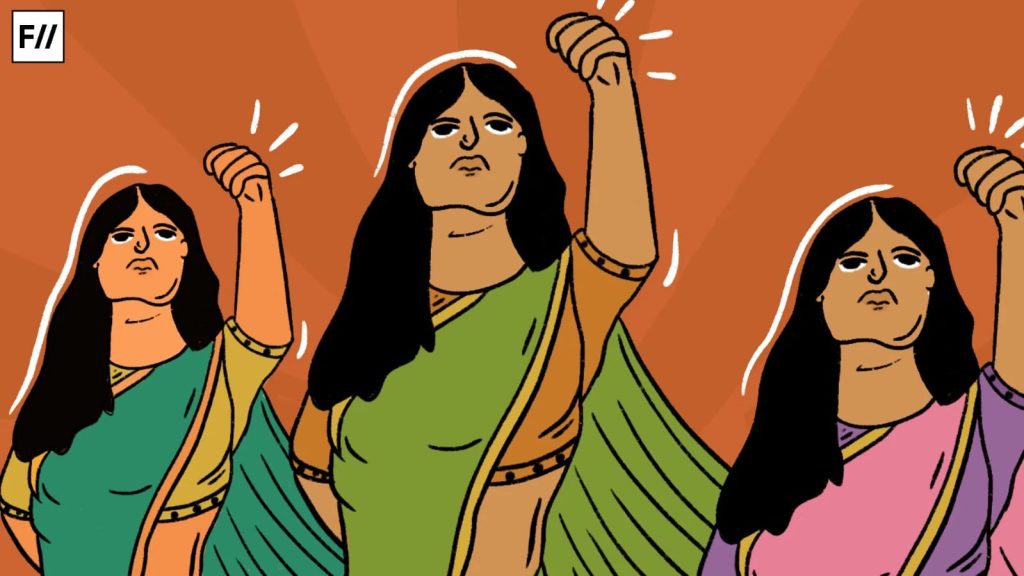
In response to this, Savitribai Phule opened the school for girls in Pune in 1848 despite facing physical threats and public shame. She and her husband, Jyotirao Phule, created institutions that educated women and challenged the Brahminical social order. Their work was a precursor to Dalit feminism. Phule remains largely invisible while Kant is widely taught.
This continues to this day. A study published by the American Philosophical Association in 2019 found that women hold 21% of tenured philosophy positions worldwide. A study published in the Wiley Online Library found that 97% of philosophy instructors for introductory courses are men. Indian women make up more than 40% of PhD enrollments but they hold few positions in fields that inform civic, policy and ethical theory.
The Epistemic Cost
When we prioritise bodies and lived experience, our philosophy changes. The Western tradition, from Plato to Kant, has seen the mind as separate from emotions, but what if our starting point was the body? What if we considered what it feels like to be pregnant, to raise children or to navigate spaces at night? Our fundamental theories about ethics, the state and justice would develop differently.
Care ethics emerged in the 1980s. It critiqued Kant’s notion of a decision-maker, arguing that moral and political life involves dependence. Standpoint epistemology argues that our social position determines how we see the world. When we create boundaries for who we consider a thinking subject, we create blind spots. For example, women’s health diagnoses differ significantly from men’s because female bodies have been systematically excluded from research. This is applied philosophy, determining which body is the subject of thought, and it can be a matter of life and death.
Ambedkarite feminists are creating thinkers who tackle the intersection of caste and gender. Economists at India’s gender budget cell are incorporating feminist insights into fiscal policy. Regionalist authors are generating intellectual work that exists beyond the scope of the English, but this work is often missed in broader philosophical contexts.
The core idea remains difficult to alter. The discourse where reason is mapped onto the male persona and emotions onto the female persona continues to push aside the logic of care and the wisdom of ancient practices. The library of our centuries of thought looks complete. Half the texts are missing because women were denied the chance to write. Philosophy’s current task is not to supplement but to rethink justice, reason and the state as if every human life were a valid starting point.
The library is incomplete, but the writing has begun.
References:
- Women in Philosophy – the Philosophers’ Magazine. The Philosophers’ Magazine –. https://philosophersmag.com/women-in-philosophy/
- Institut National D’études Démographiques (INED), F-75020 Paris, France; Aix Marseille Univ, CNRS, AMSE, Marseille, France. https://stephanebenveniste.com/wp-content/uploads/2025/02/Benveniste-2025-Noble-Lineage-and-the-Persistence-of-Privileges-in-Elite-Education.pdf
- Émilie Du Châtelet (Stanford Encyclopedia of Philosophy), https://plato.stanford.edu/entries/emilie-du-chatelet/
- German History in Documents and Images. https://germanhistorydocs.org/en/wilhelmine-germany-and-the-first-world-war-1890-1918/female-university-students-1908#:~:text=Abstract,women%20university%20admission%20in%201909.
- Homepage | AISHE | India. (n.d.). https://aishe.gov.in/
- Journal of Community & Applied Social Psychology, 35(1). https://doi.org/10.1002/casp.70036
- Google Arts Google Arts & Culture. https://artsandculture.google.com/asset/opening-of-the-first-school-for-girls-by-savitribai-phule-and-jyotirao-phule-malvika-asher/LAGLdJFS0eAbKw?hl=en
- Ley, M. (2023). Care Ethics and the Future of Work: a Different Voice. Philosophy & Technology, 36(1), 7. https://doi.org/10.1007/s13347-022-00604-5
- Women Making History | University of Oxford. (n.d.). https://www.ox.ac.uk/about/oxford-people/women-at-oxford

This article really made me think about how philosophy, which is supposed to question everything, has itself been shaped by exclusion. The idea that women didn’t lack intellectual ability but were denied time, space, and access is powerful. It’s not just about missing names in history—it’s about missing entire ways of thinking that were never allowed to emerge.
I found this deeply moving. The line about women not even being “allowed near the water” when it comes to intellectual freedom really stayed with me. It reminds us that silence is often created, not natural. How many voices, ideas, and philosophies have we lost because women were never given the opportunity to think freely?
I appreciate how this article connects global history with the Indian context—showing both the exclusion and the presence of women thinkers like Gargi and the Buddhist nuns. It’s a reminder that women have always thought, questioned, and contributed—we just haven’t always acknowledged it
This raises an important question:
If the philosophical canon was built through exclusion, how different would our understanding of knowledge and truth be if those silenced voices had been included?