Vantara, the 3,500-acre wildlife conservation centre initiated by Anant Ambani and backed by the billionaire Ambani family, is being widely hailed as a spectacular intervention in animal care and conservation in India. As one of the country’s largest animal rescue and rehabilitation centres, it is home to thousands of animals.
Importantly, the significance of Vantara lies not only in what it does, but equally in what it represents. Vantara is but a manifestation of where wildlife conservation in India is heading – away from ecosystem-first approaches and towards centralised corporate-led models. This has important implications for how we understand conservation itself. When looked at through an ecofeminist lens, however, Vantara ceases to be a mere rescue centre. Rather, it is a reflection of a broader transformation in how wildlife conservation is today institutionalised under the guise of philanthrocapitalism.
From ecosystems to enclosures
Wildlife conservation in India has traditionally been rooted in habitat protection, primarily through the creation of wildlife sanctuaries, reserves, and national parks. The emphasis was on preserving existing biospheres where animal and plant life can sustain themselves. Vantara operates differently — the emphasis is not on habitats, but on animals themselves. Rescuing, relocating, and housing animals within a human-controlled environment, where care is delivered at scale, is closer to what experts call ex-situ conservation, as opposed to traditional in-situ approaches.
There are clear advantages to such an approach. Intensive medical care and specialised treatment plans based on the individual needs of animals improve survival chances. This tailor-made care both increases life chances and aids faster rehabilitation. As such, in a landscape where ecosystems are under pressure from development activities, pollution, and deforestation, interventions such as Vantara can readily appear useful.
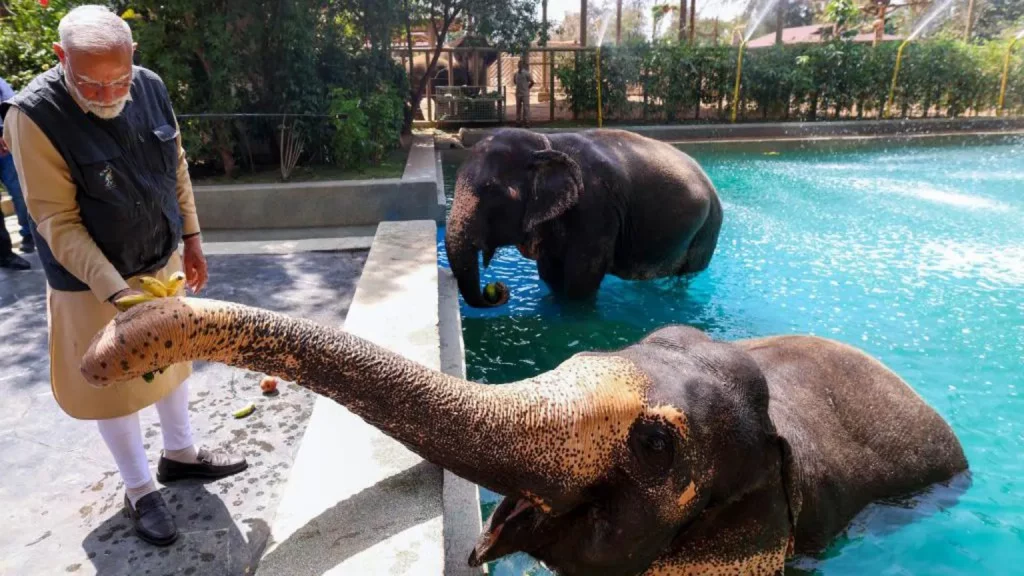
It is important to note that this model also reconfigures the relationship between animals and the environment. When conservation emphasises the management of animal bodies as opposed to focusing on habitat preservation, the focus shifts from sustaining animal life in its natural habitat to sustaining life in institutional enclosures.
However, ecofeminist critiques have long shown us how the reduction of animal bodies into manageable entities is detrimental to the animals themselves. The question, then, is not whether such care is valuable, but what it displaces – however advanced they might be, can facilities like Vantara meaningfully substitute for the habitats their animals were once accustomed to?
The role of scale and capital
Projects like Vantara are made possible by scale — of land, infrastructure, and capital. Few institutions, outside of large corporate entities and private billionaires, have the funds required to build and maintain facilities of this magnitude. This is where the idea of philanthrocapitalism becomes important. Private wealth is increasingly being used to address public and environmental issues, often through highly visible, large-scale CSR initiatives. In philanthrocapitalism, care is not separated from capital – it is organised through it.
At its core, philanthrocapitalism rests on the assumption that private wealth can effectively be utilised for public good, and that economic success and social responsibility are not only compatible but also mutually reinforcing. Vantara exemplifies this idea.
It is situated in and around the world’s largest petrochemical refinery at Jamnagar. Its scale allows it to position itself as a world-leading wildlife rescue centre, while its billionaire family backing lends it institutional authority and visibility far beyond traditional wildlife sanctuaries, national parks and reserves. This fundamental contradiction is difficult to ignore – the very structures of unsustainable industrial development are today positioning themselves as eco-warriors.
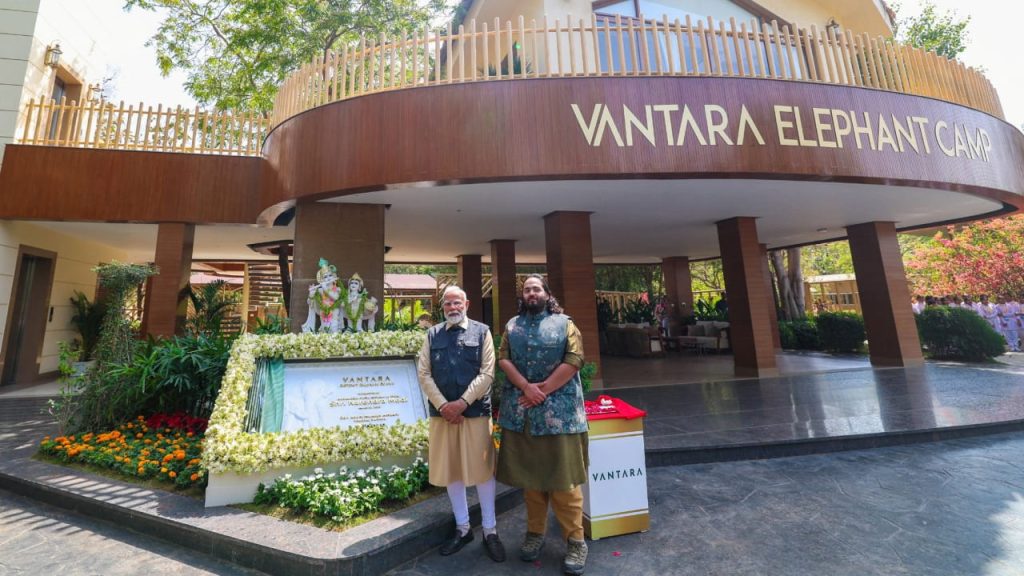
At the same time, Vantara raises questions about how conservation priorities are shaped by corporate players. When conservation depends on corporate capacities, decisions about what forms of life are protected, how they are managed and to which ends resources are allocated risk becoming concentrated within a relatively narrow institutional framework that operates with limited public oversight and outside state intervention.
This is particularly relevant in the context of Vantara, especially in the wake of recent allegations of illegal animal trafficking, poor welfare standards, and financial irregularities levied against it. However, on September 15, 2025, the Supreme Court accepted a Special Investigation Team’s (SIT) findings that, contrary to media reports, Vantara had complied with statutory requirements, closing the complaints against Vantara.
However, organisations that fall outside government accountability often come with their own sets of priorities. The role of scale and capital is thus not merely structural; it is also about how and by whom conservation priorities are defined.
Visibility, Aesthetics and the Spectacle of Care
A striking feature of Vantara is the publicity around it. Visuals of rescued elephants, big cats being rehabilitated, and million-dollar enclosures have circulated widely and shaped the project’s image in popular culture. This visibility, however, is not incidental. It plays a central role in how Vantara is perceived; in public discourse, Vantara appears as a space where care is not just practised, but made legible to a larger audience.
Vantara’s visibility has both positive and negative effects. It draws mass attention to animal issues and foregrounds the importance of conservation efforts in the public eye. At the same time, it produces a particular way of seeing conservation, specifically one that essentialises investment and the politics of scale. The focus shifts to what can be shown — rescued animals, aesthetically pleasing investment-heavy enclosures, and visually appealing content. Rescue here becomes a spectacle, emphasising aesthetics and visibility over accountability and genuine care work.
Less visible are the processes that underpin India’s wildlife crisis — the large-scale clearing of forests, mass deforestation, pollution and habitat loss we are seeing today are a direct consequence of reckless, ill-planned development projects, often led by the same institutional actors that run Vantara. The result is not a distortion so much as a reorientation: from the causes of ecological disruption to the management of its consequences. Vantara, then, is not a cure, but a symptom – it is a consequence of a system that actively produces harm even as it claims to remedy it.

Rethinking Conservation: What Remains at Stake
None of this is to say that Vantara is of no value. It provides essential care to animals who may not otherwise survive, plugging in a crucial gap in an already strained rescue landscape. But its growing prominence points to a paradigm shift in how wildlife conservation in India is increasingly being construed — it is being organised through centralised infrastructures, private capital and visible, large-scale interventions.
While Vantara does not replace traditional approaches, it does reshape the field — introducing new priorities, new forms of authority and new ways of understanding what it means to protect life. Thus, reading Vantara through an ecofeminist lens reminds us that the conservation of wildlife must not simply mean managing the ecological consequences of industrial development. Conservation, then, must also necessarily seek to reconfigure the systemic processes which produce widespread ecological harm in the first place.
Editor’s Note: An earlier version of this article didn’t mention the SIT findings, which stated that Vantara had complied with statutory requirements. The Supreme Court accepted the SIT’s findings and closed the complaints against Vantara. The article was updated on August 23, 2026, to incorporate this.
About the author(s)

Abhijay Rambabu (he/him) is a sociologist with a keen focus on digital, urban and cultural sociology. He researches and writes upon these topics, in addition his writings on ecology, inequality and critical caste studies.