My mother never called herself a feminist, but she was a staunch one. She never used words like ‘gender nonconforming’ or ‘patriarchy’. In Najafgarh, where we lived, such words belonged to English-speaking people on television panels, not to Tamil-Malayali women raising children in narrow lanes lined with judgment. But even without the language for it, my mother spent her entire life refusing to become the kind of woman society demanded of her.
She had short hair. Not the carefully styled short hair that urban women wear to signal sophistication, but practical, almost masculine hair. She had a rod inserted in her right arm and left leg after an accident at Chatrapati Shivaji Railways station, where she was working to pay for her education.
She wore my father’s shirts, faded pants, and sandals that would fail to hide her cracked heels. Her voice was husky and low due to an operation she had. A Carnatic singer once, she could not even speak louder without cracking her voice. She abused like the men in our house, who would often call her a man. Local rickshawalahs would confuse her for a drunk, loose woman. Relatives would whisper and sneer at her at the same time. Women in the neighbourhood would look at her with laughter, confusion, and would make remarks that I, as a child, found shameful. I always wondered why my mother was not like other women. Women who would cook, clean, and have long hair. For me and many others, she had failed at performing womanhood correctly. My brother, father, grandparents, and especially, I would try not to notice this.
Najafgarh notices these things.
It notices when women come home late. It notices when daughters laugh too loudly. It notices how much skin a woman shows, how softly she speaks, how obediently she lowers her gaze. It especially notices women who seem completely uninterested in conforming to the gendered roles. My mother was one of those women.
She did not know how to soften herself for society. She never walked carefully around male egos. She argued openly, laughed loudly, and occupied space with a kind of unconscious rebellion. There was no performance of delicacy in her. No effort to reassure people that, despite the shirts and short hair, she was still ‘proper’. She simply existed as herself, unapologetically, even when the world around her punished her for it. One of the first punishments came from us, her children, by shunning her from coming to our MCD schools so others would not make fun of her. She always wanted to attend school events and be more involved, but we would never allow it. Second, it came from her lover. Who would call her for money but would not stand up for her when she was in need. I remember packing our bags and shifting to a rented room. We always rented rooms, never a house. I saw my father wasn’t there for us, but my mother was. She did not know how to cook, but she bought bread for us to eat. We would eat that bread in disdain and discomfort.
As a child, I did not fully understand what I was witnessing. I only knew that my mother was different from other mothers.
The other women in the neighbourhood wore sarees or salwar suits in bright floral patterns. They gathered together on terraces in the evenings, discussing husbands, children, sex, desires, recipes, and gossip. My mother rarely joined them. Even when she did, she would make them uncomfortable. She was more comfortable with men, as they would see her as her equal. She would make friends with Malyalai migrant workers and hang out with them. Our family objected to this with the utmost fury. They hated how she could not speak Punjabi but was tweeting like a bird in her own mother tongue with these strange men. She was punished for this by insult and humiliation. As a queer child, it made me sad and terrified. I slowly started to understand her and built a better relationship with her.
Things changed when we moved out of Najafgargh, only to settle back here after 17 years. She was now living in a government accommodation where people recognised her for her job. My queerness at many times was protected by her government position. I remember being harassed by police once, and it was only once that I was a child of a Ministry of Home Affairs Director; they let me go.
Being queer does not exempt you from being a misogynist. I often found myself aligning with my brother and father when it came to her finances. Both unemployed men wanted to know the balance sheet of the family’s breadwinner. I found it strange. During one of those fights, I finally spoke out and yelled at them. I told my mother to do whatever she wants with her money. Even if she wants to burn it, she can. That was the first step towards my feminist praxis.
Years later, when I began understanding myself as non-binary, I realised how much of my resilience came from her.
Queer people often speak about “chosen family,” about finding safety outside blood relations. But I think less is spoken about the quiet inheritances that make queerness survivable long before we have the language for ourselves. Sometimes survival begins with simply watching someone refuse the world’s script. Sometimes liberation is inherited through gestures as small as a woman choosing clothes to buy.
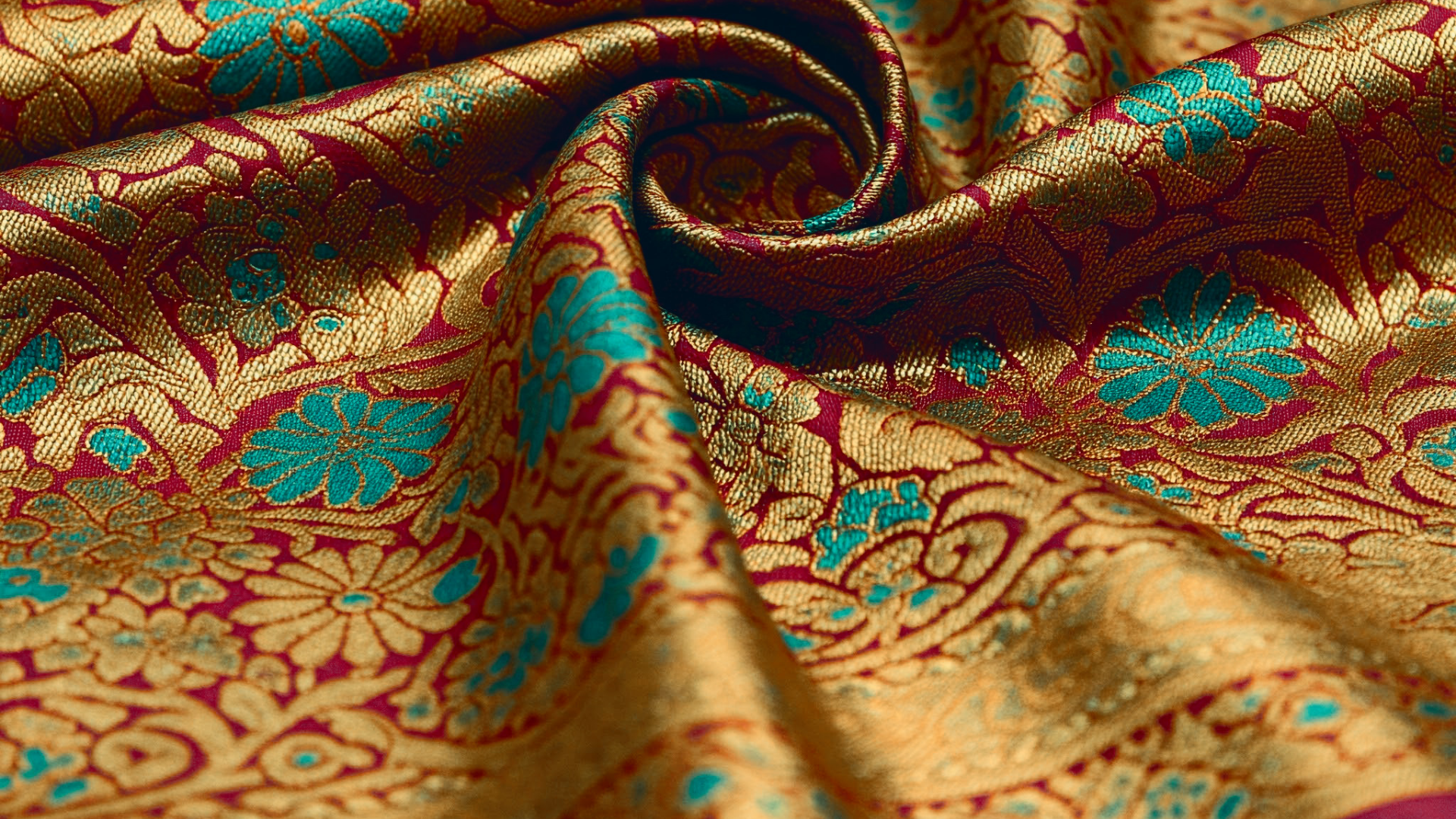
In 2012, my mother and I went to Kerala, where we visited her home state for the first time since her marriage. She had no relatives there, but the language made it easy for her to find solace. It was such a close moment for us that I was relieved that my brother and father did not join us on this trip. I had some money saved up, and I bought her a Kerala Sari. Which, ironically, got ruined by the rain.
In 2014, when I came out to her, she did not tell me it was okay to be different. She just hugged me with teary eyes as she saw my journey align with hers. We never spoke of this again. She had her own flaws, but she never apologised.
And because she never apologised, somewhere deep inside me, I learned not to apologise either.
As I grew older, I began understanding the loneliness she must have carried. Najafgarh is not kind to women who exist outside the norm. Gender roles there are not just cultural expectations; they are survival mechanisms enforced through gossip, exclusion, and humiliation. To reject femininity in such a place is to risk becoming socially illegible.
I wonder now whether she knew that.
I wonder whether she felt isolated every time another woman looked at her with suspicion. I wonder whether she knew that people laughed at her after she left the room. I wonder if she cared. I wonder if she wanted a big farewell when she retired in 2020.
We became good friends during the lockdown. I would hug her whenever I got the chance, but I could never thank her for the things she has done for me. When all of us tested positive for COVID, and I called a friend for her IAS father’s help to find her a room in a hospital, she applied lipstick and settled her hair. As if she did not want any humiliation for being herself. She was admitted to the hospital and always asked us to bring her home. We could do nothing but leave her in the hands of the system that ultimately failed us.
On May 30th, 2021, she died from COVID.
Grief rearranges memory in strange ways. After her death, I found myself replaying ordinary moments obsessively: her sitting cross-legged, her loud footsteps returning from the office, her rough voice calling my name from another room, her shouting back at my father for abusing her, her courage to face the police, her standing firmly with us, her helplessness, and her power. The things people once mocked became sacred to me. When I tried to find some of her Saris after her funeral, I could find none. All were thrown away, as in our family, a dead person’s belongings are thrown away. Even in death, she was outlawed. I felt that so deeply.
I realised then that my mother had spent her entire life teaching me how to survive without ever intending to. I did not get a sari from her, but her courage.
Not through speeches or ideology, but through embodiment, through refusing performance, through rejecting shame and through existing in a body and identity that made other people uncomfortable, yet continuing anyway.
As a queer person, especially in India, you are constantly asked to shrink yourself for social comfort. Lower your voice. Dress more “normally.” Don’t make your identity so visible. Don’t embarrass the family. Don’t invite trouble.
My mother ignored all those rules long before I did.
And perhaps that is why I survived my own queerness with less fear than I could have. Because by the time I began confronting society’s expectations of gender, I had already spent my childhood watching someone quietly disobey them every day.
She never called herself queer. But I think queerness is not only about identity. Sometimes it is also about refusal. Refusal to perform. Refusal to submit. Refusal to become smaller for the comfort of others.
My mother carried that refusal in her body long before I learned to carry it in mine.
And even now, after death, she continues to make space for me.
About the author(s)

Jitender (they/them) is a socio-legal researcher, youth advocate, and gender expert with over a decade of experience working across human rights organisations in India. An aspiring anthropologist, Jitender is deeply interested in understanding how trauma shapes identities in the present. Their work engages with affect epistemologically, exploring the temporalities of witnessing, memory, and becoming. They are also passionate about writing and documenting lived experiences.