Because I study and write about food and explore gastronomic culture, people assume I grew up surrounded by abundance: elaborate meals, a mother who cooked with care, and a childhood perfumed with spices. None of that is true.
In that world, food was a measure of maternal love and success. To my disappointment, my mother refused that measure; by any stroke of luck, if she had free time, she would catch up on her reading, or write, or garden rather than cook.
My mother, a doctor and a caregiver, hated to cook. She says with unusual clarity to this day that if there were one task she could do away with, it would be cooking. As a child, I was embarrassed by my mother’s disposition. I grew up in an industrial township in India, in the late 1980s and 90s, where most of my friends’ mothers were homemakers and, by extension, exemplary cooks. I attended an all-girls convent school, where lunchboxes were expressions of care and competence, and recipes were reputations. In that world, food was a measure of maternal love and success. To my disappointment, my mother refused that measure; by any stroke of luck, if she had free time, she would catch up on her reading, or write, or garden rather than cook.
The labour of cooking and who is expected to perform it
My father, also a doctor, did not cook. The thought of him cooking, even to this day, feels silly and comical. It was not a question of preference or skill, but the absence of expectation and responsibility. The kitchen did not belong to him, nor he to the kitchen. Yet he complained about the food — its blandness, its repetition — without ever being involved in making the food. My mom did cook, but perfunctorily, food at home was only for sustenance. Meals were functional, repetitive, and uninspiring. My brother and I ate without complaining, not because we were particularly disciplined children, but because complaining was simply not an option; food was provided, and that was enough.
However, when my maternal grandmother arrived, the kitchen transformed, meals became occasions, flavours expanded, and indulgence was suddenly permitted. Those visits revealed what we were missing, but also revealed something more complicated: that cooking in its fullness required time, attention, and willingness to give oneself over to others. The other arrangements my mother had in place, such as hiring cooks, were something my grandmother never fully approved of when she visited us. The discomfort was not only about outsourcing cooking, but about who performed it, a fact that upset my grandmother more than my mother’s reluctance to cook. I, even as a child, understood how the kitchen carried its own hierarchies.
Years later, when I moved away, set up my own home, and became a mother, I began to understand my mother’s position more intimately. Unlike her, I had a partner who was comfortable in the kitchen. And the work of cooking was, at least in parts, shared between the two of us and any cooks we could afford to hire. Yet something of the old structure persisted. He was the one who still complained about the food, about the burnt dal or an undercooked sabji, often with the ease of someone removed from the labour of making it. I found myself smoothing over those moments, as though they were still mine to manage. Which is when I began to understand my mother differently.
A quiet, resolute refusal
What I wanted to read as a lack of skill or interest was, in fact, refusal, not a casual refusal, but a conscious one. Cooking at home is often framed as a form of love, but it is also labour-intensive, repetitive, and time-consuming. My mother understood this and chose not to take it on excessively. She had already given her labour, time, emotional and physical energy to a demanding profession. The expectation that she should return home and seamlessly transition into another shift of unpaid, invisible, and often thankless labour was one that she resisted. However, her refusal came at a cost, as her children, we bore parts of it in intangible ways — monotonous meals, quiet comparisons with our peers, and the longing for something more.
What I wanted to read as a lack of skill or interest was, in fact, refusal, not a casual refusal, but a conscious one. Cooking at home is often framed as a form of love, but it is also labour-intensive, repetitive, and time-consuming. My mother understood this and chose not to take it on excessively.
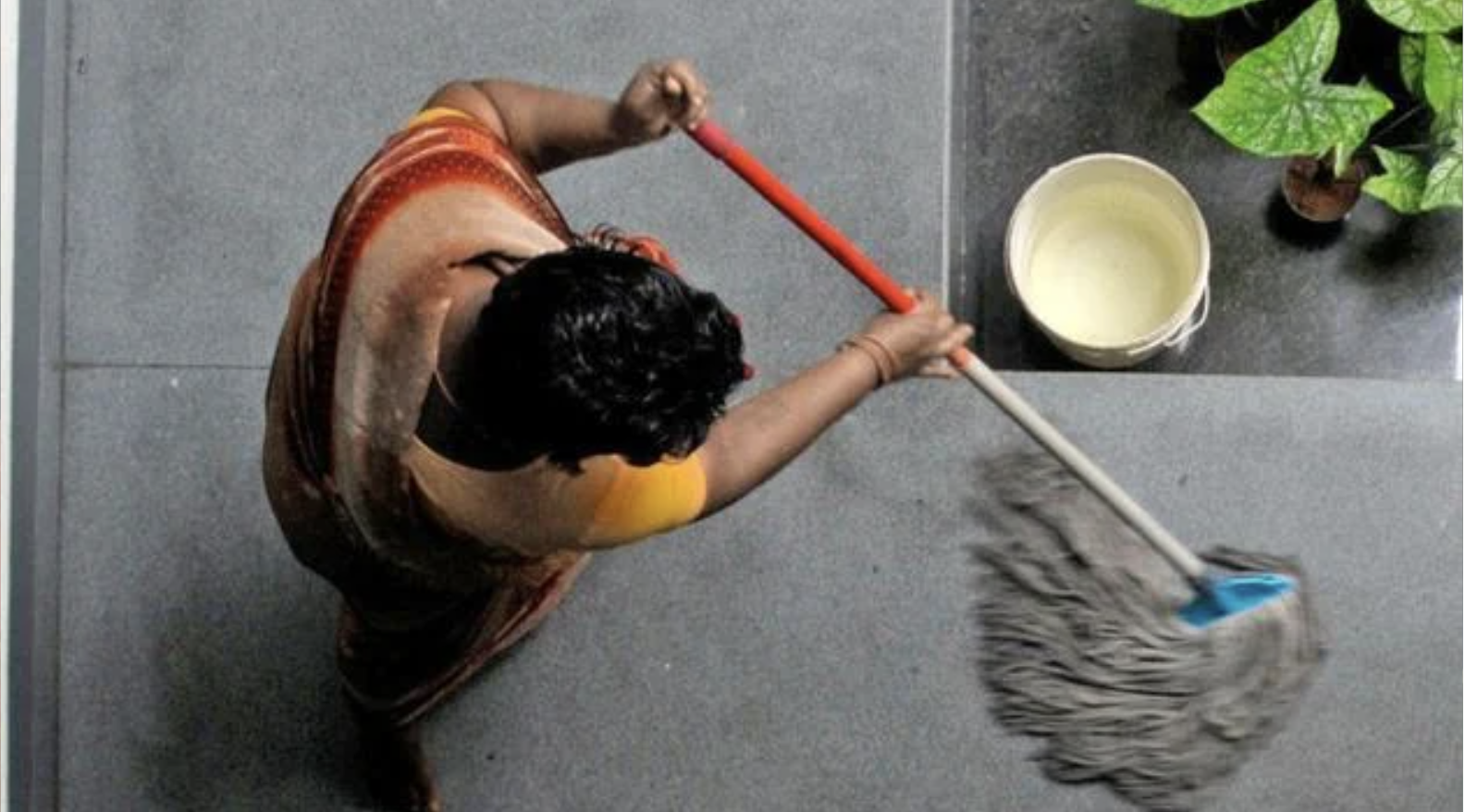
My mother stepped out of a system that makes caregiving uneven, exhausting, and inescapable. One in which it is assumed that a woman will quietly absorb the work of sustaining everyone else. Yet something had to replace what she refused. The gap created by her refusal did not vanish; it simply transferred to someone else. When labour is withdrawn, it shifts into another kitchen, other hands, and other lives. Whether it was another woman being paid to take it on, or my grandmother absorbing it without question, the burden did not disappear; it only moved between women.
I grew up between two forms of cooking, my grandmother’s extensive cooking endeavours and my mother’s insistence on its limits. Now I recognise they were both negotiating the same system: one that offers no real resolution, only a trade-off, by asking somebody else to bear the costs.
About the author(s)



Good and honest writing Shweta.
In today’s world, i see more men pitching in and sharing, even though the sharing is very unequal. The option is to order out if you can afford it. I see this as a necessary evil and sharing must be equal.
I am intrigued to know, what your brother thought about this and how he as an adult man expect his wife to be?
Nicely written