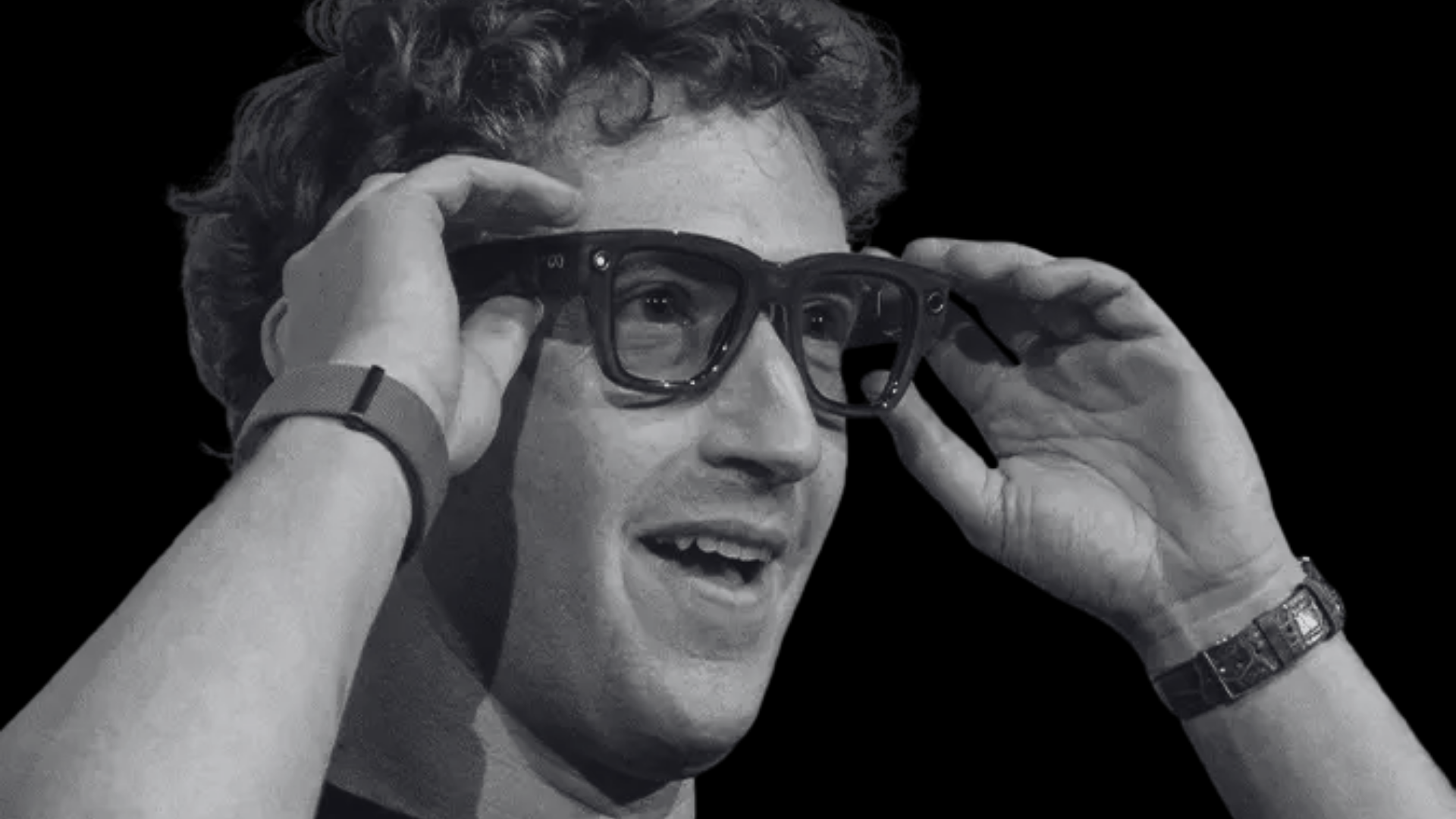
While the youth of the country marched at Jantar Mantar, some of the police personnel deployed there were seen wearing Meta smart glasses. In June, the security team at Ujjain Mahakaleshwar Temple confiscated a visitor’s camera-equipped Meta smart glasses inside the temple premises, similar to the earlier instances at the Kerala Sree Padmanabhaswamy Temple and the Puri Jagannath Temple. And recently, a transgender individual was heckled, and their reaction was trolled after it was discreetly recorded by the heckler using Ray-Ban Meta smart glasses and uploaded online.
The different cases had different outcomes. The individuals at the temples were later released after it was established that they were not recording. However, the other two cases raise grave concerns about the intent behind the use of this new technology. For the heckler, it was a tool for harassing someone who was ‘othered’, while for the Delhi Police, it served as a surveillance tool.
The divide between the intent of the user and the capability of the tech lies at the heart of the governance challenges surrounding wearable AI.
The divide between the intent of the user and the capability of the tech lies at the heart of the governance challenges surrounding wearable AI. While existing rules prohibit such recording, AI glasses increasingly compel institutions to respond even before any misuse of the devices has been established.
This difference between the user’s intentions and the capabilities of the technology raises concerns about what happens to the data after it is collected. ‘The wearer’s intentions are different from the intentions of AI companies. Most users may not even be aware of where the data they are recording is going and how it is further going to be used, resulting in information asymmetry,’ says tech and AI regulation researcher Dr Vishnu S. Pillai.
As far as privacy goes, Dr Pillai says policy surrounding the tech should examine where the collected data is stored, whether any bystanders captured are anonymised, and if the recordings contribute to AI training.
As far as privacy goes, Dr Pillai says policy surrounding the tech should examine where the collected data is stored, whether any bystanders captured are anonymised, and if the recordings contribute to AI training.
Where did it start?
Before Meta’s glasses, there was Google Glass, introduced in 2012. Although it failed to achieve widespread adoption, the few people who used it earned the moniker ‘glassholes‘ precisely because of the privacy concerns being discussed here. Snapchat’s Spectacles (also known as Snap Specs), meanwhile, presented a different use case but still raised many of the same privacy concerns.
More than a decade later, the Meta Ray-Ban smart glasses entered the market, selling more than 7 million units in the last year alone, up from roughly 2 million units sold across 2023 and 2024 combined. That’s just short of one pair of AI glasses for every 1,000 people on the planet. According to data from the International Data Corporation (IDC), 9.6 million AI smart glasses were shipped globally in 2025, with Meta occupying more than three-quarters of the market. Its market share in India, however, has not been disclosed.
As other tech giants, such as Google, also bring wearable AI devices into the mainstream, the question becomes: who bears the consequences with regard to consent and surveillance?
However, Indian consumers seem to be buying these glasses in significant numbers. Their growing visibility is also reflected on social media, where travel creators, fitness influencers, filmmakers, and lifestyle content creators increasingly showcase AI glasses. As other tech giants, such as Google, also bring wearable AI devices into the mainstream, the question becomes: who bears the consequences with regard to consent and surveillance?
Bystander’s privacy and consent
The individual who was discreetly recorded and subsequently trolled online was Shubnam, a Delhi-based queer activist and graphic designer. The uploading of the non-consensually recorded video, along with the queerphobic abuse they experienced, raises important questions about bystander privacy.
Speaking to FII, Shubnam said, ‘Just by being physically present in public, individuals don’t give permission to random people or corporations to utilise their personhood for their own purposes. The issue goes beyond recording someone; a person’s social standing is basically in someone else’s control.‘
Since the introduction of these devices, women have been recorded without their consent for social media content in several places. This raises important questions about consent and gendered harassment in public spaces.
Wearable AI has already been misused globally for non-consensual recording, with many reports emerging about its implications for women’s safety. Since the introduction of these devices, women have been recorded without their consent for social media content in several places. This raises important questions about consent and gendered harassment in public spaces.
Former cybercrime police officer and forensic expert Ukkalam Rammohan Rao points out that India’s current legal framework operates differently when a non-consensual recording is made compared to when the recording is later misused. He tells FII, ‘As per Indian laws, recording someone in a public place may be an ethical/moral offence but not a crime. Legal remedies are available when the recording is used to harass, create deepfakes, or otherwise cause harm under section 66e of the IT Act, and the section pertaining to outraging a woman’s modesty under the BNS. However, these provisions apply only to women and not other vulnerable groups who are also likely to face similar problems.’
A passerby on the road, a patient in a hospital room, or a child waiting for a school bus risks becoming part of an AI system’s data environment simply because they share the same physical space as the wearer.
‘
Scholars such as Z. Takhshid at the University of Denver describe a broader challenge regarding bystander privacy. Unlike many other AI and digital tools, where users actively choose to share information, AI glasses collect information about people without consent, making them datasets. A passerby on the road, a patient in a hospital room, or a child waiting for a school bus risks becoming part of an AI system’s data environment simply because they share the same physical space as the wearer.
‘Public awareness remains an important factor until there are stronger regulations in place. A lot of cyber crimes occur when people underestimate the privacy risks of social media. That awareness should also extend to understanding digital safety and reporting incidents when necessary through the 1930 cybercrime helpline‘, said Ukkalam Rammohan Rao.
Women, queer communities, children, and other vulnerable groups will experience public spaces differently because the consequences of unwanted recording extend far beyond the moment of capture for them. Technology does not create misogyny or queerphobia, but it can amplify existing forms of discrimination and make them easier to circulate online.
In spaces where privacy is paramount and confidentiality is critical, such as hospitals, courtrooms, and women’s shelters, invisible recording also raises concerns about compromised personal information.
For Shubnam, concerns surrounding privacy have intensified. ‘The marginalisation we experience makes the community vulnerable; that is especially true for trans persons, because our needs from the state and society are unique. As we are a group that can be taken for granted, our needs and concerns are then put on the back burner,’ says Shubnam.
In spaces where privacy is paramount and confidentiality is critical, such as hospitals, courtrooms, and women’s shelters, invisible recording also raises concerns about compromised personal information.
Policy approach within the country and outside
The Maharashtra government has announced an AI expert panel to develop standard operating procedures (SOPs) for the use of AI-powered smart glasses. While this acknowledges the governance challenges posed by wearable AI, it is unrealistic to expect individual states to regulate a technology whose data flows beyond state borders. Without standardised measures from the central government, the responsible use of these technologies will remain fragmented.
This brings us to the question: Is India ready for a technology that is already here and raising renewed challenges around consent, bodily autonomy, and bystander privacy rights? India’s existing legal framework offers only a partial response to these challenges. The DPDP Act, 2023, and the IT Act, 2000, provide safeguards for personal data and privacy protection, alongside the constitutional right to privacy.
It is unrealistic to expect individual states to regulate a technology whose data flows beyond state borders. Without standardised measures from the central government, the responsible use of these technologies will remain fragmented.
Where AI glasses are used to facilitate offences such as defamation, voyeurism, or other forms of digital abuse, existing criminal laws under the Bharatiya Nyaya Sanhita may also apply. However, while these laws address harms that arise after misuse occurs, they do not establish a comprehensive governance framework for AI-powered wearable technologies themselves. MeitY’s AI Governance Guidelines Development report recommends building AI governance on existing laws while identifying AI-specific regulatory gaps as the technology evolves.
Regarding India’s AI governance approach, Dr Pillai notes, ‘Wearable AI brings organisational and institutional risks beyond data protection. However, umbrella regulations for all tech will limit innovation; hence, the governance should be sector-specific to maintain a balance between data and user protection while allowing room for tech innovations.’
Internationally, regulators are beginning to move beyond product-specific rules towards governing AI capabilities. The EU AI Act, 2024, classifies certain AI systems capable of collecting biometric data as high-risk and imposes obligations such as transparency towards bystanders, documentation, and impact assessments.
Advocating for safe and responsible AI
There are also interesting provisions under existing regulations, such as a bystander’s audio and video footage being treated as strictly protected personal data under the EU’s GDPR. Its core principle of ‘data protection by design and by default’ mandates that tech companies build physical privacy safeguards, such as non-bypassable recording indicators or automated face-blurring software, directly into the hardware. Adapting a similar ‘privacy by design’ approach under the DPDP Act could be one way for India to address the challenges introduced by such technologies.
AI policies need future-proofing, given the rapid pace of AI technology evolution. Rather than regulating only technologies already in use, India could adopt a technology-neutral and capability-based framework that establishes limitations for AI-powered devices.
‘Along with sector-specific regulations, it is equally important that we ensure standardised measures from manufacturers, digital literacy among the public, and awareness of how the law works,’ said Dr Pillai.
Rao further noted, ‘With these new innovations and new risks, the frontline security in sensitive public places should be trained to recognise camera-incorporated wearables and respond appropriately within time. The law vs culture, privacy, and safety will always be a multi-layered issue.‘
AI policies need future-proofing, given the rapid pace of AI technology evolution. Rather than regulating only technologies already in use, India could adopt a technology-neutral and capability-based framework that establishes limitations for AI-powered devices designed to record audio, images, and video. This could serve as a starting point for AI governance in India.
About the author(s)