For the last several months, the BJP and its parent organisation, RSS, have attacked the Bengali identity in multiple ways. Earlier in the year, Assam CM, Himanta Biswa Sarma’s comment likening Bengali language-speakers in Assam to Bangladeshis snowballed into several BJP-ruled states harassing Bengali migrant labourers and deporting them to Bangladesh without proper procedure. The West Bengal CM, Mamata Banerjee, quickly reminded Sarma about Bengali personalities who are national icons and that the Indian national anthem was written by a Bengali. She asked if anyone would dare to call these icons foreigners.
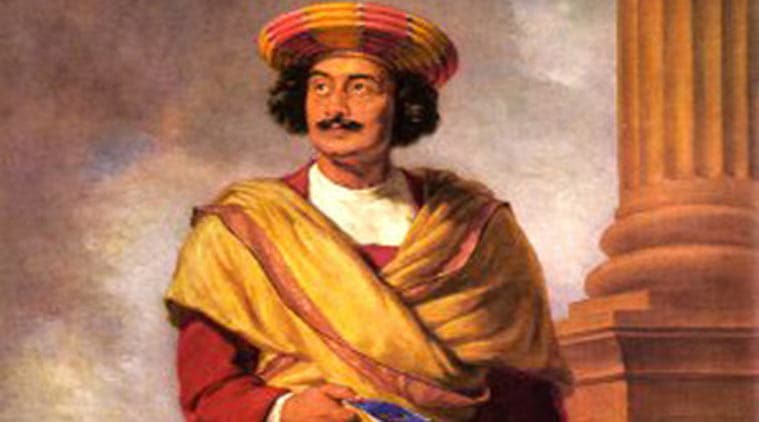
A few months later, Karnataka BJP MP, Vishweshwar Hegde Kageri, announced at the 150th anniversary of Vande Mataram that Tagore had composed Jana Gana Mana to welcome the British monarch to India, a mark of servitude to foreign rule. Kageri also said that Vande Mataram should have been chosen as the national anthem. Within a few days, Madhya Pradesh BJP leader, Inder Singh Parmar, also called Raja Ram Mohan Roy a British agent who had initiated a vicious cycle of conversion.
Roy and Tagore: the debate
Raja Ram Mohan Roy was a Hindu reformer who is best remembered for his efforts to abolish the Sati practice. He was also a proponent of Western education, and his 1823 letter to Lord Amherst, the Governor General of Bengal, proposed that the money allotted to Indians’ education by the Charter Act be utilised to promote Western disciplines like mathematics and philosophy. This letter is used as a case in point by those accusing Roy of being a “British agent”.
Rabindranath Tagore is a Nobel laureate and has authored the national anthem of India. There have been prior accusations against Tagore that the composition was meant to exalt King George V during his 1911 visit to India. However, several historical and biographical research works have revealed that the composition was directed to a divine entity, not any mortal. Hence, emphasising that the song is meant for King George is a deliberate neglect of historical evidence.
However, if we are to understand these attacks as an attack on Bengal’s ethos, we must also critically examine how these icons came to signify ‘Bengali-ness’.
Region and Bengali belongingness
G. Aloysius, in his essay, Conceptualising the Region, describes the region as primarily a geographical space with socio-cultural attributes. A region is constructed by the common experiences of people who were involved in its formation. The inhabitants must also be aware of their common culture, which comprises certain symbols, ‘myths, memories, motifs, attitudes, aspirations, worldviews‘, etc. Therefore, commonalities such as culinary preferences, worship practices, fashion choices, etc. convince a Bengali of their belonging to the region.
G. Aloysius, in his essay, Conceptualising the Region, describes the region as primarily a geographical space with socio-cultural attributes.
Furthermore, shared histories of ‘dominance and resistance‘ also shape our belongingness. This is where the internal heterogeneity of the region complicates the sentiment. These internal groups share a conflictual relationship with dominant castes and ruling classes, generally referred to as the ‘Bhadralok‘ in Bengal. By whitewashing these internal conflicts as “diversity”, regional sentiments tend to perpetuate existing hegemonies. The ‘valorisation‘ of the region, thus, sometimes results in the erasure of all those voices that had historically resisted an exclusive idea of the region bereft of a spirit of social justice. This hegemony is repeatedly reproduced through the Bengali language, which is believed to cement internal regional variations.
Aloysius further says that a space is produced through the cumulative practices of ‘conservation and transcendence‘. Its role in shaping the Bengali psyche is evident now more than ever. Historically, the Bhadralok Bengali’s valorisation of the neo-Vedantic Bengal renaissance has conserved only certain icons as a true representation of the Bengali psyche, like Tagore and Roy. Consequently, it has obliterated memories of movements and leaders who displayed radical resistance to hegemony, like Harichand Thakur, Guruchand Thakur, Jogendranath Mandal, etc., as they disturb the idyllic presumption of the harmonious coexistence of groups in the region.
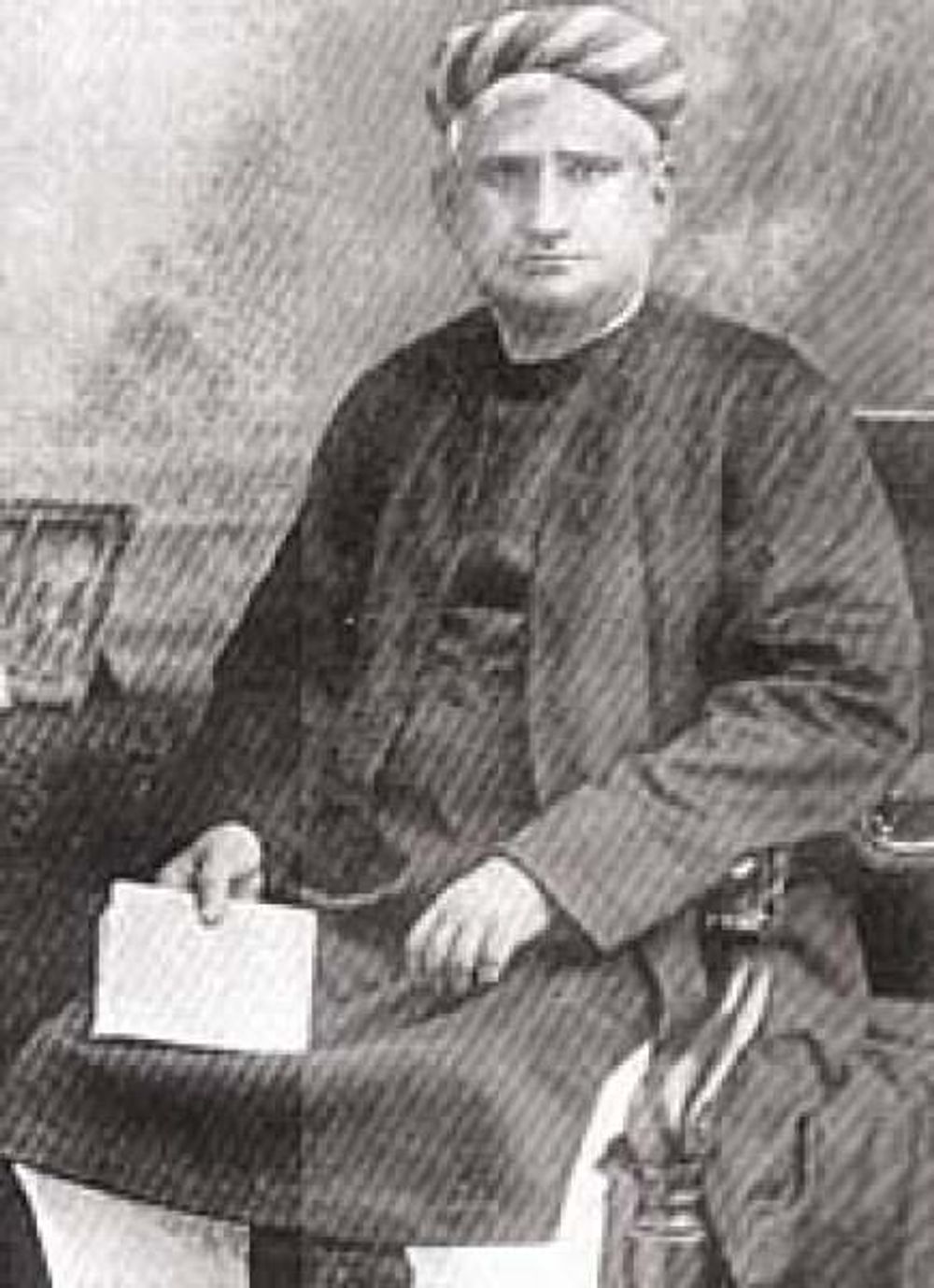
Moreover, while shunning Tagore and Roy as foreign, the BJP does not leave a vacuum in the Bengali psyche. It replaces these icons with another regional one—Bankim Chandra Chatterjee—equally revered in Bengal, on par with Tagore and Roy. It cannot be dismissed as a polarisation of the Bengali psyche. Instead, the BJP is leveraging its ideologues by capitalising on the already existing regional nostalgia among the Bhadralok, which equates Bankim with Tagore and Roy.
Moreover, while shunning Tagore and Roy as foreign, the BJP does not leave a vacuum in the Bengali psyche. It replaces these icons with another regional one—Bankim Chandra Chatterjee—equally revered in Bengal, on par with Tagore and Roy.
Hence, the question is not about the difference but the similarities among these icons, which comfortably situate all of them in the Bengali psyche.
Bankim’s vision of Hindu India
The RSS’s love for Bankim can be traced back to 1882, when he published Anandamath, the book that contained his contentious poetic composition, Vande Mataram. Several studies critique Chatterjee’s attempt to distort history by villainising only Muslim rulers in his novel as being responsible for the 1770 Bengal Famine. The novel, according to Ranajit Guha, was an attempt by Bankim to write an ‘Indian historiography of India‘ against contemporary Oriental works that painted the Hindu Indian as timid against foreign (Muslim) forces. Chatterjee decided to depict him as courageous and physically strong and, thus, advocated a concept of bahubol (literally, ‘strength of arms’), a principle followed in RSS shakhas even today.
Towards the end of the novel, when Satyananda is ready to wage a war against the British, having already conquered the Muslims, a sage stops him. The sage illuminates Satyananda about the importance of the English rule in rescuing true Aryadharma from its current debasement. This, according to the sage, can only be achieved through widespread English education. Therefore, the sage advises Satyananda to desist from fighting the British.
Battle of the Bengali icons
So, why does the RSS denounce Roy when Bankim was also advocating for English rule and English education? The difference is that while Roy envisioned a neo-Vedantic Hinduism devoid of all its orthodoxies, Bankim dreamt of going back to the glorious Hindu past, viz. Aryadharma. What the BJP is referring to as “foreign” in Roy is merely his attempt to modernise Hinduism following the Western ideas of an enlightened religion.
The similarity between both icons is that neither challenged the basic framework of classical Hinduism, which is the source of the persisting graded inequality in India. Similarly, there are critical works on Tagore that highlight his problematic reduction of caste to an innocent division of labour that had been “degraded” into practices of untouchability. Perhaps the reason why these icons simultaneously occupy the Bengali psyche is their common feature of maintaining the religious and political status quo of the Bhadralok that would ultimately allow for upper caste leadership to persist.
While Roy and Bankim both supported Western education to perpetuate their respective versions of true Hinduism, Dalits in Bengal were not allowed to share the same space with their upper caste classmates.
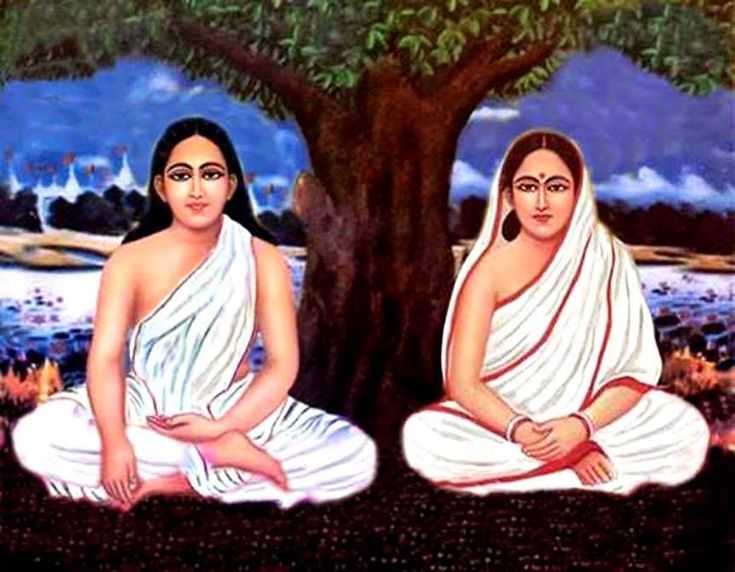
On the contrary, there was a simultaneous social movement ongoing in undivided Bengal led by Harichand Thakur in the 19th century. Thakur belonged to the disenfranchised Namashudra community and advocated for a religion (Matua dharma) against the Vedas with no hierarchy among the followers. While Roy and Bankim both supported Western education to perpetuate their respective versions of true Hinduism, Dalits in Bengal were not allowed to share the same space with their upper caste classmates. Till Harichand’s son, Guruchand Thakur, founded separate schools for Dalits in Orkandi (now Bangladesh).
It is curious as to how such a radical regional history has been structurally obliterated from the Bhadralok psyche. Are these icons not Bengali enough? While an insult to the language and maligning of icons might have wounded the Bhadralok Bengali psyche, the BJP’s recent attacks have materially affected the most disenfranchised communities in West Bengal—the Dalit and Muslim working classes. They are being harassed by the Indian state, denied their citizenship rights and displaced from the region they belong to. Hence, their articulation of their Bengali-ness fights a dual battle: one, with the Bhadralok psyche that has whitewashed their histories, and two, with the nation-state that questions their Indian-ness.
Redemptive potential of region
There is a constant tendency to subsume the region into a greater whole—India or, for the RSS, the Hindu state. In fact, a significant reason for the BJP’s preference for Bankim is that his vision transcends the confines of the region, attributing an Indian-ness to the Hindu Bengalis in the novel. This sentiment is instrumental in re-establishing Aryadharma, a vision that resonates with the RSS. For them, the region is important as long as it helps in the larger project of building a Hindu nation, obliterating the region’s specific history and identity. BJP’s gradual erosion of the Indian federal structure is a political manifestation of the same ideal.
Strengthening regional autonomy and sentiment is a definitive way of resisting this sectarian goal. However, claiming regional autonomy does not entail unwarranted celebration of hegemonic feudal relations that the Bhadralok has perpetuated in the name of Bengali-ness. In order to build a just and inclusive regionalism, one has to identify and resist these exploitative relations that dominate the psyche. It should normalise those icons and histories that truly have a radical potential to redefine Bengali regionalism and counter the RSS’s project of building a Hindu nation. To extrapolate K. Balagopal’s principle of formulating a protest, one cannot just condemn the obliteration of their icons; one should condemn the act of obliteration itself. Unless we do so, our clamour will harbour the same sectarian seed that we are accusing the RSS of.
About the author(s)

Solanki Chakraborty is a PhD scholar at the Centre for English Language Studies, University of Hyderabad. Her work is on the history of language teaching and learning in colonial India. She is interested in reading and writing about pedagogy, language politics in India, and food history.